

Table of Contents
If you’ve opened Instagram or TikTok even once this year, you’ve probably already seen it. A soft, bouncy, slightly undone haircut with wispy bangs that seem to just… fall into place. That’s the Birkin Layer Haircut, and right now it’s the single most requested style walking through salon doors.
But here’s the problem. Half the reels calling themselves “Birkin Layer” content are actually showing curtain bangs, shags, or something else entirely with a trending hashtag slapped on top. So if you’ve been sitting there wondering what you’d actually need to say to your stylist to get this specific look — you’re not alone, and you’re in the right place.
This guide breaks down exactly what the Birkin Layer Haircut is, who it flatters, how to talk to your stylist about it, how to style it at home, and how it stacks up against the five or six other layered cuts it keeps getting confused with.
What Is the Birkin Layer Haircut, Exactly?
The Birkin Layer Haircut is a mid-length to long style built around two things working together: soft, jaw-length layers that cascade down through the rest of the hair, and wispy, eyebrow-grazing bangs. It’s named for Jane Birkin, the British-French actress and singer whose loose, undone fringe became one of the defining looks of the late 1960s and 70s.
What separates this from a “normal” layered cut is the finishing technique. Stylists are using point cutting and razor work on the ends instead of cutting straight across, which is what gives the hair that feathered, almost see-through softness at the tips. The result reads as movement rather than shape — hair that looks like it fell into place on its own, even though a stylist spent real time getting it there.
A few things that define the look:
- Piecey layers starting around the jawline and moving downward
- Wispy bangs that skim the eyebrows without sitting heavy
- Face-framing pieces that feather out rather than sitting flat
- Loose, 70s-inspired bounce and texture
- A finished look that reads “I didn’t try” — even when you did
Where the Birkin Layer Haircut Actually Comes From
Jane Birkin didn’t have a stylist chasing perfection — that was kind of the point. She moved to Paris in the late 1960s and became one of the most photographed women of her era, and her hair was part of why: never sleek, never sprayed into place, always a little loose, as she’d just gotten off a scooter.
That “undone but still put together” energy is exactly what’s driving the Birkin Layer Haircut‘s comeback in 2026, a year where beauty trends in general have been drifting away from high-maintenance, heavily styled looks and toward things that look more like your actual hair, just better.
The trend got another jolt when Birkin-style bangs showed up on the runway during a major Paris fashion week moment last year, which is roughly when TikTok and Pinterest saves for the style started climbing fast.
Celebrities Wearing the Birkin Layer Right Now
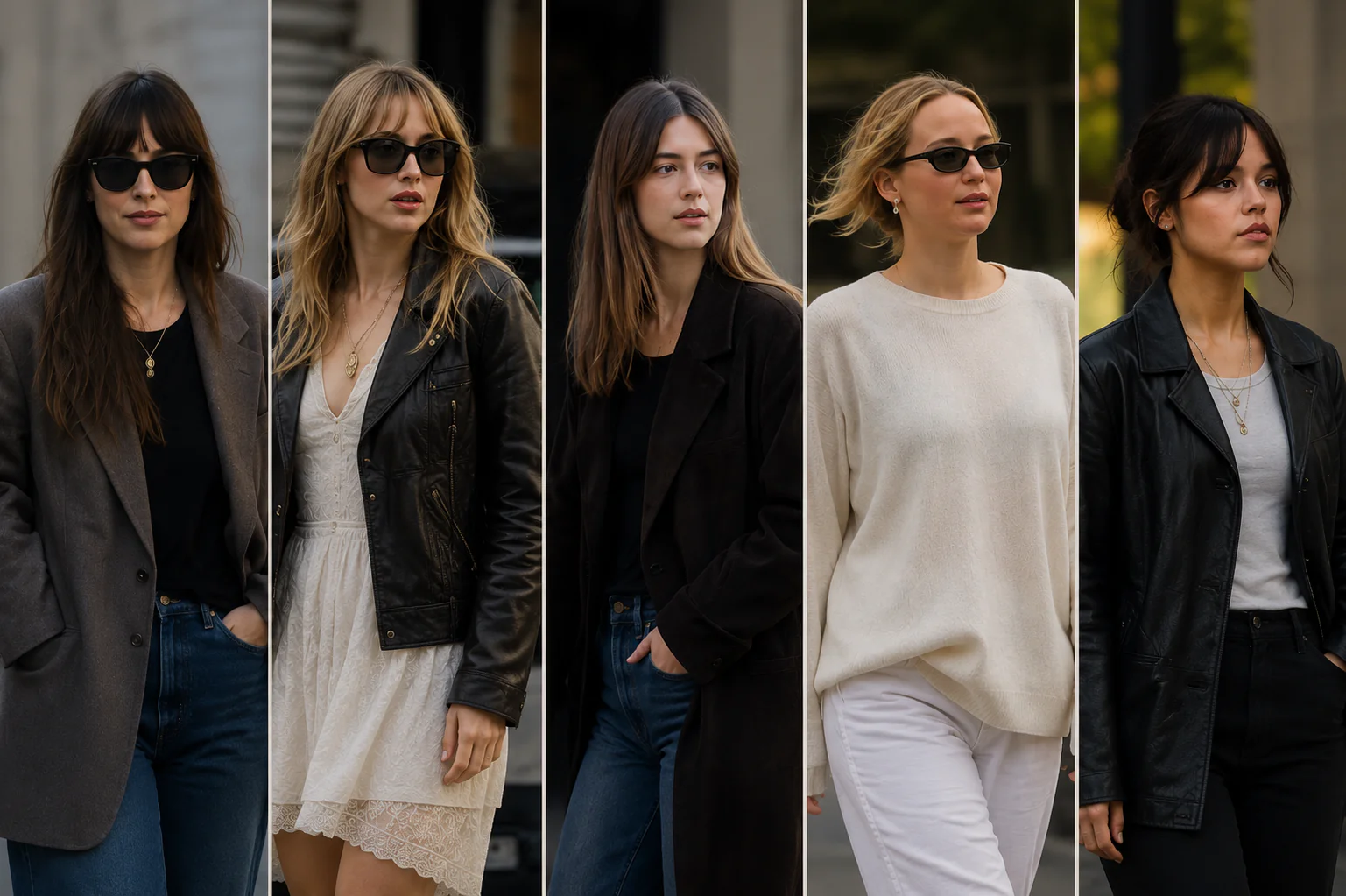
Part of why this cut is everywhere is that it didn’t come from one influencer — it’s been adopted across a pretty wide range of famous faces, which is a big reason the Birkin Layer Haircut feels less like a fad and more like an actual shift in what people want:
- Dakota Johnson — widely considered the modern reference point for this look; her loose, piecey layers are what a lot of people are bringing in on their phones now
- Suki Waterhouse — helped reignite the whole trend with a Birkin-inspired shag at a major film festival
- Daisy Edgar-Jones — wears it with a slightly retro edge, proving it works for both red-carpet and everyday looks
- Jennifer Lawrence — a near-textbook example: soft layers, natural face-framing fringe
- Camila Cabello — gives it a younger, more playful spin
- Jenna Ortega — has worn Birkin-style bangs on both a bob and longer, wavy hair, which says a lot about how flexible the cut actually is
Does the Birkin Layer Haircut Suit Your Face Shape?
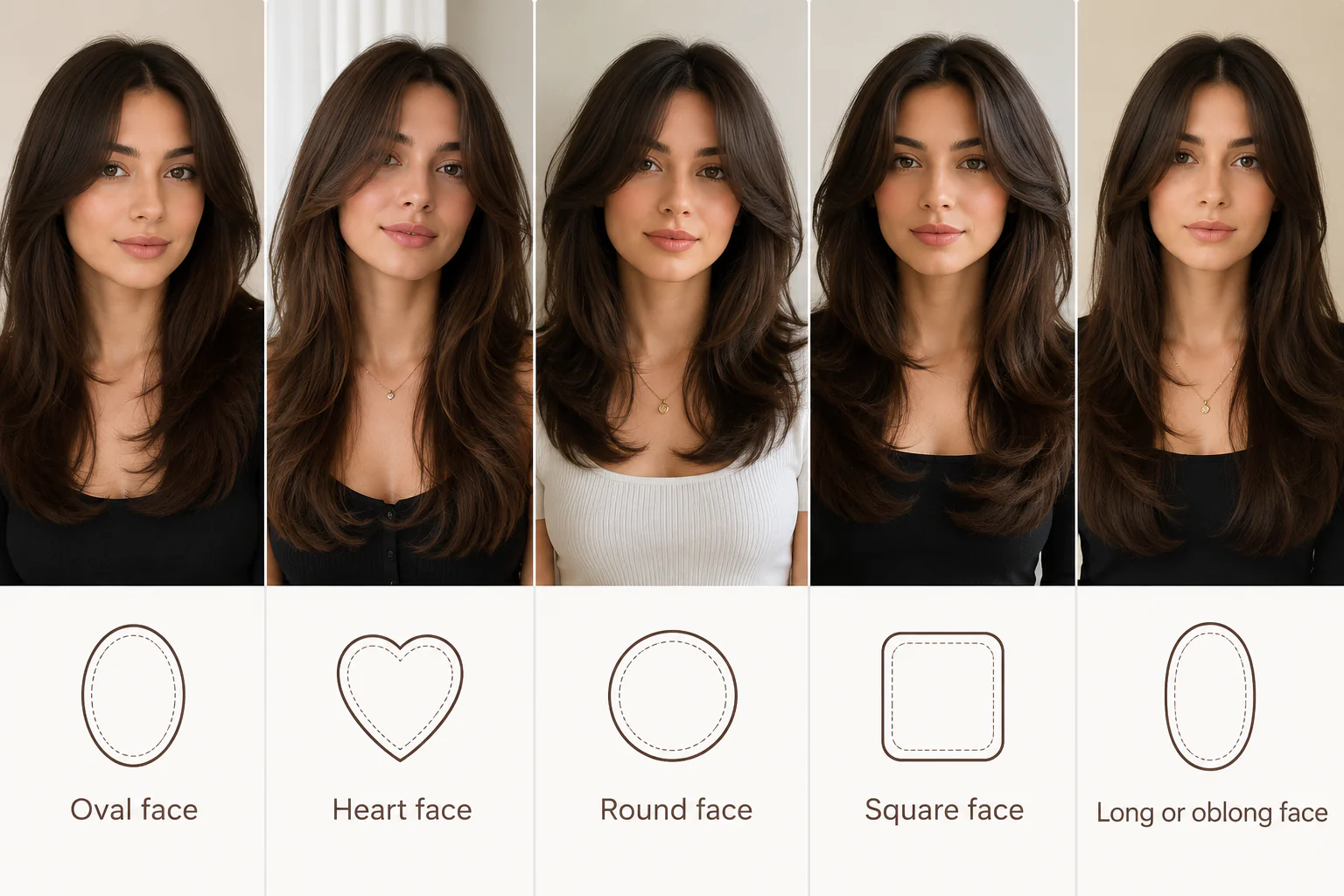
This is usually the first real question people have, and honestly, it’s a fair one — not every trending cut works for every face. Here’s the breakdown.
Oval face — the easiest match. Most things suit an oval face, and this is no exception. Medium-length layers with soft, eyebrow-grazing bangs will work almost without adjustment.
Heart face — a genuinely great match. The wispy fringe softens a wider forehead, and the layering adds volume around the jaw to balance things out. Ask for slightly longer pieces at the sides.
Round face — works, with a small tweak. Ask your stylist to angle the layers so they elongate rather than widen the face, and skip a full, blunt fringe in favor of a slightly parted one that creates a vertical line.
Square face — a genuinely softening effect. The wispy texture takes the edge off a strong jawline and pulls attention up toward the eyes. Avoid anything too blunt here; feathered and textured is the move.
Long or oblong face — needs a bit more width. Keep more volume through the sides and go slightly fuller through the bangs to add horizontal balance. Mid-length versions tend to work best.
What Hair Type Does the Birkin Layer Haircut Need?
- Fine, straight hair — this is close to ideal. The wispy fringe and soft layers show real movement without weighing the hair down.
- Straight to slightly wavy — great fit; air-drying alone gives you the natural bounce the look is built around.
- Wavy hair — works beautifully; the layers just amplify your existing wave pattern.
- Thick hair — absolutely doable, but it needs more point-cutting and thinning to avoid bulk. Talk to your stylist about this specifically.
- Curly hair — possible with the right stylist, but it needs a curl specialist and longer, softer layers only. Too many short layers on curly hair tends to balloon into extra volume rather than the intended soft shape.
One tip that actually saves people from a bad appointment: bring two or three photos of the Birkin Layer Haircut on someone with hair texture close to yours, not just whoever looks best in the reel. It gives your stylist a real reference for weight and movement instead of a vague idea.
How to Ask for the Birkin Layer Haircut at the Salon
Saying “give me the Birkin Layer” is becoming more common, but pairing it with clear direction gets you a much more predictable result. Try:
- “I want soft, face-framing layers starting around my jawline, graduating down.”
- “Can you cut wispy, textured bangs that graze my eyebrows — not blunt, not heavy?”
- “I want the ends light and airy — please use point cutting or a razor.”
- “I’m going for effortless and slightly undone, like a natural blowout, not a styled one.”
- “Keep the back longer and put the focus on the layers and face-framing pieces up front.”
If there’s one phrase to remember, it’s point cutting. That’s the technique — cutting into the hair at an angle instead of straight across — that gives Birkin bangs their soft, feathered edge instead of a flat, blunt line.
How to Style the Birkin Layer Haircut at Home
1. The everyday air-dry method: Wash and gently squeeze out water (skip the towel rub). Run a lightweight texturizing cream through the mid-lengths and ends. Lightly flip the bangs to one side with your fingers — don’t over-comb. Let it air-dry, or diffuse on low heat, then scrunch gently once dry and finish with a drop of hair oil.
2. The polished blow-dry: Rough-dry with a round brush for root volume, then use a medium round brush to shape the layers in or out, whichever you prefer. Blow the bangs forward with a lift at the root, finish with a cool shot, and use a light-hold spray nothing stiff or crunchy.
3. The five-minute half-up twist: two face-framing sections back loosely and clip them at the crown, let the bangs fall naturally, pull a few strands loose around the face, and mist with texture spray.
The one rule that matters more than any product: this haircut is not supposed to look “done.” If it looks too perfect, it’s overdone — the slightly messy, lived-in finish is the entire point.
Maintenance: What to Actually Expect
- Trims: every 6–8 weeks to keep the layers fresh and the bangs from losing shape
- At-home bang trims: doable if you’re careful — always trim dry, small amounts, point-cutting only
- Products: keep it minimal — a lightweight leave-in, a texture spray, and a light oil are genuinely enough
- Heat: a heat protectant if you blow-dry, but the style holds up fine air-dried too
- Growing out: this is one of the cut’s biggest advantages. It transitions into curtain bangs and then longer face-framing pieces without an awkward in-between stage
Birkin Layer Haircut vs. Everything Else It Gets Confused With
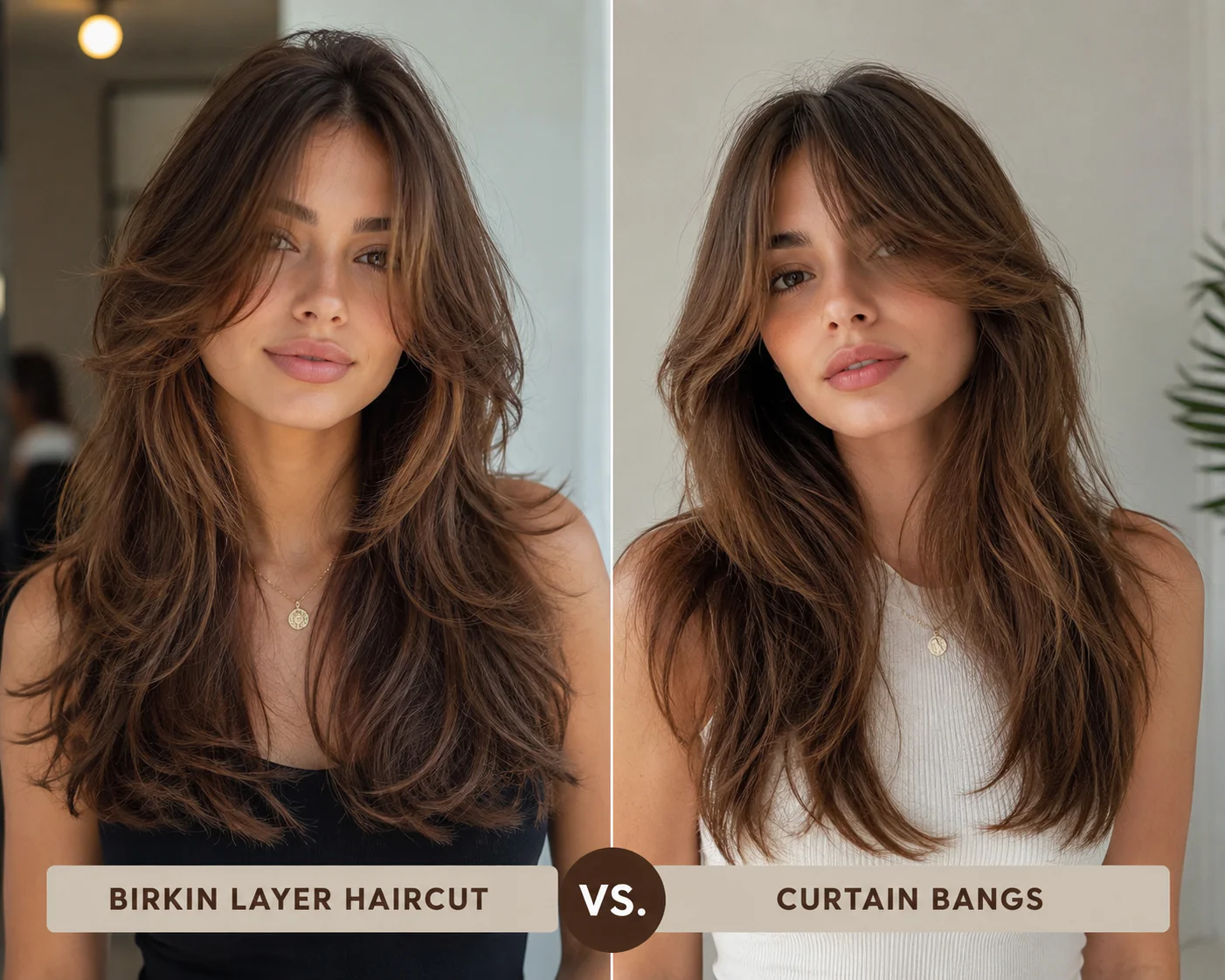
Birkin Layer Haircut vs. curtain bangs. Curtain bangs part in the center and sweep outward, framing the face like actual curtains. Birkin bangs are softer and fall more straight across, without the dramatic side sweep — lighter and less deliberately styled.
Birkin Layer Haircut vs. Bardot bangs. Bardot bangs (named for Brigitte Bardot) tend to be fuller, rounder, and a little more voluminous, often paired with a bouffant-style top. Birkin bangs are thinner, wispier, and flatter against the forehead — Bardot reads more glamorous, Birkin reads more undone.
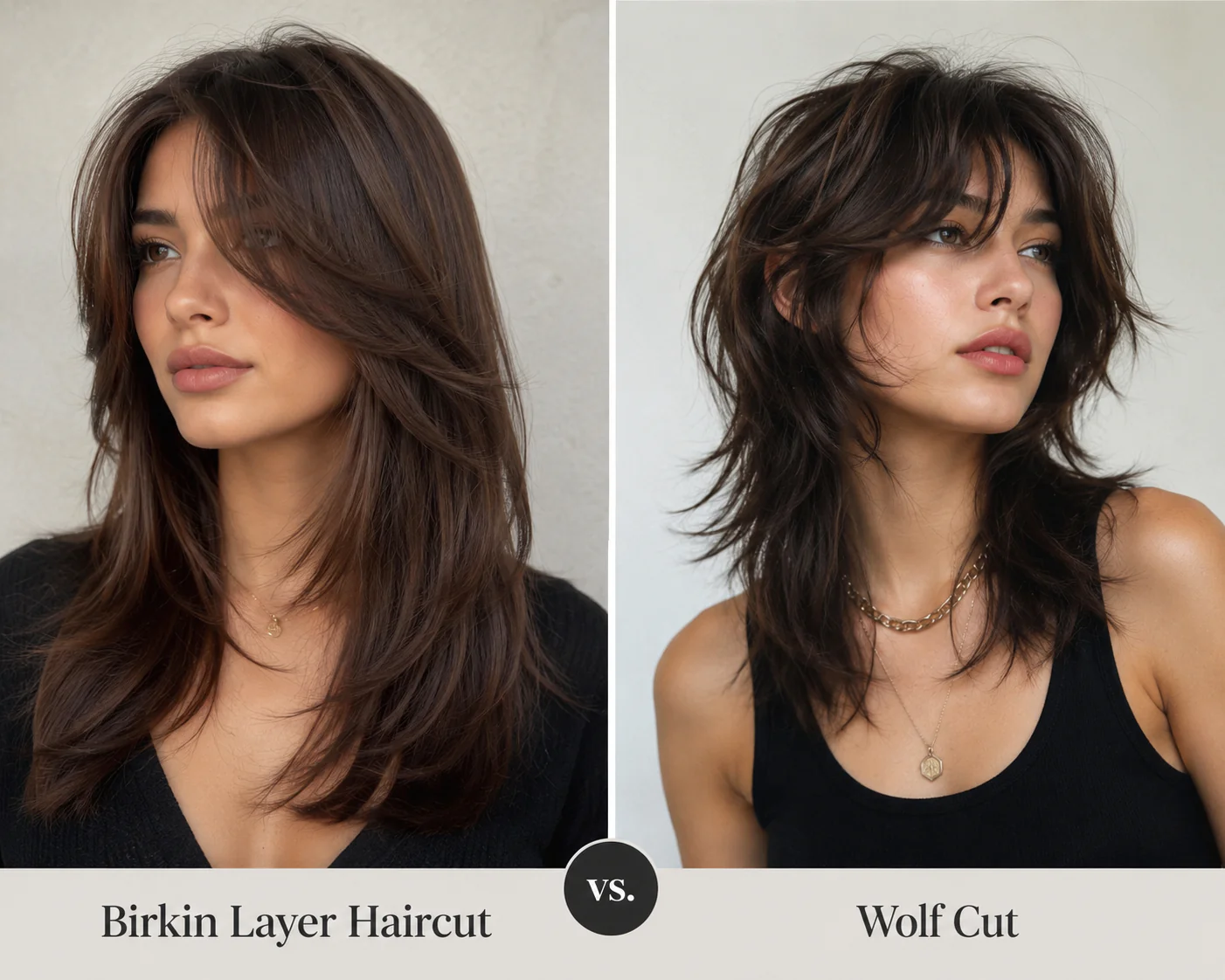
Birkin Layer Haircut vs. wolf cut.
The wolf cut is bolder and edgier, with heavy shag texture and a rock-and-roll feel. The Birkin Layer is softer and more romantic — think French girl versus cool girl.
Birkin Layer Haircut vs. butterfly cut. Butterfly layers are dramatic and full-bodied, built for volume. The Birkin Layer is quieter and more understated, with lighter ends throughout.
Birkin Layer Haircut vs. shag. Both borrow from the 70s, but the shag leans into deliberate messiness with heavier razored texture. The Birkin Layer looks polished even when it’s undone.
Best Hair Colors to Pair With the Birkin Layer Haircut
- Mocha brown — a warm, dimensional shade that shows off the movement in the layers
- Butter blonde — creamy and warm, catches the light beautifully through the ends
- Cherry cola red — for anyone who wants contrast between a dramatic color and the soft, wispy fringe
- Balayage, any shade — the soft color blending mirrors the softness of the cut itself
- Brunette with face-framing highlights — simple, but it doubles down on the face-framing effect of the cut
Can You Get the Birkin Layer Haircut With Short Hair?
Yes — and it’s one of the more common questions people have before booking. On shorter lengths, the layering shows up mostly through the bangs and the pieces framing the face, since there’s less length for the cascading layers to move through. A lob or bob version keeps the wispy fringe and softens the ends with point cutting, so you still get that undone texture without needing to grow anything out first.
Who Should (and Shouldn’t) Get This Haircut
It’s a strong fit if you:
- Want a low-maintenance style that still looks pulled together
- Have been curious about bangs but nervous about something heavy and blunt
- Have fine or flat hair and want more movement
- Air-dry most days and want a cut that works with that
- Are growing out a previous style and need a flattering in-between look
It might not be your best option if you:
- Have very thick, tightly curled hair and want the exact wispy effect without any modification
- Genuinely dislike anything sitting on your forehead
- Prefer a clean, structured, no-texture look
Frequently Asked Questions
What is a Birkin layer?
It’s a mid-length to long haircut built around soft, jaw-length layers combined with wispy, eyebrow-grazing bangs, finished with point cutting so the ends look light rather than blunt. It’s named after Jane Birkin’s signature 60s and 70s look.
What is a Birkin haircut?
Same thing as the Birkin Layer — a soft, layered cut with a wispy fringe designed to look undone rather than sharply styled. Some people use “Birkin haircut” and “Birkin Layer Haircut” interchangeably.
What is the difference between Bardot and Birkin bangs?
Bardot bangs are fuller, rounder, and more voluminous, often styled with extra height at the crown. Birkin bangs are thinner, flatter, and wispier — less “styled,” more “fell into place.”
What do Birkin bangs look like?
Soft, feathered, and eyebrow-length or just above it, with uneven, piecey ends rather than a single clean, blunt line. They sit lightly on the forehead instead of covering it heavily.
Birkin bangs vs. curtain bangs?
Curtain bangs part down the middle and sweep to both sides. Birkin bangs fall more straight across and don’t rely on a dramatic side part — they’re softer and less structured overall.
What’s the difference between the Birkin Layer and Birkin bangs?
Birkin bangs are just the fringe. The full Birkin Layer Haircut includes those bangs plus soft layering throughout the rest of the hair, so you can either add Birkin bangs to a cut you already have or go for the complete look.
Is the Birkin Layer Haircut still trending in 2026?
Yes — if anything, it’s grown, partly because it works with the broader shift toward lower-maintenance, more natural-looking styles this year, and partly because it keeps getting picked up by a wider range of celebrities and stylists.
Can I get Birkin bangs with short hair?
Yes. On a bob or lob, the layering shows up mainly through the fringe and the face-framing pieces, and point cutting keeps the ends soft even at a shorter length.
Does the Birkin Layer Haircut suit an oval face?
It’s actually one of the easiest face shapes for this cut — oval faces can wear medium-length layers and eyebrow-grazing bangs with almost no adjustment needed.
Is the Birkin Layer Haircut high-maintenance?
No. It air-dries well, needs minimal product day to day, and grows out gracefully. The main upkeep is a trim every 6–8 weeks to keep the shape and fringe fresh.
Final Thoughts:
If you want something that looks effortless without actually requiring much effort — this is probably the cut you’ve been describing to yourself without knowing the name for it. It’s forgiving, it grows out well, and it flatters more face shapes and hair types than most trending cuts manage to.
The one thing that matters more than anything else: find a stylist who’s comfortable with point cutting and who’ll actually look at your face shape and hair texture before cutting, rather than copying a reference photo exactly. That’s the difference between a Birkin Layer that looks like it belongs on you, and one that just looks like a photo of someone else’s hair.