
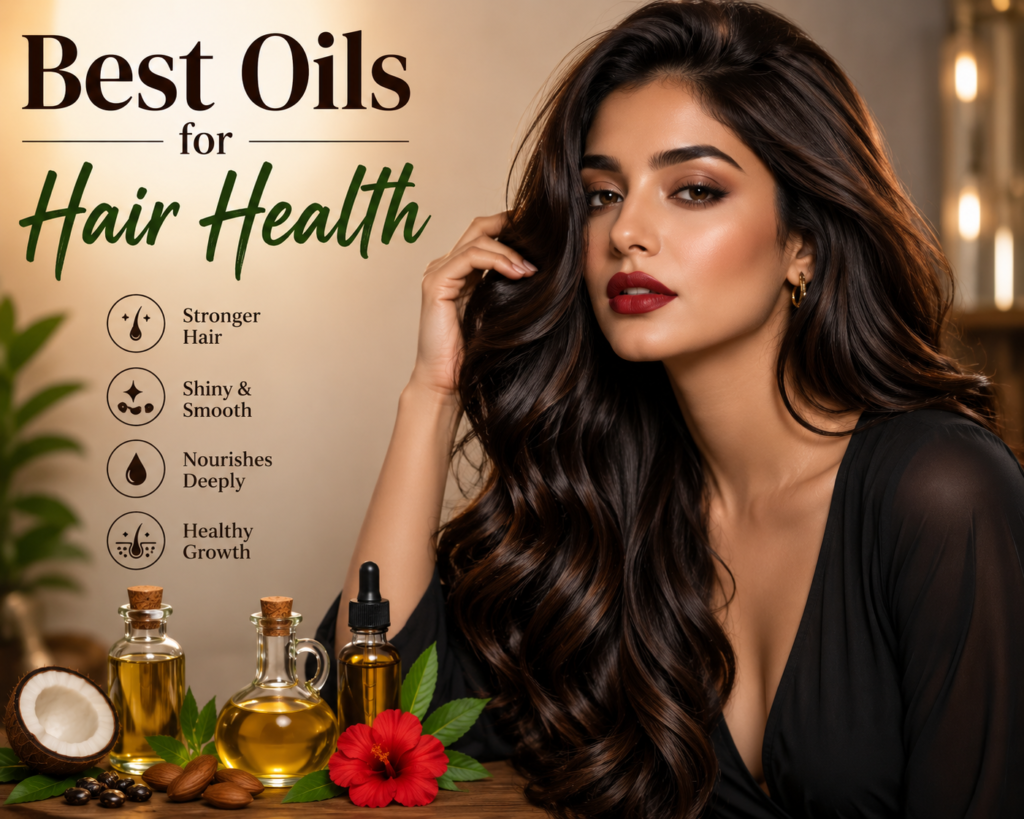
I used to think hair oils were mostly marketing, pretty bottles, strong promises, and little real results. I tried a few, used them twice, and forgot about them.
But when my hair started thinning slightly, I began researching the best oils for hair health instead of following trends. After reading studies and talking to dermatologists, I realized the problem wasn’t hair oils themselves, it was using the wrong oil, the wrong method, and expecting overnight results.
This guide covers the best oils for hair health that actually have evidence behind them, what they do, and how to use them properly without wasting time or money
First, Let Me Clear Something Up
Not all hair oils do the same thing.
Some oils actually penetrate inside the hair shaft and reduce the damage that happens when you wash or brush your hair. Others just sit on the outside and form a protective layer. Some work on your scalp to stimulate growth. Others are basically just moisturizers for the strand itself. A few do both.
The reason most people don’t get results from hair oils is simple: they pick a random oil, slap it on, and expect magic. But using a heavy oil on fine hair is like wearing a winter coat in July. It might be a great coat. Completely wrong situation.
So before we get into which oils to use, here’s the one question you need to answer: What is my actual problem?
- Is my hair thinning or falling out more than usual?
- Is my scalp dry, itchy, or flaky?
- Is my hair breaking, feeling rough, or looking dull?
- Am I dealing with frizz, lack of moisture, or damaged ends?
Your answer changes everything. Keep it in mind as you read.
Quick Reference:
| Your Biggest Problem | Oil to Reach For | Why |
| Thinning or hair loss | Rosemary oil | Clinically shown to match minoxidil results at 6 months |
| Dry or heat-damaged hair | Argan oil | Repairs the cuticle without feeling heavy |
| Wanting thicker, denser hair | Castor oil | Stimulates follicles, great for edges too |
| Breakage and rough texture | Coconut oil (pre-wash) | The only plant oil that truly gets inside the hair shaft |
| Oily or sensitive scalp | Jojoba oil | Mimics your scalp’s natural oil — balances, doesn’t overload |
| Severe dryness and breakage | Avocado oil | Heavy, rich, perfect for coarse and coily hair types |
| Dandruff or itchy scalp | Tea tree oil (diluted) | Fights the fungus that causes most dandruff |
| Slow circulation, sluggish growth | Peppermint oil (diluted) | Opens up blood flow to the scalp — you’ll feel the difference |
The 9 Best Oils for Hair Health — Ranked and Explained
1. Rosemary Oil — Start Here If Your Hair Is Thinning
If you’ve been down the rabbit hole of hair loss research, you’ve probably seen rosemary oil mentioned. And for once, the hype is actually backed by data.
A 2015 clinical trial compared rosemary oil to 2% minoxidil, the gold standard topical treatment for hair loss over six months. The results? Both groups had similar hair count improvements by the end of the study. The rosemary group also had less scalp itching as a side effect. That’s a pretty significant finding for something you can buy at a health food store for ten dollars.
The reason it works comes down to blood circulation. Rosemary contains compounds that improve blood flow to the scalp, which means your follicles get more oxygen and nutrients. Think of it like watering a plant at the root instead of spraying the leaves. There’s also evidence it has mild DHT-blocking properties DHT being the hormone that shrinks hair follicles over time in pattern hair loss.
Now, here’s the important part most people miss: rosemary essential oil needs to be diluted. It’s not a carrier oil. Using it straight on your scalp will irritate or even burn the skin. Mix 4 to 5 drops into a tablespoon of jojoba or coconut oil, massage it into your scalp, leave it for at least 30 minutes (or overnight), and wash out. Do this three times a week.
The other thing people miss? You need to give it time. Three months minimum. Six months for a fair assessment. Hair grows slowly, and nothing, not even minoxidil shows dramatic results in two weeks. If you stop after a month because you “didn’t see anything,” you quit right when things were about to change.
2. Castor Oil — The Thickening Oil That Actually Delivers
Castor oil is thick, slightly yellow, and smells earthy. It’s also one of the most popular hair oils in the world for a reason.
About 90% of castor oil is made up of something called ricinoleic acid, a fatty acid that’s rare in nature and has been shown to stimulate prostaglandin receptors in the scalp. Those receptors are involved in the hair growth cycle. Beyond that, castor oil is intensely moisturizing. It forms a seal around the hair strand that keeps moisture locked in, and it has natural antifungal and antibacterial properties that keep the scalp environment healthy.
Most people who use castor oil consistently notice their hair feels thicker and fuller within a couple of months. It’s particularly effective for edges and hairline areas that often thin first and respond well to this kind of targeted scalp treatment.
The downside: it’s heavy. Really heavy. If you have fine, straight hair and you apply castor oil like you would argan oil, you’ll end up with a greasy, flat mess. The trick is to always mix it with a lighter oil, one part castor oil to two or three parts jojoba or argan. Apply it only to the scalp, not the lengths, and wash it out after an hour or two (or the next morning if you leave it overnight).
For coily and curly hair types, you can be more generous. Your hair texture can actually absorb and benefit from the richness in a way that finer hair can’t.
3. Argan Oil — The One Everyone Should Own
Argan oil is probably the most versatile hair oil on this list. It’s the one I’d recommend to someone who said “I just want my hair to look and feel healthier and I don’t want to think too hard about it.”
It comes from the kernels of argan trees in Morocco, and it’s been used there for centuries both for cooking and for hair and skin. The fatty acid profile is impressive: high in oleic acid, linoleic acid, and vitamin E, which together repair the hair cuticle (the outer protective layer of each strand), reduce frizz, add shine, and protect against oxidative damage from sun and pollution.
What makes argan oil different from heavier oils is how it feels or rather, how it doesn’t feel. It absorbs relatively quickly, doesn’t leave a greasy film, and works on pretty much every hair type without issue. Fine hair can use it. Curly hair can use it. Color-treated hair can use it. It also provides some protection against heat damage, which is why it shows up in so many heat protectant sprays.
Two ways to use it: as a pre-wash treatment (apply a tablespoon through damp hair, leave 30 to 60 minutes, shampoo out) for deep conditioning, or as a finishing oil on dry hair for shine and frizz control. For the latter, less is more than two or three drops rubbed between the palms, smoothed over the outside of the hair. Start with one drop if your hair is on the finer side.
4. Coconut Oil — Great, But Only If You Use It Right
Coconut oil has been both overhyped and unfairly dismissed. The truth is somewhere in the middle.
Here’s what makes it genuinely special: it’s one of the only plant-based oils that can actually penetrate inside the hair shaft rather than just coat the outside. Its molecular structure is small enough and shaped right to slip through the cuticle and bind to the hair’s protein (keratin) inside. Research has shown this reduces the protein loss that happens every time you wash, comb, or manipulate your hair in some studies by up to 39%.
That’s a meaningful number. Protein loss is a big part of why hair becomes weak, breaks easily, and loses its elasticity over time. Using coconut oil as a pre-wash treatment is one of the most underrated things you can do for your hair.
But here’s where people go wrong: they use coconut oil as a leave-in, or they apply it too often, or they use it on hair types that don’t respond well to it. If you have low-porosity hair (hair that repels moisture, usually straight and fine), coconut oil can cause protein overload over time, leaving hair feeling stiff and brittle. If you have an acne-prone scalp, the high lauric acid content can clog follicles and cause breakouts.
Use it as a pre-wash treatment applied to dry hair 30 to 60 minutes before shampooing. Do it once or twice a week. Let it do its job inside the shaft, then wash it out completely. Don’t use it as a daily leave-in and don’t apply it directly to your scalp if you’re breakout-prone.
5. Jojoba Oil — The One Your Scalp Actually Wants
Jojoba is technically a wax, not an oil and that’s exactly why it’s so good for the scalp.
Its molecular structure is almost identical to the sebum your scalp already produces naturally. This means when you apply it, your scalp doesn’t freak out and overproduce oil (like it does with many heavier oils) it actually helps regulate production. If your scalp swings between dry and oily, or if you feel like you need to wash your hair every day because it gets greasy too fast, jojoba can genuinely help rebalance things over time.
It’s also completely non-comedogenic, meaning it won’t clog your follicles. It absorbs quickly, has almost no scent, and doesn’t go rancid as quickly as many other oils. For these reasons, it’s also the best carrier oil for diluting essential oils like rosemary and peppermint.
For sensitive scalps, especially people who react to most products, who get scalp bumps or irritation easily, jojoba is often the only oil that can be used without any issues. It’s gentle enough to apply daily if needed.
Use it directly on the scalp, massage it in, and leave it. It doesn’t need to be washed out (though you can). A few drops on the ends as a light leave-in moisturizer works great too.
6. Avocado Oil — For When Your Hair Is Seriously Thirsty
If your hair is extremely dry, heavily damaged, or just refuses to hold moisture no matter what you do, avocado oil might be what’s been missing.
It’s one of the richest carrier oils in terms of nutrient content high in oleic acid, plus vitamins A, D, E, and biotin. The oleic acid is particularly important because it helps the oil penetrate deeper into the hair shaft rather than just sitting on the surface. This makes it more effective for actual moisture restoration rather than just creating the temporary sensation of softness.
The biotin content is worth noting too. While oral biotin supplements get most of the attention for hair strength, topical application of biotin-containing oils does appear to support the structural integrity of the strand over time particularly for hair that’s been chemically treated, heat damaged, or just chronically dry.
Avocado oil is heavy, so it’s best suited to thicker, coarser, or coily hair types that need serious moisture. As a deep conditioning mask applied generously to damp hair, covered with a shower cap, left for 30 to 45 minutes before rinsing it works really well. For fine hair, use it sparingly and only on the ends, not the scalp.
7. Peppermint Oil — The Tingling One That Actually Does Something
The tingle you feel when you apply diluted peppermint oil to your scalp isn’t just a sensation. It means something is actually happening.
Menthol, the active compound in peppermint, is a vasodilator. It expands blood vessels temporarily, increasing blood flow to the area. A 2014 study (in animal models) found that peppermint oil outperformed minoxidil, saline, and jojoba oil in increasing follicle depth and proliferation rate. Animal studies don’t directly translate to humans, but the mechanism is sound and the anecdotal evidence from people who use it consistently is strong.
More practically: if your scalp feels congested, tight, or just stagnant like nothing is happening up there, peppermint can be a good wake-up call. Paired with rosemary oil in the same scalp treatment, you get two complementary approaches to stimulating the follicle environment: one through circulation (peppermint) and one through a combination of circulation and possible DHT inhibition (rosemary).
Always dilute it. Undiluted peppermint oil on the scalp can cause real irritation and even chemical burns. Three to five drops per tablespoon of carrier oil is the right ratio. Patch test first if you have reactive skin.
8. Sweet Almond Oil — The Quiet Achiever
Sweet almond oil doesn’t have the same dramatic reputation as rosemary or castor oil, but it’s been used in traditional hair care across South Asia and the Middle East for a very long time and there are good reasons for that.
It’s lightweight, absorbs well, and contains magnesium, zinc, and vitamins E and D. Zinc in particular gets overlooked in hair care conversations, but zinc deficiency is one of the more common hidden causes of hair shedding especially in women. While topical zinc isn’t as well-absorbed as supplemental zinc, oils that contain it naturally still provide some benefit to the scalp environment.
What makes sweet almond oil genuinely useful is how versatile and easygoing it is. It works as a carrier for essential oils, as a light pre-wash treatment, as a scalp moisturizer, and as an everyday oil for the ends without ever feeling like too much. If you want something low-maintenance that you can reach for without overthinking it, sweet almond oil is that.
9. Tea Tree Oil — The Scalp Problem Solver
Tea tree oil doesn’t directly make your hair grow. What it does is remove the obstacle that’s preventing growth.
If you have persistent dandruff, an itchy scalp, excess oil production, or scalp acne all of these create an environment that’s hostile to healthy follicles. The primary cause of most dandruff is a yeast called Malassezia, and tea tree oil has documented antifungal activity against it. A clinical trial published in the Journal of the American Academy of Dermatology found that 5% tea tree oil shampoo reduced dandruff severity by a meaningful amount after four weeks compared to placebo.
Clearing up your scalp environment is often the first step in getting hair to grow better. It’s hard to grow a garden in contaminated soil.
Use it diluted five drops in a tablespoon of jojoba or sweet almond oil massaged into the scalp and left for 15 to 20 minutes before washing. Or add drops to your regular shampoo. Start slowly with sensitive skin and watch how your scalp responds. This is not an oil you leave on overnight.
How to Actually Apply Hair Oil
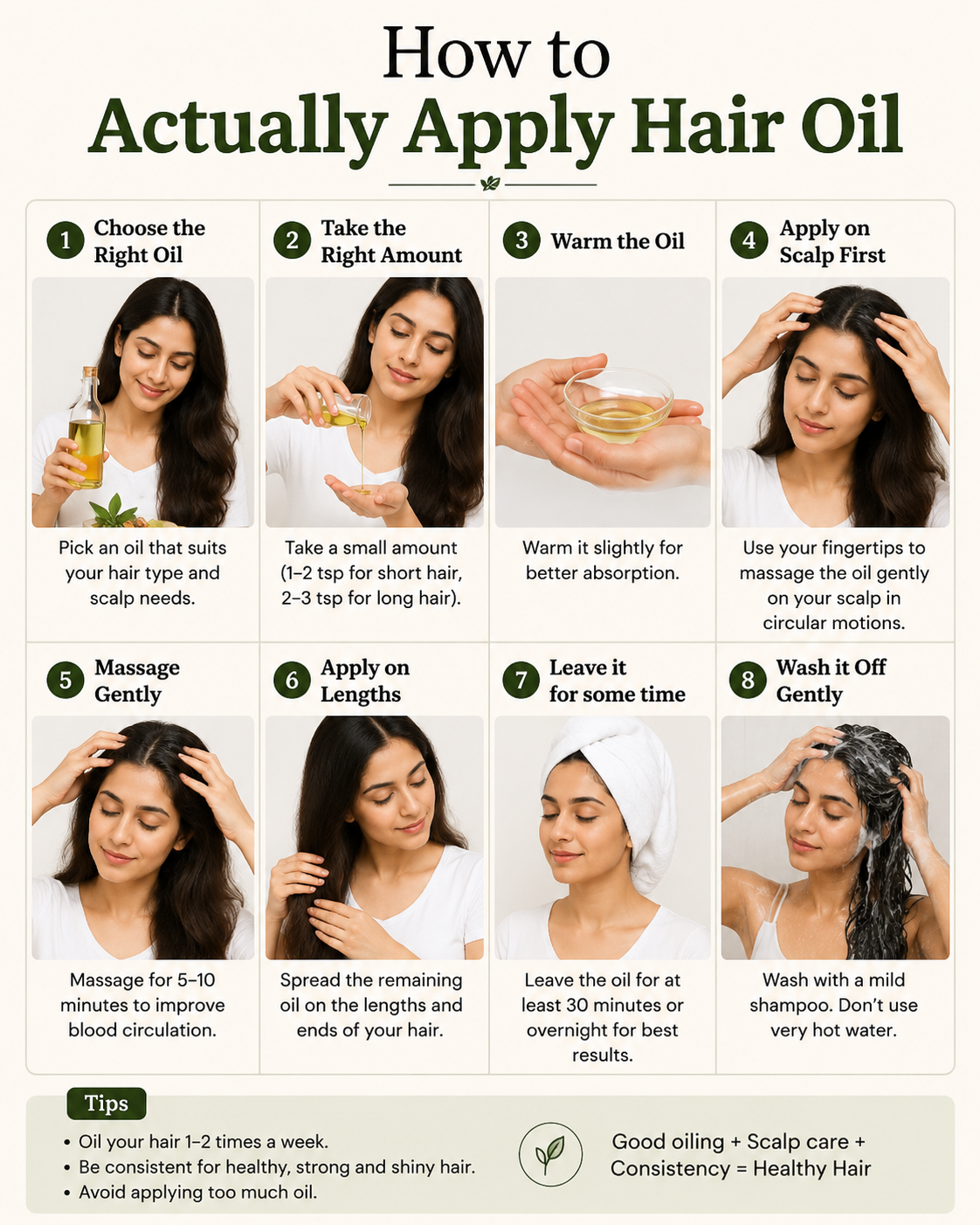
The application method matters almost as much as which oil you choose.
Pre-wash is king. Apply oil to your hair 30 to 60 minutes before you shampoo or the night before. This is where the research is strongest. It protects your hair from the swelling damage that happens when water enters the shaft (hydraulic fatigue), cushions against friction during washing, and lets active ingredients work before the shampoo strips them away. For growth oils like rosemary, this also means more time on the scalp without being immediately washed off.
Massage it properly. Not just a quick rub actual scalp massage with your fingertips (not nails) using small circular motions for four to five minutes. There’s a 2016 study that found standardized scalp massage alone increased hair thickness over 24 weeks. The massage increases blood flow to follicles and helps the oil absorb. Combined with the right oil, this is genuinely one of the most effective things you can do.
Don’t overdo it. This one matters. More oil does not mean more results. Too much oil on the scalp leads to buildup, clogged follicles, and can actually worsen shedding. Start with less than you think you need. If your hair looks greasy and flat after washing, you used too much or didn’t rinse thoroughly enough.
For leave-in finishing oils (argan, jojoba), one to three drops is usually enough depending on your hair length and texture. Rub between palms until there’s almost nothing left, then smooth over the outside of your hair. You want barely there just enough for shine without heaviness.
Coconut Oil vs. Jojoba Oil
This comes up constantly so let’s settle it.
For the scalp specifically, jojoba wins for most people. It mimics sebum, regulates oil production, doesn’t clog follicles, and suits all scalp types including oily and sensitive. Coconut oil on the scalp can cause issues for some people particularly those with acne-prone skin, as its high lauric acid content can block follicles and cause breakouts.
For the hair strands (mid-lengths and ends), coconut oil is the stronger performer due to its penetrating ability and protein-protection properties. Jojoba is more of a surface-level conditioner for the strand.
The best approach if you want both? Use jojoba on the scalp, coconut oil from mid-lengths to ends as a pre-wash treatment. Two different applications for two different purposes.
Hair Type Guide :
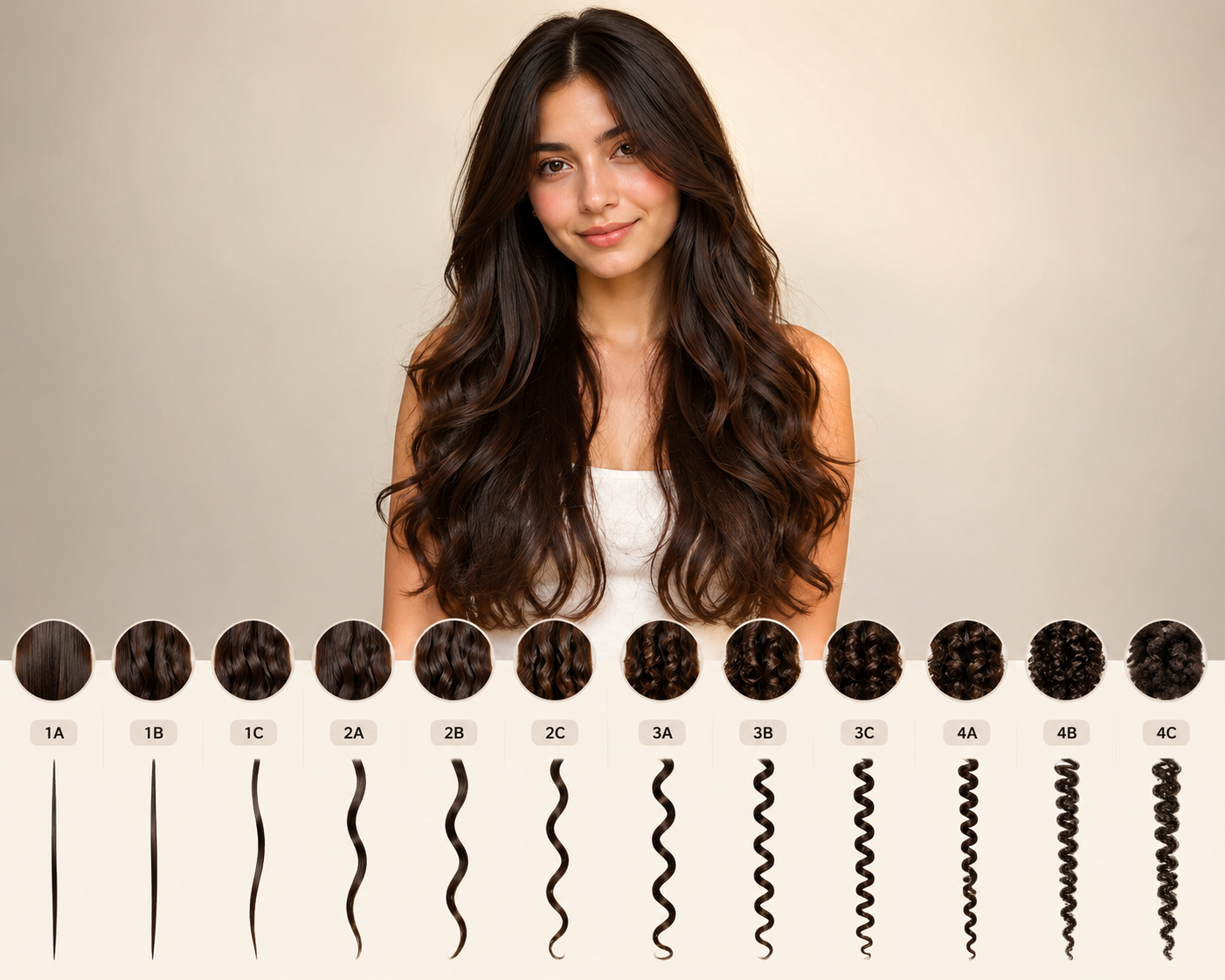
Fine and straight hair: Stick to lightweight oils. Jojoba, argan (tiny amounts), and sweet almonds are your friends. Castor oil, avocado oil, and coconut oil as a leave-in will flatten your hair and make it look unwashed. If you want to try coconut oil, use it strictly as a pre-wash and rinse it out completely.
Wavy hair: You have more flexibility. Argan works beautifully for frizz control and shine. Jojoba or rosemary mixed in jojoba for scalp health. Coconut oil as an occasional pre-wash treatment is a fine watch for any buildup over time.
Curly hair (2C to 3C): Your hair needs more moisture than straight hair because the curl pattern makes it harder for natural scalp oils to travel down the shaft. Argan, coconut (pre-wash), and avocado all work well. Castor oil diluted in argan or jojoba is great for the scalp and edges.
Coily hair (4A to 4C): You need the richest oils. Castor, avocado, coconut, and sweet almond are your staples. Layer them with lighter oil first to open the cuticle (jojoba or sweet almond), heavier oil to seal (castor or avocado). This is called the LOC or LCO method and it works.
Color-treated hair: Argan and jojoba are safe and effective. Avoid using coconut oil as a leave-in some evidence suggests it can lift color pigment over time. Marula oil (if you can find a good quality one) is also excellent, very lightweight and heat-protective.
Sensitive or reactive scalp: Jojoba first and foremost. Sweet almond as a second option. Add essential oils only after you know your scalp can handle them, always patch test first. Stay away from castor oil directly on the scalp if you’re breakout-prone.
What to Look for When Buying Hair Oils
Whether you’re buying a pure single oil or a blended product, a few things are worth checking:
For carrier oils (argan, jojoba, castor, coconut, avocado, sweet almond): look for “cold-pressed,” “unrefined,” and “hexane-free” on the label. Refined oils are often stripped of the beneficial compounds through heating. Hexane is a chemical solvent used in extraction that you genuinely don’t want on your scalp.
For essential oils (rosemary, peppermint, tea tree): buy from a brand that publishes GC/MS testing results. This is a lab test that verifies purity and composition. Without it, you’re potentially buying diluted or adulterated oil. The label should also list the Latin botanical name (Rosmarinus officinalis, Mentha piperita, Melaleuca alternifolia).
For blended scalp serums and growth products: look for rosemary extract near the top of the ingredient list, not buried near the bottom where concentrations are essentially meaningless. Caffeine is a legitimately useful addition — it’s been shown to counteract DHT’s effects on hair follicles when applied topically. Biotin, vitamin E (tocopherol), and zinc are also worth looking for.
Frequently Asked Questions
Which oil is the healthiest for hair?
Depends what you mean by healthy. For overall scalp and growth health, rosemary oil in a jojoba carrier is the strongest evidence-based choice. For conditioning and protecting existing strands, argan oil is the most universally effective. There isn’t one oil that does everything perfectly but if you had to pick just one to start with, rosemary oil is the one with the most meaningful research behind it for most people’s biggest concern (thinning).
What are the best oils for hair growth and thickness?
Rosemary oil for growth (stimulates follicles, evidence-backed). Castor oil for thickness (dense, follicle-stimulating, great for edges). Used together a few drops of rosemary essential oil mixed into castor oil and jojoba you get a treatment that covers both. Use it three times a week with scalp massage and give it four to six months.
Which hair oils have the highest ratings for improving hair health?
In consistent user surveys and dermatologist recommendations, rosemary oil, argan oil, and castor oil appear most frequently as top performers. Jojoba gets consistent praise for scalp health specifically. On Reddit’s hair care communities (which tend to be brutally honest about what actually works versus what’s marketing), castor oil, rosemary oil, and argan oil are among the most-recommended with the most before-and-after documentation.
Can you recommend hair oils safe for sensitive scalps?
Yes. Jojoba oil is the safest starting point, non-comedogenic, non-irritating, and closest in structure to your own sebum. Sweet almond oil is a good second option. Both can be used on their own without any essential oil additions to start. Introduce rosemary or peppermint only after you’ve confirmed your scalp tolerates the carrier oil without issue. Always patch test: apply a small amount behind the ear or on the inner arm, wait 24 hours, check for any reaction.
What to do for GLP-1 hair loss?
Hair loss linked to GLP-1 medications like semaglutide or tirzepatide is almost always telogen effluvium shedding triggered by rapid weight loss and calorie restriction, not the drug itself damaging your follicles. Your body sees a significant calorie deficit as a stress event and temporarily shifts hair follicles into the resting phase. Most of the time, this resolves on its own as your weight stabilizes.
The practical things that help: make sure you’re eating enough protein (many people on GLP-1s significantly undereat protein, which directly worsens shedding aim for at least 100 to 120 grams per day), supplement iron and ferritin if they’re low (get bloodwork done low ferritin is extremely common and massively underdiagnosed as a hair loss cause), and use scalp oils like rosemary and jojoba to maintain circulation and scalp health during the shedding phase. Talk to your prescribing doctor if the loss is severe or prolonged.
What supplements are good for Hashimoto’s hair loss?
The most important thing with Hashimoto’s-related hair loss is getting your thyroid levels properly managed TSH, Free T3, and Free T4 all optimized. Hair loss that comes from thyroid dysfunction won’t be meaningfully fixed by oils or supplements alone. That said, some supplements genuinely help as support: selenium is critical because Hashimoto’s patients are frequently deficient and selenium is essential for thyroid hormone conversion. Iron (specifically ferritin many women with Hashimoto’s have chronically low ferritin) is a major driver of hair shedding and often gets missed on basic bloodwork. Vitamin D and zinc round out the main ones. Work with your endocrinologist and get proper labs before supplementing, especially with selenium where too much is harmful.
Will HRT make my hair grow?
It can, yes particularly for women going through perimenopause or menopause. The drop in estrogen during this period accelerates the hair follicle miniaturization that leads to thinning, and estrogen-based HRT can slow or partially reverse that by extending the hair’s growth phase.
That said, it’s not straightforward. The progestogen component of combined HRT matters a lot. Some progestogens are androgenic (meaning they behave more like testosterone) and can actually accelerate hair loss rather than help it. Bioidentical progesterone is generally considered more hair-friendly than synthetic progestogens. This is something to discuss specifically with your gynecologist or a menopause specialist who understands the hair angle. Scalp oils can complement what HRT does, but they’re not going to substitute for addressing the hormonal shift at the root.
Where can I buy pure argan oil for hair?
Look for it at health food stores like Whole Foods or Sprouts, on Amazon from brands like Sky Organics or Pura d’Or, or directly from specialty beauty retailers. The key things to check: cold-pressed, 100% pure argan oil, dark glass bottle (light degrades the oil), and ideally an origin statement from Morocco. Avoid anything that lists “fragrance” pure argan oil doesn’t need added fragrance, and that addition usually means the oil is diluted or synthetic.
Which essential oil is best for hair growth and thickness?
Rosemary is the clear front-runner based on clinical evidence; it’s the only essential oil with a head-to-head clinical trial against a pharmaceutical hair loss treatment. Peppermint is a strong second for circulation and creating an optimal scalp environment. Lavender has some supporting evidence and is gentler, making it a good option for people who find rosemary or peppermint irritating. Combining rosemary and peppermint in a jojoba carrier used consistently with scalp massage is probably the best essential oil protocol available without a prescription.
The Bottom Line
In the end, you don’t need dozens of products to achieve healthier hair. Choosing the best oils for hair health comes down to understanding your hair concern and using the right oil consistently. Whether it’s rosemary oil for thinning hair, argan oil for dryness and damage, or castor oil for added thickness and density, the right approach matters more than having a complicated routine. Stay patient, apply oils the correct way, and give your hair enough time to show real results.