
Table of Contents
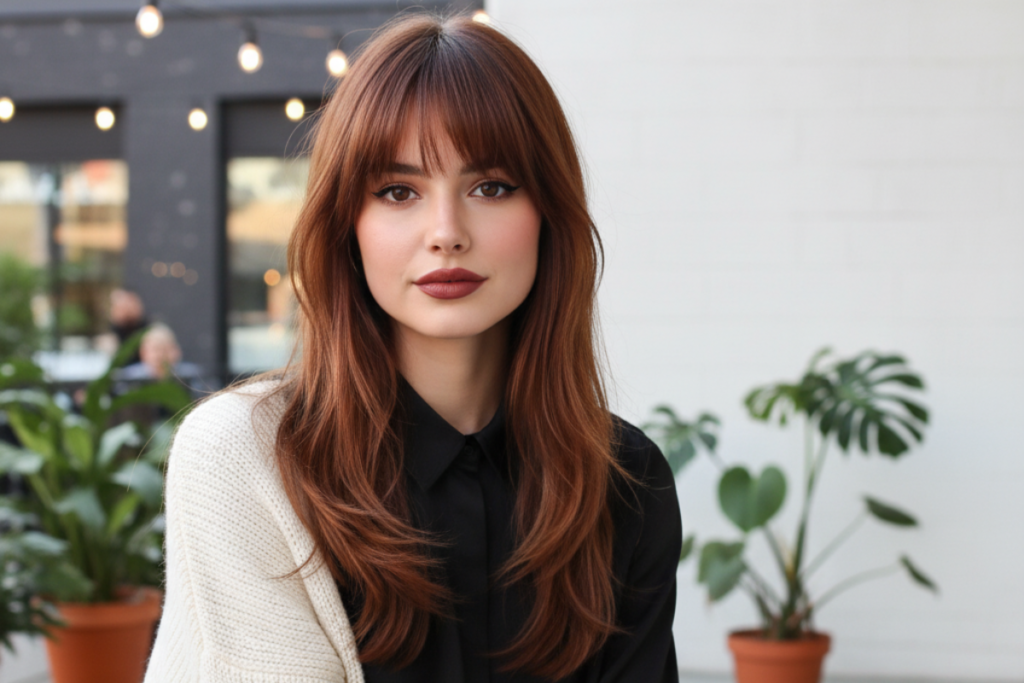
Curtain bangs, also called a curtain fringe, window bangs, or face-framing bangs, are a center-parted fringe cut shorter in the middle and gradually longer toward the sides, blending seamlessly into the rest of the hair. The two sides fall softly on either side of the face like a curtain drawn open, which is exactly where the name comes from.
Unlike blunt bangs that create a harsh horizontal line across the forehead, curtain bangs are feathered, wispy, and layered at the edges. They frame the eyes and cheekbones rather than covering the forehead, and they feel like part of the haircut , not an addition to it.
Key characteristics of curtain bangs:
- Center or slightly off-center part
- Shorter at the center crown, gradually longer toward the sides
- Feathered or point-cut edges (never blunt)
- Length ranges from brow-level to cheekbone or below
- Designed to blend into layers, not sit as a separate section
The style traces its roots to the 1960s and 70s, Brigitte Bardot, Farrah Fawcett, and Goldie Hawn all wore versions of this fringe. In 2026, expert stylists are calling the current evolution the “lived-in fringe,” softer, lighter, and more blended than any previous iteration.
Also known as: Curtain fringe, window bangs, Bardot bangs, face-framing fringe, gringe (UK)
Why Are Curtain Bangs So Popular in 2026? {#why-trending}
Curtain bangs are not just trending; they are consistently the most requested salon cut worldwide, and there are clear reasons why they stay that way.
They suit nearly every face shape. The cut can be adjusted in length, density, and width to flatter oval, round, square, heart, oblong, and diamond faces. There is no single version, there is a version for every face.
They are lower maintenance than blunt bangs. Blunt bangs need trimming every 3–4 weeks and look obviously grown-out between visits. Curtain bangs grow out gracefully, transitioning naturally into face-framing layers, with no painful, awkward stage.
They work across all hair types. Straight, wavy, curly, or coily, the styling approach changes, but the flattering face-framing effect remains.
They are gender-neutral. Men’s curtain bangs are now one of the most searched hairstyle terms globally, driven by Timothée Chalamet, Harry Styles, K-pop influence, and the broader trend toward longer, textured men’s hair.
They work on every hair length. Short bobs, medium lobs, long layered hair curtain bangs add intentionality and definition to every length category.
As senior stylist Lisa Satorn of Nine Zero One Salon has noted, curtain bangs are “the least intimidating of the fringe family” and that accessibility is exactly what keeps them at the top of salon request lists year after year.
Types of Curtain Bangs
“Curtain bangs” is not one single look. There are several distinct variations, each with a different aesthetic, suitability for different features, and a different maintenance level. Knowing which type suits you is the foundation of getting them right.
1. Classic Soft Curtain Bangs
The most universally flattering version. Long, wispy, center-parted, with feathered ends sweeping gently to each side. Length typically reaches the cheekbones. This is what most people picture when they search for curtain bangs, and it is the safest starting point for first-timers.
Best for: Oval, heart, and square faces. All hair types.
Trim cycle: Every 5–6 weeks.
2. Short / Brow-Length Curtain Bangs
These sit at or just below the eyebrow, bolder, more defined, and with a slightly vintage, French-cinema quality. They draw immediate attention to the eyes and give a stronger style statement than the longer version.
Best for: Oblong, oval, and rectangular faces.
Trim cycle: Every 3–4 weeks (grows into the eyes faster).
3. Wispy / Micro Curtain Bangs
Ultra-light, thin, almost transparent. Very few hairs, heavily point-cut edges. This is the “barely there” version, delicate and subtle, giving face-framing without committing to a full fringe. Perfect for first-time bang wearers or anyone who wants minimal commitment.
Best for: Fine hair, nervous first-timers, minimal commitment preference.
Trim cycle: Every 6–8 weeks.
4. Heavy / Thick Curtain Bangs
More density in the bang section, bolder, more dramatic, and more structured. Think Alexa Demie’s dark, defined curtain bangs in Euphoria. This version requires thick hair to pull off properly.
Best for: Thick hair, strong features, oval or heart-shaped faces.
Trim cycle: Every 4 weeks heavy bangs lose shape faster.
5. Blunt Curtain Bangs
The edges are cut straight across rather than feathered. More graphic, more editorial, and more structured. Works beautifully on straight hair where clean lines read clearly. A strong, fashion-forward version.
Best for: Straight hair, geometric or editorial aesthetics, angular features.
Trim cycle: Every 3–4 weeks.
6. Curtain Bangs with a Side-Part Lean
Instead of a perfectly centered part, these lean slightly to one side, a relaxed, asymmetrical version that feels effortless. Great for people who naturally part their hair to the side and don’t want to fully commit to a center part.
Best for: Any face shape. Easy transition from side-swept bangs.
Trim cycle: Every 5–6 weeks.
7. Bottleneck Bangs, The 2026 Evolution
The freshest variation is dominating 2026. Shorter at the very center (around bridge-of-nose level) and gradually longer toward the edges, creating a shape that mimics a bottle’s neck. They frame the eyes tightly while still blending into the hair. More defined than classic curtain bangs, more wearable than blunt bangs.
Best for: Oval, heart, and oblong faces. Especially beautiful with layered cuts.
Trim cycle: Every 4–5 weeks.
Curtain Bangs for Every Face Shape
The most important factor in getting curtain bangs right is customizing the cut for your face shape. Here is the complete breakdown including exactly what to tell your stylist.
How to Identify Your Face Shape
Pull all hair back and look straight into a mirror or take a front-facing photo. Look for these features:
| What you see | Likely face shape |
| Forehead wider than jaw, pointed chin | Heart or inverted triangle |
| Equal width and height, soft curves | Round |
| Balanced proportions, slightly longer than wide | Oval |
| Face is noticeably longer than it is wide | Oblong or rectangular |
| Strong, square jawline, broad forehead | Square |
| Narrow forehead and chin, widest at cheekbones | Diamond |
Oval Face
The most accommodating face shape for curtain bangs, almost every type works well.
Best type: Classic soft or wispy curtain bangs. Medium length (brow to cheekbone).
Key tip: Keep them light and wispy to avoid visually shortening the face.
Tell your stylist: “Soft, center-parted curtain bangs at cheekbone level, point-cut edges.”
Round Face
Round faces have equal width and height with full, soft curves. The goal is to create visual length and add definition.
Best type: Long curtain bangs, cheekbone level or below. Avoid short, wide bangs.
Key tip: A slightly off-center part adds asymmetry that counters the roundness better than a perfect center part.
Tell your stylist: “Long, wispy curtain bangs, slightly off-center part, reaching my cheekbones or lower.”
Square Face
Strong jawline, wide forehead, angular features. Curtain bangs are an excellent choic, they soften exactly what needs softening.
Best type: Soft, feathered curtain bangs with a slight wave or texture. Avoid blunt versions.
Key tip: The softer the edge, the better. A slight natural wave in the bang breaks up angular structure far more effectively than pin-straight curtain bangs.
Tell your stylist: “Soft, textured curtain bangs with a feathered, point-cut edge, natural and wispy, not structured.”
Heart Face
Wider at the forehead, narrowing to the chin. Curtain bangs are made for this face shape they add visual width at the lower face while keeping the upper face light.
Best type: Wide-sweeping curtain bangs that fall toward the cheekbones. Medium to long length.
Key tip: The wider the sweep outward, the more it draws the eye down and out balancing a pointed chin beautifully.
Tell your stylist: “Wide-sweeping curtain bangs, medium to long, falling toward my cheekbones.”
Oblong / Rectangular Face
Longer faces benefit from horizontal emphasis. A fuller curtain bang creates visual width at the forehead.
Best type: Shorter, fuller curtain bangs at or just below brow level. Avoid extra-long bangs that extend the face visually.
Key tip: More density works better than ultra-wispy for this face shape.
Tell your stylist: “Fuller curtain bangs, brow-length, with some volume, to add width across my forehead.”
Diamond Face
Narrow forehead and chin, widest at the cheekbones. Curtain bangs fill out and widen the forehead visually.
Best type: Softer, wider curtain bangs, medium length, with slightly flicked ends.
Key tip: Avoid ultra-wispy; you need enough density to visually widen the forehead area.
Tell your stylist: “Medium-length curtain bangs with enough body to frame my forehead.”
Curtain Bangs Hairstyle, Female Guide

For women in 2026, curtain bangs remain the most requested salon fringe. The current direction leans into what stylists are calling the “French-girl meets clean-girl” aesthetic, softer, lighter, and more blended than ever before.
What Makes Women’s Curtain Bangs Distinct
Women’s curtain bangs tend to be longer, softer, and more romantic in styling compared to the men’s version. The priority is a face-framing effect that feels effortless and elegant. The most universally flattering female curtain bang length sits between the corner of the eye and the top of the cheekbone.
Best Combinations for Women
Curtain bangs + long layers: The gold standard. The bangs feel like a natural beginning to the layered structure rather than a separate element added on top.
Curtain bangs + shaggy lob: Shoulder-length shag with curtain bangs is the single most requested women’s cut in salons right now. The shaggy texture complements the wispy bang beautifully.
Curtain bangs + blunt bob: Edgy yet feminine. The contrast between the clean bob line and the soft curtain fringe creates a striking, modern look.
Curtain bangs + loose waves: The viral combination. Beach waves plus curtain bangs creates instant movement and dimension, the most effortlessly beautiful pairing.
Colour Tip for Women
Ask your colourist for face-framing highlights or babylights specifically around the bang area. Lighter, brighter pieces right around the curtain bang section make the whole look more dimensional and intentional, without requiring a full colour change. This is called “money pieces,” and it is one of the most requested combinations in 2026.
Fine Hair Solution
Keep the bang section thin (fewer hairs, not a thick dense section). Use a volumizing mousse at the bang roots before blow-drying with a round brush. The round brush at the root builds lift that lasts all day; the tool matters more than the product here.
Curtain Bangs Hairstyle, Male Guide
Men’s curtain bangs are now one of the most searched hairstyle terms globally. The center-parted, face-framing look has existed in men’s hair for decades, it just didn’t always have a name.
How Men’s Curtain Bangs Differ from Women’s
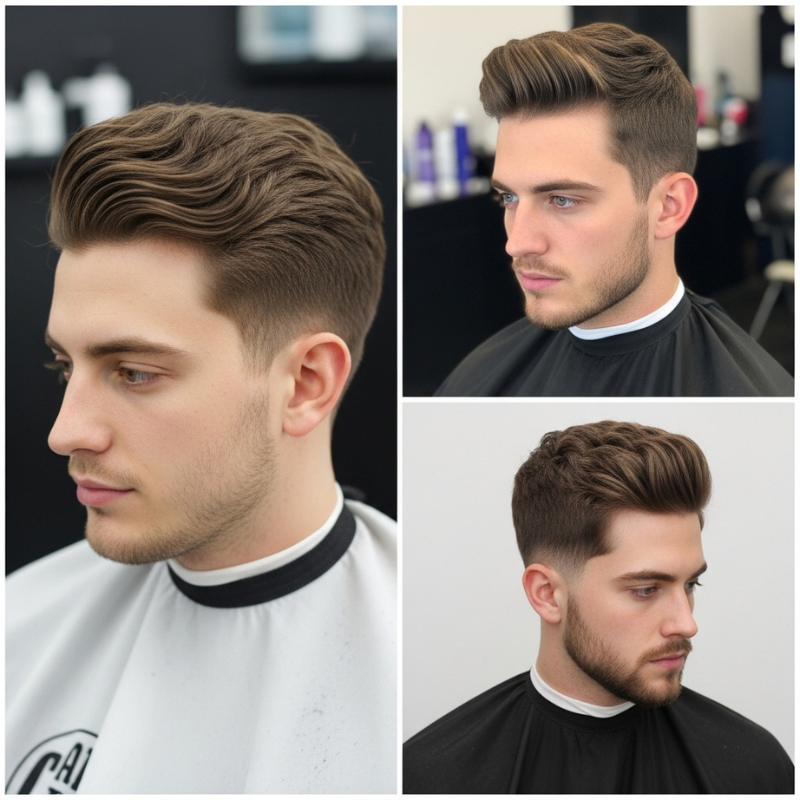
- Shorter overall, typically brow to top of cheekbone
- More textured, less polished, matte paste or sea salt spray, not a round-brush finish
- Naturally asymmetrical, not a perfect center part, but a lived-in part that falls into place
- Paired with texture and layers, not a sleek, uniform cut
Best Men’s Hairstyle Pairings
The Wolf Cut: Shaggy layers with curtain bangs. The most popular men’s pairing globally right now. Rock-and-roll energy, effortlessly cool.
The Shaggy Medium Cut: Chin to shoulder length. The Timothée Chalamet look. Works best on straight to slightly wavy hair.
The Modern Mullet: Curtain bangs at the front, length at the back. Bold and one of the fastest-growing men’s trends of 2026.
The Classic Long Center Part: Simply longer hair with natural face-framing pieces. Clean, versatile, works from casual to formal.
3-Minute Men’s Styling Method
- Towel-dry to 70%, do not start on soaking wet hair
- Work a small amount of matte texturizing paste through the bang section only
- Use a medium-barrel round brush and blow dryer to set a soft center part do not over-perfect
- Run fingers through to separate and add natural movement
- Optional: a light mist of sea salt spray for extra texture and hold
What to Tell Your Barber
“I want curtain bangs center-parted, face-framing pieces sitting between my brows and cheekbones. Keep it textured and natural, not polished. I want to style it with just my hands and texture product.”
Men’s Face Shape Guide
| Face Shape | Best Bang Length | Key Tip |
| Oval | Any length | Maximum freedom |
| Round | Keep longer | Add crown volume to elongate |
| Square | Medium, feathered | Soft texture to ease the angles |
| Oblong | Shorter, fuller | Reduce visual face length |
| Heart | Medium to long | Wider sweep for balance |
Curtain Bangs for Long Hair
Long hair and curtain bangs are one of the most naturally beautiful combinations in hairstyling. When hair reaches past the shoulders, curtain bangs solve a problem that long hair frequently has: it can lack facial focus and definition.
Curtain bangs create a visual anchor on long hair drawing attention to the eyes and cheekbones, giving the whole hairstyle purpose and intentionality without any drastic length cut.
Best Long Hair + Curtain Bang Combinations
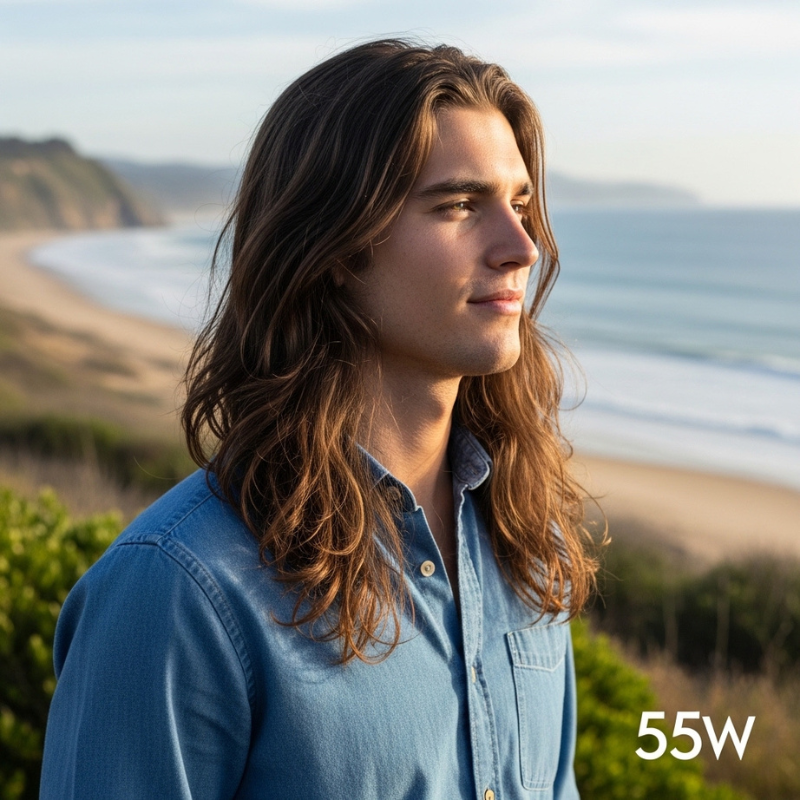
Long layers with curtain bangs: The definitive gold standard. Ask for long layers beginning at the collarbone, with curtain bangs added at the front. The bangs feel like the natural beginning of the layered structure.
Long straight hair with curtain bangs: Sleek, polished, editorial. The contrast between smooth, straight length and the soft, curved bang is visually striking. Very prominent in Korean beauty-inspired styling.
Long wavy hair with curtain bangs: The look that made curtain bangs go viral. Beach waves plus curtain bangs creates effortless, season-less beauty. This pairing has never left the trend cycle since it first went viral.
Long curly hair with curtain bangs: The most daring combination but stunning when done well. Requires a stylist experienced in cutting curly hair bangs. Curly hair shrinks 40–60% when dry, so the cut length must be adjusted significantly longer than the intended final length.
Styling Tip for Long Hair
Always blow-dry and style the curtain bangs first, before styling the rest of the length. This gives full attention to the bang shape while they’re freshest, then you work on the length separately without disturbing what you’ve already set.
Maintenance for Long Hair
Long hair is heavier, it pulls the curtain bangs downward faster than on shorter cuts. Trim every 4–5 weeks and ask your stylist to point-cut the ends lighter at each visit to maintain the wispy, feathered quality that stops heavy long hair from weighing the bang section down.
Curtain Bangs with Layers on Medium Hair
Medium hair (collarbone to shoulder length) with curtain bangs and layers is arguably the most flattering combination for most people and consistently the most requested salon look of 2025–2026.
Medium hair is the “sweet spot”: long enough to show off layers and movement, and short enough that it does not overwhelm the face. Curtain bangs add immediate face-framing. Layers add texture, volume, and shape. All three together form a complete, balanced, low-maintenance hairstyle.
How to Ask for This at the Salon
“I want a medium-length cut with curtain bangs and layers. Layers starting at the cheekbone level, getting progressively longer toward the ends. Curtain bangs, center-parted, wispy, long enough to tuck behind my ears when needed.
Layer Placement Is Everything
Layers that start too high (at the crown) look choppy and disconnected. Layers beginning at or below the cheekbone flow naturally and allow the curtain bangs to blend seamlessly into the layered structure. This is what separates a cut that looks “intentionally styled” from one that looks “uneven.”
Styling This Combination
This combination actually simplifies daily styling. Layers create movement automatically; your curtain bangs don’t need to carry the entire look alone. A quick rough-dry, round brush on the bangs only, and you’re done. Add a curl cream through the mid-lengths and diffuse for effortless waves on days when you want more texture.
Volume trick: Flip your head upside down while rough-drying. This builds root volume that holds as the hair cools. Then style the curtain bangs upright and let the layers fall naturally.
Curtain Haircut for Women with Straight Hair
Straight hair is where curtain bangs look the most polished and precise and where a bad cut is the hardest to hide. On straight hair, every detail shows clearly: length, edge, and parting position. A well-cut curtain bang on straight hair looks genuinely stunning. A poorly cut one is very obvious.
The Cutting Technique for Straight Hair
Always ask your stylist to use a point-cutting technique on the bang edges, not a blunt horizontal cut. Even for a fuller bang look, point-cutting prevents the solid, block-like appearance that looks harsh when there is no natural texture to soften the edge. Feathered, wispy ends are the goal even in a denser bang section.
Three Straight Hair + Curtain Bang Looks for Women
The Sleek Lob: Shoulder-length hair with a clean line and curtain bangs. Very French, very editorial, low-effort maintenance. Blow-dry smooth with a flat brush, style bangs with a round brush, and finish the length with a flat iron for glass-like shine. One of the most photographed hairstyles of 2026.
The Long Straight Curtain: Mid-back or longer hair, completely straight, with curtain bangs at brow or cheekbone level. Timeless and versatile. The length creates drama; the bangs provide the facial focus that prevents long straight hair from looking flat or unfinished.
The Straight Shag: A shag cut (choppy, short-to-medium layers throughout) on straight hair with curtain bangs. The layers create the illusion of movement and waves even in naturally straight hair. Style with volumizing mousse and rough-dry for an effortless, 70s-inspired result.
Essential Products for Straight Hair Curtain Bangs
- Heat protectant spray: Always, before any heat tool use
- Smoothing cream: Controls frizz, adds shine without weight
- Flexible-hold hairspray: Mist over the styled bangs while they are still warm from the dryer
- 1-inch curling wand or ceramic flat iron: Wand for the soft c-curve, flat iron for the ultra-sleek look
The Flat Bang Problem and the Fix That Actually Works
The most common complaint about curtain bangs on straight hair: they go flat by midday, especially on fine or oily hair.
The fix: after styling with the round brush, mist the bangs lightly with flexible-hold spray while they’re still warm. The heat locks the style into the hair structure as it cools. This sets the shape into the hair itself, not just on the surface, and extends hold by 4–6 hours compared to letting it cool unstyled in open air.
How to Style Curtain Bangs, Step by Step {#how-to-style}
What You Need
- Small to medium round brush (25–32mm barrel)
- Blow dryer with concentrator nozzle
- Lightweight hold cream or volumizing mousse
- Optional: 1-inch curling wand for finishing
The 5-Minute Method
Step 1: Start damp, not wet: Towel-dry after washing and wait until bangs are about 70% dry. Wet hair takes too long and leads to uneven drying.
Step 2: Apply product to the bang section only: a pea-sized amount of lightweight hold cream or mousse through the bang section. Heavy gels or thick serums will make the bangs look greasy and flat; keep it light.
Step 3: Rough-dry first: Use your fingers to move the bangs side to side across the face while blow-drying. This prevents them from setting in one direction early and builds natural root volume.
Step 4. The round brush technique: Split bangs at the center. Take one side, wrap gently around the round brush, and blow-dry while rolling the brush downward and slightly away from the face. Goal: a gentle C-curve, not curled under, not flipped out, just a soft, natural bend with volume at the root. Repeat on the other side.
Step 5. Separate and set: Run fingertips lightly through the styled bangs to separate individual strands. Curtain bangs should show individual pieces with movement not a solid block of hair.
Step 6. Optional polish: Wrap each side loosely around a 1-inch curling wand for 5 seconds and release. This gives the signature soft wave that elevates curtain bangs from “dried” to “actually styled.”
For Curly and Wavy Hair
Embrace the texture: Apply curl cream to damp bangs, scrunch lightly, air-dry. On 2B–3A curl types, this creates naturally beautiful curtain bang movement.
Smooth and style: Use a round brush + blow dryer on medium heat (not high). Finish with a flat iron on the lowest setting if needed.
For curly curtain bangs: a tiny amount of argan or jojoba oil smoothed over the surface eliminates frizz without adding weight or greasiness.
Best Products for Curtain Bangs {#best-products}
| Hair Type | Product Category | What to Look For |
| Fine hair | Volumizing mousse | Root-lifting, lightweight formula |
| Thick hair | Smoothing cream | Frizz control, medium hold |
| Curly hair | Curl cream + light oil | Moisture, definition, frizz control |
| Wavy hair | Texturizing spray | Enhances natural wave movement |
| Straight hair | Flexible-hold spray | Shape-setting, not crunchy |
| Men | Matte texturizing paste | Natural finish, no shine |
Universal essential: A high-quality small round brush (25–32mm barrel). This single tool produces more impact on curtain bang results than any product on the market.
Celebrity Curtain Bangs Inspiration 2026
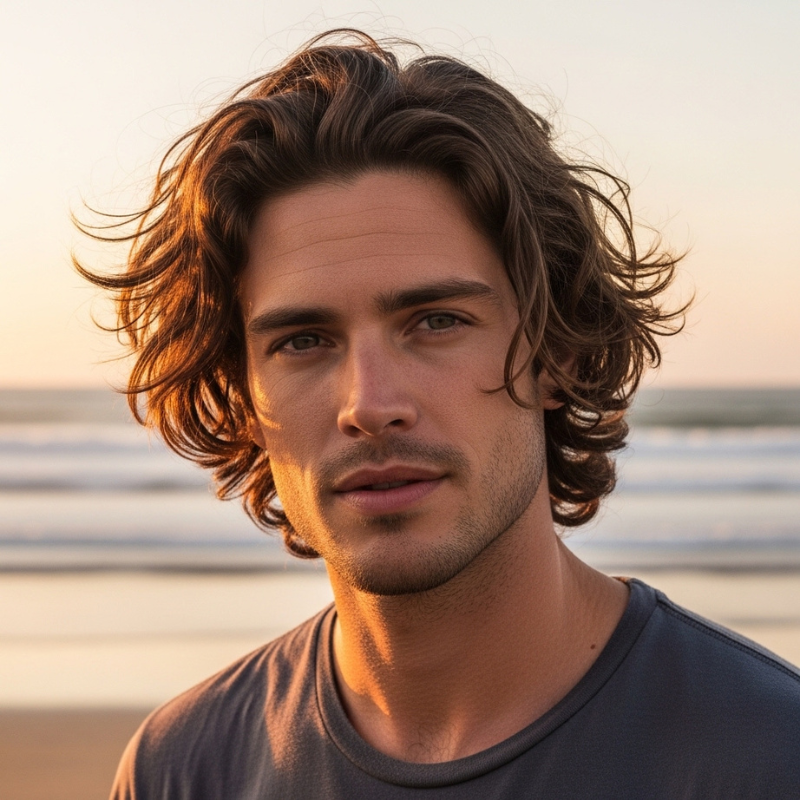
Study these celebrity examples to understand what well-executed curtain bangs look like across different hair types and face features:
Zendaya: Long, wispy curtain bangs on an oval face. Often styled slightly tousled. The benchmark for modern, effortless curtain bangs on straight hair. Core lesson: movement matters more than perfection.
Alexa Demie: Heavier, more dramatic curtain bangs with a strong center part. Dark hair makes the definition more visible. Best reference for stronger features who want a bolder, more structured version.
Sabrina Carpenter: Delicate, lighter curtain bangs worn in a polished, refined way. It shows that curtain bangs can be elevated and sophisticated, not just casual.
Timothée Chalamet: The defining men’s curtain-bang look. Medium length, slightly wavy, textured, and natural. Always looks effortless. The male benchmark.
Sydney Sweeney: Blonde, beachy curtain bangs with a natural wave. The best reference for lighter hair and a sun-kissed, effortless summer aesthetic.
Jenna Ortega: Shorter curtain bangs with a slightly darker, more defined edge. Shows how the style can be made more structured and dramatic while keeping the face-framing quality.
Harry Styles: His longer, shaggy curtain bangs paired with layered hair became one of the most replicated men’s looks globally. Proof that curtain bangs can be genuinely iconic on men.
The universal lesson from all of these: Every single one has movement in their bangs. Never flat, never stiff, never perfectly symmetrical. That natural movement achieved through the round brush technique or natural hair texture, is what separates great curtain bangs from ordinary ones.
Curtain Bangs Maintenance & Trimming Guide
How Often Should You Trim?
| Bang Type | Recommended Trim Cycle |
| Classic soft (cheekbone length) | Every 5–6 weeks |
| Short / brow-length | Every 3–4 weeks |
| Wispy / micro | Every 6–8 weeks |
| Heavy / thick | Every 4 weeks |
| Men’s curtain bangs | Every 4–5 weeks |
Many salons offer free or low-cost bang-only trims between full cuts. If your full cut cycle is every 8 weeks, book a bang trim at week 4.
Safe At-Home Trimming Method
- Style your bangs exactly as you normally wear them before trimming
- Use sharp hair-cutting scissors only, kitchen scissors create split ends and uneven lines
- Identify only the longest, most overgrown strands; do not try to reshape the whole section
- Point-cut technique: Hold scissors vertically (pointing up into the hair) rather than horizontally across. This creates feathered edges and keeps curtain bangs looking natural
- Trim a tiny amount; you can always cut more. But you cannot undo a cut
- Critical rule: Always trim on dry hair. Wet hair appears significantly longer; trimming wet hair will result in bangs that are too short once dry
Growing Out Curtain Bangs
Because curtain bangs are designed to blend into layers, the grow-out process is manageable at every stage:
- Weeks 1–4: Ideal length
- Weeks 5–8: Getting longer, easily tucked behind ears, starting to blend into face-framing layers
- Months 3–4: Fully transitioned into face-framing layer pieces
- Month 6+: Fully grown out, no visible bang line remains
Unlike blunt bangs, there is no painful awkward stage. This is one of the primary reasons curtain bangs remain the most popular low-commitment hairstyle change available.
Common Curtain Bang Mistakes to Avoid {#mistakes}
Getting them cut too short: Curtain bangs should begin at eyebrow level at the absolute shortest. Going shorter removes the sweep and the curtain effect they become regular bangs. Always ask your stylist to keep them on the longer side for the first cut.
Over-perfecting the center part: A razor-sharp perfect center part looks stiff and overdone. Use a wide-tooth comb or your fingers, slight natural imperfection is the goal.
Using heavy products: Curtain bangs need to move. Heavy gels, thick waxes, or dense serums make them flat, stringy, and greasy. Stick to lightweight formulas. Finish with your fingers, not a comb.
Not thinning for thick hair: Very thick hair makes curtain bangs heavy and flat, they drop straight down rather than sweeping outward. Ask your stylist to thin the bang section with a razor or texturizing shears. This is a game-changing adjustment for thick-haired clients.
Washing too frequently: Bangs get oily faster because they sit close to the forehead skin. Daily washing damages the hair over time. Use a dry shampoo at the bang roots between wash days to absorb oil and refresh the style.
Skipping trim appointments: Curtain bangs grow fast. Skipping one trim cycle makes them heavy shapeless, and begins affecting vision. Stay on your trim schedule; it is the single most important maintenance decision.
Q: Are curtain bangs high-maintenance?
Lower maintenance than blunt bangs, but not maintenance-free. You need a trim every 4–6 weeks and about 3–5 minutes of daily styling. If you air-dry without any styling, curtain bangs can look flat and uneven, especially on straight hair. The growing-out phase, however, is painless compared to any other bang style.
Q: What is the difference between curtain bangs and regular blunt bangs?
Blunt bangs cut straight across the forehead in a uniform line. Curtain bangs are center-parted, longer at the sides, shorter in the middle, and feathered at the edges. Curtain bangs frame the face; blunt bangs cover the forehead. Curtain bangs grow out gracefully; blunt bangs have an obvious awkward phase. Curtain bangs suit more face shapes; blunt bangs work best on oval and heart faces.
Q: What is the difference between curtain bangs and side bangs?
Side bangs are swept entirely to one side from a side part, asymmetrical by design. Curtain bangs sweep in both directions from a center or near-center part. Curtain bangs are more symmetrical, more versatile (can be worn slightly off-center), and far more on-trend in 2026. Side bangs carry a mid-2000s aesthetic association.
Q: Can curtain bangs work on very curly hair (type 3–4)?
Yes, but it requires a stylist who specializes in cutting curly hair. Curly hair shrinks 40–60% when dry, so the stylist must cut the bangs significantly longer than the intended final length. When done correctly, curly curtain bangs look beautiful, natural, springy, and full of personality. Seek a DevaCurl-certified or curly hair specialist stylist.
Q: Will curtain bangs suit a round face?
Yes, with the right length. Keep curtain bangs long for round faces, reaching the cheekbones or below. This draws the eye downward, creating the illusion of length. Avoid short, wide curtain bangs that sit high on the forehead; they add visual width and emphasize roundness.
Q: Can I get curtain bangs if I have a cowlick or widow’s peak?
Yes, but inform your stylist before the cut. A cowlick in the bang area can make curtain bangs want to grow in a specific direction. An experienced stylist adjusts the parting position and cut angle to work with the cowlick rather than against it. A widow’s peak (a natural V-shaped hairline) often works beautifully, as it creates a natural center point that makes the curtain bang part easier to maintain.
Q: How long does it take for curtain bangs to grow out?
From brow-length curtain bangs to fully grown-out face-framing layers takes approximately 4–6 months. The key difference from blunt bangs: every stage of the curtain bang grow-out looks intentional and styled. There is no painful awkward phase, just a gradual transition into longer face-framing pieces.
Q: Can I style curtain bangs without a blow dryer?
On naturally wavy or curly hair: yes. Apply a curl cream to damp bangs, scrunch lightly, and air-dry. On straight hair: air-drying typically results in flat, uneven bangs without any styling. If you want a no-heat routine on straight hair, choose ultra-wispy curtain bangs , they fall more naturally with less structure required.
Q: What are bottleneck bangs, and how do they differ from curtain bangs?
Bottleneck bangs are a 2026 evolution of curtain bangs. They are shorter in the very center (around bridge-of-nose level) and gradually longer toward the sides, creating a shape like a bottle’s neck. They provide tighter framing around the eyes than classic curtain bangs while still blending into the hair. More defined and editorial, classic curtain bangs are softer and more relaxed.
Q: Are curtain bangs suitable for mature women or women over 50?
Often more flattering than blunt bangs with age. Curtain bangs avoid the harsh horizontal line that blunt bangs can create on a mature forehead. They add movement and lightness, which makes hair appear fuller. For fine or thinning hair, keep the bang section light and feathered; do not add too much density.
Q: What should I show my stylist when asking for curtain bangs?
Always bring a specific reference photo, one that shows your hair type (straight, wavy, curly) and a face shape similar to yours. Tell your stylist: your face shape, your preferred length, how much daily styling time you’re willing to commit and explicitly ask them to keep the bangs on the longer side for the first cut. You can always go shorter you cannot undo a cut that is already too short.
Q: Can curtain bangs work on very fine or thinning hair?
Yes, in fact, curtain bangs can make fine or thinning hair appear fuller by adding texture and dimension around the face. Keep the bang section light (fewer hairs), use a volumizing mousse before blow-drying, and use a round brush to build lift at the root. Avoid a thick, heavy bang section, it will look flat on fine hair.
Want to see how curtain bangs look on your face before committing? Try the free AI Hairstyle Simulator at CuteHairstyles.org , upload a photo and preview 50+ hairstyles instantly. No registration, no cost.