
Table of Contents
My stylist has known me for six years. Six years of me walking in and saying something completely useless like “just make it look good” or “you know, kind of like… fresh?” She’s a patient woman. A saint, honestly.
But last month I walked in with my phone already open, three photos pulled up, and she looked at me and actually said those words “Finally, you know what you want.”
The photos were Greta Gerwig’s bixie cut, Jane Fonda’s silver curls, and Amy Schumer looking genuinely radiant with her warm blonde waves. Three women, completely different from each other, different ages, different lifestyles, different everything and yet between the three of them they managed to say everything I’d been trying to explain to my stylist for years.
I’m writing this because I know I’m not the only one who’s spent an embarrassing amount of time scrolling through celebrity photos before a haircut. And I think these three in particular deserve a real conversation not a roundup of bullet points, but an actual talk about why they work, what makes them different, and whether any of them might be the answer to whatever you’ve been trying to tell your own stylist.
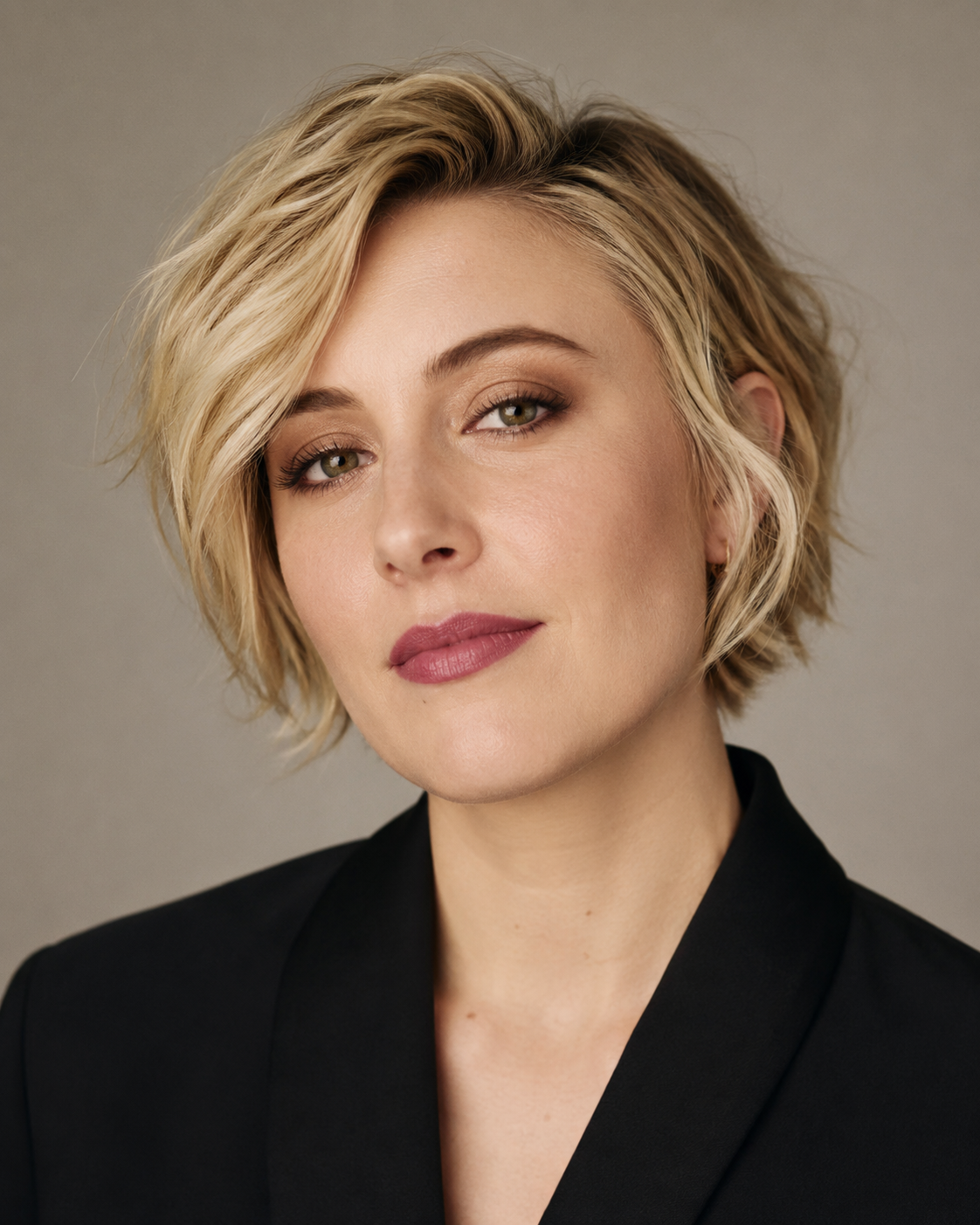
Greta Gerwig’s Bixie:
Okay so I need to tell you about the moment I first really noticed Greta Gerwig’s hair.
It wasn’t at the Oscars, even though that’s when everyone else noticed it. I saw a photo of her at some industry event, nothing fancy, just standing outside talking to someone and her hair was doing this thing where it looked completely effortless but also somehow really intentional at the same time. Champagne blonde, short but not severe, textured in a way that looked like wind had done it rather than product.
I screenshot it immediately. I sent it to my sister. She said “that’s a bixie” and I said “a what?”
So for anyone else who had to Google it like I did: a bixie is basically the length between a pixie and a bob. Shorter than a bob, longer than a pixie. It sits somewhere around your ears or a bit below, with enough movement to style different ways but short enough that it actually feels like a Statement. Her stylist John D created her Oscars version using Navy Haircare products and Kristin Ess tools, and his whole philosophy was about not overdoing it, letting the hair be hair rather than forcing it into something stiff and perfect.
That’s the part that got me. Because I have spent so many years watching celebrities with hair that looks so processed and heavy and lacquered that it doesn’t even look like actual hair anymore. Gerwig’s bixie looked like real hair that happened to be having a really good day.
Before the bixie became her signature, she wore a short wavy shag for ages golden blonde base, warm copper highlights running through it, layers cut through natural waves, a side fringe that fell casually to one side. It was the kind of wash and shake and go that I genuinely aspire to but have never managed to pull off because my hair is fine and flat and betrays me daily.
When I brought the photo to my stylist, the first thing she asked was about my maintenance expectations. Not my face shape, not my hair texture, my lifestyle. Because apparently the bixie is one of those cuts that looks effortless but only stays that way if you’re coming back every five weeks for a trim. Let it go two months and it crosses over from “intentional short hair” into “growing out a bad decision” territory. She wasn’t trying to talk me out of it, she just wanted me to know what I was getting into.
I went slightly longer than Gerwig’s version a little past my ears, enough to tuck behind them on days when I don’t want to deal with it. And honestly? My stylist was right about the maintenance, but she was also right that it was worth it.
Jane Fonda’s Silver Hair:
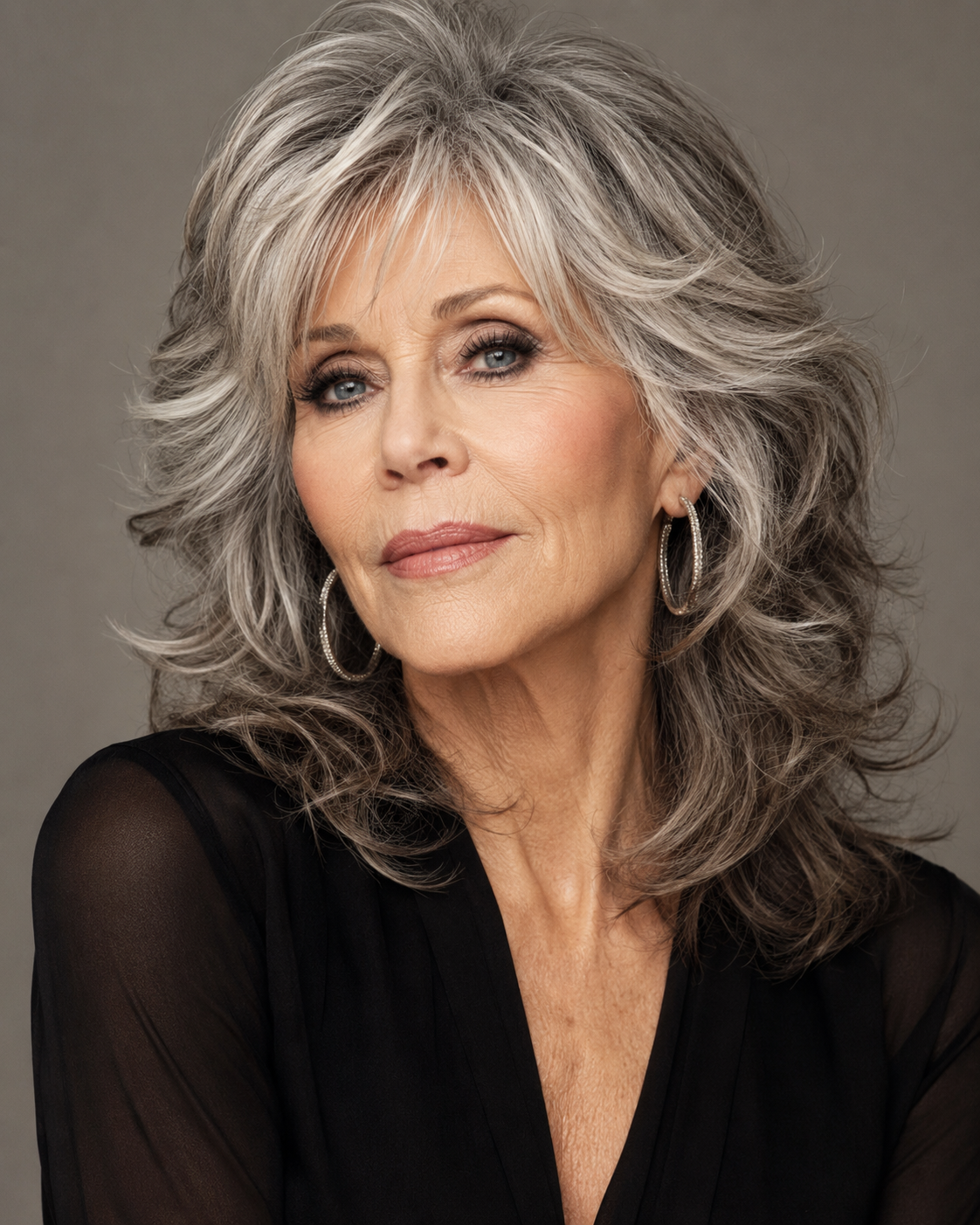
I want to say something that might sound harsh but I mean it genuinely: before I started paying attention to Jane Fonda’s hair choices over the past few years, I had this quiet assumption in my head that a certain age meant a certain kind of hair. Shorter, yes. Safer, definitely. Nothing too bold or too noticeable. I didn’t even realize I believed this until I watched her walk out at the 2020 Oscars with that silver pixie and something shifted.
Because here’s what actually happened at those Oscars: she spent seven hours in the chair with her colorist Jack Martin doing a total transformation taking what he described as “tired warm golden blonde” with salt-and-pepper roots and turning it into an icy silver that she specifically wanted to be a surprise. She recycled her dress from Cannes 2014. She presented Best Picture to Parasite. And Twitter completely lost its mind, in the best possible way.
People weren’t saying “she looks good for her age.” They were saying “she looks incredible, full stop.” There’s a difference, and it matters.
Since that Oscars moment, she’s continued showing up with silver hair in different forms: pixie cuts, curly bobs, longer chin-length versions with flicked ends that somehow manage to look both elegant and playful at the same time. The curly gray bob she wore in fall 2025 was the one that made my group chat explode. My friend Nadia, who is 52 and has been hiding her gray for probably fifteen years, sent it to all of us with just three question marks.
We spent an hour talking about it. About whether any of us were ready. About what it actually takes: the purple shampoo situation (very real, very necessary, keeps the silver from going yellow), the moisture issue (gray hair is dry, you need to baby it), the transition period which nobody wants to talk about but everyone needs to know about.
What Fonda does that’s remarkable isn’t just that she looks good. It’s that she looks like she made a choice. Her colorist Martin said she’s “not afraid of change” and you can feel that in every photo. The silver isn’t something that happened to her. She decided on it, owned it, and made everyone else want it too.
If you’re anywhere in the gray conversation yourself, whether you’re a few months into letting it grow, or you’ve been coloring for years and you’re tired, or you’re just curious, she is genuinely the most useful reference you’ll find. Not because you’ll look like her. But because she shows what it looks like when a woman decides the silver is the point, not the problem.
Amy Schumer’s Hair:
I’m going to be honest with you about something. When I first started pulling references for this piece, I almost didn’t include Amy Schumer because I was worried I couldn’t write about her hair without the conversation becoming entirely about her health, and I didn’t want to reduce her to that either.
But the more I thought about it, the more I realized that separating her hair from her story right now is actually the wrong move. Because the reason her look resonates the way it does in 2026 isn’t just aesthetic. It’s everything surrounding it.
In case you missed it: she was diagnosed with Cushing syndrome in 2024, a hormonal disorder that causes elevated cortisol and can be fatal if untreated. She found out because online commentary about changes in her appearance pushed her to go get checked. Think about what that means for a second: cruel comments on the internet accidentally saved her life. She treated it, went through a significant physical transformation as a result, and talked about it all completely publicly. In December she said she did it “not to look hot, which does feel fun and temporary. I did it to survive.”
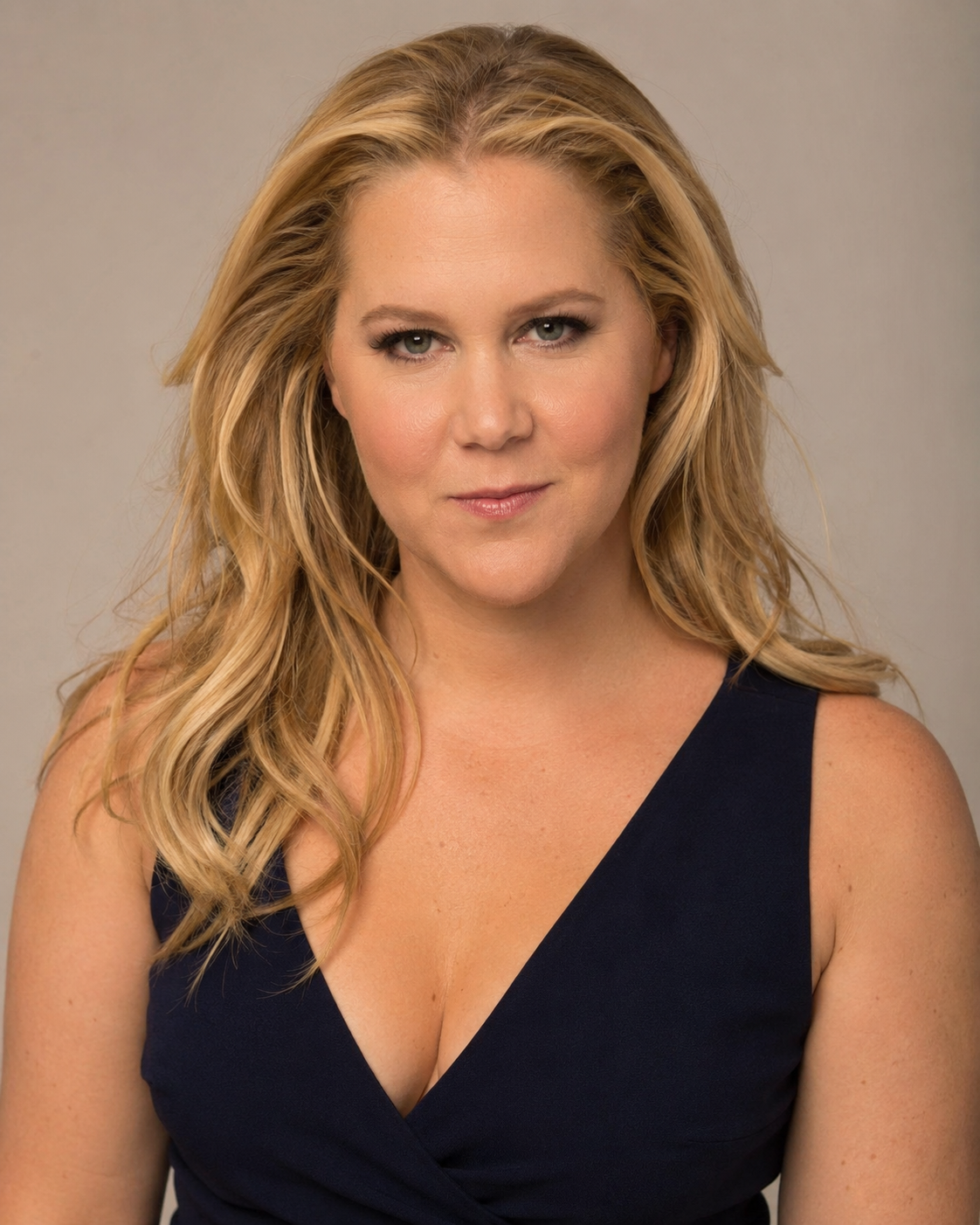
When someone says something like that, and then shows up looking the way she does now, warm, comfortable, genuinely glowing her hair is part of that story. The warm golden waves. The color that has real dimension and life to it, not flat processed blonde. The softness of the whole look. It reads like someone who is taking care of herself and actually feeling it.
For practical purposes: her hair is one of the most genuinely adaptable celebrity references I’ve found because it works across a lot of different situations. Round face shape, soft waves, shoulder-adjacent length, warm blonde color with variation through the lengths. None of that is complicated. None of it requires a glam team.
The wave technique that gets you closest to her look without a lot of effort: light mousse or texture spray on damp hair before you blow dry. Medium barrel wand the kind that’s about an inch and a quarter once your hair is dry, but wrap sections loosely and alternate the direction on each one. This is the step people skip. When every curl wraps the same way, it looks styled. When they alternate, it looks like your hair does this naturally. Then don’t brush it. Fingers only. Flexible hold spray to finish. Done.
For the color: this is where I’d say don’t go it alone if you can help it. The warmth and dimension in her blonde hair comes from a balayage or lived-in technique where the color is lighter through the ends and warmer through the mid-lengths, with variation that catches the light differently depending on how she moves. Single-process blonde does not do this. Ask your colorist specifically for dimension, and if they need a reference photo, bring hers.
Real Talk About What’s Happening in Hair Right Now
Since I’ve been deep in this research rabbit hole anyway, here’s what I’m noticing more broadly in 2026 that’s worth knowing.
The bixie is genuinely having a mainstream moment. Zendaya wore one at the Oscars and my reaction was embarrassingly loud. Gracie Abrams wore hers at the BAFTAs in February and stylists and beauty editors were immediately calling it a spring trend. The fact that women with completely different aesthetics Zendaya’s polished and refined version versus Gerwig’s piecey undone one are both landing on this length tells you it’s more than a trend. It’s a cut that actually works on a lot of different people.
Bobs are not going anywhere. Every year I hear that bobs are finally done and every year bobs prove to be completely indestructible. They keep evolving the blunt chin-grazer, the curved French girl bob, the asymmetric version, the one with the flipped ends but the silhouette itself is apparently immortal.
Gray is shifting from “accepting the inevitable” to “making a choice.” That’s a real cultural movement and Jane Fonda is not the only one leading it. Women in their 40s, 50s, 60s and beyond are increasingly making the silver or gray look intentional rather than something that happened while they weren’t paying attention.
Color with actual movement is replacing flat, uniform color. Balayage, lived-in blonde, glossy brunettes with warm variation the dimension is the whole point right now. Flat single-process anything is read as dated.
For the Girls Who Don’t See Themselves in Hollywood References
Something I think about a lot and want to name: almost every celebrity hair reference that gets the most coverage is centered on a specific beauty standard that a huge chunk of women don’t actually share.
For women who look to Bollywood or Indian celebrity hair for references that match their texture, their features, their aesthetic, that world is doing genuinely interesting things right now. The high-shine blowout aesthetic that actresses like Deepika Padukone have made iconic is technically specific; it requires understanding South Asian hair density and behavior, not just applying a general “smooth” technique. The contemporary braided updos are becoming increasingly visible and influential globally. And there’s a growing movement toward celebrating natural South Asian hair texture: the waves, the curls, the thickness rather than straightening it into submission.
If you’ve been frustrated that Western celebrity hair references never quite translate for your hair, that frustration is completely valid. The good news is that Bollywood and Indian celebrity hairstyle references are becoming much more searchable and much more specific, and the stylists who specialize in these textures are increasingly worth seeking out.
For male celebrity hair which is driving just as many salon appointments as women’s, by the way the textured crop, the taper fade that plays with natural curl, and the somehow-still-here modern mullet are the main languages being spoken in 2026. The general direction is toward working with natural texture rather than against it, which is honestly a message that applies regardless of gender.
The Actual Things That Make Salon Conversations Go Well
I’ve had some genuinely bad salon experiences and I’ve had some magical ones. The difference, I’ve figured out, is almost entirely in the conversation before the scissors come out.
Bring multiple photos. Not one. The problem with one photo is that you might love it for the color but your stylist might interpret it as being about the cut, or vice versa. Three photos let them find what you actually love about all three that’s the real brief.
Name what makes you nervous. I didn’t tell my stylist I was scared about my bixie looking too severe and she did it a little shorter than I would have chosen. My fault entirely. Stylists aren’t mind readers and naming your fears gives them the information they need to get it right.
Be real about your morning. Not your aspirational morning where you have forty-five minutes and a full set of Dyson tools. Your actual morning. The one where you have twelve minutes and you’d rather sleep. That morning is the one your haircut has to work for.
Ask what it looks like at week six. This is the question that changes everything for short cuts. A great cut at week six is a joy. A bad grow-out at week six means months of awkward in-between hair. Know what you’re committing to.
FAQs
What are the most searched celebrity hairstyles for women in 2026?
Bixie cuts, sculpted bobs, curtain bangs, soft natural waves, and silver/gray styling are leading everything right now. The bixie specifically has had a massive moment following Oscars and BAFTAs appearances from Zendaya, Gracie Abrams, and honestly the one that started it all Greta Gerwig.
What celebrity hairstyle inspiration is best for men right now?
Textured crops, taper fades that work with natural curl texture, and refined modern mullets with clean sides are what’s actually being booked. The through-line is natural texture working with it rather than flattening it.
What’s actually the difference between a bixie and a pixie?
A pixie is short all over close to the head, minimal length anywhere. A bixie has real length, sitting somewhere between the ear and chin, with enough to move and be styled in different ways. It’s not as dramatic a commitment as a pixie but it still feels genuinely short. Think of it as the braver bob.
What celebrity hairstyles work on a round face shape?
Amy Schumer is your reference here, full stop. Length below the chin, movement that goes downward rather than outward, color with dimension so it doesn’t look heavy. The one thing to genuinely avoid on a round face is a blunt bob ending right at the jawline every stylist I’ve ever talked to confirms this adds width in a way that’s unflattering on this face shape specifically.
Is letting my hair go gray actually worth it?
Depends on what you’re weighing it against. If you’ve been coloring every few weeks and you’re exhausted by the maintenance, going natural gray can actually be less work once you’re through the transition, no root appointments, just toning and moisture care. The transition itself takes patience. Jane Fonda’s colorist Jack Martin actually told PEOPLE he suggests trying a wig first if you’re nervous, to see how you feel about it before committing.
What are the best Bollywood celebrity hairstyle references right now?
High-shine blowouts, contemporary braided updos, and an increasing celebration of natural South Asian texture are the biggest trends. These are increasingly valuable references for women whose hair texture doesn’t respond the same way to Western styling techniques.
What Indian celebrity haircuts for women are trending?
Long layers with face-framing elements remain dominant, but the shift is toward texture embracing the natural wave, curl, and density of South Asian hair rather than fighting it. This is actually becoming globally influential, not just a regional trend.
How long before I need to trim a bixie to keep it looking right?
Five to six weeks, honestly. Short cuts don’t grow out gracefully the way longer ones do. At two months the shape starts to blur and it stops reading as intended. If you’re the kind of person who regularly pushes appointments back, ask your stylist to design the cut with the grow-out in mind. Some versions of the bixie hold their shape longer than others.
How do I get Amy Schumer’s soft wave without spending an hour on it?
Light mousse on damp hair, blow dry with a round brush or just rough-dry it, then medium barrel wand on dry hair wrapping sections loosely and alternating directions. Don’t brush, just finger-separate. Flexible hold spray. The whole thing takes twenty minutes once you’ve done it a few times. The alternating direction thing is the actual key that makes it look real rather than done.
Last Thing
I’ve been thinking about why these three women in particular have become the hair references everyone keeps coming back to this year, and I think it’s actually pretty simple.
Greta Gerwig looks like someone who made a decision and stands behind it. Jane Fonda looks like someone who stopped asking permission a long time ago. Amy Schumer looks like someone who has been through something and comes out the other side knowing what actually matters.
None of them look like they’re performing for anyone. And I think that’s the thing that makes us screenshot their photos and bring them to our stylists not because we want to look like them, but because we want to feel the way they look.
That’s the actual celebrity hair inspiration worth chasing.
Pingback: Short Textured Crop Guide: Low-Maintenance Cuts