
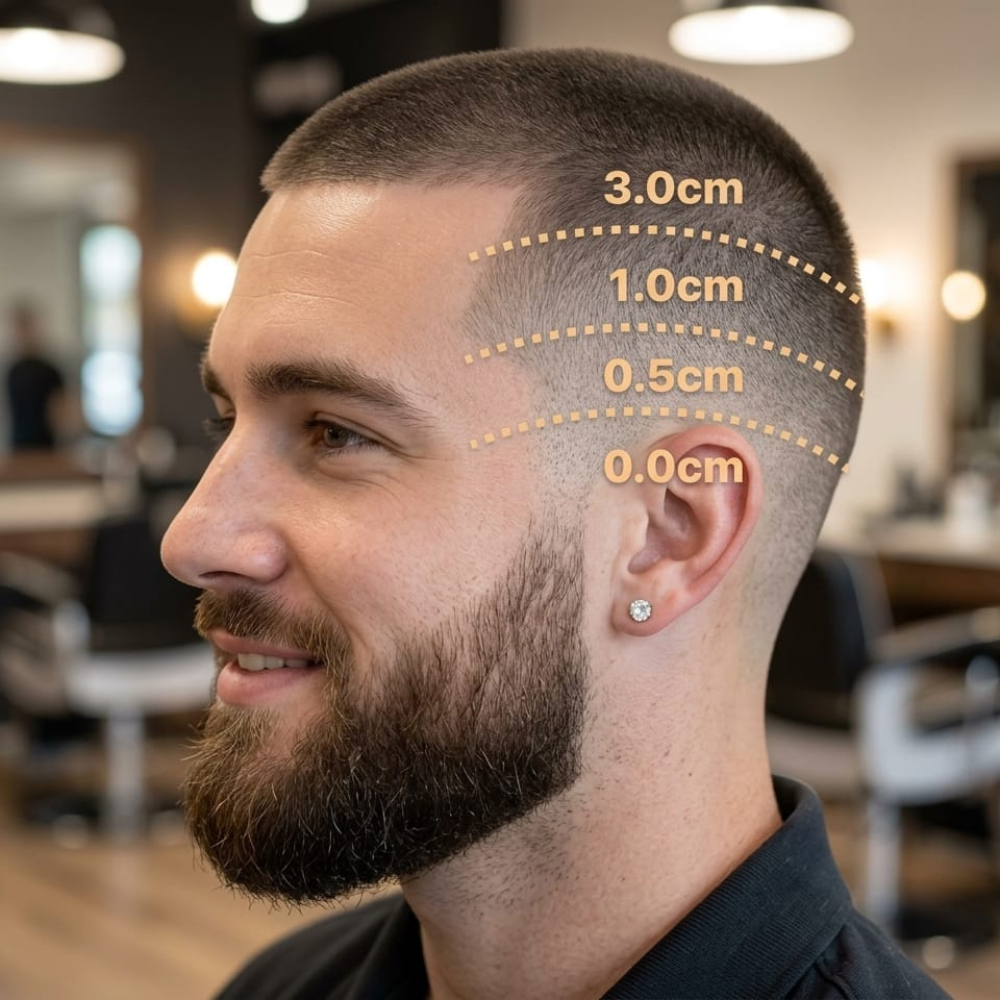
Okay, real talk if you’ve been spending way too long scrolling through Instagram trying to figure out what haircut to get next, you’re not alone. I’ve been there too. There’s something about standing in the barber’s chair, trying to explain exactly what you want, that feels oddly stressful. So I decided to put together this guide not as a robotic listicle, but an actual honest breakdown of everything you need to know about the low taper fade, buzz cut, and all the variations in between.
Whether you want something clean and professional for work, edgy for the weekend, or just something that’s genuinely low maintenance this guide covers it all. Let’s get into it.
Quick tip before you start reading: Save a reference photo before your next barber visit. Barbers work a LOT better when you show them what you want instead of trying to describe it. Trust me on this one.
What’s in This Guide
• What Is a Low Taper Fade? (And Why Everyone Wants One)
• Low Taper vs Mid Fade vs Skin Fade vs Drop Fade What’s the Difference?
• The Buzz Cut Breakdown: From Induction Cut to Long Buzz
• Burst Fade & Taper Fade Mullet The 2026 Viral Styles
• Best Fade for Your Face Shape
• How to Talk to Your Barber (The Exact Words to Use)
• Styling & Maintenance Tips
• FAQ — All Your Questions Answered
1. What Is a Low Taper Fade — And Why Is Everyone Getting One?
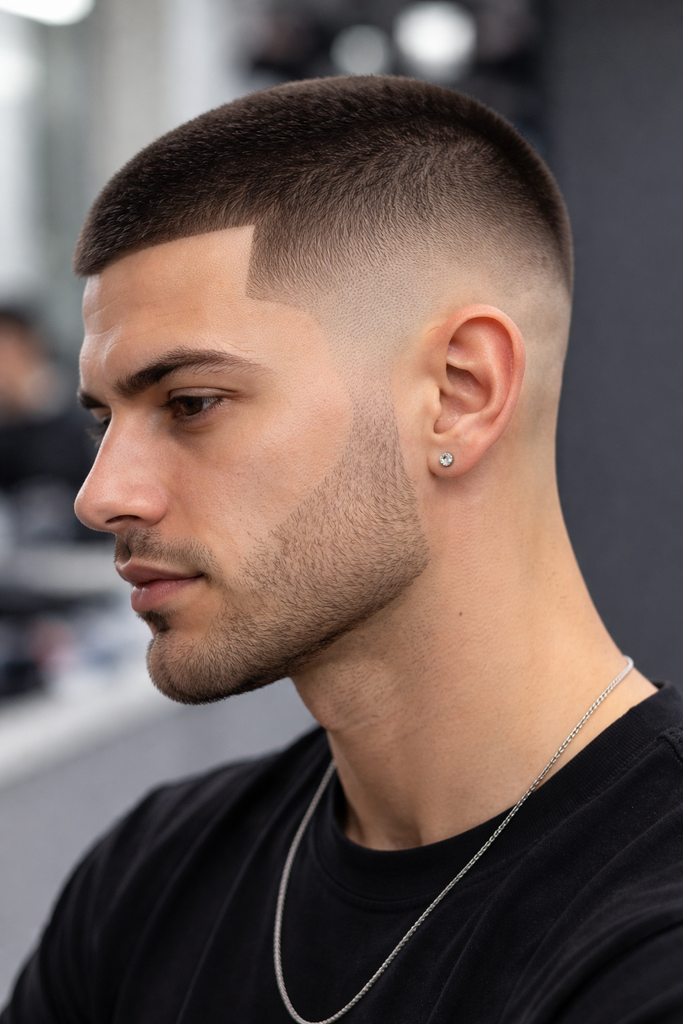
A low taper fade is basically the gentleman’s fade. It starts low just above the ears and around the neckline and gradually blends the hair shorter as it moves down. Unlike a high fade that starts near the crown, the low taper is subtle. It’s the kind of haircut that looks sharp without screaming ‘I tried too hard.’
Here’s what I personally noticed when I first got a low taper: it made my whole face look more structured. I have a round-ish face and always thought fade haircuts would look weird on me. But the low taper? It actually softened everything in the right way. My barber explained it perfectly ‘the fade does the work, the hair on top does the talking.’
The low taper fade works on almost every hair type: straight, wavy, curly, coily. It pairs with literally everything: a textured crop, a comb over, a slick back, or even just leaving the top natural. That versatility is honestly why it’s been trending so hard in 2026 it’s not a statement haircut, it’s a foundation haircut.
Barber tip: When you sit down, tell your barber ‘low taper fade, starting just above the ear, blending into the neckline.’ If you want it even subtler, say ‘natural finish.’ That tells them everything.
2. Low Taper vs Mid Fade vs Skin Fade vs Drop Fade — Let’s Clear This Up
This is where most guys get confused. Every barbershop uses slightly different terminology, and if you walk in saying ‘just a fade,’ you might end up with something very different from what you imagined. Here’s the honest breakdown:
Low Taper Fade
Starts just above the ear. Very subtle transition. Natural-looking, not too much contrast. Best for: professional settings, oval faces, guys who want a polished but not intense look. This is your go-to ‘can’t go wrong’ fade.
Mid Taper Fade
Starts around the temple area. More contrast than the low taper, sharper look. Best for: square and diamond face shapes, guys with thicker hair, comb-overs, slick backs. The mid fade gives you that barber-magazine-cover sharpness.
Skin Fade (Bald Fade)
Goes all the way down to the skin. Maximum contrast. Very clean, very modern. Best for: strong jawlines, angular faces, guys who want their cut to last a bit longer between appointments. The skin fade is the one everyone stares at when it’s fresh.
Drop Fade
Follow the natural curve of your head, dropping down behind the ear. It gives more coverage on the sides while still looking clean. Really great for guys who want the faded look but don’t want to expose too much scalp. Works beautifully with textured or curly hair on top.
Burst Fade
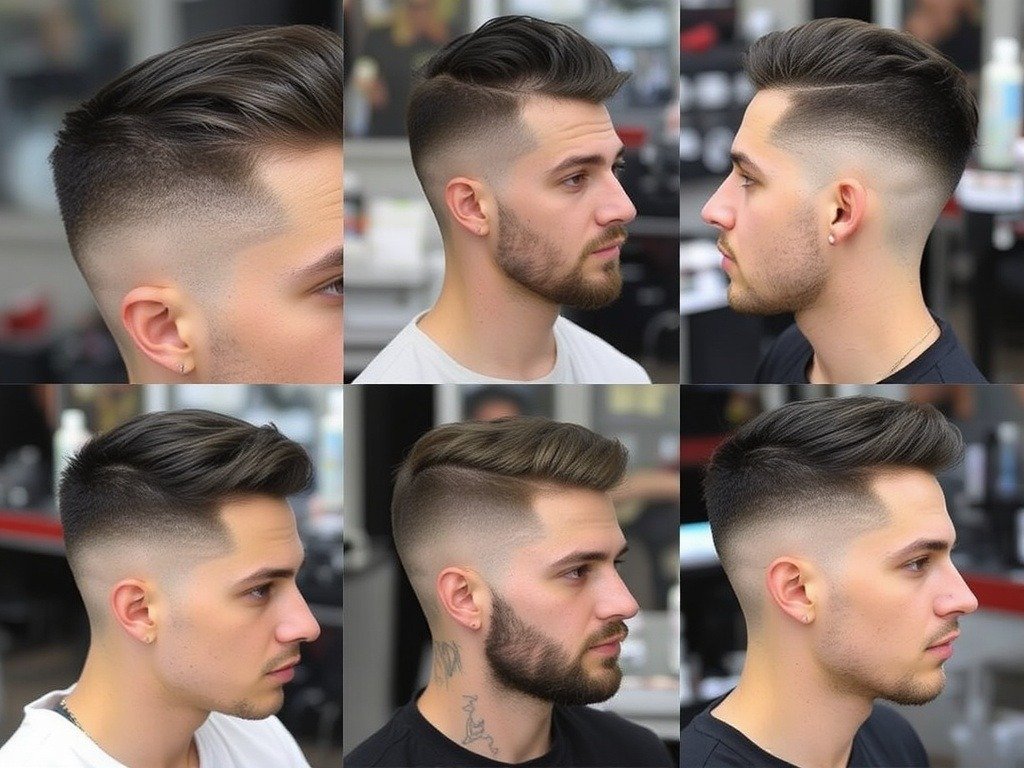
This one fans out from behind the ear in a semicircular shape. It’s the fade that makes the mullet look so good right now. The burst fade has this natural, organic shape that’s different from the straight-line fades. If you want something that looks creative without being too ‘out there’, the burst fade is your move.
2026 Trend Alert: The burst fade mullet is probably the most searched men’s haircut right now. The combination of the burst fade’s curved shape with the longer back creates this retro-meets-modern look that genuinely suits most face types.
3. The Buzz Cut Family — From Zero to Hero
Here’s the thing about buzz cuts that most people don’t realize: ‘buzz cut’ is not one haircut. It’s a whole family of styles, and they feel and look very different from each other. Let me walk you through all of them.
Induction Cut (Military Buzz)
This is the shortest you can go without shaving your head. Guard #0 or #1 all over. The military gives this cut to every new recruit that’s why it’s called the induction cut. It takes about 10 minutes, reveals your actual head shape, and requires exactly zero maintenance. The only downside? If you have an unusual head shape, there’s nothing to hide it. But most guys look great with it. It’s a bold, confident choice.
Crew Cut
A slight upgrade from the induction cut. The top is left a little longer (guard #3 or #4) and tapered down on the sides. This is the ‘safe bet’ buzz cut. It works for school, work, sports, everything. If you’ve never tried a short cut before, the crew cut is the best entry point. It still gives you something to style on top if you want, and it looks clean without being extreme.
Personal experience: My first crew cut felt strange for about three days. Then I couldn’t imagine going back to longer hair. The morning routine goes from 15 minutes to literally 2 minutes. That alone made me a convert.
Long Buzz Cut with Low Taper Fade
This is the sweet spot for guys who like the idea of a buzz cut but aren’t ready to go super short. The top is left at guard #4 or #5 just enough length to show some texture and work with your natural hair pattern while the sides taper down with a low fade. This combo is absolutely massive right now because it gives you the low-maintenance lifestyle of a buzz cut but the polished look of a faded haircut. Best of both worlds, genuinely.
Mid Taper Fade Buzz Cut
Same idea as above but with a mid fade instead of a low one. More contrast, sharper look, more dramatic. If you have a well-defined jawline and strong features, this version will emphasize all of that. Guys with oval or square faces especially look great with this combination.
Buzz Cut Low Fade
The buzz cut low fade is softer and more natural-looking than the mid or skin fade versions. It works really well for professional environments because it doesn’t look ‘extreme’ , just neat and clean. Pair it with a shaped beard and you’ve got a genuinely timeless look.
Guard size cheat sheet: #0 = skin level, #1 = 3mm, #2 = 6mm, #3 = 10mm, #4 = 13mm. When asking for a buzz cut, knowing these numbers means you’ll always get exactly what you want.
4. The 2026 Viral Styles: Burst Fade Mullet & Taper Fade Mullet
Alright, let’s talk about the elephant in the room: the mullet is back, and this time it actually looks good. I was skeptical, too. But the modern mullet with a burst fade or taper fade is genuinely one of the most flattering haircuts I’ve seen on a wide range of guys.
Here’s what makes the 2026 mullet different from the 80s version: the modern mullet is much shorter, cleaner, and built around precise fade work. The top and sides are tight and textured, and the back has length but it’s styled, not just left to grow. The burst fade mullet specifically uses that curved fade shape that transitions beautifully into the longer back section.
Taper Fade Mullet
The taper mullet uses a classic taper fade on the sides instead of the burst shape. It’s a bit cleaner and more symmetrical than the burst version. If you’re getting a mullet for the first time and you’re nervous, this is the safer starting point. Ask for a ‘short mullet with a low taper fade’ and your barber will know exactly what to do.
Burst Fade Mullet
The burst version has more personality. The semicircular fade behind the ear gives it a sculptural quality; it looks like the hair was designed, not just cut. This is the one you see going viral on social media constantly. If you want something that gets compliments, this is it.
Barber script for the burst fade mullet: ‘I want a modern mullet tight and textured on top, burst fade on the sides, and length at the back. Keep the back around 3-4 inches and square the tail slightly.’ Show a photo too.
5. Best Fade for Your Face Shape
This is the one thing most online guides get wrong: they tell you what the ‘best’ haircut is without explaining why. Here’s the actual logic, face shape by face shape:
• Round face: You want to add height and length. Low taper fade with volume on top (like a textured crop or quiff) elongates the face. Avoid styles that add width on the sides.
• Square face: Lucky you most fades look great. The mid taper fade with a clean top is your perfect match. The sharp lines complement your jaw structure.
• Oval face: Also lucky you can pull off basically anything. Low taper, mid fade, skin fade, buzz cut. Oval faces are the most adaptable. Try the long buzz cut with a low fade for a timeless look.
• Diamond face: You have narrow forehead and chin with wider cheekbones. A mid taper with some width on top balances this out. Avoid skin fades that emphasize the narrow jaw.
• Oblong/Rectangular face: Keep the sides fuller and go for a low taper instead of a high or skin fade. A burst fade mullet actually works really well here; the length at the back shortens the visual length of your face.
6. How to Talk to Your Barber (Exact Scripts That Work)
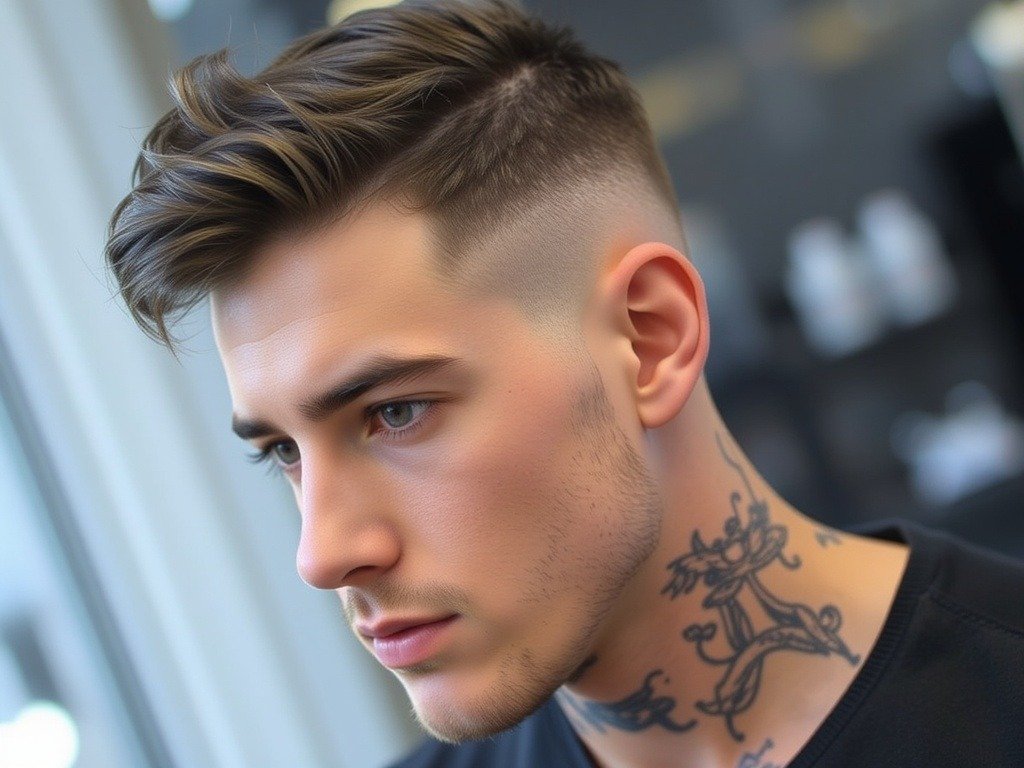
This section might be the most practically useful thing in this entire guide. I’ve been getting haircuts for 20+ years and the single biggest upgrade was learning how to communicate properly with my barber.
For a Low Taper Fade:
“I want a low taper fade starting just above the ear, blending down to the neckline. Keep the top [your preferred length, e.g., 2 inches / textured / natural]. Clean up around the ears.”
For a Buzz Cut with a Low Fade:
“I want a [guard #3 or 4] buzz cut on top with a low fade on the sides, nothing too dramatic, just a clean blend above the ear. Square or round the neckline? [pick one].”
For a Burst Fade Mullet:
“Modern mullet with a burst fade tight and textured on top, burst fade on the sides starting behind the ear, and I want to keep length at the back. Keep it clean, not too wild.”
One more thing: always say whether you want a square, rounded, or tapered neckline. Barbers have different defaults and this one detail makes a huge difference to the finished look.
7. Maintenance & Styling Tips for Fades and Buzz Cuts
How Often Should You Get a Fade Touched Up?
• Skin fade & burst fade: Every 2–3 weeks for maximum sharpness
• Low taper fade: Every 3–4 weeks it grows out more gracefully
• Buzz cut: Every 2–3 weeks if you want it clean; every 4–5 weeks for more casual
• Mullet styles: Every 3 weeks the sides grow faster than the back
Product Recommendations by Style
• Textured crop with fade: Texture clay or matte paste. A small amount worked through dry hair gives definition without greasiness.
• Slick back / comb over with fade: Water-based pomade for shine and medium hold. Oil-based for stronger hold and higher shine.
• Buzz cut: Honestly, none needed. A light scalp moisturizer or argan oil can keep the scalp healthy and give a subtle sheen.
• Mullet styles: Sea salt spray for texture and movement on the top and back. Avoid heavy products. The mullet needs to look lived-in, not stiff.
Scalp Care — The Bit Everyone Ignores
Here’s something nobody talks about enough: a fade looks 10x better on a healthy scalp. When your scalp is dry or flaky, it shows with short hair. Use a gentle sulfate-free shampoo, condition 2-3 times per week (yes, even with short hair), and if you’re using clippers at home, clean and oil them regularly, dull blades cause irritation.
Frequently Asked Questions
Q: What is the difference between a taper and a fade?
A: A taper gradually shortens the hair from top to bottom but doesn’t necessarily go down to the skin. A fade specifically blends the hair into the skin at some point. Tapers are generally softer and more subtle; fades have more visible contrast. A ‘taper fade’ combines both it tapers and it fades to skin.
Q: Can a buzz cut with a low taper fade suit straight hair?
A: Absolutely straight hair actually looks great with a buzz cut low taper fade because the smooth texture contrasts beautifully with the faded sides. You can add a bit of texture paste on top to avoid it looking too flat, or just let the natural shine of straight hair do the work.
Q: What’s a long buzz cut low taper fade?
A: This is a buzz cut where the top is kept at a longer guard length (usually #4 or #5 around half an inch to just over) while the sides get a low taper fade treatment. It gives you the low-maintenance lifestyle of a buzz cut but with enough length on top to show your hair texture and add a little dimension.
Q: Is the taper fade and buzz cut combination good for thinning hair?
A: Actually, yes and this surprises a lot of people. Very short cuts like buzz cuts can make thinning hair look intentional rather than unfortunate. A mid or low taper fade with a short top makes the overall volume more uniform and draws less attention to thinning patches. Many barbers specifically recommend this direction for men starting to experience hair loss.
Q: How do I ask for a mid taper fade buzz cut?
A: Say this: ‘I want a buzz cut on top guard #3 or #4 and a mid taper fades on the sides starting around the temple. Blend it smoothly and clean up the neckline.’ That gives your barber every detail they need.
Q: How long does a low taper fade last before it needs a touch-up?
A: A low taper fade holds its shape for about 3–4 weeks. Because it starts lower, it grows out more gradually and gracefully than a high or skin fade. If you’re on a tight schedule, a low taper is actually the most forgiving choice.
Q: Is the burst fade mullet suitable for straight hair?
A: Yes and it actually looks really clean on straight hair. The modern mullet with straight hair has a sleek, structured quality. Ask your barber for a ‘straight hair modern mullet with burst fade’ and show a reference photo. The top can be styled with a small amount of pomade or left natural for a more relaxed vibe.
Q: What’s the difference between a crew cut and a buzz cut?
A: A buzz cut is typically a uniform length all over the head (like an induction cut). A crew cut keeps the top slightly longer and tapers the sides; it has a bit more shape and structure. The crew cut is technically a type of buzz cut, but it’s more styled and flattering for most face shapes.
Final Thoughts — Just Go For It
If there’s one thing I want you to take away from this guide, it’s this: the ‘right’ fade is the one you actually commit to. A lot of guys spend months contemplating and then finally get the haircut they wanted and immediately wonder why they waited so long.
The low taper fade in particular is genuinely one of the most versatile, flattering, and timeless haircuts you can get in 2026. It doesn’t expire after a season. It works for your job interview and your Friday night. It works with a beard or clean-shaven. And with the buzz cut variations and mullet styles available now, there’s a version of this haircut for every personality.
Save this guide, pick your style, screenshot a reference photo, and go talk to your barber. You’ve got everything you need.
Remember: Show your barber a photo + describe the fade level + tell them your neckline preference. Three pieces of information = a perfect cut, every time.
Pingback: Men's Hairstyle Trends 2026: Modern Fades & Crops