
Table of Contents
You know that moment when you’re standing in front of the mirror, hair dryer in hand, and you just… sigh? That’s usually the moment people start Googling something new. Not a drastic change, necessarily. Just something that actually works with your life, not against it.
That’s basically the whole appeal of a pixie bob haircut. It’s not one of those trends that looks great on a runway model and terrible on everyone else. It’s genuinely wearable and, more importantly, forgiving on busy mornings. I’ve talked to enough stylists (and read enough client horror stories) to know that the gap between “loved my new cut” and “regretted it instantly” almost always comes down to how well the cut fits someone’s actual routine — not how it looked in a photo.
So let’s get into it properly. What a pixie bob actually is, who it works on, the fringe question, the layers question, and — since so many people ask specifically — how it holds up for women over 50 and over 60.
Okay, But What Is a Pixie Bob, Really?
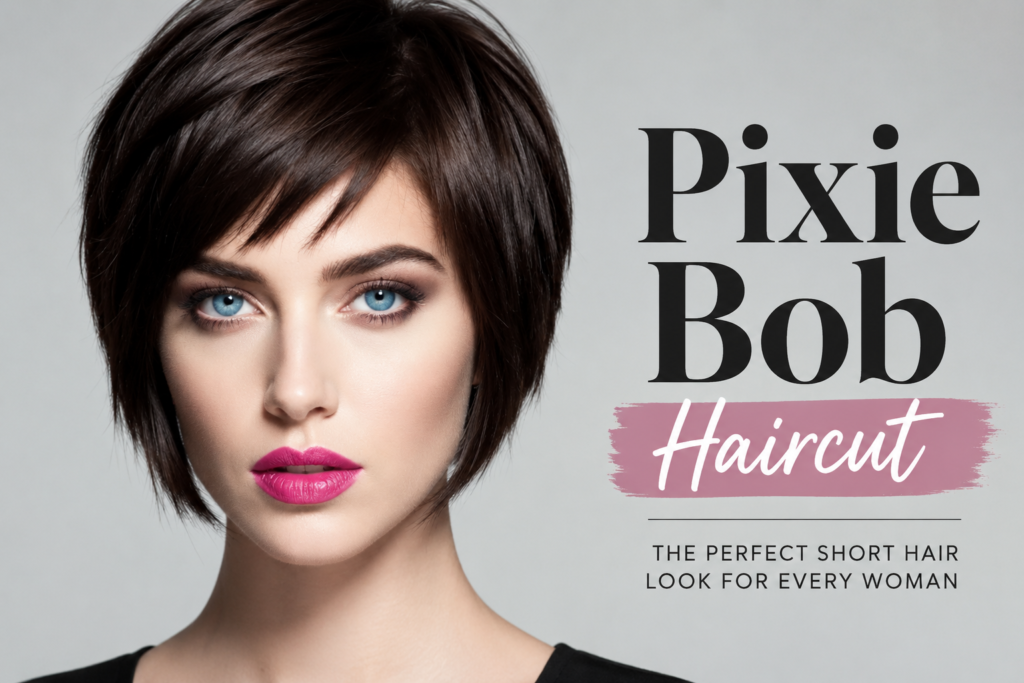
People throw around the term “bixie” a lot these days, and honestly it’s a decent shorthand. A pixie bob sits in that middle ground between a proper pixie crop and a chin-length bob. Shorter through the back and sides, a bit more length up top and around the face. It borrows the ease of a pixie and the softness of a bob, which is exactly why it’s so hard to get wrong once it’s cut properly.
It’s also more flexible with hair type than people assume. It’s not just for pin-straight hair — plenty of stylists cut it for wavy textures too, since <cite index=”1-1″>a bold pixie bob works on straight to slightly wavy hair</cite> when it’s shaped right.
Why Everyone’s Suddenly Talking About It
Short hair cycles in and out of fashion, sure, but the pixie bob keeps coming back because it isn’t chasing a look — it’s solving a problem. That’s part of why editors keep describing it as <cite index=”5-1″>a mix of pixie and bob that gives a soft, voluminous look with pretty effortless charm</cite>. Not “high-maintenance glam.” Effortless.
And it’s not just an editorial darling. Salons are seeing it walk through the door constantly, with plenty of stylists listing it among <cite index=”2-1″>the most requested pixie bob styles clients are asking for this season</cite>. When a cut is both trending online and actually being booked in real salons, that’s usually a sign it’s not just hype.
Does It Actually Suit You?
Here’s my honest take: most face shapes and hair types can wear a version of this cut. The trick is knowing which version.
- Oval or heart faces — pretty much any pixie bob works.
- Round faces — ask for height at the crown, with longer pieces angling near the jaw. It elongates things nicely.
- Square faces — soft, feathered layers plus a side-swept fringe take the edge off a strong jawline.
- Longer, narrower faces — go fuller and rounder through the sides for balance.
- Fine or thinning hair — shorter length instantly reads as thicker.
- Thick, coarse hair — you’ll want layering, otherwise it can sit heavy instead of light.
Really, though, the single biggest factor isn’t your face shape at all — it’s whether your stylist is willing to customize instead of copying a Pinterest photo exactly. That’s where most disappointing pixie bobs go wrong.
Pixie Bob Haircut with Fringe
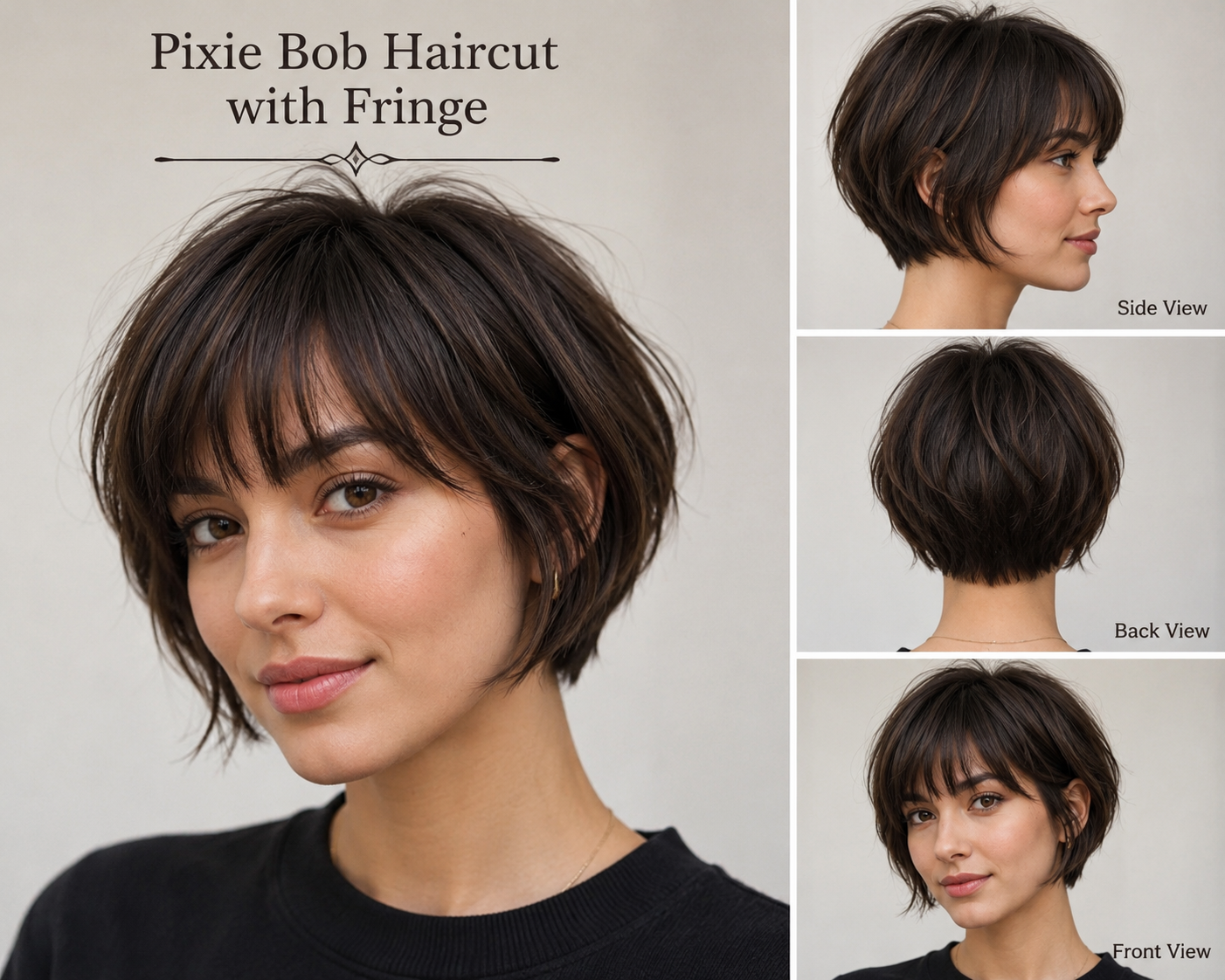
Add a fringe and the whole personality of the cut shifts. A pixie bob haircut with fringe softens the forehead, pulls focus toward the eyes, and, I’ll be honest, can genuinely knock a few years off how old you read at a glance.
A few directions worth discussing with your stylist:
- Wispy, feathered fringe — light pieces that just graze the brow. Good if you’re softening a square or angular jaw.
- Deep side-swept fringe — longer on one side, sweeping across. Flattering on round or oval faces, and it grows out gracefully.
- Blunt, choppy fringe — bolder, more graphic. Works best with straighter hair and a slightly edgier vibe.
What people don’t expect is how little extra time this adds. A quick pass with a round brush, maybe a bit of texturizing paste, and you’re out the door.
Pixie Bob Haircut with Layers
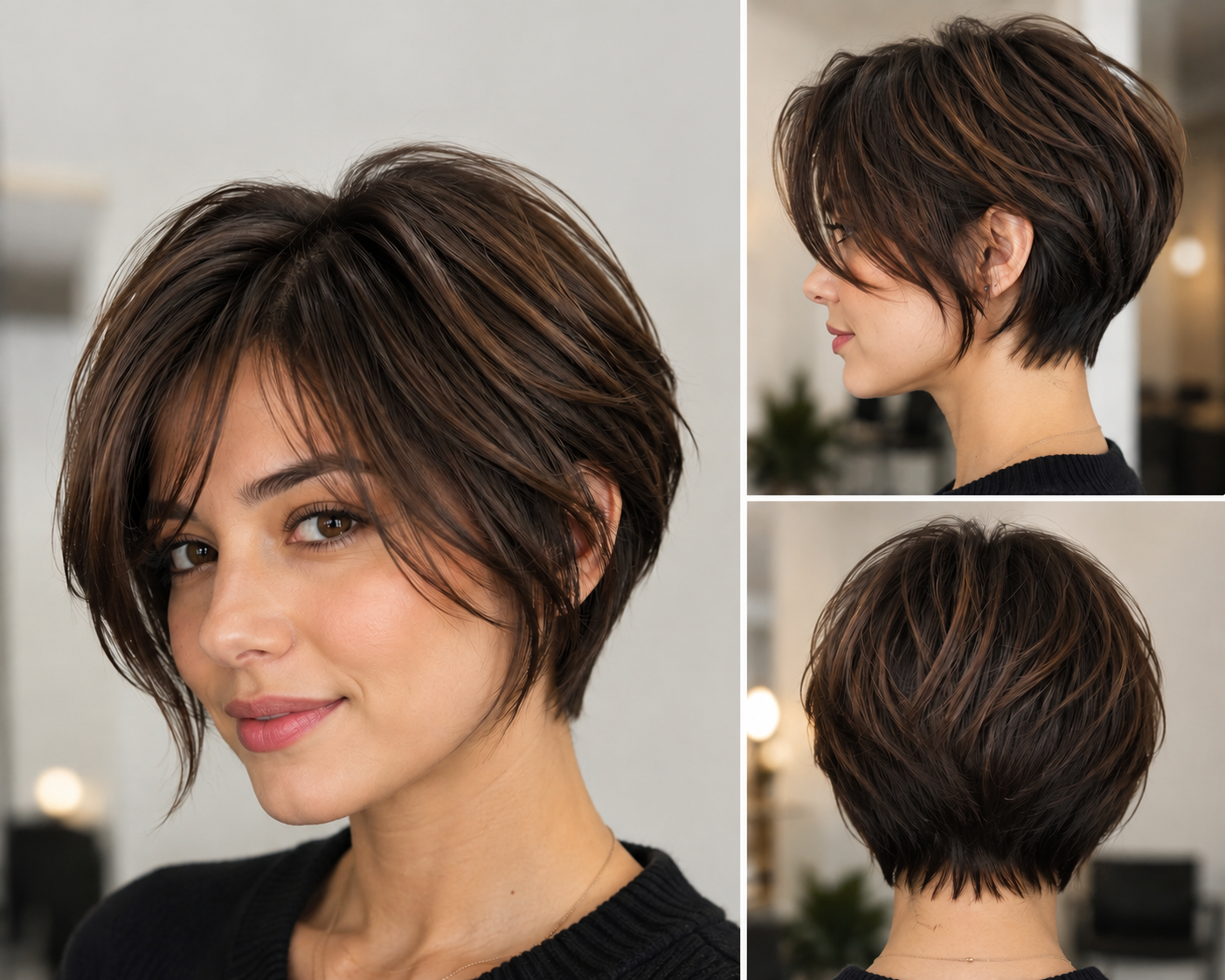
Layers are really what give this cut its movement — without them, a pixie bob can start looking flat, or worse, like a helmet. A pixie bob haircut with layers is usually shorter at the crown for lift, with slightly longer face-framing pieces up front.
Why it matters:
- Adds volume without needing a blow-dry ritual every morning.
- Smooths the transition between the short back and longer top.
- Lets natural texture — wavy hair, curly, whatever — actually do some of the styling for you.
- Blends better as it grows out, so you’re not stuck at the salon every three weeks.
If your hair has any natural wave or curl, push for the layered version specifically. Blunt cutting tends to fight natural texture instead of working with it.
Low Maintenance Pixie Bob Haircut
If your main complaint about your current hair is “this takes forever,” pay attention here. A low-maintenance pixie bob haircut is built around minimal daily effort, not zero effort — there’s a difference, and a good stylist should be upfront about that.
What actually makes a pixie bob low-maintenance:
- Cutting that’s designed to air-dry into shape, not one that only looks good freshly styled.
- Staying closer to your natural color, or choosing subtle, low-contrast highlights so roots aren’t screaming at you every three weeks.
- A light hand with product — a texturizing spray on damp hair, scrunched, left alone.
- Regular trims that maintain shape rather than full re-cuts each time.
Honestly, the biggest thing here isn’t the cutting technique — it’s being straight with your stylist about your real morning routine. If you’re not blow-drying daily, say so. Ask specifically for something that air-dries well.
Pixie Bob Haircut Over 50
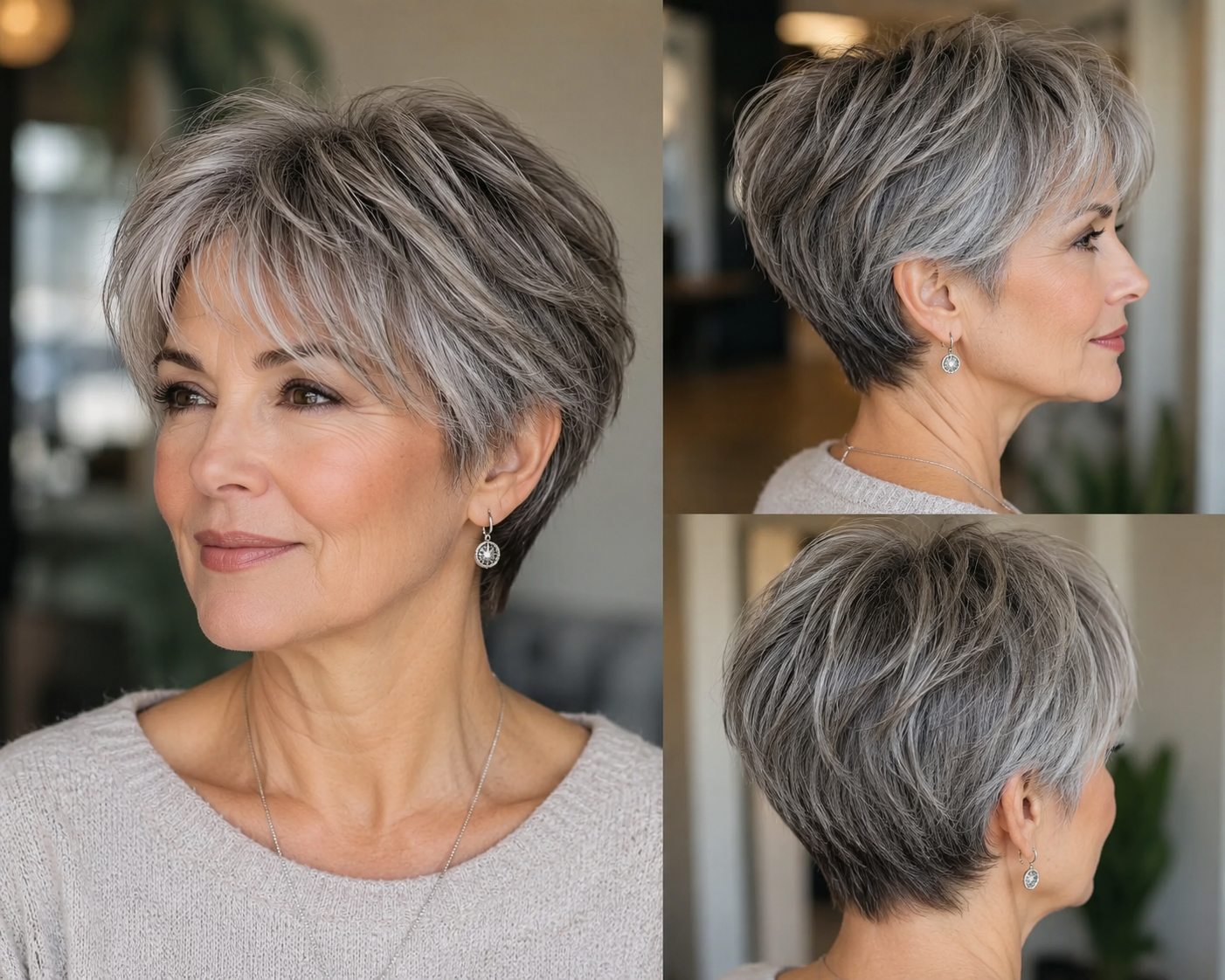
Fifty doesn’t mean your hair has to go quiet. If anything, a well-cut pixie bob haircut over 50 tends to look more intentional, more polished than it might have a decade earlier. Here’s why it works so well at this stage:
- Lifts the face, drawing attention upward rather than toward the jawline.
- Adds volume where hair often thins first — the crown.
- Looks fantastic with grey blending, balayage, or a full switch to silver.
- Cuts down daily styling time dramatically compared to longer hair, which can start looking flat or stringy as texture changes with age.
Layering with a soft fringe tends to be the sweet spot here — enough structure to look pulled together, enough softness to avoid looking severe.
Pixie Bob Haircut for Over 60
This is one of the most-searched versions of the cut, and there’s a good reason for it. Stylists consistently bring it up as one of the most flattering short options for mature hair, largely because it delivers a polished look without demanding much daily effort at all.
One stylist put it well when discussing why this cut works so well for older clients — <cite index=”1-1″>it looks chic without much effort, which can shorten styling time while still looking flattering</cite>. That combination, low effort plus real payoff, is exactly why so many women in their 60s and beyond search for it specifically.
A few honest notes if you’re weighing this cut:
- Talk it through with your stylist first. A good one will assess your actual texture and density rather than just handing you a photocopy, because <cite index=”1-1″>the main risk with a short cut is choosing one that doesn’t suit your face shape — which is why finding the right stylist matters so much</cite>.
- Listen to their honest read. A stylist worth trusting will tell you what’s realistic, since <cite index=”1-1″>they should give honest feedback on what cut actually fits your lifestyle</cite>.
- Grey and silver tones genuinely shine with the movement layering provides.
- Glasses wearers benefit a lot — the shorter length and softer framing work with your frames instead of getting in the way.
If you’ve been hesitating because you’re worried it’ll look “too plain,” the layered, feathered versions solve exactly that. Soft, textured, nothing stiff about it.
Low Maintenance Pixie Bob Haircut with Fringe
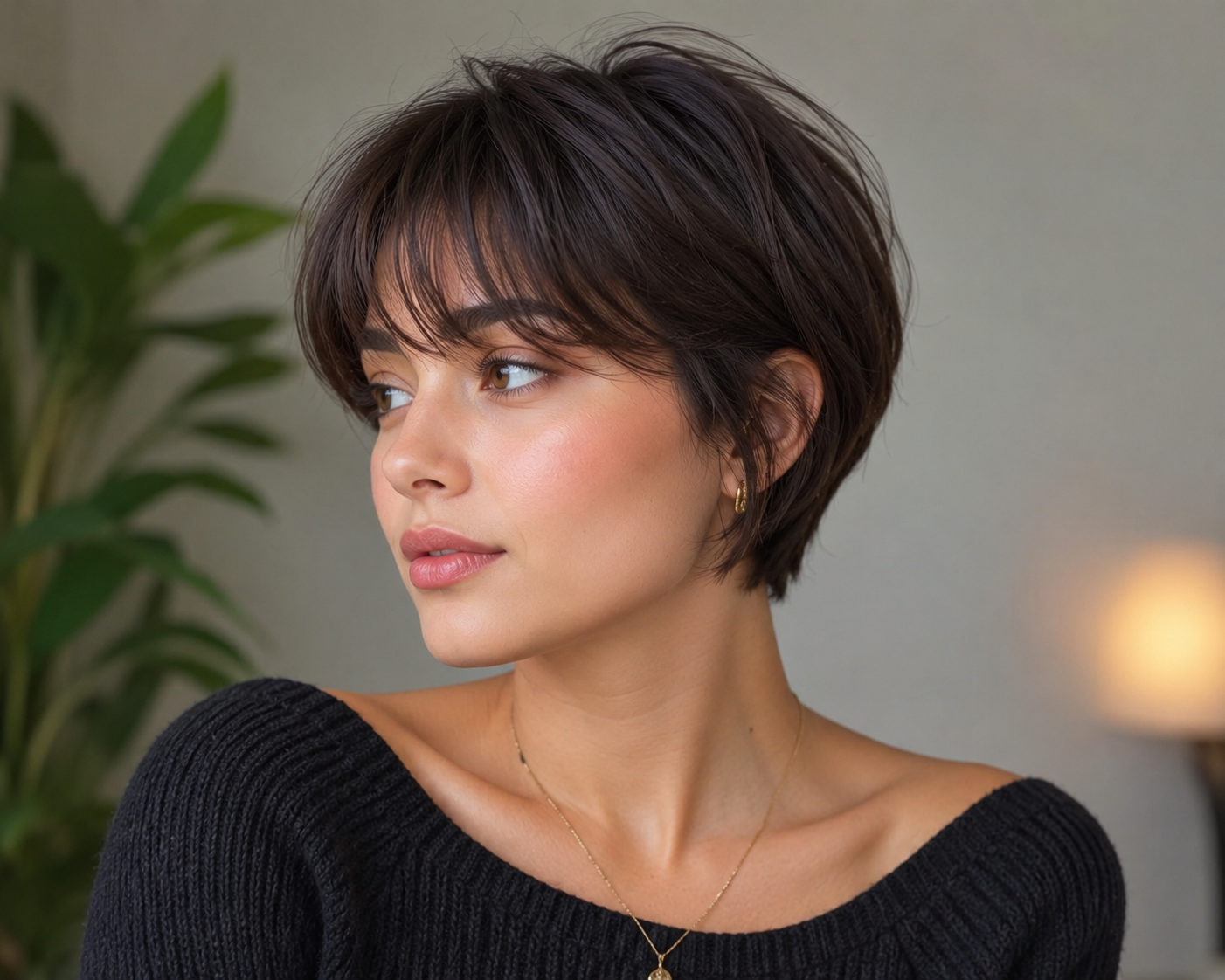
Put the two most requested things together — low effort and a face-softening fringe — and you get what might be the single most practical version of this whole cut.
Here’s why the combination works:
- The fringe does a lot of the face-framing work on its own, so the rest of the cut can stay simpler.
- A wispy, textured fringe dries naturally without needing a flat iron.
- It softens the forehead instantly — no contouring required.
- It grows out into a side-sweep gracefully, so you’re not chained to three-week salon visits.
If you want the lowest-effort version possible, ask for a slightly longer, wispier fringe rather than something blunt and precise. Blunt fringes look sharp, but they need far more upkeep to stay that way.
Styling It Yourself, Realistically
You don’t need a professional kit sitting on your bathroom counter. Here’s roughly what works:
- Towel-dry gently — rubbing roughly just creates frizz.
- Work a lightweight mousse or texturizing spray through damp hair, focusing on the roots.
- Air-dry, or diffuse on low heat, scrunching lightly.
- Add a touch of texture paste or dry shampoo the next day for extra lift.
- Use your fingers more than a brush if you want to keep waves or curls intact.
For a sleeker look, a small round brush and a low-heat blow-dry usually does it — and because the cut is short, the whole thing rarely takes more than ten minutes.
What About Color?
Color changes how a pixie bob reads more than people expect.
- Silver and platinum — striking on layered, textured cuts, and a natural fit if you’re embracing grey.
- Soft balayage or babylights — adds depth without demanding constant root touch-ups.
- Warm auburn or copper — brings warmth to the skin, pairs nicely with sleeker, more structured cuts.
- Icy or ash blonde — cool and modern, though it needs regular toning to stay that way.
If low-maintenance really is the priority, stay close to your natural base, or ask for a soft, root-blended technique instead of something high-contrast.
What to Actually Say to Your Stylist
Bringing a photo helps, but the right words help more:
- “I want layers for volume, but I need this to air-dry easily.”
- “Can we do a soft, wispy fringe instead of something blunt?”
- “My hair is [fine/thick/wavy] — what version of this cut actually works with that?”
- “I want this genuinely low-maintenance — what’s realistic given how I actually style my hair?”
Being upfront about your texture, your habits, and how much time you’re willing to spend is honestly the biggest factor in whether you love the result.
Frequently Asked Questions
What is a pixie bob haircut with fringe best for?
Mainly softening the forehead and drawing focus to the eyes without adding real styling time. It works especially well on round, square, and oval faces.
Does a pixie bob haircut with layers work on thick hair?
Yes — layering is almost essential for thick hair here. Without it, the cut can sit heavy. Layers remove bulk and add movement.
How do I get a genuinely low-maintenance pixie bob haircut?
Ask for a cut designed to air-dry well, avoid heavy blunt lines that need constant reshaping, and stick close to your natural color to cut down on root touch-ups.
Is a pixie bob haircut over 50 worth trying?
Generally, yes. It lifts the face, adds volume where it’s often needed most, and works beautifully with grey blending — all while cutting your styling time down.
What’s the best pixie bob haircut for over 60?
A layered, softly textured version with a wispy fringe tends to be the most flattering and lowest-effort choice, particularly for anyone transitioning to grey or silver.
Can I do a low-maintenance pixie bob haircut with fringe if I wear glasses?
Definitely — it’s actually one of the better combinations for glasses wearers, since the shorter length and soft fringe work with your frames rather than against them.
How often does a pixie bob need trimming?
Roughly every 4–6 weeks to hold its shape, though the more layered, textured versions can usually stretch a little longer between visits.
Last Thought
A pixie bob haircut isn’t really about following a trend. It’s about solving something — too much time spent styling, hair that’s thinning in places, a look that stopped feeling like you. Whether you’re leaning toward a pixie bob haircut with fringe, something heavily layered, or a properly low-maintenance pixie bob haircut built for chaotic mornings, there’s a version of this cut for wherever you’re at — including thoughtful takes on a pixie bob haircut over 50 and a pixie bob haircut for over 60.
Honestly, the best move is simple: save a couple of the styles above, book a consultation, and be straightforward with your stylist about your hair type and how much time you’re actually willing to spend on it. Get that conversation right, and the cut does most of the work from there.