

A client came in last week, sat down, and before I could even say hello, she had her phone out. “Can I get this?” Same photo I’d seen four times that month already. Short, a bit messy, somehow still looks done. A Bixi cut.
I get why this one keeps coming up. Bobs go flat by 2 pm. A full pixie is a bigger commitment than most people are ready for on a random Tuesday. The Bixi cut is the in-between option, and if I’m honest, it’s probably the most forgiving short cut I’ve cut in years, maybe ever.
So instead of another “it suits everyone!” post that tells you nothing, I wanted to actually break this down the way I would in a real consultation. Which version of the Bixi cut fits your face, what your hair texture changes about the cut, how you’d actually style it on a Tuesday morning, and the exact words to use with your stylist so you don’t leave disappointed.
So What Actually Is a Bixi Cut?
Bob plus pixie, squished together into one word. That’s the whole naming logic. Length-wise it sits between the two: longer than a pixie (which usually stops around the ear), shorter than a bob (chin or below). Most Bixi cuts land somewhere between your earlobe and your jaw, though I’ve cut them a little longer for clients who weren’t ready to commit fully.
Length isn’t really what makes it a Bixi cut, though. It’s the layering. A few things I always build in:
- Choppy, textured layers through the crown and sides
- Longer face-framing pieces left at the front
- A tapered, shorter nape for a cleaner finish at the back
- Volume that’s already built into the cut, so styling isn’t a whole production
Put those together, and you get hair that looks a little undone on purpose, not messy in the bad way. It looks intentional even on the days you did nothing to it. That’s really the whole appeal.
Bixi Cut vs. Pixie vs. Bob
|
Bixi Cut |
Pixie |
Bob |
|
|
Length |
Earlobe to jaw |
Ear and above |
Chin to collarbone |
|
Layers |
Choppy, textured |
Minimal/tight |
Minimal or blunt |
|
Volume |
Built in |
Minimal |
Flat without styling |
|
Maintenance |
Every 4-6 weeks |
Every 3-4 weeks |
Every 6-8 weeks |
|
Styling time |
5-10 minutes |
5 minutes |
10-20 minutes |
|
Best for |
Versatility seekers |
Bold, minimal routines |
Classic lovers |
Why Has the Bixi Cut Taken Over 2026?
Partly it’s just timing. People are done spending forty minutes on a blowout before 8 am, and 2026’s whole hair mood has been effortless over perfect. A Bixi cut is basically that idea, but as a haircut.
Celebrities help too, obviously. Sharon Stone has been wearing a soft, cheekbone-skimming version that doesn’t feel severe at all. Emma Thompson’s take leans into texture and movement rather than sharp lines, which tells you something about how well this cut ages with you rather than against you. And on my end, it’s simply the most requested short haircut walking through my door right now, more than the wolf cut, more than the classic bob.
This isn’t one of those trends that vanishes in a season. It’s more of a shift, hair that works with your actual texture instead of demanding you fight it every morning.
The Best Bixi Cut for Every Face Shape
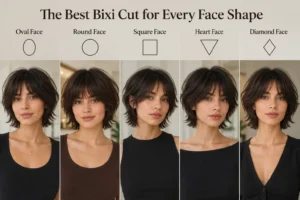
Here’s where I think most articles fail people. “Works on every face shape!” and then, nothing else. That’s not useful. The layering and length you ask for change quite a bit depending on your face, so let’s actually get into it.
Quick way to figure out your face shape if you’re not sure: pull your hair all the way back, stand at the mirror, trace your face outline on the glass with a washable liner. Whatever shape you drew, that’s your answer.
Oval Face
Honestly, you can’t mess this one up. Oval faces are naturally balanced, so classic, shaggy, curtain-bang, asymmetric, whatever version of the Bixi cut you want, it’ll work. Just say: “I want a Bixi cut, choppy layers through the crown and sides, longer pieces at the front, and I trust you to customize it to my face.”
Round Face
The goal is length, not width. I build height at the crown to elongate things, keep the sides closer to the head, and leave the front pieces a bit longer to pull the eye downward instead of across. What I avoid is adding bulk near the temples; that just widens things further. Ask for: “a Bixi cut with height at the crown, longer face-framing pieces, and flatter through the sides.”
Square Face
A blunt cut on a strong jawline can look boxy fast. A Bixi cut does the opposite; the choppy, wispy layers soften those sharper lines exactly where you’d want them. I usually bring in side-swept or curtain bangs and a touch of asymmetry, and stay well away from anything blunt or too geometric. Ask for: “soft, wispy layers around my jaw, side-swept framing, nothing too structured.”
Heart Face
Wider forehead, narrower chin, this is one of my favorite shapes to cut a Bixi into, honestly. Layers hitting right at cheekbone level are the sweet spot, side-swept or curtain bangs soften the forehead, and keeping a little length at the front balances out the chin. Ask for: “a Bixi cut with layers at cheekbone level and side-swept framing to balance my forehead.”
Diamond Face
Prominent cheekbones, narrower forehead and jaw. Crown volume widens the forehead just a touch, soft textured sides keep the cheekbones from reading too sharp, and curtain bangs tie the whole thing together. Ask for: “volume at the crown, soft textured sides, curtain bangs to balance my forehead.”
Bixi Cut for Every Hair Type
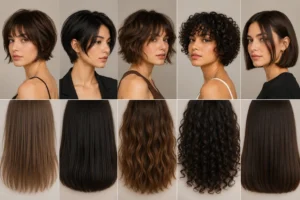
Face shape decides which version you get. Hair type decides how you’ll actually pull it off day to day.
Fine Hair
Fine hair and a Bixi cut just work. The choppy, feathery layers trick the eye into seeing more fullness than you actually have. I don’t remove a ton of length, just enough texture at the crown to create movement. Volumizing mousse at the roots, blow-dry upward, and skip the heavy creams or oils; they’ll flatten everything you just built.
Thick Hair
Thick hair can turn bulky and heavy in the wrong cut. A Bixi cut fixes that by thinning the sides and cutting into the layers to remove weight while keeping movement in the ends. A light texturizing spray plus a round-brush blow-dry is genuinely all you need. You already have the volume, you’re just directing it now.
Wavy Hair
This might be the easiest pairing on this whole list. Soft layers just enhance whatever wave pattern you’ve already got instead of fighting it, and you end up with that woke-up-like-this look without really trying. Scrunch a curl-enhancing mousse through damp hair and let it air-dry, or diffuse it for a bit more definition.
Curly Hair
Yes, curly hair can absolutely wear a Bixi cut. Keep the layers slightly longer so the curls have room actually to form, while still removing enough bulk to keep the shape. Curl cream on soaking wet hair, scrunch upward, diffuse on low. Don’t brush it out once it’s dry; that’s the one rule I hold clients to.
Straight Hair
Straight hair gives a Bixi cut this sleek, almost editorial quality. The choppy layers add movement to what would otherwise sit flat. A round-brush blow-dry with a light smoothing serum gets you that sharp, polished finish.
Bixi Cut Variations Worth Knowing in 2026
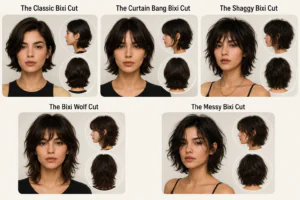
1. The Classic Bixi Cut
Feathered layers, a bit longer at the front, tapered at the nape. Clean, wearable, works at the office and at brunch. If it’s your first Bixi cut, start here.
2. The Curtain Bang Bixi Cut
Add a soft, center-parted fringe and the whole thing gets more romantic and face-framing. Curtain bangs fall gently on either side of the forehead; they work beautifully on almost anyone, especially heart and oval shapes.
3. The Shaggy Bixi Cut
Nineties rock-star energy, basically. Lots of choppy, disconnected layers, heavier texture everywhere, an undone finish that still somehow looks styled. Good for anyone who wants that “didn’t try but still looks great” thing going on.
4. The Bixi Wolf Cut
This is the one clients are now asking for by name, not just by photo. It’s the shaggy, heavily-layered texture of a wolf cut applied to Bixi-length hair, so you get more of a mullet-adjacent shape with real volume at the crown and choppy pieces framing the face. Bolder than a classic Bixi cut, and it looks fantastic if you’ve already got natural wave or curl to exaggerate the shag.
5. The Messy Bixi Cut
Deliberately undone. Texturizing spray scrunched through damp hair, air-dried instead of brushed smooth, letting the layers separate on their own. It’s the lowest-maintenance version of this cut, and it’s what I recommend to anyone who doesn’t want to touch a hot tool most mornings.
6. The Asymmetric Bixi Cut
One side kept slightly longer than the other. Bold, a bit editorial, photographs really well. Best if you like your hair making a statement before you’ve said a word.
7. The Sleek, Polished Bixi Cut
Same cut, styled smooth instead of tousled. Good for workplaces where you want something more refined. A flat iron and a smoothing serum are really all it takes to turn a shaggy Bixi cut into something polished for the day.
Bixi Cut for Women Over 50
I want to actually spend time on this one, because it’s the question I get most in consultations and most guides skip it completely. As hair thins with age, a Bixi cut becomes one of the more flattering options out there, and that’s not a coincidence.
The layering does two things that mature hair genuinely needs: it fakes density through the crown, and it softens the face without looking severe. Kept a little longer at the front, with airy texture rather than a blunt line, it lifts the face and plays up the cheekbones instead of aging things. Where it goes wrong is if the sides get cut too short or too blunt; that reads harsh instead of soft, and it’s the mistake I see most often when someone brings in a photo of a much younger model.
What I tell clients over 50: ask for “a Bixi cut with longer face-framing pieces, volume at the crown, and soft, airy texture, nothing blunt through the sides.” A texture spray and a gentle scrunch with your fingers usually covers the daily styling, which matters if you’re also dealing with finer or slower-growing hair.
How to Style a Bixi Cut at Home
This is genuinely one of the easiest cuts I know to style yourself. Seven steps, under ten minutes, most days.
What you’ll need: a towel, volumizing mousse, a blow-dryer with a nozzle, a small round brush, texturizing spray, and a light hairspray.
- Towel-dry gently. Squeeze the water out rather than rubbing; you want hair around 80% damp, not soaked. Rubbing just creates frizz and messes with your natural texture.
- Work a golf-ball amount of mousse into your roots and crown only. That’s what gives the cut its lift. Ends only get mousse if your hair is wavy or curly.
- Attach the nozzle and blow-dry the crown, pointing the airflow down each section but lifting at the root as you go. This one step controls most of your volume for the day.
- Roll a small round brush under your crown sections while drying to build natural bounce.
- Pick your part. Deep side part for drama and volume on one side, center part for something softer and more balanced.
- Once it’s dry, spritz texturizing spray over the whole head and scrunch gently. This separates the layers; this is the step that actually makes a Bixi cut look like a Bixi cut.
- Set with a light mist of hairspray held at arm’s length. You want movement, not a helmet.
Seven to ten minutes, start to finish. That’s the whole routine.
Best Products for a Bixi Cut
You don’t need a full shelf here, just four things really.
- Volumizing mousse, at the roots before blow-drying, for lift that actually lasts the day.
- Texturizing spray, the finishing step that separates the layers and gives you that undone feel.
- A small, one-inch round brush for crown lift while drying.
- A light hairspray to set things without stiffness.
Optional: a one-inch curling wand for loose waves on the days you want a bit more polish.
Bixi Cut Maintenance, the Honest Version
Plan on a trim every four to six weeks to keep the shape, a bit more often than a bob, though these trims are quick since your stylist is mostly cleaning up the layers and nape rather than taking off real length. Got bangs on your Bixi cut? Trim those every two to three weeks; a growing fringe changes the whole shape of the cut faster than you’d think.
Here’s the part nobody tells you upfront: growing it out has an awkward stretch, usually around week eight to twelve, where the nape gets shaggy, and the layers lose shape. The easiest fix is asking your stylist to reshape it into a shaggy lob and keep going from there. Honestly, most people who set out to “grow out” their Bixi cut end up keeping it anyway, because it still looks good at that stage.
What to Tell Your Stylist, Word for Word
Bring these exact phrases into your consultation:
- Oval face: “I want a Bixi cut, choppy layers throughout the crown and sides, longer face-framing pieces at the front, tapered at the nape. Customize it to my features.”
- Round face: “I want a Bixi cut with extra height at the crown, longer pieces framing my face, and kept softer and flatter at the sides.”
- Square face: “I want a Bixi cut with soft, wispy layers around the jaw and side-swept framing. Nothing too geometric or blunt.”
- Heart face: “I want a Bixi cut with layers at cheekbone level and curtain bangs or side-swept framing at the front.”
- Over 50: “I want a Bixi cut with longer face-framing pieces, volume at the crown, and soft, airy texture, nothing blunt through the sides.”
And bring two or three photos. Sounds obvious, but it’s still the single biggest thing that closes the gap between what’s in your head and what you walk out with.
Frequently Asked Questions
What is a Bixi cut?
A hybrid haircut between a bob and a pixie. It sits between the earlobe and jaw, with choppy, textured layers through the crown and longer face-framing pieces at the front, shorter than a bob, longer than a pixie, more textured than both.
What is a boxy haircut?
A boxy haircut is a blunt, structured short cut, usually a graduated bob, where the shape holds a defined, squared-off silhouette instead of falling into soft layers. People mix it up with a Bixi cut because the names sound alike, but they’re really opposites; boxy is sharp and geometric, a Bixi cut is choppy, textured, and deliberately undone.
Who can pull off a Bixi cut?
Pretty much anyone. It works on fine, thick, wavy, curly, and straight hair, and on every face shape once the layering and length get customized. It’s especially flattering on diamond, square, and heart shapes, where crown volume balances stronger angles, and it works well on women over 50 who want softness without going too short.
How do you style a Bixi cut?
Mousse at damp roots, blow-dry the crown upward with a small round brush for lift, then texturizing spray scrunched through the ends and a light hairspray to set. Most people manage it in under ten minutes without any heat tools beyond the blow-dryer.
What face shape is best for a Bixi cut?
Every face shape can wear one; the customization is what changes. Oval faces can wear any variation. Round faces do best with height at the crown and flatter sides. Square and diamond faces benefit from soft layers breaking up sharper angles, and heart faces look best with layers hitting at cheekbone level.
What is a Bixi wolf cut?
It combines the heavy shag layering of a wolf cut with Bixi-length hair, giving you extra crown volume, choppy face-framing pieces, and a wilder, more textured finish than a classic Bixi cut.
Is a Bixi cut good for women over 50?
Yes, genuinely one of the more flattering short cuts for mature hair. Layering fakes density, softens the face, and highlights the cheekbones, as long as the sides aren’t cut too short or too blunt.
Mistakes I See Most Often With a Bixi Cut
A few things come up again and again in my chair, and most of them are avoidable if you know to ask about them upfront.
- Going in without a length reference. “Short” means something different to everyone. Bring a photo, always.
- Skipping the crown volume conversation. This is the one detail that decides whether your Bixi cut looks flat by noon or holds shape all day.
- Cutting the sides too short for a round or square face. It happens when the stylist doesn’t know your face shape preference going in, so say it out loud.
- Ignoring fringe upkeep. A Bixi cut with bangs that’s overdue for a trim stops looking like a Bixi cut and starts looking like a grown-out pixie.
- Over-styling with product. This cut is meant to look a little undone. Two products, applied at the right stage, beat five products fighting each other.
Final Thoughts
A Bixi cut rewards you for choosing it. It looks good even on the days you barely style it, and it grows out into something you can still work with instead of a shape you’re stuck fixing every week. If you’re still on the fence about which version suits your face and hair, take the notes above into your next consultation, bring your photos, and use the exact words. That’s really the difference between loving your new cut and booking an emergency fix appointment two weeks later.