
Table of Contents
I still remember a client, a college student, who sat in my chair holding her phone with a photo of some Instagram model’s perfect ringlets. “I want this,” she said. “I’ve tried everything, and my curls just don’t do this.” I looked at her hair, still damp from the wash I’d just given her, and I already knew why. She had two completely different curl types on one head, and every product she owned was made for either one. That’s the story behind almost every frustrated curl client I’ve ever had, and it’s the reason I sat down to write this guide the way I actually explain it in the chair, not the way a product label explains it.
Here’s the truth: knowing your curl type is the starting point, not the whole answer. The real shift happens when you understand your curl pattern together with your porosity and your strand thickness. That combination is what actually tells you which product will sit on your hair and do nothing, and which one will finally give you the definition you’ve been chasing. This guide walks through the full 2A–4C curl types chart, how to find your own pattern at home, and the routines that genuinely work for each one, plus the stuff most curl guides quietly skip.
What Is the Hair Typing System, Really?
The hair typing system almost everyone uses today was created by celebrity stylist Andre Walker back in the 1990s, and it’s stuck around because it’s simple. It sorts hair into four main types, numbered 1 through 4, based on the shape the hair naturally forms. Within each number, the letters A, B, and C tell you how loose or tight that pattern is, with A being the loosest and C being the tightest.
A few things I always tell clients before we even get into the chart:
- Most people don’t have one single curl type. You might be a 3A on top and a 3C at the nape, and that’s completely normal. Curl pattern often varies by section.
- Curl type describes shape only. It says nothing about how your hair drinks moisture, how thick each strand is, or how much hair you actually have. That’s where a lot of guides stop short, and it’s where most of the frustration in my chair comes from.
- Your curl pattern isn’t fixed for life. Hormones, heat damage, color processing, and even the towel you dry with can all shift it over time.
With that out of the way, let’s get into the actual curl types chart.
The Full Curl Types Chart: 1 Through 4C
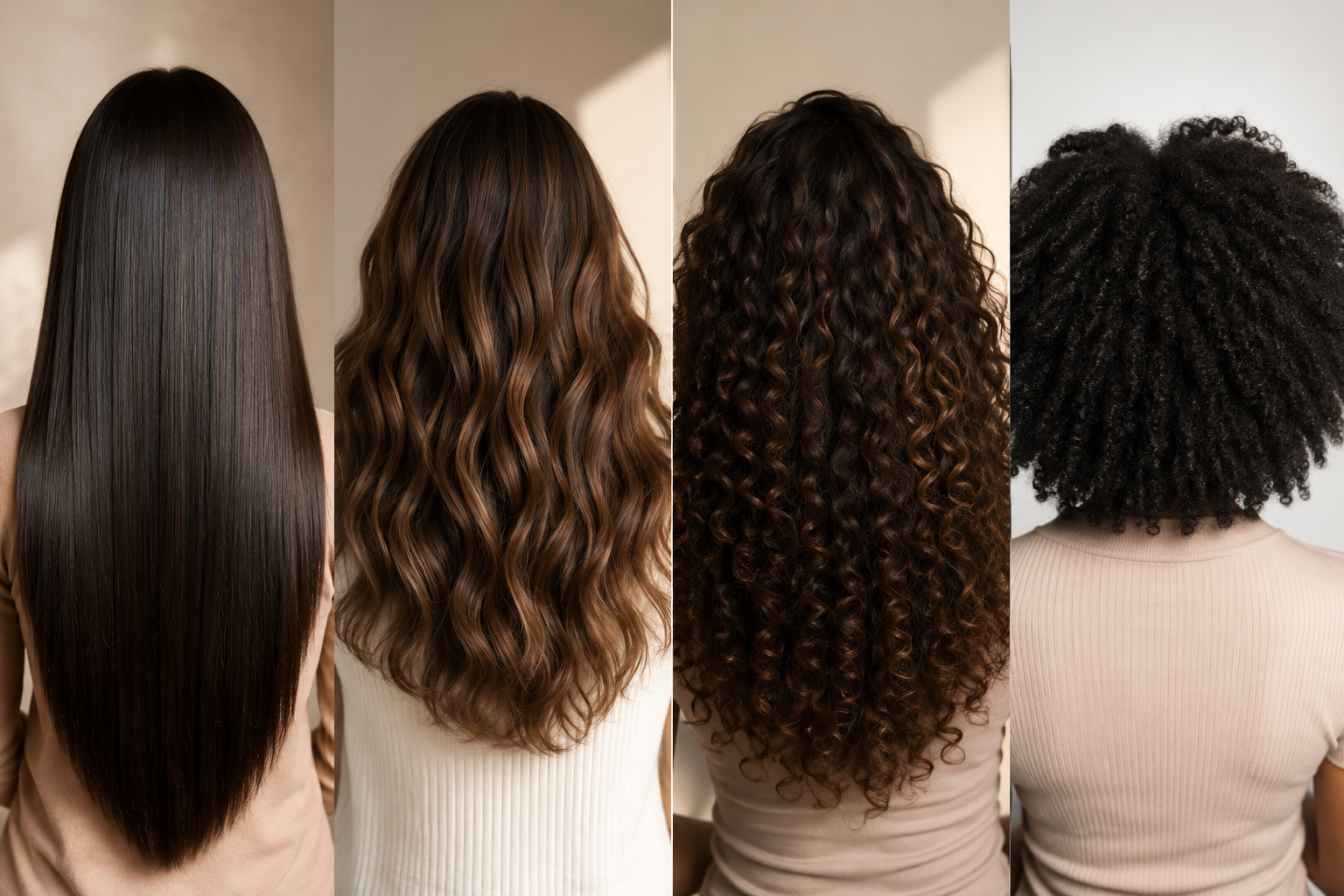
| Type | Curl Shape | Subtypes |
| Type 1 | Straight, no bend at all | 1A, 1B, 1C |
| Type 2 | Wavy, loose S-shape | 2A, 2B, 2C |
| Type 3 | Curly, defined spirals | 3A, 3B, 3C |
| Type 4 | Coily, tight coils/zig-zags | 4A, 4B, 4C |
That’s the bird’s-eye view. Now let’s break each one down properly, because the difference between a 2C and a 3A, or a 3C and a 4A, is exactly where most people misdiagnose their own hair.
Type 1: Straight Hair
Type 1 hair has no bend at all, and it’s still part of the same conversation because plenty of my clients with “straight” hair actually have a very loose 2A hiding underneath layers of heat styling.
- 1A — Fine, silky, and flat. Struggles to hold a curl even with a wand. Volume is the main goal here, so lightweight mousses and root-lifting sprays are your friends.
- 1B — A bit more body than 1A, and the most versatile straight type. Takes to both sleek looks and loose textured waves.
- 1C — Thick and coarse with the occasional bend near the ends. Doesn’t curl easily even under heat. Smoothing serums and a strong heat protectant do the heavy lifting.
Type 2: Wavy Hair (2A, 2B, 2C)
Wavy hair is the type I see misunderstood the most in my chair. So many clients with gorgeous natural waves spent years straightening because nobody ever told them they even had a wave pattern worth working with.
- 2A — Barely-there waves with a gentle S-shape, usually starting mid-shaft. Fine strands that fall flat fast, especially in humidity. Go light: mousse or a curl spray, never a heavy cream or oil.
- 2B — More defined S-waves sitting closer to the scalp. Frizz shows up more here, and a light gel or foam on soaking wet hair, scrunched out once dry, gives you soft bounce without weight.
- 2C — The border case, tighter waves that sometimes spiral at the ends. Frizz-prone and thirstier than 2A or 2B. This is where a modified Curly Girl routine starts to make sense, though I always tell 2C clients to clarify more often than the method usually recommends.
The technique nobody mentions enough for Type 2 clients: plopping. Wrap wet hair in a microfiber towel or old t-shirt for fifteen to twenty minutes after you apply the product. It sets the wave pattern without the frizz a regular towel-dry causes. Clip sections at the root while diffusing, too; wavy hair needs that extra root volume.
Type 3: Curly Hair (3A, 3B, 3C)
Type 3 curls are the ones with the most personality in my chair, bouncy, springy, full of shine when they’re treated right. But they’re also the type that turns to a frizzy halo the fastest when the moisture balance is off.
- 3A — Large, loose spirals about the width of sidewalk chalk. Shiny and well-defined when healthy, but they fall flat under heavy products or too much touching. Light-to-medium hold, curl creams, and a light gel are usually enough.
- 3B — Tighter, bouncier ringlets around the width of a marker pen. Needs more moisture than 3A and responds beautifully to the LOC method (Leave-in, Oil, Cream). Ends dry out fastest here, so weekly deep conditioning isn’t optional.
- 3C — Very tight corkscrew curls, dense and springy, sitting right at the edge between curly and coily. Shrinkage can hit 50%. Detangle gently, always with slip from a conditioner, never on dry hair.
A 3C-specific tip I give constantly: the spiral shape makes it hard for scalp oil to travel down the whole strand, so 3C hair can look oily at the root and feel bone-dry at the ends at the same time. Treat the two zones differently: lighter product near the scalp, richer cream on the ends, and you’ll notice the difference within a couple of wash days.
Type 4: Coily / Kinky Hair (4A, 4B, 4C)
Type 4 hair is, without a doubt, the most versatile texture that walks into my salon, and also the most under-served by mainstream hair care. It has the tightest pattern, the highest shrinkage, and it needs the most moisture of any curl type on this chart.
- 4A — Tight, densely packed coils with a visible S-pattern. Responds well to the LOC or LCO method and holds a wash-and-go nicely when properly moisturized.
- 4B — A crimped Z-pattern rather than a spiral, with sharper bends. Significant shrinkage, needs consistent sealing with heavier butters and oils. Twist-outs, braid-outs, and bantu knots all work well here.
- 4C — The tightest pattern on the chart, a Z-shaped zig-zag that barely shows a curl unless stretched. Shrinkage can reach 70–75% of true length. It’s the driest of all the curl types because moisture simply can’t travel the twisted strand easily. Heavy leave-ins, shea butter, and sealing oils are essential, and protective styling with minimal manipulation is where 4C hair genuinely thrives.
What I wish more guides said about Type 4 hair: watch the scalp, not just the strands. Over-manipulation, styles installed too tight, and a dry scalp under a protective style are the leading causes of traction alopecia I see along the hairline. Protective styles are wonderful, but they need gentle tension, a defined time limit, and scalp moisture even while the style is in.
Quick Self-Check: What’s My Curl Type?
Before we get into porosity and routines, here’s the mini version of the quiz I actually run through with clients in the chair. Answer honestly, on freshly washed, product-free, air-dried hair:
- Does your hair fall mostly straight with maybe a slight bend near the ends? You’re likely a Type 1 or a very loose 2A.
- Does it form a soft S-shape you could lose in humidity by lunchtime? You’re in the Type 2 wavy range.
- Does it spring into a defined spiral, roughly the width of a marker or chalk, that holds its shape when dry? You’re a Type 3 curly texture.
- Does it coil tightly, shrink dramatically, or form a Z-shaped zig-zag with real definition only when stretched? You’re a Type 4 coily texture.
If your honest answer changes depending on which section of your head you’re looking at, congratulations, you’re like most of my clients. Note the pattern at your crown separately from your nape and your hairline, and treat each zone according to its own needs instead of forcing one routine on all of it.
Beyond the Chart: Porosity, Density, and Strand Thickness
This is the part I spend the most time on with clients, because curl type tells you the shape of your hair. It does not tell you how your hair behaves with the product, and that’s the piece that actually decides your routine.
1. Porosity. This is how well your hair absorbs and holds moisture, determined by how tightly the outer cuticle layer sits.
- Low porosity: cuticles lie flat and tight, so the product tends to sit on top instead of soaking in. Warmth (steam, warm water) helps open the cuticle. Lean on humectants like aloe vera, glycerin, and honey, and go easy on protein, which builds up fast on low porosity hair.
- Medium porosity: a balanced cuticle that lets moisture in and out at a healthy rate. Most products and methods work as directed.
- High porosity: cuticles are raised or damaged, often from heat or chemical processing, so moisture rushes in and escapes just as fast. Heavier creams and butters seal it in, and occasional protein treatments help fill the gaps.
The at-home test I give every client: drop a few clean strands into a glass of room-temperature water. Floats after a few minutes, low porosity. Sinks slowly, medium porosity. Sinks fast, high porosity.
2. Density. This is how many strands you have per square inch, not how thick each strand is. Low density means your scalp shows through and needs volumizing, lightweight formulas. Medium is the most common and the most forgiving. High density can handle heavier products and usually needs to be worked through in sections so it actually reaches every strand.
3. Strand thickness. Fine strands are fragile and weigh down easily, especially with too much protein. Medium strands are the most resilient and versatile. Coarse strands are strong but resist moisture, so they need more intensive conditioning. Hold a single strand up to the light next to a piece of sewing thread: thinner than the thread is fine, similar is medium, thicker is coarse.
How to Actually Find Your Curl Type
You cannot accurately read your pattern on unwashed, product-loaded hair, so here’s the clean version:
- Wash with a gentle, sulfate-free shampoo.
- Skip every product: no leave-in, no gel, no cream.
- Let it air dry completely. No touching, no blow dryer.
- Look at the shape your hair forms once it’s fully dry.
Remember that your pattern can vary across your head. Identify the most common one, then note where it shifts so you can adjust product zone by zone instead of guessing.
Curl Type Routines: What Actually Works
Wavy routine (2A–2C), two to three times a week:
- Clarify with a gentle sulfate-free shampoo. Wavy hair needs this more often than curly types to avoid buildup that weighs the wave flat.
- Apply a lightweight conditioner and detangle gently with fingers.
- Rinse with cool water to help close the cuticle.
- Apply a curl-enhancing mousse or light gel on soaking wet hair.
- Plop for fifteen to twenty minutes with a microfiber towel or t-shirt.
- Diffuse on low heat or air dry, then scrunch out the crunch once fully dry.
Curly routine (3A–3C), one to two times a week:
- Co-wash or use a sulfate-free shampoo.
- Apply a rich conditioner and detangle section by section with a wide-tooth comb.
- Apply leave-in conditioner on soaking wet hair, then layer a curl cream on top.
- Seal with a light oil or finishing gel.
- Diffuse or air dry without touching, then scrunch out any crunch once dry.
- Deep condition weekly for twenty to thirty minutes, with heat if your porosity is low.
Coily routine (4A–4C), once a week or every ten to fourteen days:
- Pre-poo with coconut or olive oil for at least thirty minutes before shampooing.
- Shampoo gently, focusing on the scalp.
- Deep condition with a heavy mask under heat or a plastic cap for thirty-plus minutes.
- Apply a generous leave-in on soaking wet hair, then seal with a thick butter followed by an oil.
- Style in sections, twist-out, braid-out, or chunky twist, and let it dry fully before unraveling.
Between wash days for coily hair, keep the scalp lightly oiled and refresh curls with a water-based spray and some finger coiling wherever the style needs it.
Curl Types for Men: What’s Actually Different
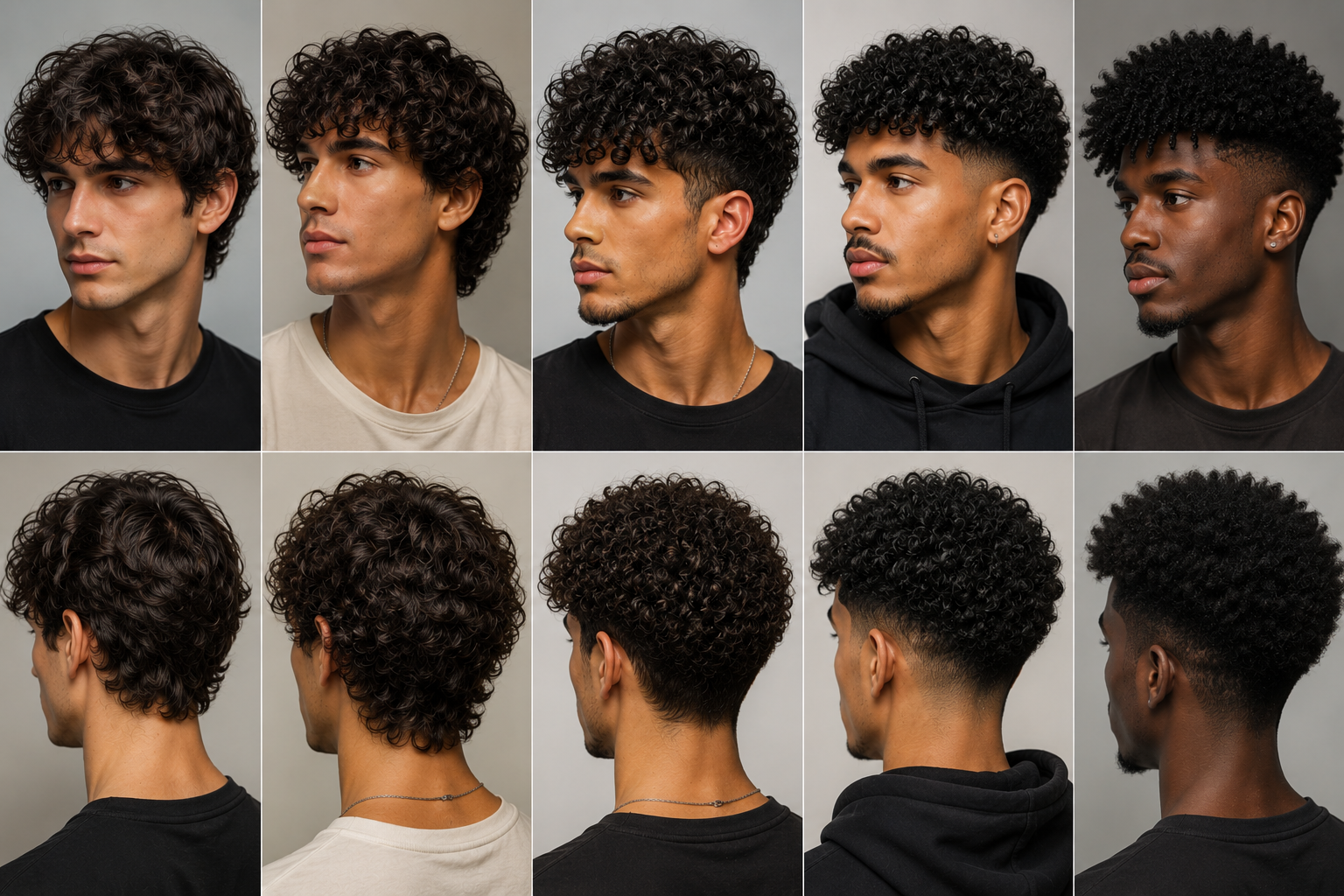
Almost every curl guide is written as though only women have curls, and it’s one of the bigger gaps I see across the industry. Men’s curl types follow the same 2A–4C chart. What changes is the routine, mostly because of shorter length.
- Product buildup shows faster on short hair, so clarify more often than you would with longer curls.
- A visible scalp means scalp health matters even more; a flaky or dry scalp is a lot more noticeable on a short cut.
- Use less product than you think. Start with a dime-sized amount and build up, working it in section by section rather than raking it through all at once.
- Styling for shorter curl types often means prioritizing definition and hold over length-based techniques like twist-outs.
Do Curl Types Work the Same on Every Hair Color and Texture?
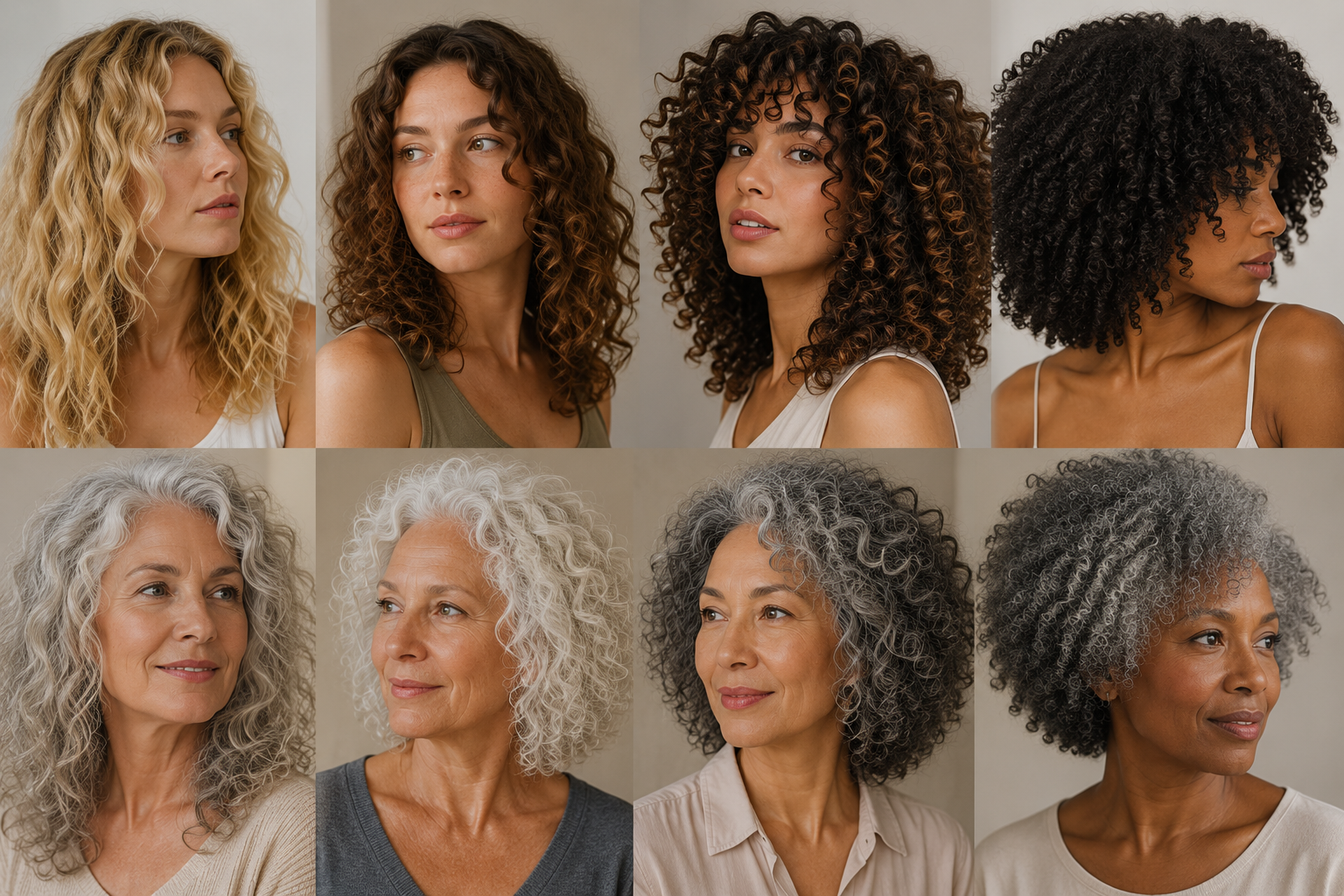
A question I get constantly, especially from clients with fine, white, gray, or naturally blonde hair: does the curl chart even apply to me? Yes, the 2A–4C system is based purely on the physical shape of the strand, not its color. That said, a few things do shift the experience:
- Fine, light-colored hair (common with naturally blonde or white/gray strands) tends to run lower density and lower thickness, so even a defined 3A pattern can look less voluminous simply because there’s less strand mass per curl.
- Gray and white hair is naturally more resistant to moisture and often reads as higher porosity due to changes in the cuticle over time, so treat it with the same heavier sealing approach you’d use on damaged high-porosity hair.
- Color-treated hair of any shade usually shifts porosity upward regardless of the starting curl type, which is exactly why porosity matters more than the curl number once you’re choosing products.
Protective Styles: What They’re For and Who Needs Them
Protective styles tuck your ends away to cut down on breakage and moisture loss, and they matter most for Types 3C through 4C, which lose moisture and length the fastest.
- Box braids
- Knotless braids
- Senegalese twists
- Cornrows
- Faux locs
- Buns and updos
A few rules I never skip with clients: install with gentle tension, never pulling at the edges. Keep the scalp moisturized while the style is in. Give your hair a real break between styles. And never leave a protective style in longer than six to eight weeks.
Weekly Maintenance Checklist for Every Curl Type
- Deep condition weekly, non-negotiable for Types 3 and 4.
- Clarify monthly, since even sulfate-free products build up over time.
- Trim every eight to twelve weeks before split ends travel up the shaft.
- Sleep on satin or silk, since cotton pulls moisture out of hair and causes friction.
- Keep manipulation low; the less you touch your curls, the less breakage you’ll see.
- Balance protein and moisture. Too much protein leaves hair stiff, too much moisture leaves it limp. Alternate the two.
What Most Curl Guides Get Wrong
After going through a stack of the most popular curl type guides online while building this one, here’s what I consistently found missing:
- The multi-pattern reality. Almost nobody addresses what to do when you have more than one curl type on your own head, which is most people. Treat each section by its own needs instead of forcing one universal routine.
- Scalp health gets skipped. A lot of guides jump straight to product recommendations and ignore the scalp entirely, even though a healthy scalp is what feeds every strand from root to tip.
- Porosity gets buried under curl type. Your curl pattern tells you the shape. Your porosity tells you how your hair processes moisture, and that matters more when you’re actually choosing products. Two people with the same 3A pattern can need completely different routines if their porosity differs.
- The oil myth for Type 4 hair. Oil is a sealant, not a moisturizer. Used alone on dry hair, it just seals in the dryness that’s already there. A water-based product goes on first; oil locks it in second.
- Men are an afterthought. Nearly every curl guide defaults to a female audience, when curl type, porosity, and density apply to absolutely everyone.
Frequently Asked Questions
What are the different types of curls, and are there pictures I can compare mine to?
Curls run from Type 1 (straight) through Type 4C (the tightest coils), with each type split into A, B, and C subtypes from loosest to tightest. Comparing your hair to reference photos can help, but honestly, the wet-hair test described earlier in this guide is more reliable than eyeballing a picture, since lighting and hair length change how a curl photographs.
Is there a curl type quiz I can take instead of guessing?
Yes, several hair care brands offer short online quizzes, and I’ve also built a quick self-check into this guide above. A quiz is a helpful starting point, but pairing it with the actual wash-and-air-dry test always gives a more accurate read.
What does a full curl type chart look like?
A full chart lists Types 1 through 4 down one side, with subtypes A, B, and C across each, moving from straight to the tightest coily zig-zag pattern. You’ll find the complete breakdown earlier in this guide, along with what separates each subtype in practice.
Are curly hair types different for men?
The curl types themselves are identical for men and women; hair doesn’t know gender. What changes is the routine, since shorter cuts hair show buildup faster, make scalp health more visible, and need noticeably less product per application.
What’s the difference between 2C and 3A hair?
2C sits at the edge of the wavy, forming thick, well-defined S-waves that sometimes spiral at the very ends. 3A crosses fully into curly territory with a true, consistent spiral from root to tip. If your pattern forms a full loop rather than just a bend, you’re looking at 3A rather than 2C.
What do 3A curls actually look like?
3A curls are large, loose spirals, roughly the width of a piece of sidewalk chalk or a highlighter. They’re shiny and well-defined when healthy, but they’re also the most prone to falling flat under heavy product or excessive touching among the Type 3 subtypes.
Does the curl types chart work the same on white or gray hair?
Yes, the chart is based on strand shape, not color, so it applies the same way. The one difference worth knowing is that white and gray hair tends to run more porous due to natural cuticle changes over time, so it usually needs the heavier, sealing-focused routine you’d use on high-porosity hair.
How often should I wash my hair based on my curl type?
Wavy hair (2A–2C) generally does best washed two to three times a week to avoid buildup. Curly hair (3A–3C) usually works well with one to two washes weekly. Coily hair (4A–4C) can stretch to seven to fourteen days between washes, especially in a protective style. Let your scalp guide the exact timing.
Final Thoughts:
Understanding your curl type is the foundation, not a rulebook you’re locked into. I’ve had this exact conversation in my chair more times than I can count: the number or letter next to your name doesn’t decide how good your hair can look. It’s just a starting point for figuring out what your strands actually need.
Start with your pattern on the curl types chart, then layer in your porosity and density. Build your routine around those three things together, and give it four to six weeks before you decide whether it’s working. Curls take time to adjust, and real results rarely show up overnight.
Most importantly, stop chasing someone else’s curl pattern. The goal was never to look like the girl in that Instagram photo my client showed me. It’s the healthiest, happiest version of your own hair, whatever type that turns out to be.