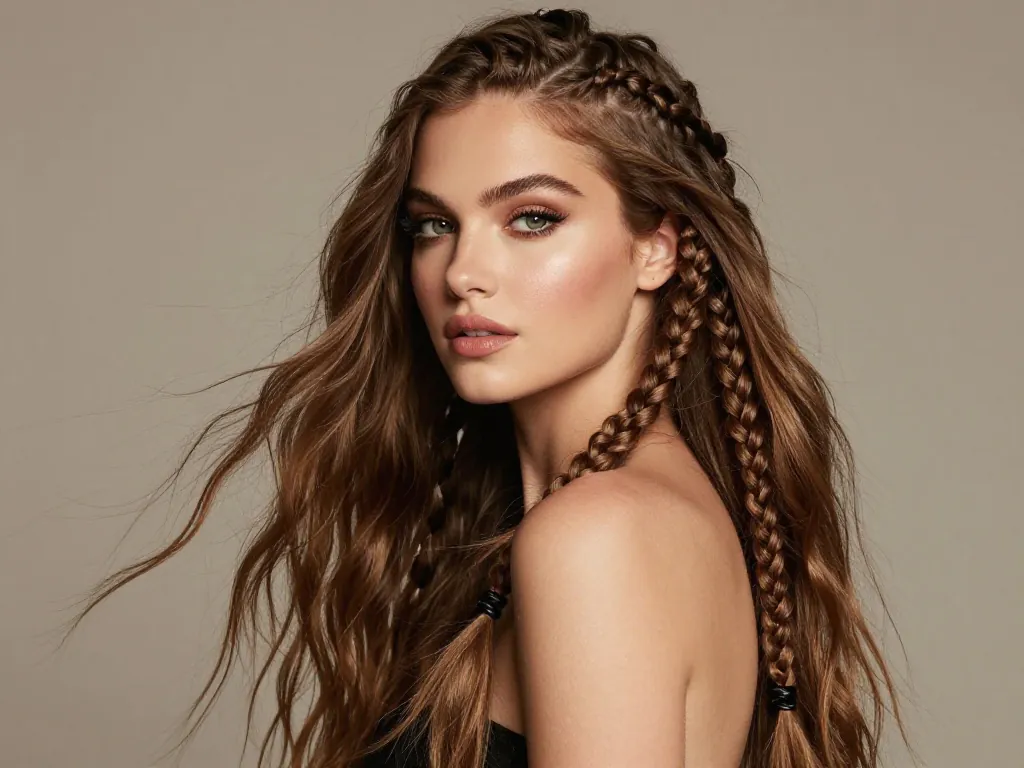
Table of Contents
Someone asked me last week which braid she should get for a beach trip, and I genuinely couldn’t answer in one sentence, because it depends on her hair, how long she wants it to last, and honestly how much pain she’s willing to sit through. That’s the thing nobody tells you about cute braided hairstyles: there isn’t one right answer; there’s a right answer for you.
So I want to actually walk through this properly: a real guide to cute braided hairstyles for every hair type. Box braids, knotless braids in every size and color combination, French and Dutch braids, cornrows, and a bunch of styles most guides skip entirely: goddess braids, boho braids, gypsy braids, the whole list. I’ll tell you honestly who each style works best for, how long it actually lasts, and what to say to your braider so you walk out with what you pictured instead of something close but not quite it.
Why Braids Never Actually Go Out Of Style
Braids aren’t a trend, not really. People have been doing this for thousands of years, across African, European, South Asian, and Native American cultures, and historically braids communicated things: social status, tribal identity, age, sometimes even relationship status. That’s a lot of meaning packed into something we now mostly think of as a Pinterest board.
Right now they’re having a full moment again: runways, street style, college campuses, all of it. And there are real practical reasons this keeps happening. Braids protect your ends and cut down on daily manipulation, which means less breakage over time, especially on natural and textured hair. They’re genuinely versatile, sleek or boho, your call. Your morning routine shrinks to almost nothing once they’re in. And a well-kept set can stay fresh anywhere from four to eight weeks depending on which style you picked.
Box Braids, The One That Started It All
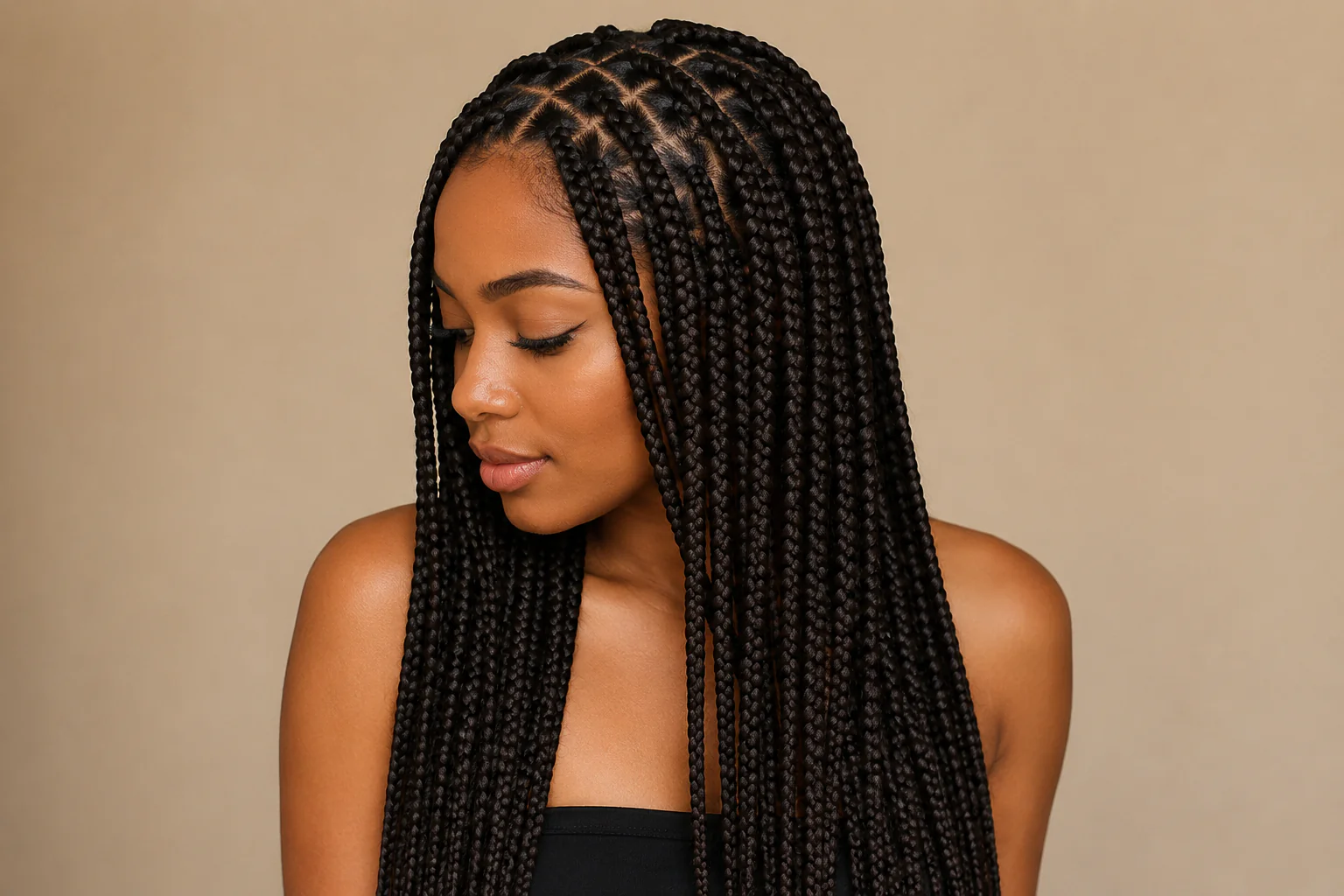
If there’s a single braid style that’s stood the test of time, it’s this one. Named for the little box-shaped sections at the root, box braids are individual plaits, done with your own hair or with extensions woven in for length and volume.
They’re basically the Swiss Army knife of protective styles: wear them down, throw them in a high pony, pile them into a bun, curl the ends for a totally different mood. They work beautifully on 3c through 4c textures, and a skilled braider can adapt them for looser curl patterns too. The classic version starts with a small knot at the root where the extension hair gets added, then braids the rest of the way down, giving that neat, uniform look right at the scalp.
A few box braid ideas worth trying
- Jumbo box braids, big, bold, and quick to install, gorgeous worn down or piled into a messy high bun.
- Micro box braids, tiny and detailed, take longer to install but last longer and handle intricate updos beautifully.
- Colored box braids, burgundy, caramel, even blue or purple woven through with extension hair for a dimensional, sun-caught look.
- Box braids with curly ends: leave the last inch or two unbraided for a softer, more romantic finish.
- Half-up box braid bun: gather the top half up, let the rest fall; effortless but reads as intentional.
A few honest tips before you book. Find someone who actually respects your hair’s tension limits; braids pulled too tight can cause traction alopecia, and no look is worth that. Deep condition about a week before your install. Sleep on satin, always. And take them out before matting starts at the root, usually somewhere around the six to eight week mark.
Knotless Braids, The Gentler Upgrade Everyone’s Talking About
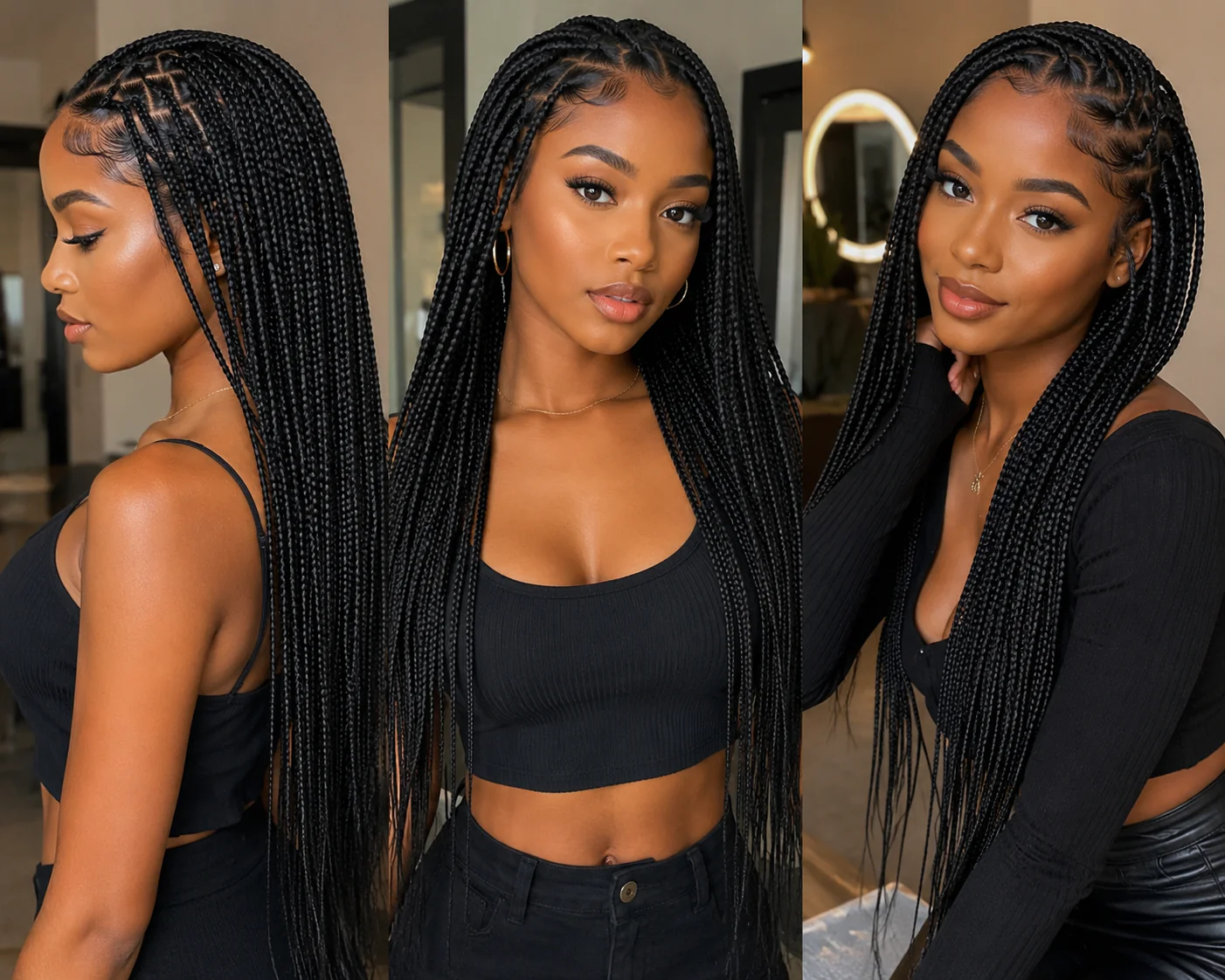
If box braids are the classic, knotless is the upgrade, and the hype around them is genuinely deserved. Instead of anchoring extension hair with a knot right at the root, a knotless braid starts with your own hair and gradually feeds the extension in as it goes. What you get is a braid that starts flush at your scalp, no bump, no knot, way less tension pulling on your hairline.
This matters a lot if you’ve dealt with scalp sensitivity, thinning edges, or breakage from traditional box braids before. Less tension also makes that first week of sleeping in them way more comfortable, which honestly is half the battle with any new install. The look is different too; the root blends more seamlessly with your actual hairline, lays flatter, moves more naturally, almost like your hair genuinely grew that long.
Knotless braid sizes, because this changes everything
Size is probably the single biggest decision you’ll make with knotless braids, and it affects install time, how they wear, and how long they last.
- Small knotless braids, delicate and detailed, take the longest to install but give you the most styling versatility and usually last closer to eight weeks.
- Medium knotless braids, the sweet spot most people land on, quicker install than small, still refined enough for sleek updos or a low pony.
- Jumbo knotless braids, fastest install by far, bold and statement-making, best for shorter wear since the weight can loosen at the root faster.
Knotless braids with color
Color is where knotless braids get really fun. Warm caramel and honey blends melt naturally into a dark base for a sun-kissed effect. Burgundy or deep wine tones add drama without looking like a full color change. Peekaboo color, a few braids in a totally different shade woven through the rest, gives you a playful pop without committing your whole head. And for something bolder, blue, plum, or even a soft pastel mixed sparingly throughout reads as intentional rather than costume-y.
Knotless braids with curly ends
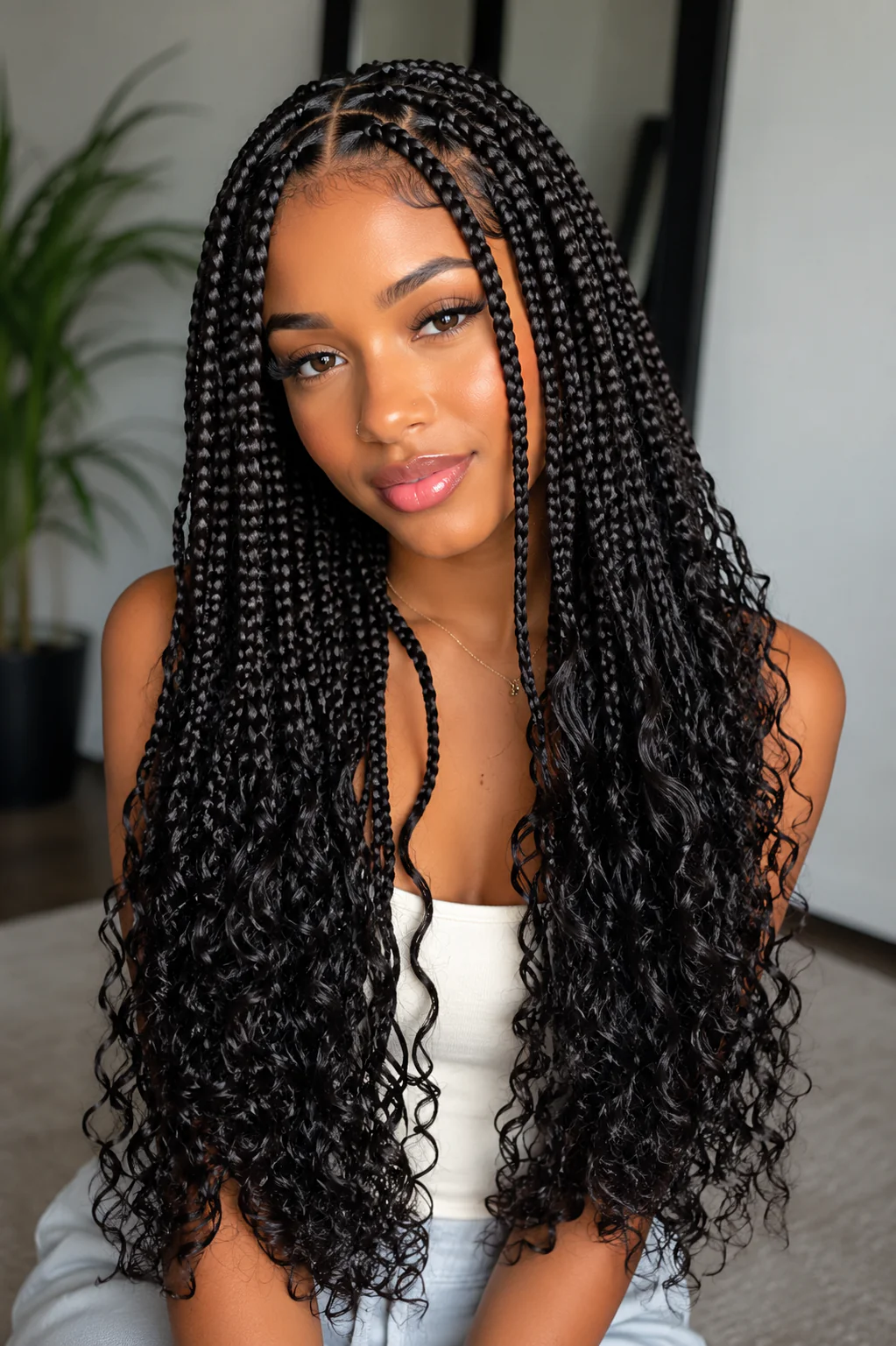
This might be my favorite knotless variation, honestly. Leave the last few inches of each braid unbraided, and use curly or wavy extension hair so the ends fall into soft, bouncy curls rather than a straight tail. It photographs beautifully, softens the whole look, and gives you a bit of movement that straight-ended braids just don’t have.
Eleven ways to actually wear knotless braids
- Long and loose with a middle part, simple and stunning, past the collarbone.
- Low ponytail, gathered loosely at the nape with a few pieces framing your face.
- High bun, everything piled up top for a clean, put-together look.
- Half-up, top section clipped back, the rest left down.
- With beads woven through for a bohemian, elevated feel.
- Triangle parts instead of squares for a more intricate scalp pattern.
- Side part with face-framing pieces left loose.
- Boho knotless, fluffed out with curly extension mixed throughout.
- Double buns, playful and great for workouts.
- Braided-in accessories, a scarf or gold cuffs woven into a ponytail version.
- Slicked back into a low, sleek bun for something more polished.
Knotless braids genuinely work for almost anyone, but they’re especially good if you’ve got a sensitive scalp, get tension headaches from tight installs, or you’re protecting thinning edges. The gentler install really does make a long-term difference in how your hairline holds up.
French Braids, The Classic That Refuses To Age
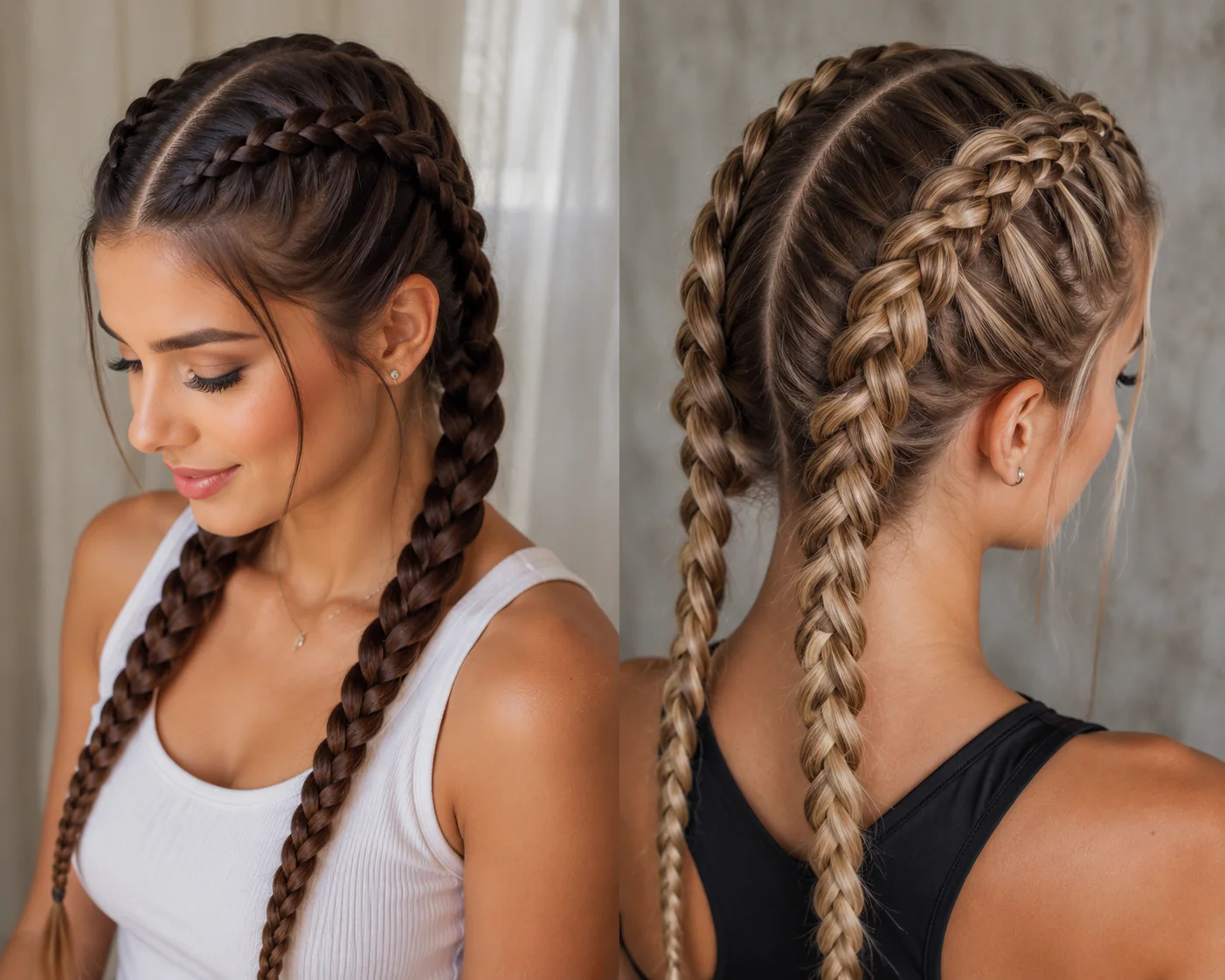
The French braid might be the most recognizable braid on the planet, and somehow it still feels fresh every time. You’re braiding sections together while feeding in small amounts of new hair from each side as you move toward the nape, so the braid looks like it’s emerging right out of your scalp.
It works on almost every hair type: straight, fine, wavy, medium texture, all of it. It’s trickier to do solo on very coily hair, though a skilled stylist handles it fine; but for anyone with straighter or wavier hair, it’s a genuine DIY staple. One thing worth knowing that doesn’t get mentioned enough: French braids double as one of the best heat-free wave methods out there. Braid slightly damp hair before bed, sleep on it, undo it in the morning, and you’ve got defined waves with zero heat damage involved.
- Classic single French braid, crown to nape, finished with a silk scrunchie.
- Double French braids, part down the middle, braid each side, flattering on almost anyone.
- French braid into a low bun, sleek and polished for work or formal days.
- Waterfall French braid, dropping strands out as you go for a cascading, romantic effect.
- French braid half-up, just the crown section braided back.
Dutch Braids, French Braids Turned Inside Out
Dutch braids are French braids reversed; sections cross under instead of over, which pushes the braid up on top of your hair instead of flush with it. That gives you a raised, almost 3D look. For thin or fine hair especially, Dutch braids are honestly the better pick since they fake volume and thickness that a flat French braid just can’t.
- Double Dutch braids, sporty and athletic, great for workouts.
- Dutch braid crown, wrapped around the head for something romantic and boho.
- Dutch braid into a ponytail, adds texture to an otherwise simple pony.
- Loose Dutch braid, gently tugged wider for a softer, airier finish.
Cornrows, Where Craft Meets Real History
Cornrows go back thousands of years in African history, braided close to the scalp in an underhand motion, either straight lines or genuinely intricate geometric patterns. It’s worth pausing on what these actually represent: in West African cultures, cornrow patterns communicated tribal affiliation, age, social status, even escape routes used during slavery. This isn’t just a hairstyle; it’s a living piece of history, and it’s worth knowing that before you sit in the chair.
- Classic straight-back cornrows, clean, protective, timeless.
- Lemonade braids, side-swept cornrows popularized by Beyoncé, bold and photogenic.
- Cornrows with beads, shells, gold, or wood woven into the ends.
- Feed-in cornrows, extension added gradually for thicker, fuller rows.
- Cornrow designs, zigzags, swirls, honeycomb patterns, genuine scalp art from a skilled braider.
Styles Most Guides Completely Skip
A lot of round-up articles stop at the five or six styles everyone already knows. Here’s what usually gets left out, and honestly some of these are worth knowing about more than the obvious ones.
- Goddess braids, thick cornrows with curly hair strands added through the middle or ends for a softer, more romantic finish.
- Boho braids, loose wavy strands woven throughout for a carefree, festival-ready look.
- Gypsy braids: knotless braids with curls added throughout for extra volume and texture.
- Bora Bora braids: natural hair braided with wavy extensions to your natural length, then the extension flows freely from there.
- Mermaid braids: only the top lengths braided, the rest left flowing; works on straight or curly hair.
- Ghana braids, cornrows built up with added extension for extra thickness and volume.
- Pick and drop braids: the top few inches braided, the rest dropped into soft waves or curls.
- French curl braids, box braids with loose curls left at the very end for something elegant and feminine.
- Crochet braids, extensions latch-hooked onto cornrowed hair underneath, incredibly versatile for switching up looks fast.
- Peekaboo braids, a handful of braids done in a contrasting color for a playful pop without a full color commitment.
- Stitch braids, a cornrow variation with a distinctive stitched, raised texture.
Quick Braids For When You Don’t Have Four Hours
Not every braid needs to eat your whole Saturday. Some of the best-looking options take fifteen minutes or less, which makes them great for beginners or just a regular Tuesday when you need your hair out of your face.
- Basic three-strand braid, part down the middle for two, or leave it whole for one.
- Side braid, pull everything to one side, effortlessly chic past collarbone length.
- Braid into a bun, loosely braided, twisted up, pinned, done in three minutes.
- Braided headband, a small front section braided back and pinned like a headband.
- Mini braids mixed into loose hair, a few small braids scattered through otherwise natural texture.
Braids on Black Hair, Cultural Craft Meets Texture
4a, 4b, and 4c textures are genuinely built for braiding; the tight curl pattern gives braids excellent hold, and the natural oils in coily hair actually help braids stay looking fresh longer than you’d expect.
- Fulani braids, rooted in the Fula people of West Africa, are cornrows plus box braids plus a distinctive center braid, often decorated with beads and cowries.
- Senegalese twists, not technically braids but closely related, are two-strand twists that create a sleek, ropelike look.
- Passion twists, bohemian and romantic, made with water wave extension hair for a soft, textured finish.
- Tribal braids, a broad category incorporating beads, shells, and intricate cultural parting patterns.
Natural Braided Styles, Protecting What You’ve Got
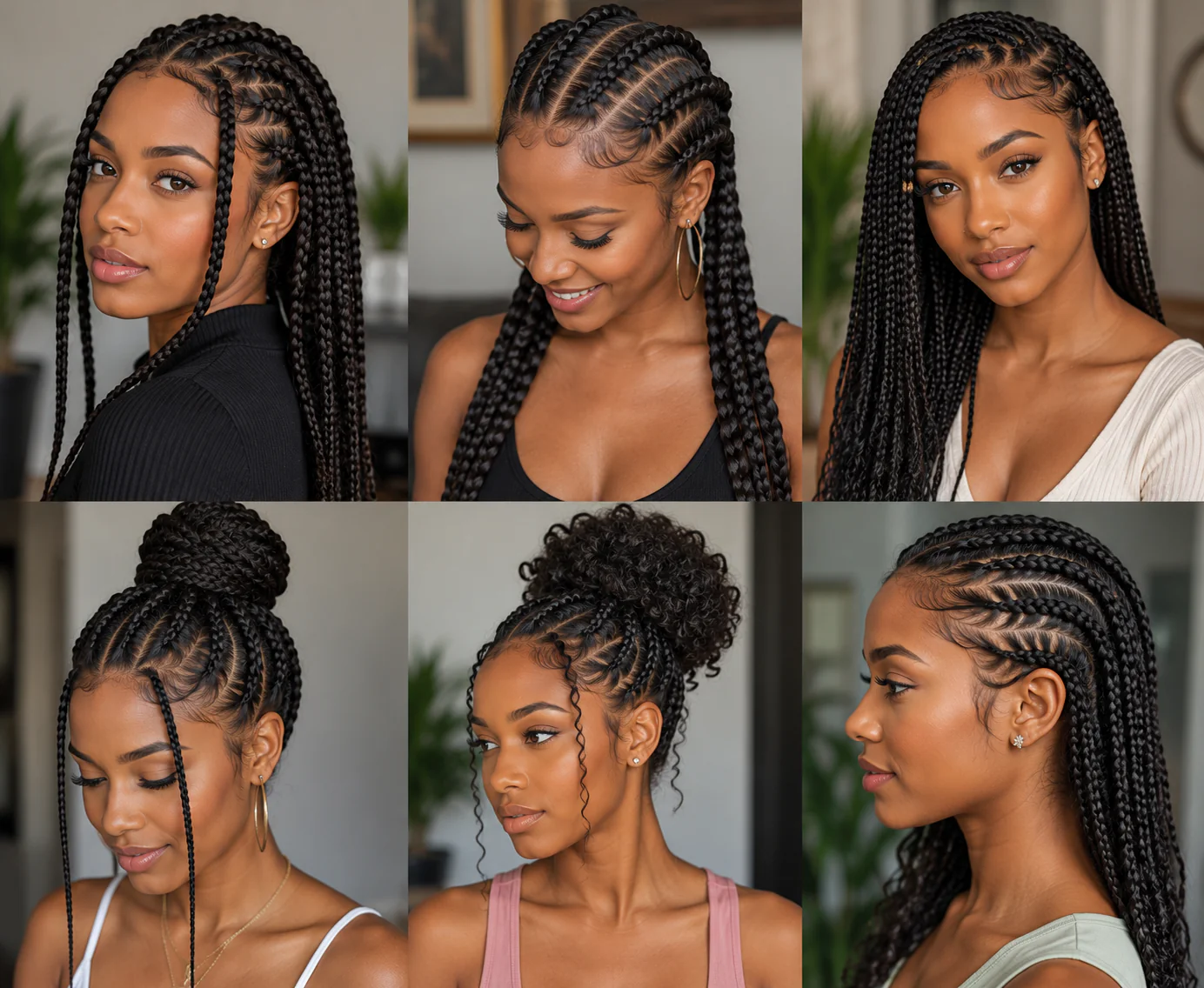
This covers any style working with your unaltered natural texture, no relaxers, no texturizers, just your actual curl pattern. The real key to keeping braids healthy on natural hair is moisture; coily and kinky hair is inherently drier since the curl pattern makes it harder for scalp oils to travel down the shaft. Deep condition before you braid, keep things moisturized while it’s happening, and seal moisture in regularly with a light oil once it’s installed.
- Two-strand twists into braids, twisted first, then unraveled and braided for defined texture.
- Flat twist cornrows, softer, more defined than a traditional cornrow.
- Bantu knots, technically twists, but part of the same family, coiled into tight knots and unraveled later for serious definition.
- Halo braid: with enough length, natural hair can absolutely rock a full crown braid.
Two Braids, Simple and Somehow Universally Flattering
Two braids, one on each side, might be the single most flattering braid category there is. Every face shape, every texture, every length can pull this off.
- Classic two braids, part down the middle, simple three-strand each side.
- Two French braids, sleek, athletic, clean.
- Two braids with a zigzag part, small change, big personality shift.
- Two chunky braids, bold and thick, an early-2000s throwback done right.
Who Can Actually Wear Braids
Let’s just address this directly. Braids are for everyone, technically speaking. While certain styles are deeply rooted in and most associated with Black hair traditions, braiding as a technique shows up across nearly every culture on earth: French braids, Dutch braids, Scandinavian crown braids, traditional South Asian styles, all with their own distinct roots.
What actually varies is which specific style suits which hair type. Fine or straight hair does beautifully with French braids, Dutch braids, simple three-strand styles, and waterfall braids, though very tightly coiled extension styles may need a texture spray to hold properly. Wavy or medium-textured hair has the widest range; almost everything works. Thick or coarse hair holds braids naturally, and extension styles like box or knotless braids look spectacular. 4a through 4c natural hair has the full menu open, every protective style included, and honestly tends to hold braids longest of all.
The One I Personally Keep Going Back To
My actual favorite, and this surprises people, is a simple two-strand twist that transitions into a braid at the ends. Twist near the root, then switch to a three-strand braid for the last few inches. You get gorgeous texture up top and a clean, structured finish at the bottom, and the whole thing takes maybe thirty minutes for a full head. Nobody else’s version looks quite like yours either, since it’s working directly with your own curl pattern, not fighting it with uniform extension hair. That specificity is something no tutorial fully replicates.
Actually Taking Care Of Your Braids
- Moisturize your scalp with a lightweight oil, jojoba, peppermint, or rosemary, every two to three days.
- Sleep on satin or silk; always, cotton pillowcases cause friction and frizz overnight.
- Take braids out within four to six weeks for most styles; past that, new growth tangles into the braid and removal gets rough.
- Wash gently with diluted shampoo focused on the scalp, and pat dry instead of rubbing.
- Use a light edge control gel if you want your hairline looking laid and intentional.
- Remove slowly, section by section, with a detangling spray to soften any stubborn knots first.
Frequently Asked Questions
What are 11 ways to style knotless braids?
Long and loose with a middle part, a low ponytail, a high bun, half-up, with beads woven through, triangle parts, a side part with face-framing pieces, boho with curls mixed in, double buns, braided-in accessories, and slicked back into a sleek low bun. All work with the same install; it’s really just about how you wear it day to day.
What are the types of knotless braids?
Mostly it comes down to size and finish. Small, medium, and jumbo knotless braids, plus variations like knotless braids with curly ends, boho knotless with wavy extension mixed through, and colored knotless braids using tinted extension hair blended into your base.
What do knotless braids with color look like?
Color in knotless braids usually shows up as caramel or honey blended through a dark base, deep burgundy for drama, a few peekaboo braids in a contrasting shade, or bolder colors like blue or plum used sparingly so it reads intentional rather than costume-like.
What do knotless braids with curly ends look like?
The braid itself stays straight and neat, but the last couple of inches are left unbraided using curly or wavy extension hair, so the ends fall into soft curls instead of a straight tail. It softens the whole style and adds movement.
Should I get medium or small knotless braids?
Medium is the easiest middle ground, quicker to install than small, still refined enough for updos, and holds up well for six to eight weeks. Small takes longer in the chair but gives more styling versatility and often lasts a bit longer overall.
What are the most popular cute braided hairstyles right now?
Knotless braids, especially boho versions with curly ends, medium-length box braids, Fulani braids with beads, and feed-in cornrows are all having a real moment. Simple two-braid looks and French braid pigtails are popular too, especially with younger wearers.
How long do braided hairstyles actually last?
Knotless and box braids typically run four to eight weeks with good care. Cornrows usually last two to four weeks. French and Dutch braids are meant for short-term wear, a few days to a week. Anything done purely with your natural hair, no extensions, is more temporary, usually a day or two.
What’s the best braid for fine or thin hair?
Dutch braids and French braids both fake volume nicely since they sit slightly raised rather than flat. A Dutch braid especially looks thicker than it actually is. Skip anything installed too tight, since fine hair stresses more easily under tension.
Can people with straight hair wear box braids or cornrows?
Technically yes, though very tightly coiled extension styles hold better with a bit of texture spray or braiding hair on straighter strands, since there’s less natural grip to keep things in place without it.
Are knotless braids actually better than box braids?
Knotless puts noticeably less tension on your scalp and hairline, which makes it the gentler option, especially for fine hair, sensitive scalps, or anyone who’s had headaches from tight installs before. Box braids aren’t harmful on their own, but that initial knot does create more tension right at the root.
Final Thoughts
Braids aren’t just a hairstyle; they’re self-expression, protection, cultural tradition, and honestly a pretty reliable way to look put-together on a day when everything else feels chaotic. Whatever list of cute braided hairstyles you end up pulling reference photos from, whether you’re a lifelong box braids person, trying knotless for the first time, or you’ve been rocking cornrows since you were a kid, there’s always another way to wear them. Try a new color, mix in some curl at the ends, ask your braider to design something nobody else has. Your hair is yours; wear it however actually feels like you.