
A friend of mine has a daughter who is, in her words, extremely tender-headed, and doing her hair used to end in tears almost every single time, hers and the kid’s both. What actually fixed it wasn’t a new product or a fancier technique; it was switching to smaller, gentler sections and picking styles that didn’t demand her daughter sit still for two hours straight. Small change, completely different mornings, and honestly a lesson worth remembering before it feels urgent.
So this is a genuinely practical list of natural hairstyles for kids, the ones that actually work when you’re short on time, patience, or both. Sorted by what you’re dealing with that day: a squirmy toddler, a school morning, a kid who’s over braids entirely, or just someone with shorter hair who keeps getting left out of every tutorial written for waist-length curls. There’s also a bit on the habits that make the whole week easier, not just the individual styles themselves, since honestly that’s where most of the real stress actually comes from.
Start With How You Section The Hair
Before any specific style, there’s one habit that makes almost everything easier: parting hair into smaller sections before you start, rather than working with big unwieldy chunks. Some parents section a whole head into eight parts before washing even begins; it makes detangling faster, washing more thorough, and every style after that noticeably less painful for a tender-headed kid. It sounds like extra work up front, but it genuinely saves time and tears later in the process.
Another small trick worth borrowing: if breakage along the hairline is a concern, a couple of thin braids right along the edges before styling the rest can help protect that delicate area over time. You can always skip this part if it’s not an issue for your kid; the rest of the style still looks just as good without it.
For A Genuinely Rushed Morning
- The classic all-down twist or braid-out, wash day products still doing their job, hair simply left down and defined. Zero styling time needed once the wash-day work is done.
- Two puffs, gather natural hair into two sections and secure, no braiding required at all, maybe two minutes total.
- A single low bun, gathered and wrapped, works even on days when nothing else about the morning is going smoothly.
- Flat twists just at the front with the rest left in its natural texture gives a styled look without committing to a full head of anything.
Natural Hairstyles For Kids Who Are Done With Braids
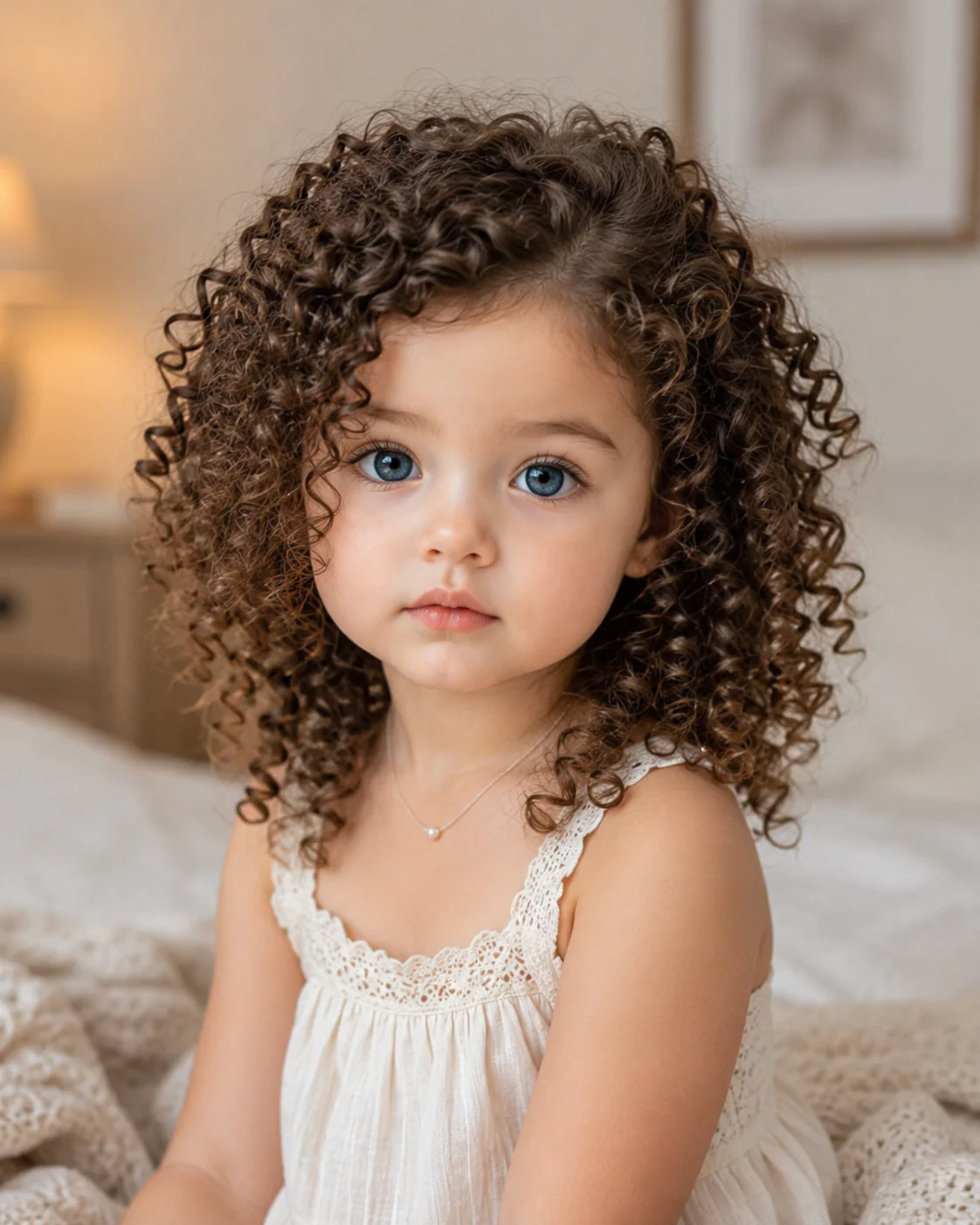
Braids get a lot of attention, understandably, but plenty of kids reach a point where they just don’t want anything pulled and sectioned that tightly anymore, and that’s completely fair. A few styles that skip braiding entirely.
- A twist-out, hair twisted while damp with product, dried overnight or under low heat, then unraveled for defined curls with no braiding pattern involved at all.
- Bantu knots worn as-is, coiled sections secured against the scalp, a full look on their own without needing to be unraveled into anything else.
- A simple afro puff, the lowest-effort option on this entire list, genuinely just gather and secure.
- Loose two-strand twists left long rather than braided down, softer looking and just as protective.
Short Hair Deserves Its Own Section
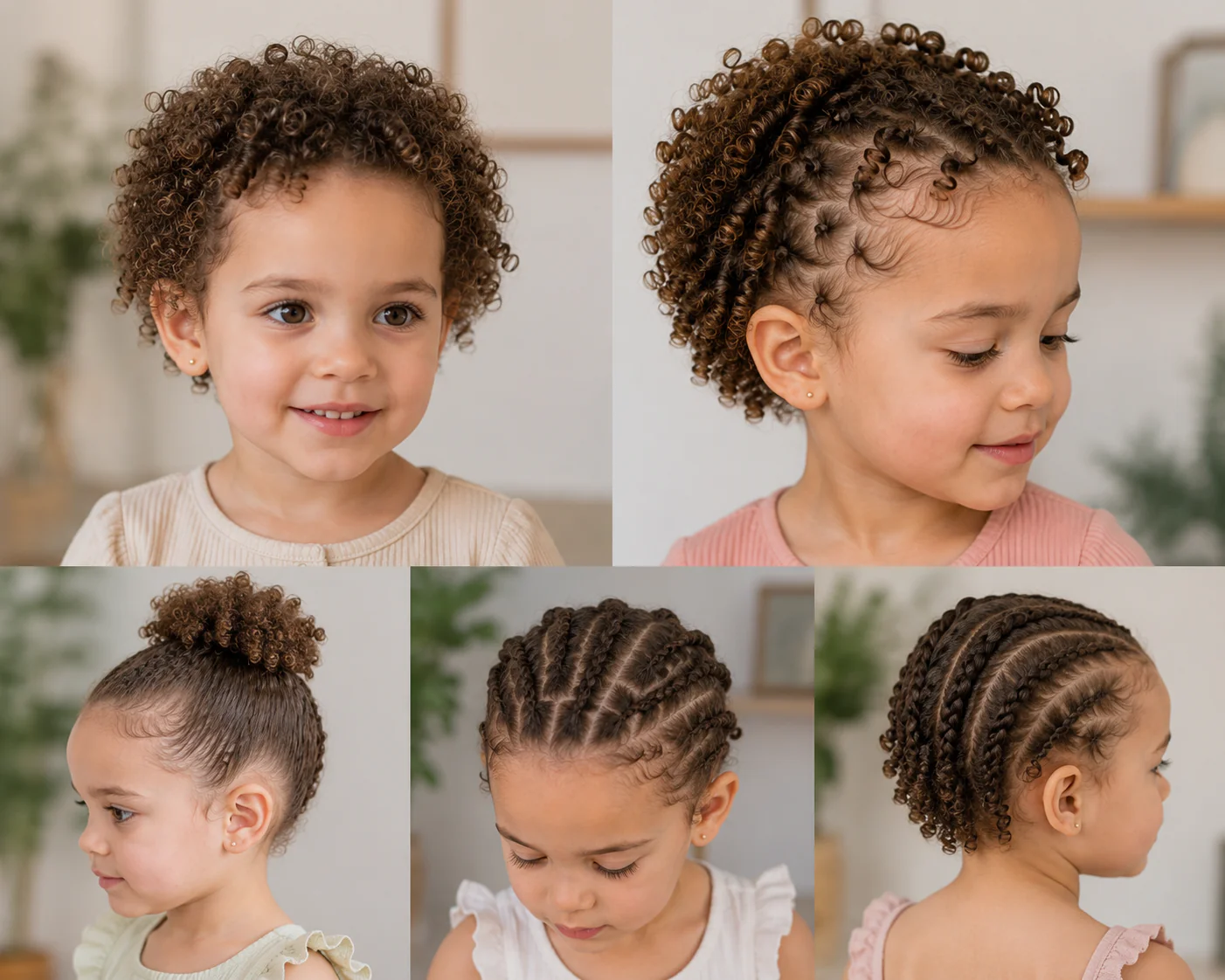
Most tutorials assume a long head of hair to work with, and short natural hair gets left out constantly, which isn’t fair since it’s honestly some of the easiest hair to style well.
- A defined wash-and-go, curl cream applied to damp hair, air-dried or diffused, shows off short curls beautifully without any manipulation at all.
- Tiny finger coils around the hairline, a quick way to define edges without needing length for anything more elaborate.
- A small puff at the crown works even on very short hair and takes under a minute.
- Flat twists close to the scalp in a simple pattern don’t need length to look intentional and neat.
When You Do Want Braids
For longer-lasting protective styling, braids and twists genuinely hold up for a week or more, which matters on busy weeks. A few worth knowing.
- Simple cornrows in a straight-back pattern, classic, neat, and quick once you’ve got the hang of the technique.
- Feed-in braids for a bit more length and fullness without the full weight of extensions.
- Small box braids, longer-lasting than most other options here, though best saved for kids around five and up who can handle a longer sitting time and the added weight comfortably.
- A braided crown, two sections braided back and wrapped, dressy enough for an occasion but simple enough to do on a regular morning too.
What Actually Makes This Easier Week To Week
A few habits that experienced parents swear by. Cream-based products tend to work better than lighter lotions on thicker natural hair; they coat and moisturize more effectively without needing constant reapplication. Doing a proper wash day once a week, rather than washing more frequently, keeps the hair from drying out between styles. And if a twist-out is part of the rotation, letting it dry under low heat or overnight rather than rushing it with high heat protects the curl pattern and cuts down on frizz considerably.
What’s Age-Appropriate And What Isn’t
Not every cute style you see online is actually right for every age. Extensions and added hair generally work better on kids five and older, who can handle the added weight and a longer sitting time without real discomfort. Younger kids do better with styles using only their own hair, kept simple and low-tension. Heat styling, even low-heat blow-drying, is worth minimizing on very young kids whose hair is still developing; air-drying or a gentle diffuser setting is usually the safer route until they’re a bit older. None of this means younger kids can’t have fun, playful styles; it just means matching the technique to what their hair and patience can actually handle that day, and adjusting as they grow rather than sticking to whatever worked when they were smaller.
Making Wash Day Less Of An Event
A lot of the actual stress around kids’ natural hair doesn’t come from the styling part; it comes from wash day itself, and doing it well makes every style afterward genuinely easier. Washing once a week rather than more frequently keeps hair from drying out between styles; over-washing strips natural oils that curly and coily hair needs more of than straighter textures do. Sectioning the hair into parts before you even start, four to eight depending on thickness, makes both washing and conditioning noticeably more thorough and a lot less painful to sit through. And a proper deep-conditioning session, even just fifteen minutes under a warm towel, makes the actual styling afterward go faster, since detangling is so much easier on properly conditioned hair.
Avoiding The Damage Nobody Notices Until Later
A few small habits prevent bigger problems down the line. Braiding or twisting too tight is the most common one; if a child winces or pulls away while you’re working, that’s the signal to loosen up, not push through. Repeated tension in the same spots, especially right along the hairline, can genuinely thin hair over months of the same tight styles. Leaving any protective style in for more than two to three weeks tends to cause matting near the root, making removal harder and increasing the risk of breakage. And skipping moisture in between styling days is an easy one to miss; a braided or twisted style still needs the scalp underneath looked after. It’s not a reason to ignore hair care entirely until removal day. None of this requires being overly cautious; it just means checking in with your kid honestly while you work instead of pushing through discomfort to finish faster.
For Toddlers Specifically
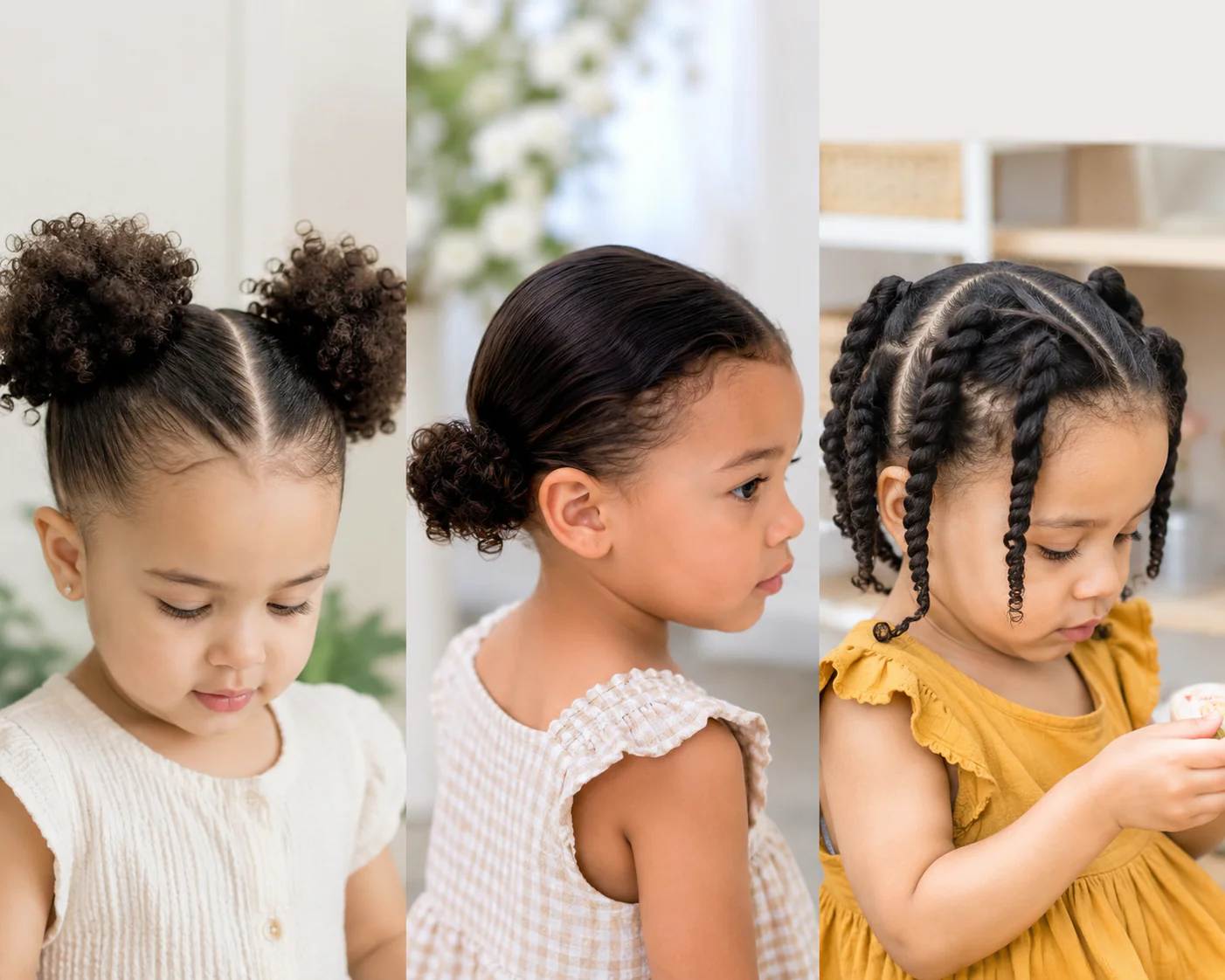
Toddlers have their own reality; most will give you three to five minutes of stillness before they’re actively climbing off the chair, no matter how good the snack bribe is. A few things that genuinely help. Do the style in short sessions if you need to; half today and half tomorrow is completely fine. Nobody’s grading this. Keep sections big rather than intricate; detailed patterns just aren’t realistic at this age. And do it while they’re upright and distracted, not lying back over a sink; that position alone can turn a calm morning into a meltdown.
- Simple twin puffs, no braiding involved, under three minutes total.
- A single puff at the nape, the lowest-effort option for a toddler who genuinely won’t sit.
- Loose, larger two-strand twists rather than small detailed ones, quicker and gentler on a squirmy kid.
Tools That Actually Make A Difference
- A wide-tooth comb for detangling; it pulls far less than a fine-tooth comb ever will on curly or coily texture.
- A spray bottle with water and a bit of leave-in mixed in; damp hair is genuinely easier to work with than dry hair for almost every style here.
- Cream-based styling products rather than light lotions; they coat thicker strands more effectively without needing constant reapplication throughout the day.
- Small, soft, snag-free hair ties: the difference between these and regular elastics is noticeable the first time you try to remove one from a kid’s hair without a wince.
- A satin bonnet or pillowcase sized for a child’s head, it protects whatever style is in and cuts down on frizz and breakage overnight.
Products Worth Actually Having On Hand
You don’t need an overflowing shelf, just a few reliable basics. A leave-in conditioner for daily moisture, a curl cream or gel for definition on wash day, a lightweight oil to seal moisture in afterward, and an edge control for laying baby hairs neatly around the front. That’s genuinely the whole list; anything beyond this is optional rather than necessary, and it’s usually cheaper products applied consistently that outperform expensive ones used once and forgotten in a drawer.
Frequently Asked Questions
What are good natural hairstyles for kids who are girls?
Two-strand twists into a puff, a simple twist-out, or an afro puff cover most requests: quick, protective, and genuinely flattering regardless of length.
What are some simple styles for a busy morning?
An afro puff, two low puffs, or a single low bun are the absolute quickest, all doable in under five minutes with zero braiding skill needed.
What holds up best for a full school day?
Simple cornrows, a braided low bun, or a twist-out hold up best through a full day of activity without needing a midday touch-up.
What are good options with no braids at all?
A twist-out, Bantu knots worn as-is, a plain afro puff, or loose two-strand twists left unbraided all skip braiding entirely while still looking styled and protective.
What works well on short hair specifically?
A defined wash-and-go, finger coils around the hairline, a small crown puff, or flat twists close to the scalp all work beautifully without needing length.
What are good braided options that last longer?
Simple cornrows, feed-in braids, small box braids for kids five and up, or a braided crown are the most reliable longer-lasting options.
The Honest Takeaway
You really only need a small handful of go-to styles to get through most weeks without a fight: one quick option for rushed mornings, one longer-lasting protective style, and one for the days a kid just wants their curls left alone entirely. Keep sections smaller if tender-headedness is an issue, don’t rush the drying process on twist-outs, and let your kid have some say in what they’re wearing that day. A calm five-minute style beats a stressful thirty-minute one every single time, for both of you.