
Table of Contents
You’ve been sitting in the salon chair, pointing at a picture on your phone, trying to explain something you’ve been seeing everywhere but can’t quite name. It looks like someone forgot to touch up their roots except it’s clearly intentional. The contrast is too sharp, the color too deliberate, the vibe too editorial to be an accident.
That’s ghost roots. And if you haven’t already booked your appointment, this guide is going to make you want to.
I’ve spent the last several months tracking this trend from its runway origins to the chairs at independent salons in New York, London, and beyond and I can tell you this: ghost roots aren’t just a passing moment. They’re a philosophy. A quiet rebellion against decades of “perfect” hair that this year’s most discerning clients are embracing with both hands.
This is the most complete guide to ghost roots & hair color trends 2026 anywhere on the internet. We cover technique, color options, hair health, face shape, natural and 4c hair types, men, gray hair, DIY vs salon cost, and exactly what to say to your colorist. Let’s go.
What Are Ghost Roots? The 2026 Hair Color Trend Fully Explained
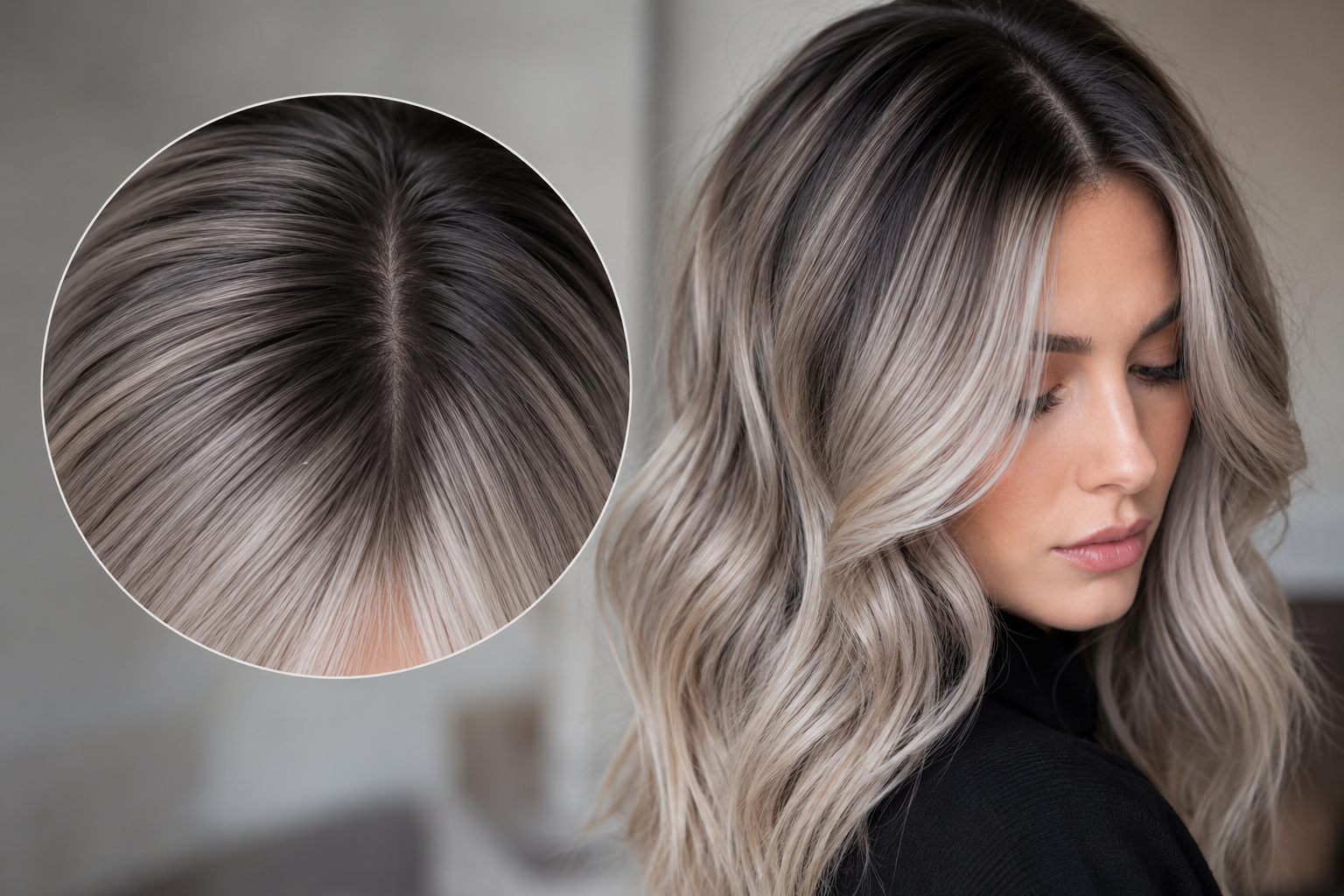
Ghost roots are a hair coloring technique where your natural root color whether dark brown, black, or gray is left visible or intentionally intensified at the scalp, creating a sharp, high-contrast line against the dyed length of your hair. Think of it as the anti-touch-up: instead of blending your regrowth away, you lean into it, harden it, and make it the loudest part of the look.
Unlike ombré or balayage which are all about seamless, graduated color transitions ghost roots celebrate the hard line. The demarcation isn’t a mistake you need to fix. It is the style.
The technique first hit the mainstream radar backstage at the Dries Van Noten Fall 2020 runway, where celebrity stylist Sam McKnight bleached the tops of models’ heads before applying an acidic green, fuchsia, or red overlay. The scalp-to-midshaft contrast was so striking it looked almost haunted. Ethereal. Hence the name.
Fast forward to 2026, and the look has exploded from niche editorial territory into everyday salon conversations. Colorist Kirsten Stuke at Suite Caroline in New York City describes it perfectly: “This technique is when your natural root color is left visible or intentionally lightened to create a sharp contrast with the rest of your hair. It rejects perfection. Instead of a seamless blend, it embraces a hard line, turning natural grow-out into a fashion statement.”
Takeaway: Ghost roots aren’t an accident, they’re a choice. A very stylish one.
Ghost Roots vs Shadow Roots vs Money Piece vs Smudge Root: Stop Confusing Them
This is the question nobody else is answering clearly and if you’ve been searching for ghost roots and accidentally ended up with a shadow root, you know exactly why it matters.
Here’s the definitive breakdown:
| Technique | What It Does | Contrast Level | Vibe |
|---|---|---|---|
| Ghost roots | Sharp, intentional root-to-length contrast, root usually darker or starkly lightened | High — hard edge | Editorial, edgy, bold |
| Shadow root | Darker color softly blended into the root zone to add depth | Medium — diffused edge | Natural, low-maintenance, subtle |
| Money piece | Face-framing highlights at the front sections only | Localized | Trendy, face-brightening |
| Smudge root | Colorist “smudges” the root to soften the grow-out line | Low — very blended | Effortless, lived-in |
| Reverse balayage | Dark color painted back into lightened hair from roots down | Medium-high | Dramatic, dimensional |
| Regrowth camouflage | Covering natural regrowth to match the existing color | None — matching | Classic, polished |
The key distinction: shadow roots soften a contrast. Ghost roots create one on purpose. If your colorist is trying to blend everything together, that’s a shadow root. If they’re drawing a deliberate hard line? That’s a ghost root.
A client I spoke with, let’s call her M, a 34-year-old creative director in Chicago came in asking for a shadow root and walked out with what she describes as “a smudge root that I had to Google to understand.” After she brought in the actual ghost roots reference, her colorist immediately understood: sharp line, no blending, the natural dark root stays visible and proud.
Why Ghost Roots Define 2026: The Cultural Moment Behind the Trend
Here’s something competitors aren’t telling you: ghost roots aren’t just a hair trend. They’re a cultural statement about who gets to define beauty.
For the last decade, salon culture has been obsessed with seamless. Invisible transitions. Perfectly blended balayage. The kind of highlights where you genuinely can’t tell where the natural hair ends and the color begins. Social media built an algorithm that rewarded this polished, aspirational look and we all felt the unspoken pressure to comply.
2026 is the correction.
Celebrity hair artist Chriselle Baptista put it well: “We’re finally seeing a move away from fighting our natural features. Whether it’s curly hair, frizzy texture, or greys, people are embracing what makes them unique instead of trying to smooth, straighten, or conceal everything.”
Ghost roots are part of a wider aesthetic shift that includes cool-girl shags, asymmetrical layers, statement fringes, air-dried finishes, and what BeBeautiful’s writers are calling “the anti-perfect era.” Natural waves, frizz, and lived-in texture are no longer problems to solve they’re features to amplify.
Billie Eilish has been the trend’s most visible ambassador for years, with her wide swaths of contrasting color at the root. Rosalía offered a more delicate version a softer halo of lighter root color melting into her naturally dark length. Together, they showed the world that ghost roots work across a spectrum from subtle to extreme.
The spring 2026 runways doubled down. From Victoria Beckham to Gucci, cobalt blue has emerged as the season’s breakout vivid color and ghost roots with a cobalt blue base against dark lengths was one of the most referenced looks of Fashion Week.
Takeaway: Ghost roots are a cultural reset, not just a color service. They tell people you stopped apologizing for your hair.
The Complete Ghost Roots Color Guide for 2026
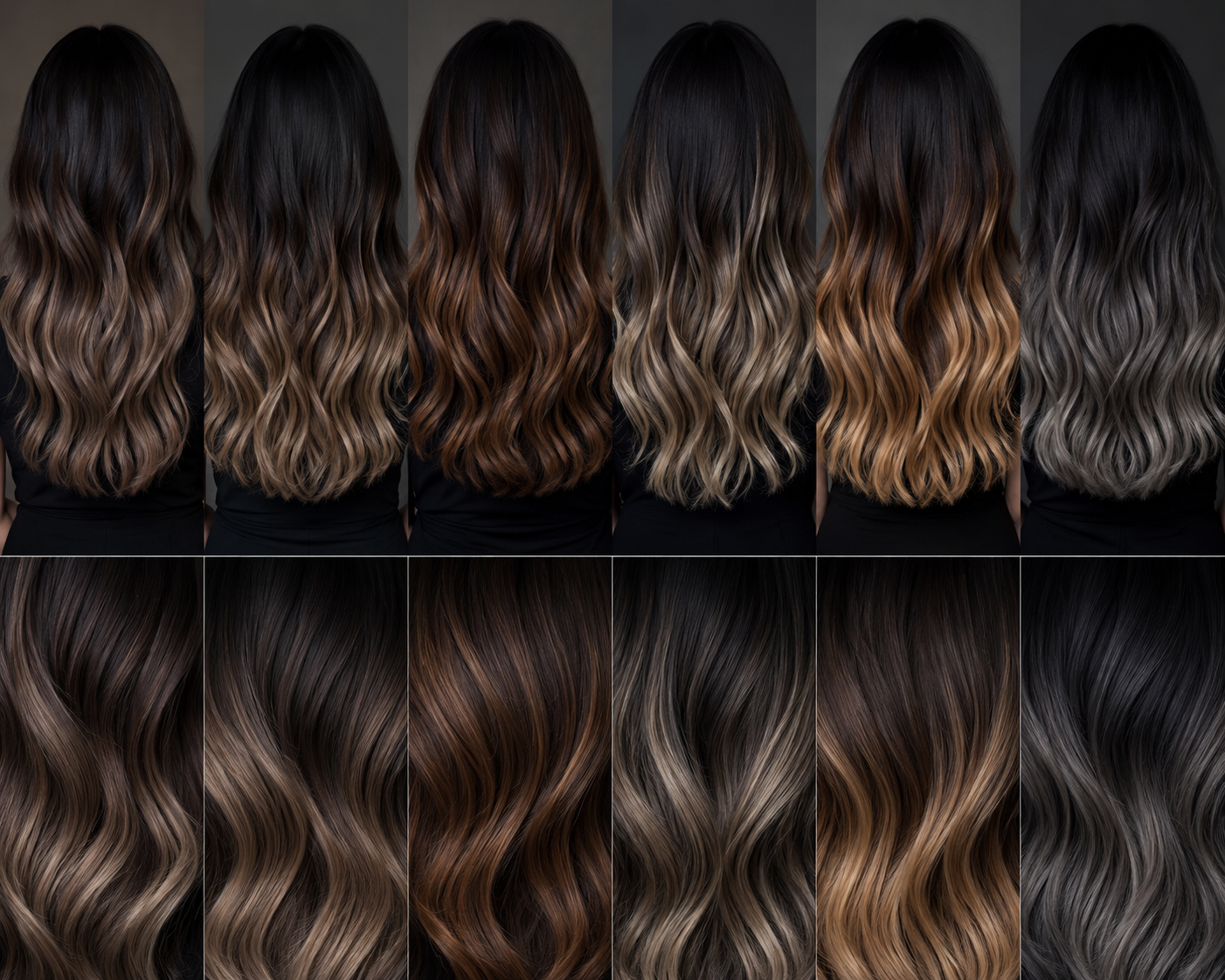
One of the most searched questions right now is simple: what color should my ghost roots be? The answer depends on your base, your boldness level, and your lifestyle. Here’s the full breakdown.
Natural Ghost Roots: The Grow-Out-as-Feature Approach
The most accessible version. You simply stop covering your natural regrowth and let the contrast build. This works especially well for:
- Dark brunettes with light blonde or highlighted lengths the dark root against bright lengths creates a stunning, editorial contrast without a single drop of bleach on the root
- Women going gray silver or white ghost roots against colored lengths are having a huge moment in 2026 (more on this later)
- Black hair against any vivid-dyed length the hard contrast is built-in
No products needed at the root. Just patience, a good colorist to shape the line, and the confidence to let it be.
Vivid Ghost Roots:
This is the Eilish-level version. The colorist bleaches the root section (roughly 1–3 inches of scalp-to-midshaft) and deposits a vivid, often fantasy shade directly onto it. The lengths stay in a contrasting usually darker tone.
Top vivid shades for 2026:
- Cobalt blue the runway color of the season, showing up everywhere from Victoria Beckham to Gucci
- Acid green / neon lime the original Dries Van Noten ghost root shade; still arresting
- Crimson / cherry red works especially well on black hair for a high-contrast, low-fuss approach
- Teal cool, dimensional, unexpected
- Magenta / hot pink perennially popular, especially on dark bases
- Silver-white ghostly in the most literal sense; stunning on dark hair
- Fantasy pastels soft blues, lilac, blush for an ethereal rather than edgy effect
Blonde Ghost Roots: The Corporate-Friendly Version
Not everyone can walk into work with acid green roots. Blonde ghost roots platinum or honey blonde root against a darker brunette or brunette-to-blonde length are the grown-up, office-appropriate take on the trend.
The look works by letting a couple inches of lighter root show against a darker, richer length. It reads expensive and intentional, not “I forgot to book my appointment.” Ask your colorist for “platinum root lift with a hard line, no blending into the mid-lengths.”
Takeaway: There’s a version of ghost roots for every boldness level, from platinum-root-against-brunette to full neon. Your only job is to pick the one that fits your life.
How to Get Ghost Roots:
Here’s what competitors are skipping entirely the actual how. Whether you’re doing this in a salon or at home (carefully), you need to understand the mechanics.
The Salon Process
Step 1: Consultation — define the line Before any product touches your hair, you and your colorist need to agree on the demarcation line placement. Typically this sits 1–3 inches from the scalp. The further it extends, the more dramatic the effect.
Step 2: Section the root panel The colorist clips the rest of your hair away and isolates the root section. For vivid ghost roots, the root panel is what gets lightened. For natural ghost roots, this step determines where the hard line falls.
Step 3: Pre-lightening (for vivid colors) If you’re going vivid, the root section needs to be lifted first. This is where developer volume matters critically:
- 20 vol — lifts 1–2 levels, minimal damage, good for already-lightened hair
- 30 vol — lifts 2–3 levels, the most common choice for virgin dark hair
- 40 vol — aggressive lift, use only with an experienced colorist, significant damage risk
Processing time: typically 25–45 minutes depending on hair texture, porosity, and starting color.
Step 4: Rinse, tone, deposit After lifting, a toner neutralizes any brassiness. Then the vivid shade is deposited directly onto the lightened root panel. This step is where your color choice happens and where a good colorist earns their fee.
Step 5: The hard line is the whole point. Unlike balayage, which involves feathering and softening, ghost roots require the colorist to stop cleanly at the demarcation line. No blending down. The edge should look intentional and architectural.
Step 6: Protect the lengths While the root is processing, the lengths get a conditioning treatment to prevent bleed and maintain their color integrity.
Can You DIY Ghost Roots at Home?
Honestly? The natural version, yes, absolutely. You’re essentially just not dyeing your roots and letting the contrast build. That requires zero skill.
The vivid root version is a different story. Bleaching a root panel without professional guidance carries real risks: scalp burns, uneven lift, breakage at the line of demarcation where the hair has two very different levels of structural integrity. If you’re going vivid:
- Always do a patch test 48 hours before any bleach service
- Use a bond builder (Olaplex No. 1, K18, or similar) mixed into your bleach
- Never leave bleach on the scalp for more than 45 minutes
- Have a neutralizing shampoo ready
For the DIY vivid refresh between salon appointments, color-depositing products and semi-permanent dyes are your best friends. They don’t require bleach and can top up the vivid shade without risking the hair’s structural integrity.
Takeaway: Natural ghost roots are a DIY-friendly grow-out strategy. Vivid ghost roots are a salon job at least the first time.
Ghost Roots for Different Hair Types: Dark, Brunette, Black, Gray, Curly, and 4C
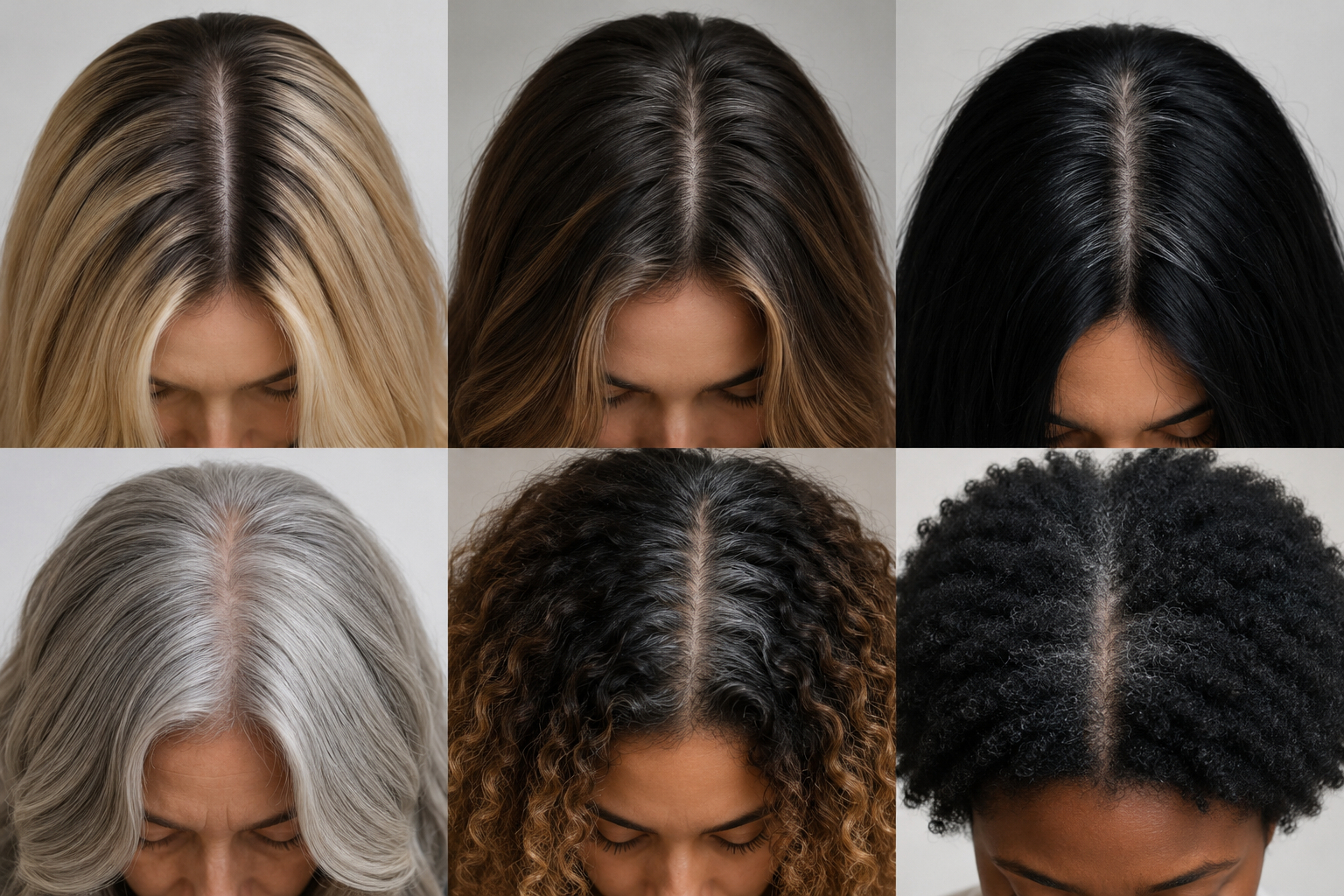
This is the section that basically every competitor ignores and it’s where ghost roots get genuinely interesting.
Ghost Roots on Black Hair
Black hair and ghost roots are a match made in contrast to heaven. The deep base makes any vivid color pop harder. Silver-white, crimson, cobalt blue, and neon green all hit differently against a true black base than they do against brown or blonde.
For natural ghost roots on black hair, simply letting the virgin black root grow in against a lighter-colored length creates that signature architectural contrast without any chemical intervention at the root.
Ghost Roots for Brunettes
The most-searched variant in 2026 and for good reason. Dark brunette to platinum blonde ghost roots is the sleekest, most editorial look in the category. The root stays dark, the length goes light, and the hard line between them does all the work.
Brunettes wanting to go vivid should budget for a 2–3 visit lightening process if their hair is very dark. Rushing the lift leads to brassiness, breakage, and an uneven base that makes vivid colors look muddy.
Ghost Roots on Gray Hair
This is an underserved conversation and one that deserves more attention.
For women in their 40s, 50s, and beyond who are growing out their natural gray, ghost roots reframe the whole experience. Instead of fighting the gray-to-colored line, you’re calling it a design feature. The silver or white root against a warmer, richer colored length reads as intentional and sophisticated rather than overdue for a touch-up.
I spoke with a colorist who described a 52-year-old client who came in dreading her salt-and-pepper regrowth. They left her natural gray root fully intact about 2 inches and refreshed the colored length to a deep, warm brunette. The result was widely complimented as looking “like expensive jewelry.” That’s ghost roots working exactly as intended.
Ghost Roots on Curly and 4C Hair
Curly and coily hair types are an entirely overlooked canvas for ghost roots and they shouldn’t be. The natural texture amplifies the dimensional quality of the contrast, creating movement and depth that straight hair simply can’t replicate.
For 4C hair specifically, the ghost roots approach pairs beautifully with protective styling. Ghost roots locs and ghost roots braids are both trending on Lemon8 and TikTok, with colorists applying vivid shades to the new growth section of locs or to the visible root panels between braided rows.
Key caution for textured hair: porosity is everything. High-porosity hair lifts faster and loses color faster. Always do a porosity test before any bleach service (the float test drops a clean strand in water; if it sinks quickly, your hair is high-porosity). Bond repair treatments like K18 are non-negotiable before bleaching already-textured hair.
Takeaway: Ghost roots aren’t just for straight, fine European hair. They’re one of the most inclusive color techniques precisely because the contrast works on every texture, base color, and hair type.
Ghost Roots for Men:
Men’s ghost roots are having a legitimate moment and it’s not just the alt-adjacent guys driving it.
The most popular iterations for men in 2026:
- Platinum or silver root against dark curtain bangs or longer quiff styles
- Blue or cobalt root panel on short, textured cuts
- Red or copper root against dark lengths on mullets and shags
- Bleached root panel on tight curls for a high-contrast natural look
The technique is the same as for women, but the scale is usually more contained, often just the crown panel or the front fringe section which makes it feel more wearable in professional settings.
Ghost roots on men’s mullets and shags are especially strong right now, aligning with the broader 70s revival in menswear. If you’re going to grow a shag, you might as well have ghost roots to match.
Takeaway: Men’s ghost roots work best when they’re contained to one section crown, fringe, or side panels rather than all-over.
Ghost Roots on Bleach-Damaged Hair:
Nobody is talking about this and it might be the most important section in this entire guide.
If your hair has already been bleached, highlighted, or chemically treated, ghost roots require a more careful approach. Here’s why: the line of demarcation between your natural root and your colored length is a structural weak point. The natural hair at the root has a different porosity, elasticity, and protein level than the previously processed hair below it. Applying bleach right at that junction without preparation is asking for breakage.
The Pre-Lightening Safety Protocol for Damaged Hair
Porosity assessment first. High-porosity hair (common in frequently colored hair) lifts faster, takes color unevenly, and is more prone to breakage. Do the float test before booking any bleach service.
Bond builders are non-negotiable. Products like Olaplex No. 1 (mixed into bleach), K18 (used as a pre-treatment), or equivalent bond repair treatments work by reconnecting broken disulfide bonds in the hair before the chemical service. A colorist who doesn’t mention these when discussing ghost roots on previously bleached hair is a colorist you should question.
Scale back developer volume. If your hair is already light or damaged, 10–20 vol is often sufficient. You don’t need 30–40 vol if the hair has been previously lightened.
The reversed balayage approach for box-dyed hair. If you’ve been using black box dye and want ghost roots, the reversed balayage technique is the safest entry point. Rather than lifting the whole root panel at once, the colorist strategically places lighter color to create the ghost root effect while minimizing trauma to the rest of the hair.
Case Study:
This is one of the most common scenarios I’ve seen in colorist communities online and the one with the most pitfalls.
The challenge: black box dye is notoriously difficult to lift cleanly. It often contains metallic salts that react unpredictably with bleach, and because the color molecule has saturated so deeply into the hair shaft, lifting results can be uneven and brassy.
The solution: don’t try to lift it all at once. A skilled colorist will use the reversed ghost roots balayage approach focusing the bleach application 1–3 inches from the scalp on the new growth section only, where the virgin hair is more predictable to lift. The contrast between the lifted new growth and the dark box-dyed length creates a natural ghost root effect without requiring full color correction.
One Lemon8 creator who documented this process described it as her “favourite way to rework a black box dye” because it dramatically reduces the damage compared to full color correction and still delivers that pop of contrast she was after.
Takeaway: If your hair has existing chemical damage, talk to your colorist about bond builders before you book any ghost roots service. This isn’t optional.
How to Ask Your Colorist for Ghost Roots:
Walk into any salon without the right vocabulary and you might walk out with something completely different from what you wanted. Here’s exactly how to communicate.
The Magic Phrases
For a natural ghost root look:
“I want my natural root color visible with a hard line not blended into the length. I want the demarcation to look intentional, not like I missed my appointment.”
For vivid ghost roots:
“I want the root section bleached and then [color] deposited on it. I want a sharp, clean line where the root meets the length, no feathering, no blending down. The root should be clearly a separate zone from the rest of the hair.”
For a blonde ghost root on brunette:
“I want a platinum root lift with a hard line at about [X] inches from the scalp. No balayage, no blending. I want the contrast to be visible and defined.”
For grown-out ghost roots you want to maintain:
“My ghost roots are growing out. I want to refresh the color in the root panel and sharpen the demarcation line without losing the grown-out feel.”
What to Show Your Colorist
Save three reference images before your appointment:
- One showing the line placement (how far from the scalp)
- One showing the color contrast level (subtle or extreme)
- One showing the texture of hair most similar to yours
Ghost roots look different on straight vs wavy vs curly hair, on dark vs light bases, and on short vs long hair. The more specific your reference images, the better your result.
Takeaway: The phrase “hard line of demarcation that looks intentional” is the magic combination of words. Use it.
Ghost Roots Maintenance:
Here’s the practical reality nobody fully explains: the maintenance schedule for ghost roots depends entirely on which version you have.
Natural Ghost Roots Maintenance
If you’re working with your natural root growing in maintenance is nearly zero. The look gets better the longer you leave it. Refresh your lengths every 8–12 weeks to keep the colored section vibrant, and the root panel takes care of itself.
The only styling note: as the root grows longer (past 3 inches), the look can start to feel less sculptural and more genuinely grown-out. Most people refresh the colored length and get the demarcation line cleaned up around the 10–12 week mark.
Vivid Ghost Roots Maintenance
This is where “low maintenance” claims need a reality check. Vivid colors, especially blues, greens, and pinks on a bleached root fade fast. Expect:
- Full vibrancy: weeks 1–3
- Faded but acceptable: weeks 4–6
- Noticeably washed out: weeks 7+
Between salon appointments, color-depositing shampoos and conditioners are essential. Match the product to your shade there are color-depositing options for blue, purple, red, and pink tones that deposit a small amount of pigment with every wash.
Purple shampoo is essential if any blonde or platinum is in the root panel it neutralizes the yellow brassiness that appears as lightened hair oxidizes.
A root-specific toner applied at home every 3–4 weeks can extend your vivid color significantly.
The Grown-Out Ghost Roots Look
Grown-out ghost roots when the vivid root section has grown down 2–3 inches and the line is now mid-shaft is itself a style. Some people deliberately let this happen. The roots grow naturally dark, the vivid color migrates down, and the whole thing starts to look like a gradient that nobody planned. Surprisingly beautiful, surprisingly wearable.
If you’re at this stage and want to lean into it: a gloss treatment in a color slightly darker than your vivid shade can unify the faded areas and make the grown-out look feel intentional rather than neglected.
Takeaway: Natural ghost roots are genuinely low-maintenance. Vivid ghost roots need monthly home care to stay sharp budget for color-depositing products and toner.
Ghost Roots Cost: What to Budget in 2026
Here’s the honest breakdown because “it depends” is not a useful answer.
| Service Type | U.S. Salon Price Range | Timing |
|---|---|---|
| Natural ghost roots (root clean-up + line sharpening) | $60–$120 | Every 8–12 weeks |
| Blonde ghost roots on brunette (with pre-lightening) | $150–$250 | Every 8–10 weeks |
| Vivid ghost roots (bleach root panel + vivid deposit) | $200–$350 | Every 6–10 weeks |
| Ghost roots refresh (vivid color top-up only) | $80–$150 | Every 5–7 weeks |
| Full ghost roots on long, thick hair | $300–$500+ | Every 8–12 weeks |
DIY cost comparison:
- Bleach kit: $15–$30
- Vivid direct dye: $10–$25
- Bond builder treatment: $25–$40
- Total DIY: $50–$95
The quality gap between DIY and professional ghost roots is significant mostly because the demarcation line requires precision that’s difficult to achieve on your own hair. That said, the DIY vivid refresh (just re-depositing color on an already-bleached root panel) is genuinely manageable at home and can cut your salon visits from monthly to every 8–10 weeks.
Takeaway: Budget $150–$350 for your first professional ghost roots service. After that, strategic DIY refreshes between salon visits can keep costs manageable.
Ghost Roots in Summer 2026:
Summer changes the ghost roots calculus in a few important ways.
UV fades vivid color faster. If you’re spending time outdoors, your cobalt blue or magenta root panel will lose vibrancy in weeks rather than months. Use a UV-protective hair mist and rinse with cool water to slow the fade.
Humidity and heat play differently on ghost roots. The high-contrast root section can look especially striking on air-dried, naturally textured hair which is conveniently summer-appropriate. Lean into the lived-in, effortless aesthetic.
Summer ghost roots color trends for 2026:
- Cobalt blue root against sun-kissed, natural blonde lengths the contrast between the saturated, cool root and the warm, sun-touched length is unexpected and genuinely gorgeous
- Copper or coral root against dark lengths warm and summery without being predictable
- Bleached platinum root against deep brunette lengths minimal maintenance, maximum impact
For brunettes, summer is actually the easiest time to start ghost roots naturally because sun lightening the length creates a gradual contrast with the darker root that starts to look intentional without any salon visit at all.
Takeaway: Summer is ghost roots season for brunettes; the sun does half the work.
Frequently Asked Questions
What’s the difference between ghost roots and shadow roots?
Shadow roots use color to softly blend a darker shade into the root zone, diffusing the grow-out line. Ghost roots do the opposite; they create or accentuate a hard, sharp line of contrast between the root and the length. Shadow roots soften; ghost roots define. If you want something that looks seamless, go shadow root. If you want a visible contrast, ask for ghost roots.
What do ghost roots look like on gray hair?
Spectacular, honestly. Silver or white ghost roots against a richer colored length read as deliberate and sophisticated rather than “overdue for a touch-up.” It’s one of the most beautiful versions of the trend for women in their 40s and 50s who are transitioning to natural gray. You’re reframing the regrowth as a design feature rather than a problem to solve.
Can men get ghost roots?
Absolutely. Men’s ghost roots typically involve a contained root panel crown, fringe, or side sections rather than all-over placement. Platinum, silver, cobalt blue, and red all work well on men’s shags, mullets, and textured shorter cuts. It’s one of the strongest menswear-adjacent hair trends of 2026.
What do grown-out ghost roots look like — should I fix them?
Grown-out ghost roots where the vivid root panel has migrated down the hair shaft can look genuinely beautiful if you lean into it. Refreshing the demarcation line every 8–10 weeks keeps the look sharp. Alternatively, a gloss treatment in a slightly deeper version of your vivid shade can unify the faded, grown-out section and make it look intentional. You don’t have to “fix” grown-out ghost roots; you can style them.
How long do vivid ghost roots last before they fade?
Expect 3–5 weeks of full vibrancy for most vivid shades on a bleached root panel. Blues and greens tend to fade fastest; reds and pinks hold a little longer. Color-depositing shampoos, cold water rinses, UV protection, and a root-specific toner every 3–4 weeks will extend your color significantly between salon visits.
How do I ask for ghost roots at the salon without getting something else?
Use this exact language: “I want a hard line of demarcation at the root that looks intentional, not blended, not feathered, just a clean, visible contrast between the root zone and the rest of my hair.” Bring three reference photos: one showing line placement, one showing your desired color contrast level, and one showing a texture similar to yours. The more specific your brief, the better your result.
Are ghost roots possible on 4C or natural hair?
Yes and they’re stunning. The natural coily texture amplifies the dimensional quality of the root contrast. Ghost roots work beautifully on locs, twists, and braids, with vivid color applied to the root panel or the new growth section. Always do a porosity test before any bleach service on textured hair, use a bond builder like K18, and work with a colorist experienced in textured hair chemistry.
The Bottom Line
Ghost roots are the hair color story of 2026 not because they’re new, but because they’ve finally reached the cultural moment they’ve been building toward since that Dries Van Noten runway six years ago.
They work because they’re honest. They don’t pretend your roots aren’t there. They don’t chase seamless perfection. They find the dramatic potential in what your hair already is, and they amplify it.
Whether you’re a brunette letting your natural dark root grow into your highlighted length, a 50-something embracing silver ghost roots as a sophisticated alternative to endless root touch-ups, or someone sitting in a salon chair about to get cobalt blue deposited on a bleached root panel you’re making the same statement.
You stopped apologizing for your hair. And in 2026, that’s the most stylish thing you can do.