
Table of Contents
Your son just cried in the barber’s chair for the third time this month. You’ve shown the stylist a photo, said “just a little trim,” and somehow walked out with a haircut that made him cover his head with his hoodie for a week.
Sound familiar? You’re not doing anything wrong. Most guides to kids hairstyles for boys are written by people who’ve never actually sat in that chair holding a squirming five-year-old’s hand. I have. More times than I can count.
This guide is different. It’s built from real barber chair experience, real parent frustrations, and the questions I get asked every single week, not just a list of pretty haircuts ripped from Instagram.
By the end of this, you’ll know exactly which cut fits your son’s hair type, face shape, age, and lifestyle and you’ll walk into your next appointment knowing exactly what to say.
What Parents Actually Want When They Search for Kids Hairstyles for Boys
Here’s something most blogs miss completely: parents aren’t just looking for “cool haircuts.” They’re solving a logistics problem.
You need something that survives gym class, doesn’t need ten minutes of styling before school, passes the dress code, and doesn’t make your son hate haircut day. The “cool” part is honestly secondary for most parents, practical wins every time.
I’ve worked with families where the haircut decision came down to one factor: would this child sit still long enough for the barber to finish? That’s the real starting point, not a Pinterest board.
Takeaway: The best kids hairstyle for boys isn’t the trendiest one, it’s the one that fits your child’s actual daily life.
Classic and Timeless Boys Haircuts That Never Go Out of Style
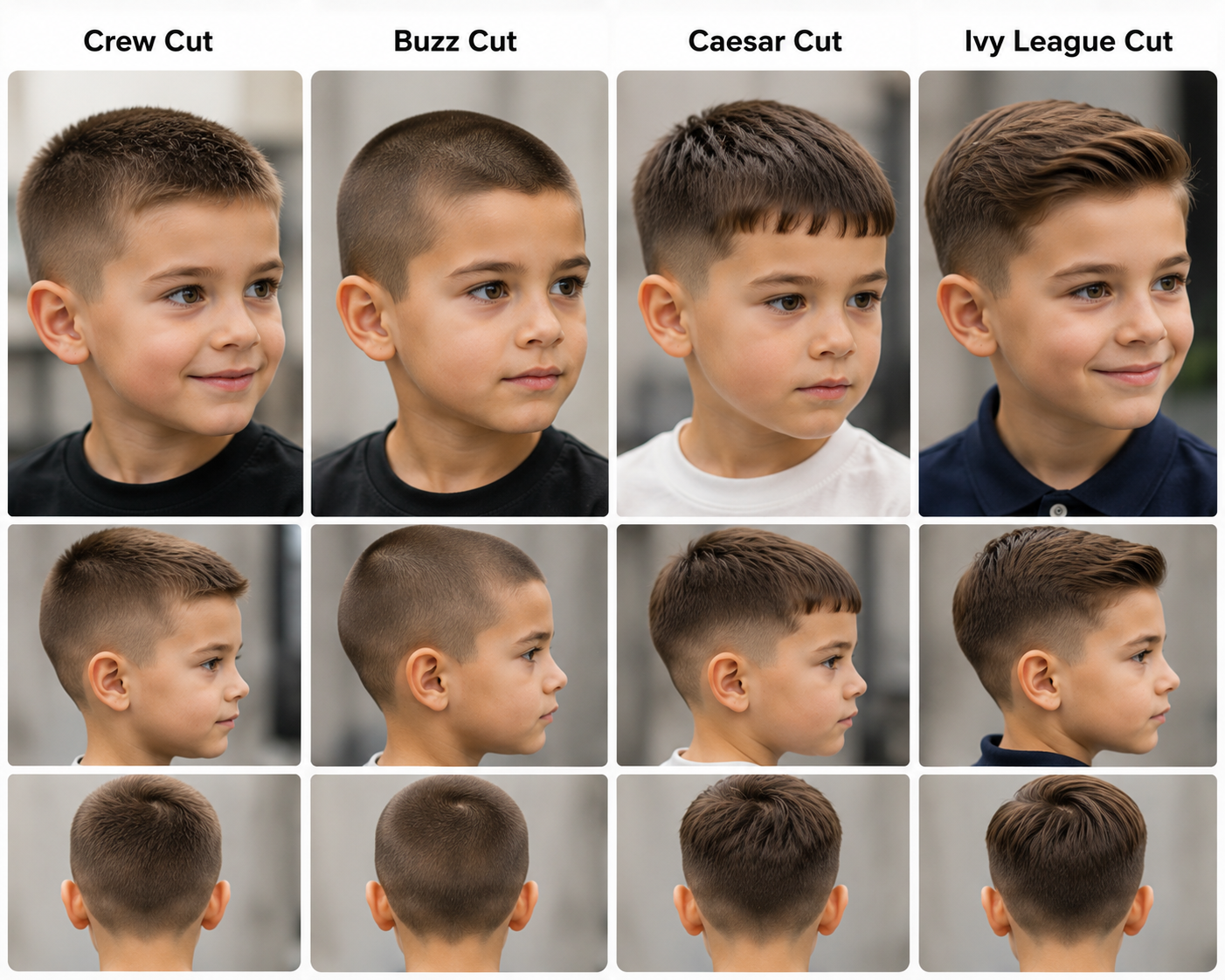
Some cuts have survived decades of trends because they just work. If you want zero drama and guaranteed results, start here.
Crew Cut
Short on the sides and back, slightly longer on top. This is the cut I recommend to nine out of ten parents who tell me “we just want something easy.”
It suits straight, wavy, and even curly hair, needs almost no product, and grows out without looking messy. In my experience, boys aged 3 to 8 do best with this because there’s no styling routine to fight over in the morning.
Buzz Cut
One length all over with clippers. This is the fastest haircut you’ll ever get. Most barbers finish in under five minutes.
I’ve cut buzz cuts on toddlers who wouldn’t sit still for anything else, simply because there’s nothing to mess up. It’s also the go-to for summer, swim season, and any kid with sensory sensitivities who can’t tolerate scissors near their scalp.
Caesar Cut
Short all around with a forward-brushed fringe. This Roman-inspired classic is brilliant for boys with cowlicks or a high forehead, because the forward fringe disguises both.
It needs a trim every 4 to 6 weeks to stay sharp, but the upkeep between visits is basically zero.
Ivy League Cut
Think of this as a crew cut with more versatility. The top is left slightly longer, so it can be combed to the side for school photos or left messy for the weekend.
It’s a smart pick for boys around 6 to 12 who are starting to care about how their hair looks but don’t want a high-maintenance routine.
Takeaway: Classic cuts exist because they solve real problems, low effort, reliable results, and they work on almost any hair type.
Trendy Boys Haircuts for 2026 That Parents and Kids Both Love
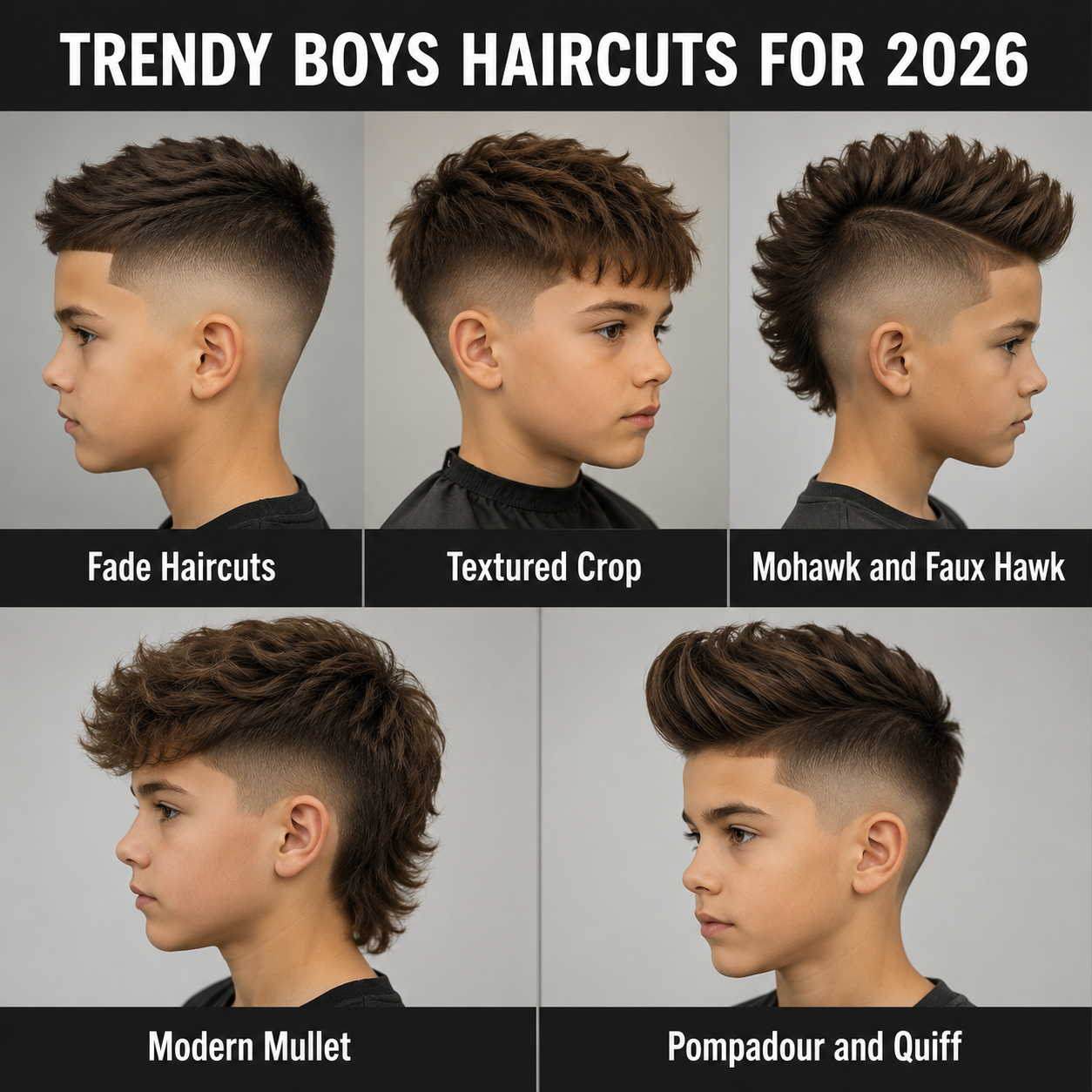
If your son is past the “just cut it short” phase and wants something with personality, these are the styles actually being requested in barbershops right now.
Fade Haircuts (High, Mid, Low, Skin, Burst, Drop)
The fade is the single most requested boys haircut I see today, and it’s not close. Roughly 7 out of 10 boys aged 8 and up who sit in my chair now ask for some version of a fade.
A skin fade goes all the way down to bare skin. A mid or low fade keeps a bit more length near the ear and neck. A burst fade curves around the ear for a rounder finish, and a drop fade dips lower at the back of the head, which works especially well with thicker hair.
The fade pairs with almost anything on top: a textured crop, a quiff, curls, or a mohawk strip. That versatility is exactly why it’s dominating right now.
Textured Crop
Choppy, slightly messy layers on top with a taper or fade on the sides. This is the cut for boys who want to look like they didn’t try, while actually looking very put together.
It works on straight, wavy, and curly hair with just a small amount of matte clay.
Mohawk and Faux Hawk
A true mohawk shaves the sides completely and leaves a strip of length down the middle. A faux hawk softens that sides are tapered rather than shaved, so it’s easier to dial back for school.
I’ve had plenty of parents come in nervous about the mohawk request, only to leave thrilled because the faux hawk version is genuinely school-appropriate.
Modern Mullet
Short and tidy at the front and sides, longer and textured at the back. It sounds bold on paper, but the 2026 version is far more tapered and controlled than the mullets you remember from decades ago.
This works best on boys aged 8 to 14 with straight to wavy hair who want something that stands out without breaking any rules.
Pompadour and Quiff
Both push the hair up and back off the face, but the pompadour has more height and a fuller sweep, while the quiff is shorter and punchier at the front.
These suit boys with straight to slightly wavy hair and a bit of patience for styling not the cut for a child who refuses to use a product.
| Style | Best Hair Type | Maintenance Level | Best For |
| Crew Cut | Straight, wavy, curly | Very low | Toddlers, active kids, school |
| Buzz Cut | All types | Lowest | Toddlers, sports, summer |
| Caesar Cut | Straight, wavy | Low | Cowlicks, high foreheads |
| Ivy League | Straight, wavy | Low-medium | School photos, all-rounder |
| Fade (any type) | All types | Medium | Boys 8+, trend-conscious kids |
| Textured Crop | Straight, wavy, curly | Medium | Tweens wanting an “effortless” look |
| Faux Hawk | Straight, wavy | Medium | Bold kids who still need school approval |
| Modern Mullet | Straight, wavy | Medium-high | Standout look, special occasions |
| Pompadour/Quiff | Straight, slightly wavy | High | Special events, patient kids |
Takeaway: Trendy doesn’t have to mean impractical; the fade family alone proves you can have style and low-maintenance ease at the same time.
Best Haircuts by Hair Type: Straight, Wavy, Curly, and Coily
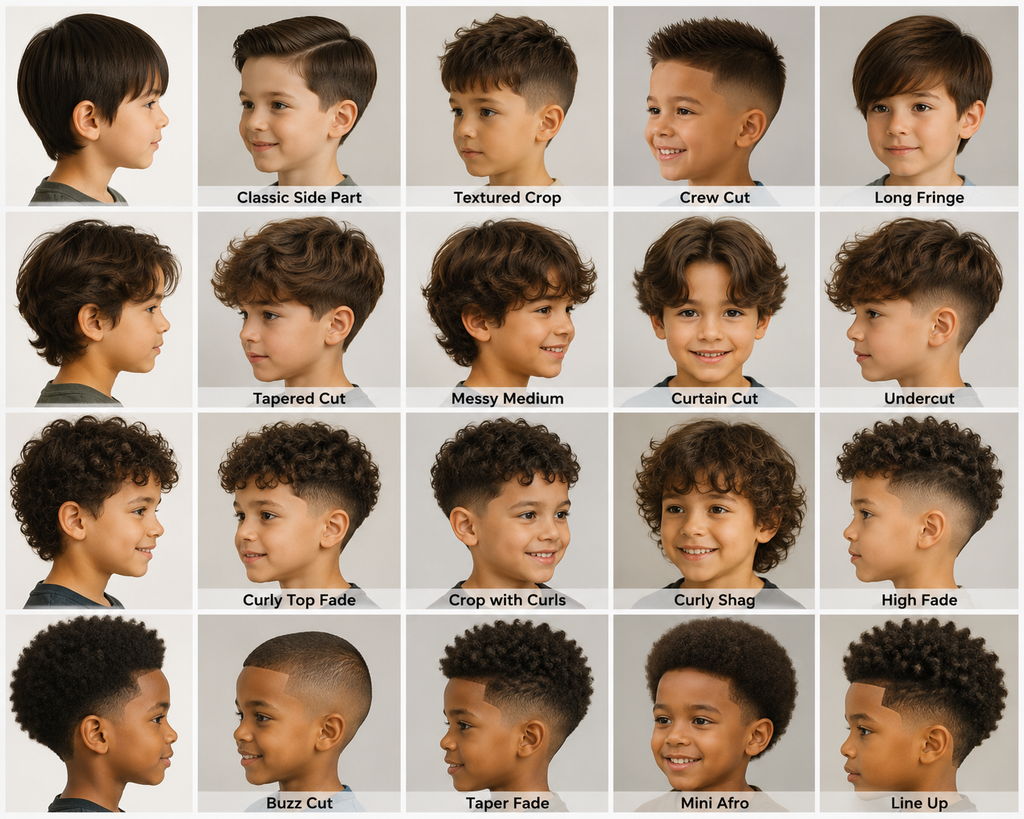
This is the section most competitor guides barely touch, and it’s honestly the most important one. The same haircut can look completely different and need completely different upkeep depending on hair texture.
Straight Hair
Straight hair holds structured shapes really well, which is why crew cuts, Ivy League cuts, and side parts look so crisp on it. The trade-off is that straight hair shows grease and flatness fast, so a lightweight pomade or clay usually does more good than a heavy gel.
Wavy Hair
Wavy hair is the most forgiving texture to work with. It holds texture naturally, so textured crops, faux hawks, and surfer-style cuts barely need any product at all; a little sea salt spray brings out the wave without effort.
Curly Hair
Curly hair needs cuts that work with the curl pattern, not against it. A curly fade keeping curls on top while fading the sides is one of the best combinations I’ve ever cut, because it controls bulk while showing off the texture.
Skip heavy gels here. A lightweight curl cream or leave-in conditioner keeps curls defined without the crunchy look that makes curls look stiff and unnatural.
Coily and Afro-Textured Hair
This is where I see most parents get bad advice. Coily hair needs a barber who genuinely understands how to cut and shape it, not someone using the same technique they’d use on straight hair.
The Afro mohawk fade and high skin fade with a natural curly top are two of the strongest options here, because they celebrate the texture instead of flattening it. Protective styles like short twists are also worth discussing with a barber experienced in textured hair, especially for boys who want lower-maintenance routines between cuts.
Mini case study: A mom I worked with had been told for years that her son’s tight curls “couldn’t hold a fade.” We did a skin fade with the curls left full on top, finished with a small amount of curl cream. Three weeks later, she sent a photo from a school assembly of the best haircut compliments he’d ever gotten, and the easiest morning routine they’d had in two years.
Takeaway: The right cut for curly or coily hair isn’t about forcing a style, it’s about choosing a shape that lets the natural texture do the work.
How to Choose the Right Haircut for Your Son’s Face Shape
Face shape genuinely changes how a haircut looks, and this is one place where a five-minute conversation with your barber saves you a disappointing result.
- Round face: Add height on top (think crew cut, textured crop, or quiff) to create the illusion of length.
- Oval face: This is the lucky shape almost any style works, from buzz cuts to faux hawks.
- Square face: Soften strong jaw angles with textured, slightly messy cuts rather than sharp, geometric ones.
- Heart-shaped face: Keep height low and add a bit of volume near the jawline to balance a wider forehead.
I always tell parents: don’t just hand the barber a photo and walk away. Mention your son’s face shape out loud. A good barber will quietly adjust the plan, and you’ll get a far better result than the photo alone would’ve delivered.
Takeaway: A haircut copied exactly from a photo can flatter one face shape and completely miss the mark on another context that matters more than the picture.
Step-by-Step: How to Cut Your Son’s Hair at Home
Not every family wants to pay for a salon visit every month, and honestly, a basic at-home cut isn’t as scary as it sounds once you know the order of operations.
- Set up properly. Good lighting, a cape or old towel, and clippers with multiple guard attachments (numbers 1 through 8 minimum).
- Start with the longest guard you think you’ll need. You can always go shorter, you can’t add hair back.
- Cut the sides and back first, moving the clippers against the direction of hair growth in smooth, upward strokes.
- Blend the transition point between the shorter sides and the longer top using a slightly bigger guard, moving in small circular motions to avoid a harsh line.
- Switch to scissors for the top, combing small sections up and trimming the tips rather than cutting deep into the length.
- Check both sides in a mirror before declaring it finished, symmetry mistakes are the most common at-home error.
- Clean up the neckline and around the ears last, using the clipper without a guard for crisp edges.
If this is your first time, start with a buzz cut or simple crew cut before attempting a fade. Fades genuinely take barbers months of practice to blend properly; there’s no shame in leaving that one to the professionals.
Takeaway: A confident, simple at-home cut beats a botched attempt at a complicated style every single time.
What Is a Number 3 Haircut? A Quick Guide to Clipper Guard Sizes
Walking into a barbershop and hearing “what number do you want?” can feel like a pop quiz nobody warned you about. Here’s the cheat sheet.
| Clipper Number | Length in mm | Look |
| 0 (skin) | Bare skin | Completely shaved |
| 1 | 3mm | Very close buzz |
| 2 | 6mm | Classic buzz cut |
| 3 | 9mm | Slightly fuller buzz |
| 4 | 12mm | Short, but visible length |
| 5 | 16mm | Noticeably longer |
| 6 | 19mm | Short crop length |
| 7-8 | 22-25mm | Longer textured looks |
A number 3 specifically means 9mm of length, tidy, short, and a popular choice for the sides of a fade or for an all-over short cut on active kids.
Takeaway: Knowing the guard numbers means you walk into the barbershop speaking the same language as your stylist, fewer surprises, better results.
Easy and Low-Maintenance Haircuts for Active, Sporty Kids
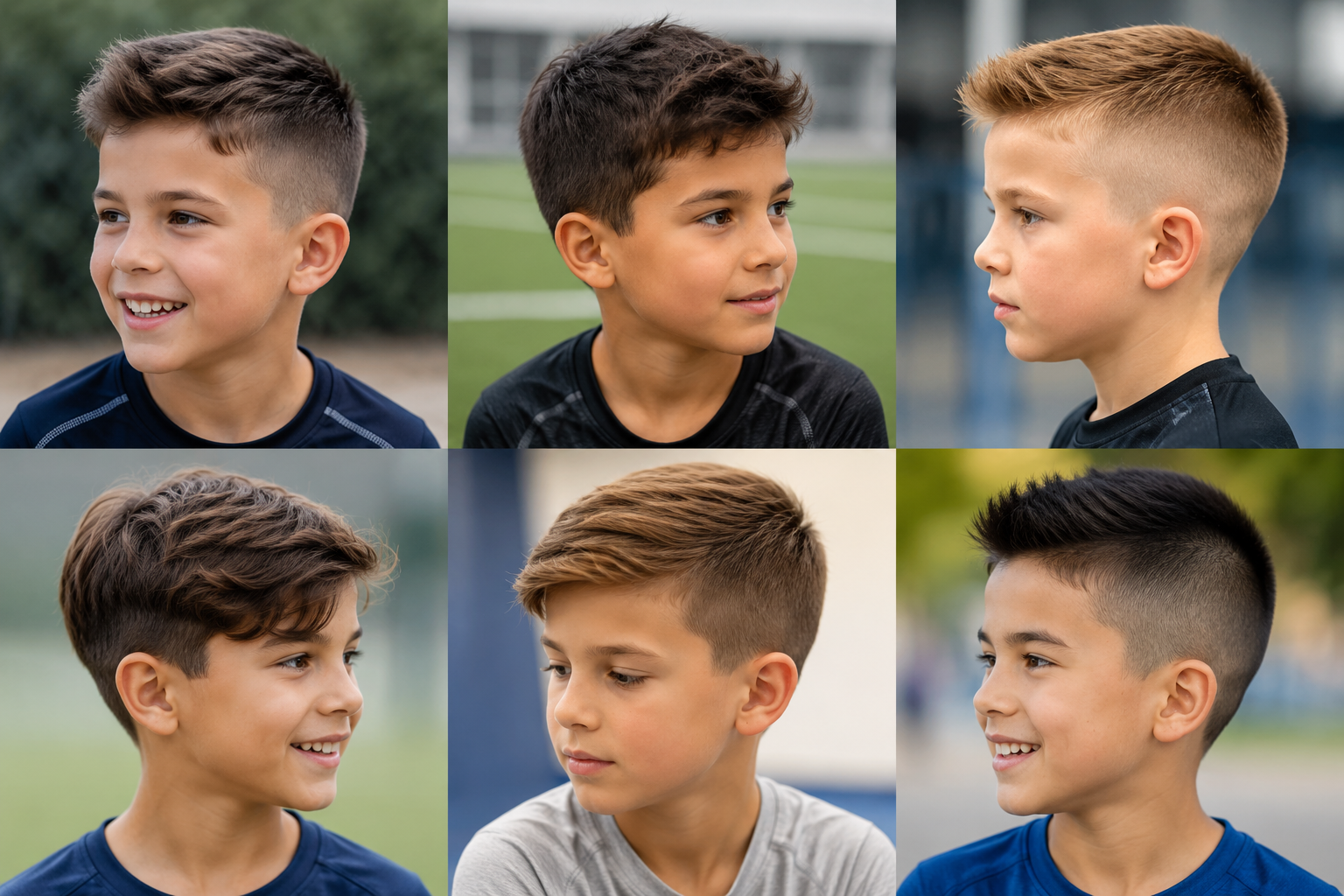
If your son plays sports, swims regularly, or just sweats through everything, his haircut needs to survive that lifestyle without daily fuss.
Buzz cuts and crew cuts top this list because there’s genuinely nothing to mess up. Wash, towel dry, done. A skin fade with a short, textured top is the next best option if he wants slightly more style without adding a morning routine.
I’d avoid anything requiring daily product application for kids under 10 who are in sports most days. The product washes out in the pool or shower, and you’ll end up re-styling constantly, which usually ends in frustration for both of you.
Takeaway: For active kids, the best haircut is one that looks intentionally wet, dry, sweaty, or fresh out of the pool, with no touch-ups required.
Helping a Scared or Sensitive Child Get Through Haircut Day
Nobody talks about this enough, but a huge number of “bad haircut” stories actually start with a child who was anxious before the clippers even turned on.
In my experience, the fix usually isn’t about the haircut at all; it’s about the environment. Bring noise-cancelling headphones if your son is sensitive to the clipper sound. Let him hold the cape, choose the chair, or even hold his favorite toy throughout the whole appointment.
For sensory-sensitive kids, a buzz cut with clippers only (no scissors near the scalp, no spray bottles) is often far easier to tolerate than a textured cut requiring lots of combing, sectioning, and product application.
Booking the first appointment of the day, when the shop is quiet and the barber isn’t rushed, makes a bigger difference than most parents expect.
Mini case study: A regular client of mine has a son with sensory processing differences who used to scream through every haircut. We switched to buzz-cut-only visits, did them first thing on a Saturday morning, and let him wear headphones the whole time. After three visits, he started walking in calmly on his own. The haircut never changed the experience around it.
Takeaway: A calmer haircut experience often matters more to your child than the style itself fixes the environment before changing the cut.
Your Son’s First Haircut:
The first haircut is a genuine milestone, and it deserves a little extra planning. Most kids get their first real cut somewhere between 12 and 24 months, though plenty of babies are born with barely any hair and don’t need one until much later.
Some families keep a small lock of hair as a keepsake, and many cultures have their own first-haircut traditions and ceremonies marking this exact moment. It’s worth asking relatives if there’s a family tradition you’d like to include.
For the cut itself, keep expectations realistic. A simple trim around the ears and neckline is plenty for a first visit; this isn’t the appointment for an ambitious fade.
Takeaway: The first haircut is about the memory as much as the result: keep the style simple and let the moment be the focus.
How Much Does a Kid’s Haircut Cost?
Pricing varies a lot by location and salon type, but here’s a realistic range based on what I see across different setups:
- Big-box chain salons: Often the most budget-friendly option, with kid-specific pricing.
- Independent barbershops: Mid-range pricing, usually with more one-on-one attention and chair experience tailored to kids.
- Specialized kids’ salons: Typically the highest price point, but they’re built around the whole experience, entertainment, distraction tools, and staff trained specifically for children.
If your son struggles with sitting still, paying slightly more for a kids’ specialty salon or an experienced barber who’s genuinely good with children is often worth every extra dollar. It saves you both the stress of a rushed, frustrated cut.
Takeaway: The cheapest option isn’t always the best value if your child needs extra patience and a calmer setting.
Hair and Scalp Care Between Haircuts
A great haircut doesn’t mean much if the hair underneath isn’t healthy. A few habits make a real difference.
Wash two to three times a week with a gentle, sulphate-free shampoo. Daily washing strips natural oils and can leave hair drier and harder to style. If you notice flaking or an itchy scalp, that’s often a sign the shampoo is too harsh rather than a sign of poor hygiene.
Cowlicks are simply the direction hair naturally grows in, and trying to fight them with product usually backfires. The Caesar cut and short crew cuts work with cowlicks instead of against them, which is often the simplest fix.
Takeaway: Healthy hairstyles are better than dry, irritated hair. Scalp care is half the battle.
How to Talk to Your Barber:
Walking in and saying, “Just make it look nice,” is how mismatched expectations happen. Try this instead:
“Can we do a number 2 on the sides blending into a number 4 on top, kept short enough for school, nothing that needs daily styling?” That single sentence covers length, blend, and maintenance level, three things every barber needs to know.
Bring one reference photo, but say it out loud too: photos alone miss face shape, hair density, and growth pattern, which only a real conversation can cover.
Takeaway: Specific, spoken instructions beat a silently-handed photo almost every time. Your barber can ask follow-up questions a photo can’t answer.
Simple Kids Hairstyles for Boys Who Hate Sitting Still
If your son is the squirmy type, simplicity is your best friend. A buzz cut wins here because most barbers can finish it in under five minutes flat. A basic crew cut is the next fastest, especially if the barber skips a precise blend and keeps the sides uniform.
Avoid anything requiring multiple product applications or a long blow-dry session mid-cut that’s where most meltdowns happen. The shorter the total chair time, the better your odds of a calm appointment.
Takeaway: For a squirmy kid, speed of the haircut matters just as much as the style itself.
Kids Hairstyles for Boys With Short Hair
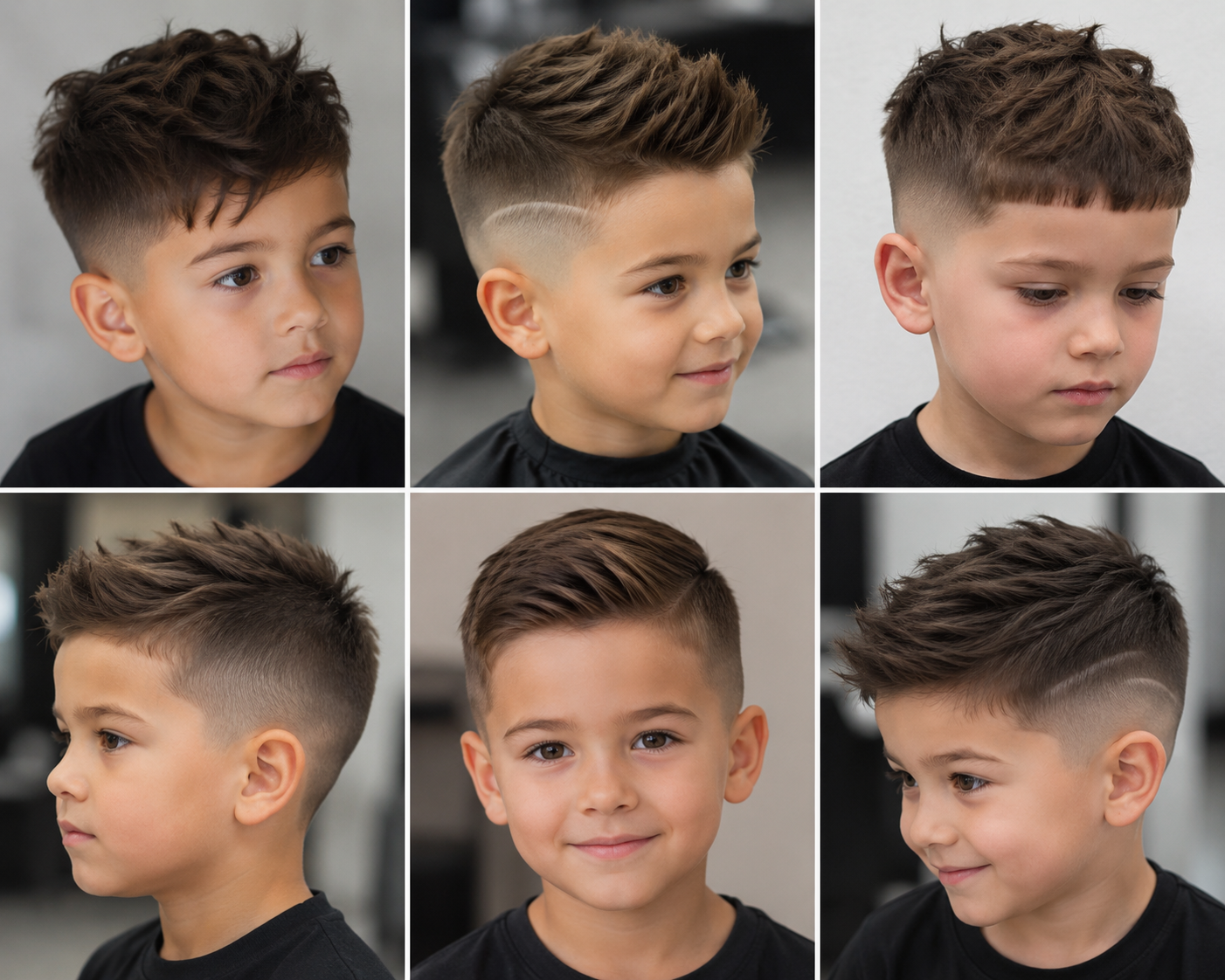
Short doesn’t have to mean boring. Buzz cuts, crew cuts, Caesar cuts, and skin fades with a slightly textured top all deliver a clean, low-maintenance look while still offering a bit of personality through subtle texture or a defined hairline.
A short textured crop with a skin fade gives just enough edge for a tween who wants to feel a little more grown-up, without crossing into territory that needs daily styling.
Takeaway: Short hair gives you the most low-maintenance options on this whole list, perfect for busy mornings.
Kids Hairstyles for Boys With Long Hair
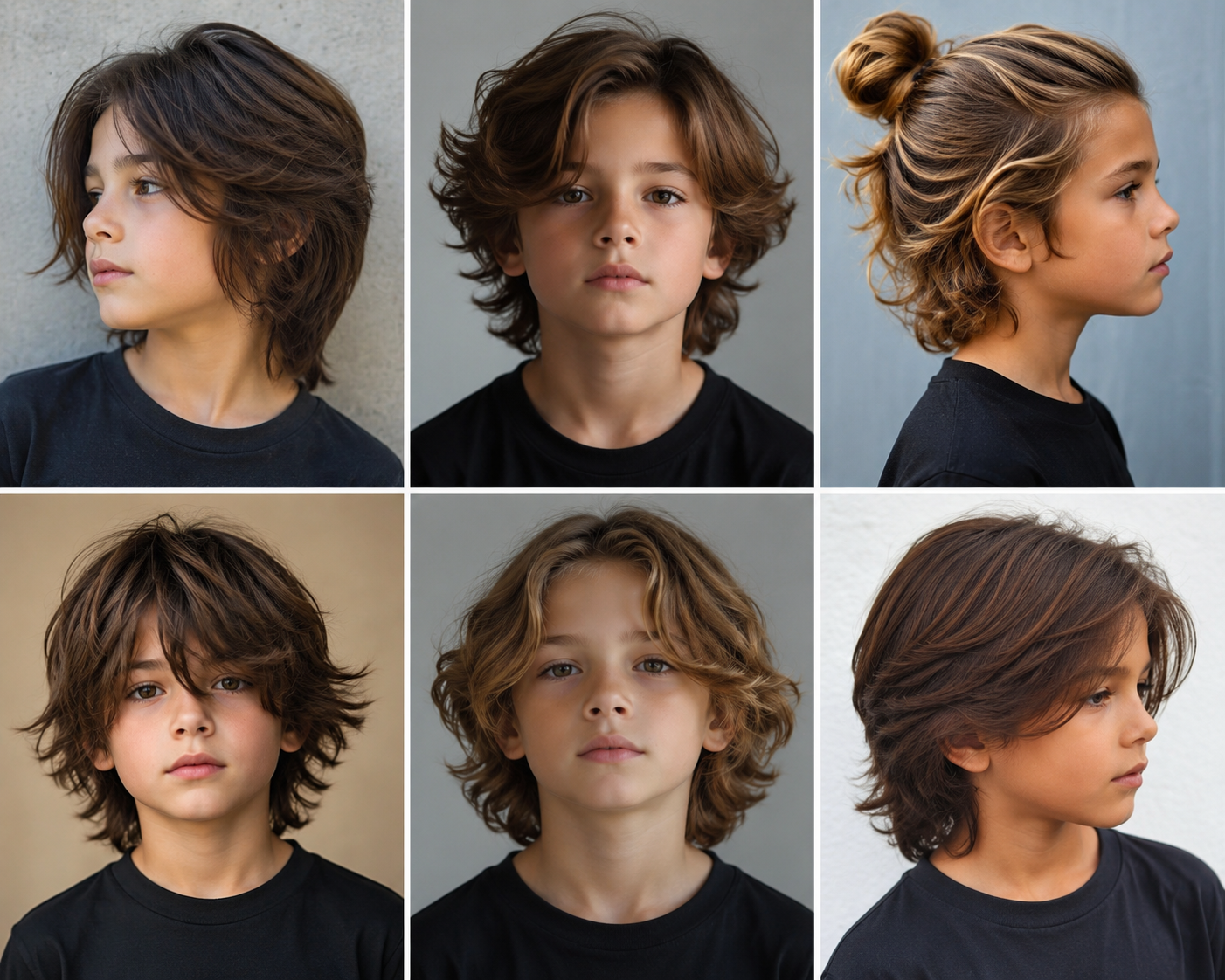
Long hair on boys has made a real comeback, and layered cuts are what keep it from looking heavy or unkempt. Regular trims every 6 to 8 weeks maintain shape without sacrificing length, and a side-swept or surfer-style finish works beautifully on wavy to straight hair.
The biggest mistake I see with long hair on boys is skipping layers entirely without them. Hair just hangs flat and looks unintentional rather than stylish.
Takeaway: Long hair needs layers to look deliberate rather than simply “grown out.”
Kids Hairstyles for Indian Boys
Many Indian families navigate both modern style preferences and traditional first-haircut customs like the mundan ceremony, which typically happens in early childhood. Outside of that tradition, classic crew cuts, side parts, and modern fades are extremely popular choices that work well with the straight-to-wavy hair texture common among many Indian boys.
For festival or special occasion looks, a textured quiff or side-swept style photographs beautifully and pairs well with traditional outfits.
Takeaway: Balancing cultural tradition with modern style is entirely possible; many classic cuts work for both everyday wear and special occasions.
Kids Hairstyles for Black Boys
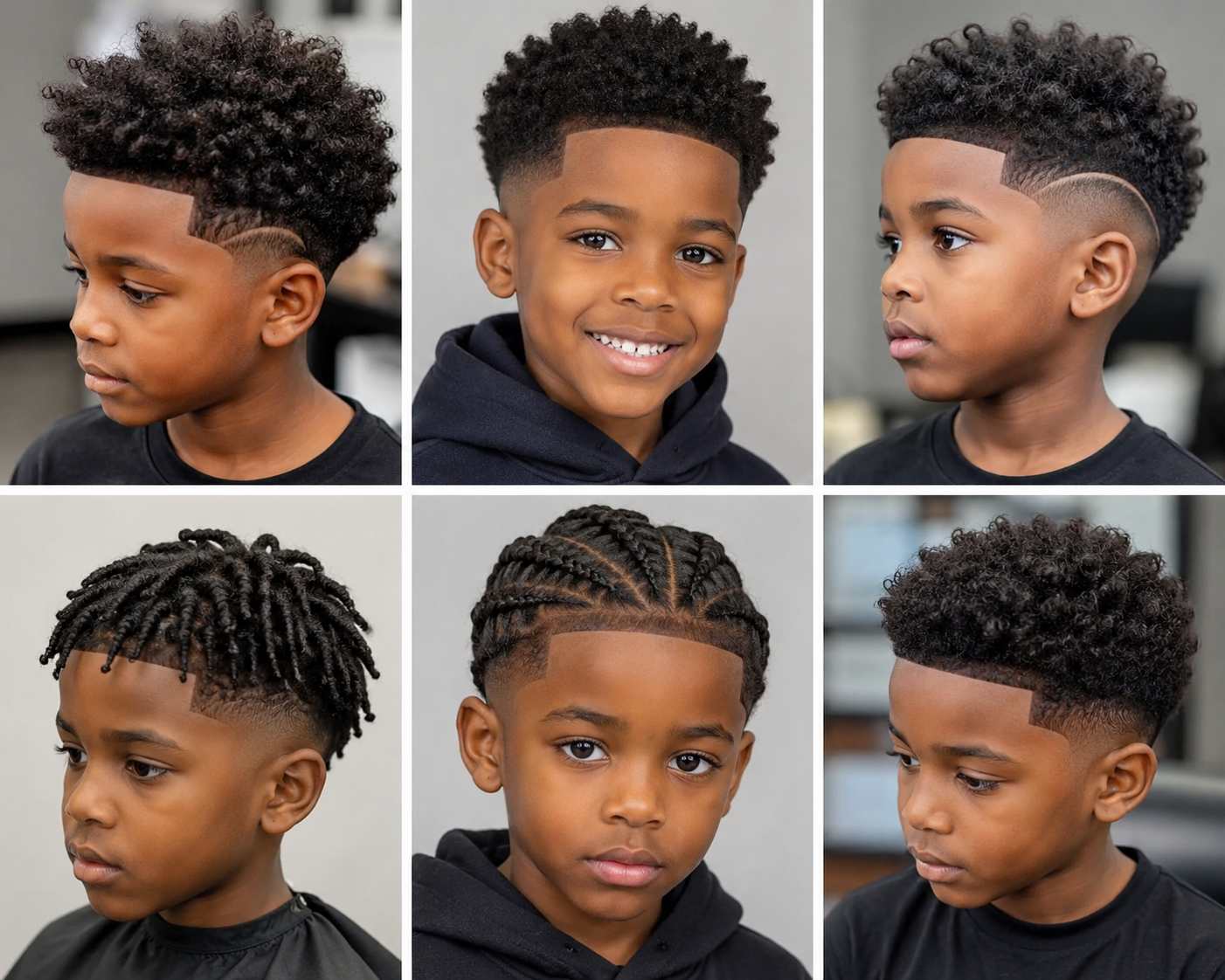
This deserves real attention, not a single afterthought paragraph. Afro-textured hair shines in cuts designed specifically for it, the Afro mohawk fade, high skin fade with a curly or coily top, and tapered designs with line-up detailing all celebrate the natural texture rather than fighting it.
Finding a barber who specifically has experience with textured hair makes an enormous difference in the final result. Don’t be afraid to ask directly about their experience before booking; it’s a completely normal and important question.
Takeaway: The right cut for Black boys’ hair isn’t a smaller version of styles built for straight hair; it’s a category of cuts designed around the texture itself.
Frequently Asked Questions
What is the most popular boy haircut right now?
Fades are leading by a clear margin, especially paired with a textured crop or curly top. Crew cuts and buzz cuts remain close behind for younger kids and anyone wanting a low-maintenance option.
What is a cool haircut for boys that’s still easy to manage?
A skin fade with a short, slightly textured top hits that sweet spot. It looks current without needing daily styling effort.
What is a boy cut?
It’s another name for a classic short-back-and-sides style, usually with a side part and a slightly longer top that’s brushed neatly to one side.
What is a number 3 haircut?
A number 3 clipper guard leaves hair at 9mm short and tidy, commonly used on the sides of a fade or as an all-over length for active kids.
Which haircut is best for a schoolboy?
Anything short to medium with minimal styling needs works best. Crew cuts, low fades, and Caesar cuts are reliable, school-friendly choices that also meet most dress codes.
What age should a boy get his first haircut?
There’s no fixed rule. Most boys get their first proper cut between 12 and 24 months, but plenty of babies don’t grow enough hair to need one until well past their first birthday.
The Bottom Line on Kids Hairstyles for Boys
The “perfect” haircut isn’t a single style from a magazine; it’s the one that matches your son’s hair type, face shape, age, school rules, and patience level, all at once.
Start simple if you’re unsure, talk openly with your barber instead of just handing over a photo, and remember that a calm experience often matters more than the cut itself. Get those fundamentals right, and you’ll never dread haircut day again.