
Table of Contents
I’ve been behind the chair for over a decade, and the quiff is still one of the most requested cuts that walks through my door — right up there with the fade. It’s also the style clients come back complaining about the most. Not because the cut itself is wrong, but because almost nobody ever explains how to keep it standing past lunch.
I had a client, an accountant who came in every six weeks like clockwork, tell me once that he’d basically given up on the style. “It looks great for the photo, then it’s dead by 11 a.m.,” he said. Turned out he was doing almost everything right — good cut, decent product — except for the one thing nobody had ever told him about. We’ll get to that.
If you’ve left the house with a sharp, lifted quiff and caught your reflection three hours later looking like you slept on it, you’re not doing anything “wrong.” You’re just missing a few pieces most guides skip entirely. That’s what this guide is for: what the style actually is, which version fits your face and hair type, the real reason it collapses by midday, and the exact step-by-step routine I give clients in the chair.
A Quick Word on Where This Style Came From
The quiff haircut isn’t a new invention — it’s been around since the rock-and-roll era of the 1950s, when icons like James Dean and Elvis Presley wore their hair swept up and back with serious height. Over the decades it’s been reworked with fades, undercuts, and modern texture, but the core idea has never changed: short sides, long top, and volume that draws the eye upward. That staying power is exactly why barbers still consider it one of the most reliable go-to cuts for guys who want something that looks current without chasing a trend that disappears in a year.
What Exactly Is a Quiff Haircut?
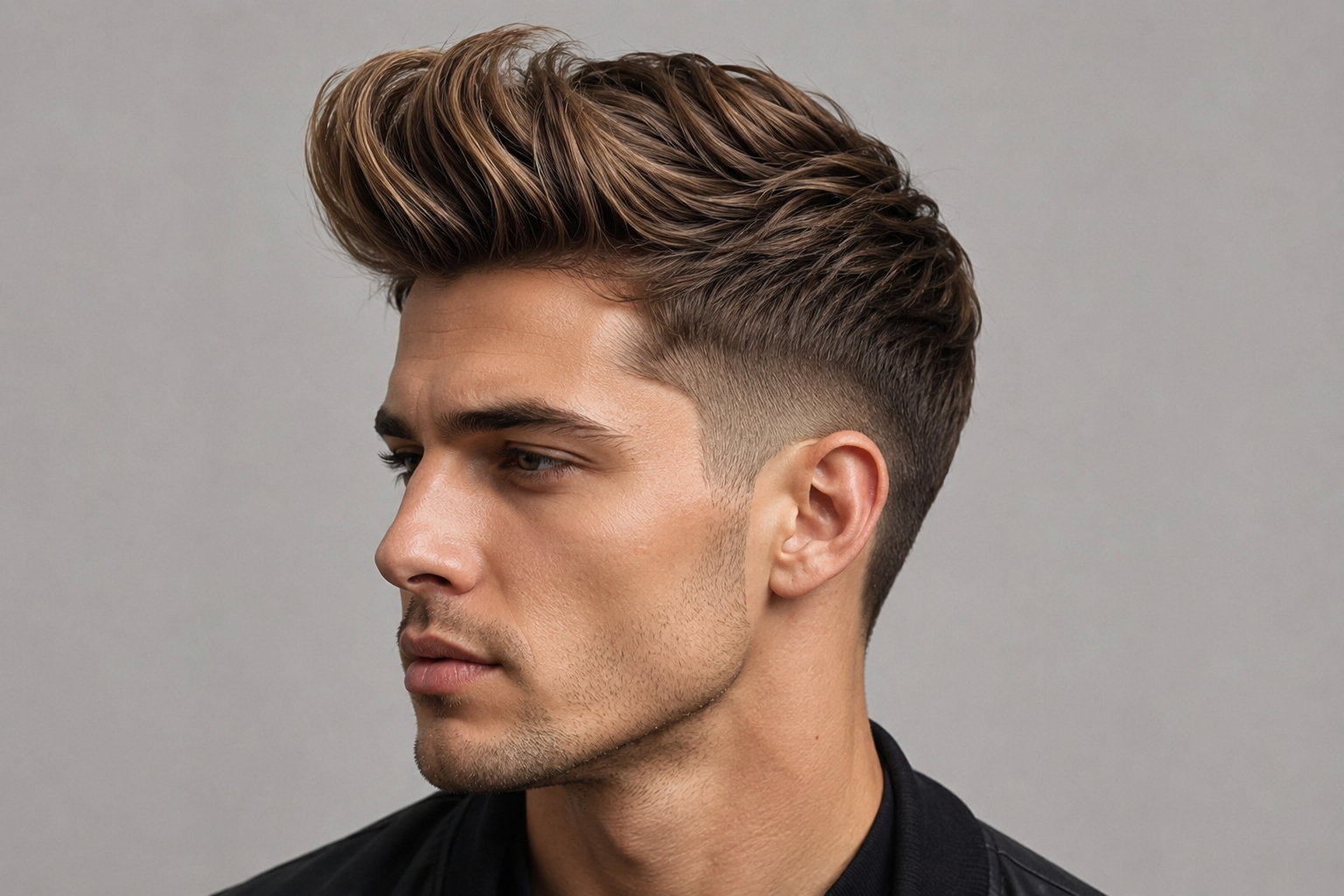
At its core, this style is built around one thing: forward, upward volume at the front of the head. The sides are cut short — usually faded or tapered — while the top is left long enough to sweep up and slightly forward, away from the face. That contrast between tight sides and a lifted front is what gives it shape and edge.
Technically, you need 3 to 5 inches of length at the front hairline (what barbers call the forelock) so there’s enough hair to grab, lift, and shape. I always tell first-time clients to leave a little extra weight in that front section rather than texturizing it too aggressively — thin, choppy strands up front won’t hold a forward sweep no matter how much product you use.
The transition from that longer front section into the rest of the top matters more than most people realize. If a barber cuts a hard length drop between the front and the crown, you’ll see a visible ridge every single time you style it up. A well-cut version has a graduated blend, so the front melts smoothly into the top instead of looking like a shelf.
How It Compares to a Pompadour
Clients ask me this constantly, so let’s settle it once. A pompadour sweeps hair straight back and up, away from the forehead, for a sleek, formal finish. This style, by contrast, sweeps up and slightly forward, toward the face, building a peak right at the hairline. It reads more casual and textured, where the pompadour reads more polished and vintage. Both need a blow-dry for lift and a strong product to hold, but if you want something you can rough up with your fingers and still look intentional, this is the better everyday option of the two.
| Best for | Everyday wear, creative offices | Formal events, classic style lovers |
| Styling effort | Moderate — blow-dry plus product | Higher — needs more structure and shine |
| Overall vibe | Casual, textured, modern | Polished, formal, vintage |
| Feature | Quiff | Pompadour |
| Direction of sweep | Up and slightly forward | Straight back |
Choosing the Right Variation for Your Face and Hair
Not every version of this cut looks the same on every guy, and picking the wrong one for your face shape or hair type is the fastest way to end up disappointed in the mirror. Here’s how I break it down with clients.
By Face Shape
- Round faces — go taller. Extra height at the front elongates the face and breaks up the roundness.
- Oval faces — you can wear almost any variation; balanced length works well across the board.
- Square faces — soften the front with texture instead of a sharp, blocky peak, which can make a strong jaw look boxier.
- Heart-shaped faces — add a touch more width at the sides so the volume doesn’t sit too high and narrow, which tends to exaggerate a pointed chin.
By Hair Type
- Fine or thin hair — a shorter, tighter version with a lightweight texture spray builds the illusion of density without weighing hair down.
- Thick hair — internal thinning at the front keeps the peak from looking bulky or helmet-like.
- Curly or wavy hair — let the natural texture do some of the work; a looser, messier finish plays to your strengths instead of fighting them.
- Straight hair — you’ll get the cleanest, most defined peak, but you’ll also need a stronger grip product since straight strands drop faster than textured ones.
Popular Variations Worth Knowing by Name
If you’re bringing a reference photo to your barber, these are the terms that come up most often in my chair, and knowing the right one saves you from a miscommunication in the mirror:
- Textured quiff low fade — a soft, piecey top paired with a subtle fade, keeping things low-contrast and easy to wear every day.
- Short quiff hairstyle — tighter sides, less length up top, ideal for corporate settings or guys who don’t want a long daily styling routine.
- Textured crop — a cropped, forward-styled fringe that borrows the same forward volume without going for full height.
- Medium length version — the sweet spot for most guys; enough length for real lift, still easy to manage on a rushed morning.
- No-fade version — sides are tapered but not shaved down to skin, giving a softer, less severe silhouette.
- High fade version — maximum contrast, with the fade climbing high on the head so the top does all the visual work.
- Taper fade version — a gradual blend on the sides rather than a hard line, which ages better between barber visits and needs less upkeep.
- Mid fade version — a balanced middle ground between subtle and bold, and probably the single most requested combination I cut.
- Undercut version — a sharp, high-contrast build where the sides are clipped close, and the top is left long and heavy for maximum lift.
- Slick back version — hair is swept back with a wet or high-shine finish for a more retro, rock-and-roll look.
Whatever variation you land on, the underlying rules for keeping it up all day stay the same — and that’s where most guides stop short, and this one keeps going.
The “Silent Killer” of Style: Office Air Conditioning
Here’s something almost nobody talks about: the single biggest reason your style looks incredible when you leave the house and sad by 2 p.m.: dry, conditioned air.
Office air conditioning systems pull moisture out of the room to keep it cool, and that dry air pulls moisture straight out of your hair strands right along with it. Hair depends on a certain amount of internal hydration to hold its “spring.” Without it, the shaft weakens, gets heavier, and the lift you built that morning slowly caves in on itself over the course of the day. It’s not your technique failing you — it’s the environment working against you.
How Dry Air Actually Breaks Down the Style
When your strands lose moisture, the keratin bonds that give hair its bounce begin to flatten. That’s why a style that looked sharp at 8 a.m. can look completely deflated by your first afternoon meeting — the internal structure holding that volume has been dried out from underneath the product, not just weighed down by it.
The Fix: Moisture Locking with Sea Salt Spray
The solution isn’t more product — it’s sealing moisture in before you style, so dry air has less to pull out in the first place.
- The method: Apply a sea salt spray to damp hair before you start any other step.
- Why it works: Sea salt spray helps close the hair’s outer cuticle layer, which locks existing moisture inside the strand instead of letting office air draw it out over the day. That’s what lets a well-styled, textured finish hold its shape through hour eight instead of hour three.
My accountant client above? We swapped nothing about his cut. Added a sea salt spray step before his usual clay, and he texted me a week later saying it was the first time the style had made it through a full workday.
The Science of Porosity: Why Your Wax Might Be the Real Problem
If you’ve been layering on more and more wax and still watching everything fall flat, the issue is probably porosity, not effort.
Porosity determines how easily hair absorbs and holds onto product:
- Low porosity hair — takes longer to get wet and resists absorbing product. Heavy waxes just sit on the surface and drag the front down instead of lifting it. Lightweight sprays and mousses work far better here.
- High porosity hair — absorbs and loses moisture quickly — it’s “thirsty” hair. A heavier matte clay gives a messier finish and the grip it actually needs to hold through the day.
If you don’t know your type, a quick test tells you everything: drop a clean strand of hair into a glass of water. If it sinks fast, you’re high porosity. If it floats for a while before sinking, you’re low porosity.
| Hair Type | Recommended Product | Avoid |
| Fine or low porosity | Lightweight texture spray, mousse | Heavy wax or thick pomade |
| Thick or high porosity | Matte clay, molding paste | Shiny gels, light sprays alone |
| Curly or wavy | Light cream plus sea salt spray | Overly stiff-hold products |
| Straight | Firm-hold clay or paste | Anything with low grip |
Best Products for Making a Quiff Haircut Last
Beyond porosity matching, a few product categories do most of the heavy lifting for keeping this cut structured through a full day:
- Sea salt spray — your pre-styling step on damp hair. Builds grip and locks in moisture before anything else goes on.
- Volumizing mousse — a lighter alternative to sea salt spray if your hair is already on the drier side; apply to damp roots before blow-drying.
- Matte clay — the workhorse for thicker or high-porosity hair that needs real hold without shine.
- Molding paste — a softer, more flexible option if you want movement without a stiff, “set” look.
- Texture powder — great for an instant midday root lift without adding weight, especially useful for fine hair.
- Light hairspray — optional final step to lock the shape in place; a light mist from about six inches away is enough. Overdoing it turns a natural quiff haircut into a stiff helmet, which defeats the point.
I generally tell clients to keep it to two products max: one pre-styler for moisture and grip, one finishing product for hold. Layering five different things doesn’t build a better quiff haircut — it just adds weight and confuses which product is actually doing the work.
How-To Guide: The 5-Minute Morning Routine
You don’t need forty-five minutes and three mirrors to get this style looking sharp. This is the exact routine I walk clients through:
- Start with about 80% dry hair. Fully wet hair won’t hold structure; fully dry hair won’t reshape easily.
- Apply sea salt spray first. This locks in moisture before anything else touches your hair.
- Blow-dry for root lift. Point the dryer upward from the roots, working against the direction you want the final shape to fall. This builds the vertical lift the whole style depends on.
- Use the cold shot. Hit the “cold” button on your dryer for the final 10 seconds to set the shape before product goes in.
- Apply product last, front section first. Work a small amount of clay or paste into the front hairline, pushing up and slightly forward to build the peak, then blend the rest through the top.
How-To Guide:
When the front starts sagging around 1 or 2 p.m., the instinct is to reach for more wax. Don’t. Extra product just adds weight to hair that’s already struggling to hold itself up, and it makes the collapse worse, not better.
Instead, use your fingertips to massage the scalp vigorously right at the roots for about 15 to 20 seconds. This reactivates the product already in your hair and physically lifts the roots back up. Most of the time, that alone brings a messy, textured version right back to life without a single new product touching your head.
Common Mistakes That Kill the Style
- The “wet look” trap. Shiny gels might look great in a mirror at home, but under office lighting, that shine reads as greasy or sweaty. Stick to a matte clay or texture powder for a natural, dry finish that still looks touchable.
- Skipping the pre-styler. Going straight to wax on dry hair, with no sea salt spray or mousse underneath, means you’re fighting flat hair from the very first step instead of setting yourself up to succeed.
- Ignoring porosity. As covered above, using the wrong weight of product for your hair type is one of the most common reasons a great cut in the shop falls apart within hours of leaving it.
- Overwashing. Washing daily strips the natural oils that actually help hair grip and hold shape. Every other day is usually the sweet spot for most guys.
- Rushing the blow-dry. The root lift step is the foundation everything else builds on. Skip it or rush it, and no amount of product afterward will fully make up the difference.
How to Ask Your Barber for the Right Look
Getting exactly what you want starts before the clippers ever touch your head.
- Use specific language. Say “textured, with a mid fade” or “short on the sides, longer through the front” rather than just pointing at your head — vague requests get vague results.
- Bring a reference photo. A clear image removes the guesswork around fade height, top length, and overall shape.
- Specify length up top. Tell your barber exactly how much length you want left at the front hairline. Three to five inches is the standard range for real volume.
- Mention your styling habits honestly. If you’re not going to blow-dry it every morning, say so. A good barber can cut a lower-maintenance version that still holds a reasonable shape air-dried.
Maintaining the Look Between Visits
This isn’t a “cut it once and forget it” style. Book a trim every 4 to 6 weeks to keep the sides sharp and the front section balanced. Once the sides grow out, the contrast that defines the whole look starts to soften, and the style reads as less intentional. Between visits, a light trim of stray ends or a fade touch-up at home can buy you an extra week or two if you need it.
A simple daily routine also protects the cut between appointments: rinse with a shampoo suited to your hair type, condition to replace lost moisture, and finish weekly with a lightweight oil to prevent dryness and split ends from undoing the barber’s work early.
Daily Use Cases:
- In meetings: A clean, short version reads as sharp and detail-oriented, which is great for client-facing roles.
- Social settings: A messier, more textured finish feels effortless and approachable without looking undone.
- Face-slimming effect: Because the volume builds vertically rather than horizontally, this style visually elongates the face, which is why it’s such a popular pick specifically for round faces.
Is This the Right Style for You?
Before you commit at your next barber appointment, it’s worth being honest with yourself about upkeep. This cut rewards guys who are willing to spend five minutes with a blow-dryer most mornings and don’t mind a mid-afternoon scalp massage if things start to sag. If that sounds like too much commitment, a shorter, lower-volume variation still gives you the same short-sides, long-top silhouette with far less daily maintenance — you’ll just trade some of the dramatic height for convenience. Either way, the fundamentals in this guide, from moisture locking to matching product to your porosity, apply no matter how tall or subtle you take the front section.
Frequently Asked Questions
What is a quiff haircut?
It’s a men’s style with short, faded or tapered sides and a longer top that’s blow-dried and styled upward and slightly forward, creating volume and height at the front hairline.
What’s the difference between this style and a pompadour?
A pompadour sweeps hair straight back for a sleek, formal finish, while this cut sweeps up and forward toward the face for a more textured, casual look.
How long does my hair need to be?
Most barbers recommend 3 to 5 inches at the front hairline so there’s enough length to lift, shape, and hold.
Is a quiff haircut high maintenance?
It needs regular trims every 4 to 6 weeks and a quick daily styling routine, but it’s not as demanding as people assume. Five minutes with the right technique gets most guys through the day.
Can I get this style with fine or thin hair?
Yes. Fine hair actually holds the shape well once you switch to lightweight, volumizing products instead of heavy waxes that weigh it down.
Why does my style fall flat by the afternoon?
Usually it’s dry indoor air pulling moisture out of your hair strands over the day, combined with a product that doesn’t match your hair’s porosity.
What’s a textured, mid-fade version?
It’s one of the most requested combinations in barbershops right now — a textured, piecey top paired with a fade that sits in the middle of the head, blending gradually rather than starting high or staying low.
Do I need to blow-dry it every day?
For maximum height and hold, yes. If you’d rather skip it, choose a shorter variation that air-dries into a reasonable shape on its own.
What face shapes suit this cut best?
Round and square faces tend to benefit most from the added vertical height, though oval and heart-shaped faces can wear most variations comfortably too.
What products work best for keeping it up all day?
Sea salt spray for pre-styling, a lightweight mousse or texture spray for low porosity or fine hair, and a matte clay for high porosity or thicker hair that needs a firmer hold.
Can curly or wavy hair pull off this style?
Absolutely. Curly and wavy textures actually create natural volume on their own; you’re mostly just guiding that texture upward and forward rather than fighting to create lift from scratch.
How often should I get it trimmed?
Every 4 to 6 weeks keeps the contrast between the sides and top sharp. Waiting much longer lets the sides grow out and softens the whole shape.
Your Look Is Your Signature
This style is more than a trend that cycles in and out — it’s one of the few cuts that genuinely adapts to your face shape, hair type, and daily routine once you understand how to work with it instead of against it. Factor in moisture locking, porosity, and the midday reset trick, and you’re not just copying a photo anymore. You’re running the same playbook I use in the chair. Get that right, and it stays as sharp at 6 p.m. as it did the moment you walked out the door.