
Let’s be honest. Every year, we think the Met Gala can’t possibly top itself. And then every year, fashion proves us completely wrong.
The Met Gala 2026 officially themed “Costume Art” with a dress code of “Fashion Is Art” took place on May 4 at the Metropolitan Museum of Art in New York City, and it delivered exactly what we’ve come to expect: moments so stunning they stop you mid-scroll. Co-chaired by Beyoncé, Nicole Kidman, Venus Williams, and Anna Wintour, this year’s gala felt like a genuine collision between the worlds of high fashion, fine art, and celebrity spectacle.
But here’s the thing that doesn’t always get enough attention: while the gowns steal the headlines, the hair tells the real story. A look can be interesting. But the right hair can turn a look into a moment. And the Met Gala 2026 had moments plural, stacked on top of each other, one after another, like a fever dream of silk, sculpture, and creative risk-taking.
So let’s do what everyone really wants to do: rank the hair. From the quietly breathtaking to the flat-out unreal, here are the most iconic hair moments from the 2026 Met Gala, dissected, ranked, and appreciated the way they deserve to be.
First, Let’s Talk About This Year’s Theme — Because It Explains Everything
You can’t talk about the hair without understanding the theme. The Met Gala 2026 drew its inspiration from the Costume Institute’s exhibition “Costume Art,” which explored how clothing and the dressed body have been depicted across thousands of years of art history pairing actual garments with paintings, sculptures, and artistic expression.
The dress code? “Fashion Is Art.” And that phrase opened every creative door imaginable.
Curator Andrew Bolton described the exhibition as transformative, a recognition that clothing isn’t just fabric, it’s a living part of cultural meaning and artistic legacy. For celebrities and their stylists, this theme was a playground. It meant referencing Van Gogh brushstrokes, ancient Greek sculpture, Baroque portraiture, surrealist art pieces, and everything in between. And it meant that hair wasn’t just an accessory. Hair was part of the art.
That context matters. A lot. Because many of the hair choices this year weren’t random they were intentional artistic references, as carefully considered as the gowns themselves.
The Ranked List:
1. Sam Smith
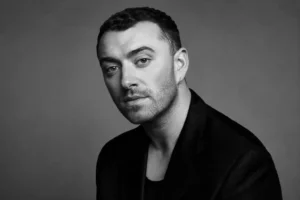
We have to start here, because nothing at the 2026 Met Gala created quite the same visual impact as Sam Smith’s arrival. The musician wore a dramatic, giant feather headpiece that defied gravity and probably challenged a few of the laws of physics. Towering above them, sweeping outward in an architectural fan of plumage, the piece felt less like a hair accessory and more like a living sculpture installed on a human being.
The brilliance of this look was in its commitment. There was no halfway. This wasn’t “I added a few feathers to a blowout.” This was a statement, a full artistic installation on the head that made every camera in the vicinity do exactly what it was supposed to do: stay locked on Sam Smith.
In the context of a “Fashion Is Art” dress code, this was perhaps the most literal interpretation on the carpet. The feathered headpiece transformed Sam Smith into a walking artwork.
2. Beyoncé
Beyoncé arrived as a co-chair, so there were expectations. She met them, then went further. The sheer gown covered in diamonds outlining a skeleton was already one of the night’s most talked-about looks but paired with the feathered coat with a train “as long as her list of hits,” the overall silhouette created something that read as high art and high spectacle at the same time.
Her hair was sleek, polished, and perfectly controlled, a deliberate contrast against the theatrical drama of the feathered train. The choice made sense: when the rest of your look is operatic, your hair needs to be the calm at the center of the storm. Beyoncé’s beauty team understood this perfectly. The result was a look where every element played its role, and the hair was the quiet anchor that let everything else sing.
3. Teyana Taylor
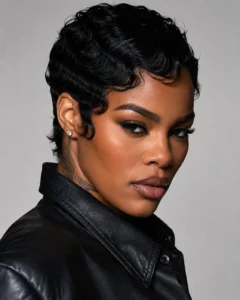
This might be the most genuinely inventive hair moment of the entire night. Teyana Taylor, who had earned her place in the cultural conversation through her Oscar-nominated role in One Battle After Another, arrived in a silver hair dress with a matching hairpiece. Yes, you read that correctly. The dress was made of hair. And the hairpiece matched it.
The effect was simultaneously surreal and cohesive, a full look that collapsed the boundary between clothing and coiffure. It raised genuinely interesting questions: Where does the dress end and the hair begin? Is it fashion? Is it sculpture? Is it both?
In the context of a Met Gala themed around “Costume Art,” that question felt exactly right. Teyana Taylor didn’t just show up to wear a look; she showed up to ask a question.
4. Heidi Klum
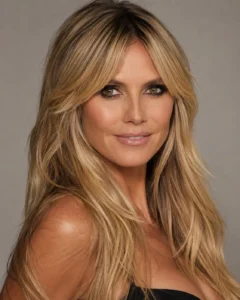
Heidi Klum has built an entire career on transformation. Known for her annual Halloween spectacles, she arrived at the 2026 Met Gala channeling Raffaele Monti’s 1846 piece “Veiled Vestal” , a sculpture famous for rendering a veil in marble so realistic it looks almost transparent. Klum’s look brought that idea to life in fabric, and her hair pinned back, hidden beneath the sculpted veil served the piece perfectly.
The hair here isn’t the hero of the look. But that’s the point. By keeping the hair architectural and restrained, Klum let the veil become the face. The whole look became a living breathing artwork and knowing Klum, she’d walked around the Met’s galleries until she found exactly the right reference. (“I went walking around in the Met and Raffaele Monti, he’s done most of the sculptures from the 1800s, so I looked and I was like, ‘Wow, this is so beautiful.'”)
5. Janelle Monáe
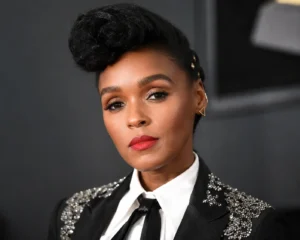
Janelle Monáe arrived in a look where robotic butterflies flitted their wings on her head and shoulders while her mossy gown wove together nature and technology cords and cables lining the dress like veins. The hair, adorned with those mechanical butterflies, served as the transition point between the organic and the artificial. It was, in a word, extraordinary.
This look required the hair to do genuinely difficult work: it needed to look like a natural environment that also hosted living machines. The styling team delivered something that looked like it had grown rather than been constructed which, given the butterfly mechanism, was exactly the right call.
6. Doja Cat
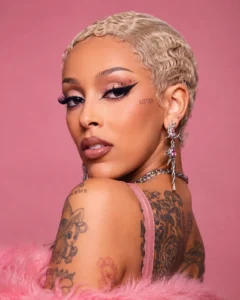
Doja Cat is capable of theatrical extremes. Let’s not forget the full feline transformation she underwent in 2023. So when she arrived at the 2026 Met Gala in a sleek, nude latex gown by Saint Laurent with a hooded draping detail, keeping things smooth and polished, the restraint felt like a choice that required more confidence than maximalism.
Her hair was minimal, controlled, and perfectly suited to the latex silhouette. No competing drama. No distraction. Just clean, precise beauty that let the sculptural quality of the gown speak for itself. In fashion, knowing when not to add is a skill most people underestimate. Doja Cat demonstrated it beautifully.
7. Charli xcx
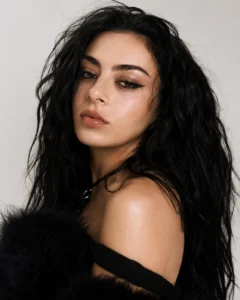
Charli x has been having her moment and fashion has taken notice. She arrived at the 2026 Met Gala in an all-black Saint Laurent gown, bringing a particular kind of rock-chic editorial energy to the carpet. Her beauty looked dark, a little undone, and completely intentional, the kind of barely-there beauty that takes significantly more effort than it appears.
What made this work was the coherence between the aesthetic of the Brat era and the red carpet translation. This wasn’t a departure from who Charli xcx is. It was a more refined version of it, fitted for the most prestigious carpet in fashion.
8. Naomi Osaka
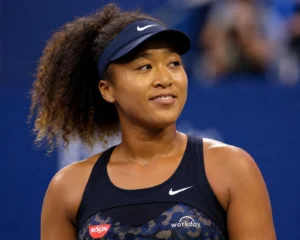
Some of the biggest hair and beauty moments at the Met Gala happen in stages. Naomi Osaka understood this. She arrived in a feathered white Robert Wun cloak with a matching Awon Golding headpiece and then dramatically revealed a red sleeveless gown and gloves underneath. The reveal was the moment; the styling, both before and after, had to hold up to the drama of that transition.
It did. The before-and-after contrast was precise enough to feel like two entirely different looks, which is exactly what a dramatic reveal requires. Hat tip to whoever was responsible for the headpiece construction.
9. Emma Chamberlain
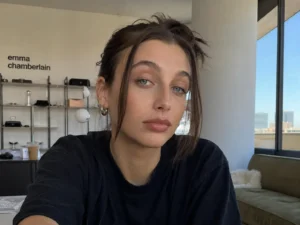
Emma Chamberlain arrived in a custom Mugler gown referencing paintbrush strokes by Vincent van Gogh, multi-hued and vibrant, a direct reference to the Impressionist master’s signature technique. Her beauty look leaned into the artistic reference without overwhelming it, keeping the hair relatively soft against the busy visual energy of the gown.
This is the kind of look that works better in person than in photographs, because the brushstroke effect is most legible at close range. But as a concept, it was one of the most specific artistic references of the night and Chamberlain’s styling team clearly did their homework.
10. Blake Lively
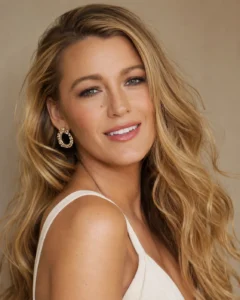
Blake Lively is considered a Met Gala institution at this point. She arrived in Versace and delivered exactly what everyone expected: stunning, polished, and completely on-theme without sacrificing the glamour that has defined her red carpet appearances across years. Her hair was Hollywood perfection: voluminous, warm-toned, and framing everything beautifully.
Sometimes the best thing you can do is be reliably extraordinary. Lively does this better than almost anyone else on the carpet.
The Bigger Picture:
Looking across all of these looks, some patterns emerge that feel important.
Sculpture over decoration. The most talked-about hair moments of the night weren’t about beautiful styling in a traditional sense. They were about hair functioning as structural, sculptural elements of a larger artistic concept. Sam Smith’s feathers. Teyana Taylor’s hair dress. Heidi Klum’s veil. The Met Gala 2026 confirmed what fashion editors have been saying for a few seasons now: hair is no longer an afterthought. It’s architecture.
The reference is everything. Because the theme was explicitly about art and artistic history, every beauty choice carried the weight of a potential reference. Hair that might have read as “interesting styling” at another event read as a specific artistic choice here. This raised the stakes for everyone and elevated the conversation around beauty in ways that felt genuinely new.
Restraint as a statement. Doja Cat and Charli xcx both chose relative restraint in a sea of spectacular maximalism. And both looked incredible. The Met Gala 2026 was a reminder that knowing how to edit, knowing when to pull back is its own kind of creative intelligence.
What Is the Met Gala, Really?
The Met Gala is the annual fundraising gala for the benefit of the Metropolitan Museum of Art’s Costume Institute in New York City. It marks the opening of the Costume Institute’s annual fashion exhibition and is widely considered the most exclusive and prestigious event in the fashion calendar often called the “Oscars of Fashion.”
Each year, the event is organized around a theme that corresponds to the Costume Institute’s spring exhibition. Guests, celebrities, designers, artists, and cultural figures are expected to dress according to that theme, which makes the red carpet unlike any other. It isn’t just about looking beautiful; it’s about participating in a creative conversation that has a specific subject.
The guest list is curated, not applied for. Invitations are extended through the magazine Vogue and Anna Wintour, who has co-chaired the event for decades. Celebrities don’t buy tickets, corporate sponsors purchase tables, and those sponsors make the guest selections. A single ticket, for reference, has been reported to cost approximately $75,000 to $350,000 per seat, with tables running into the millions.
The event takes place every year on the first Monday in May.
A Brief History of Why the Met Gala Became What It Is
The event started quietly. The very first Met Gala was held in 1948 as a midnight supper, a fundraiser, not a spectacle. It cost $50 a ticket. For decades it remained a relatively modest affair, important in fashion circles but not widely covered.
Everything changed when Anna Wintour took over as chair in 1995. Under her direction, the guest list expanded beyond fashion to include film, music, and sports. The themes became more conceptually ambitious. The red carpet became a genuine cultural event not just a fashion show, but a moment in which celebrity, art, and commerce intersected publicly and dramatically.
Rihanna’s 2015 yellow fur-trimmed Guo Pei gown. Lady Gaga’s 2019 four-look Brandon Maxwell sequence. Kim Kardashian wearing Marilyn Monroe’s actual dress in 2022. These weren’t just fashion choices, they were cultural events that entered the broader conversation and stayed there. The Met Gala became, over those years, the single most-talked-about red carpet on earth.
Met Gala 2026: Numbers, Facts, and What You Might Not Know
- The theme was “Costume Art”, with a dress code of “Fashion Is Art.”
- Co-chairs: Beyoncé, Nicole Kidman, Venus Williams, and Anna Wintour.
- Host committee co-chairs: Anthony Vaccarello (creative director of Saint Laurent) and Zoë Kravitz.
- First-time attendees included Tate McRae, Sarah Pidgeon, and several other stars who have come to prominence in the last year.
- Rihanna and A$AP Rocky closed the night, arriving nine minutes after the red carpet officially closed a tradition at this point.
- The strict no-phone policy inside the museum remains in effect. (Yes, even for Kylie Jenner, who is famous for sneaking bathroom selfies.)
The Hair Products and Techniques That Made 2026 Happen
Every breathtaking hair moment at the Met Gala is the result of weeks, sometimes months, of preparation. Here’s what typically goes into creating a look at this level:
Consultations begin 3–6 months out. Celebrity hairstylists, the ones who work at this level aren’t brought in two weeks before the event. The conversation starts early, sometimes when the gown is still in early design stages. The hair and the dress are developed together, not separately.
Extensive testing. For structural pieces like Sam Smith’s feathered headpiece, multiple test fittings happen to ensure the piece stays in place, doesn’t interfere with movement, and photographs correctly in different lighting.
Reference boards and art history research. Given a theme like “Costume Art,” stylists go deep into art historical references looking at how hair was depicted in specific paintings, how certain sculptural shapes translate to human hair, what artistic periods had distinctive beauty aesthetics worth referencing.
Products for hold and finish. At this level, the products are varied and specific strong-hold finishing sprays for structural pieces, nourishing treatments to ensure hair is in optimal health, specialized adhesives for hairpieces, and texture products that allow hair to read beautifully under the particular lighting conditions of the Met’s entrance stairs.
FAQs:
What is the concept of the Met Gala?
The Met Gala is an annual fundraising gala for the Costume Institute at the Metropolitan Museum of Art in New York. Each year it centers on a theme tied to the Costume Institute’s spring exhibition, and attendees, celebrities, designers, and cultural figures are expected to dress according to that theme. It functions simultaneously as a fundraiser, a fashion show, and a cultural event, bringing together fashion, art, celebrity, and philanthropy on one of the most photographed carpets in the world.
Is there going to be a Met Gala in 2026?
Yes, the Met Gala 2026 already happened! It took place on Monday, May 4, 2026, at the Metropolitan Museum of Art in New York City, under the theme “Costume Art” / dress code “Fashion Is Art.” It was co-chaired by Beyoncé, Nicole Kidman, Venus Williams, and Anna Wintour.
Do celebrities pay for a Met Gala ticket?
Generally, celebrities don’t personally pay for their attendance. Corporate sponsors purchase tables (at costs that can run into the millions of dollars), and those sponsors then invite the celebrities. However, some celebrities are part of the host committee, and some do contribute financially in various ways. The actual ticket price for individuals, when it applies, has been reported at around $75,000 per seat.
How do you get invited to the Met Gala?
Getting an invitation to the Met Gala is not something you can apply for. Anna Wintour and the editorial team at Vogue curate the guest list, which is determined by a combination of cultural relevance, fashion industry relationships, and the sponsor who is hosting a given table. Corporate sponsors, fashion houses, luxury brands, and major companies purchase tables and invite their chosen guests. For most celebrities, the path to the Met Gala runs through a relationship with a fashion brand or Vogue itself.
Why the Met Gala Still Matters (And Why It Matters More Than Ever in 2026)
There’s a version of this conversation where someone argues that the Met Gala has become too commercial, too predictable, too much of a PR exercise. And there’s something to that critique. There are years where the theme feels underutilized, where the red carpet delivers safe choices rather than genuine creative risks.
But 2026 wasn’t one of those years. The “Costume Art” theme demanded genuine engagement with art history, and a significant number of celebrities and their creative teams delivered exactly that. Sam Smith’s headpiece required artisanal construction. Teyana Taylor’s hair dress required genuine concept work. Heidi Klum walked the Met’s galleries until she found the right sculptural reference. These aren’t lazy choices.
When the Met Gala is at its best, it’s one of the few moments in popular culture where art history, fashion history, and the current cultural moment collide publicly and visibly. It introduces millions of people through their social media feeds and entertainment coverage to artists, artistic movements, and cultural references they might not have encountered otherwise. That feels worth something.
And for anyone who loves fashion, beauty, and the particular thrill of watching creative risk-taking at the highest possible level: the Met Gala is still one of the most exciting nights of the year. The 2026 edition proved it.
Final Thoughts:
Every year, the Met Gala sets the tone for the months of fashion and beauty conversation that follow. The looks that landed in 2026 the sculptural headpieces, the hair-as-dress moments, the restrained confidence of a few well-placed minimalist choices will influence runway presentations, editorial shoots, and beauty trends through the rest of the year.
If 2026 had a thesis, it was this: beauty is most powerful when it serves an idea. The hair moments that resonated most weren’t the most technically accomplished or the most expensive. They were the ones that made you ask a question, think a thought, or feel something unexpected.
That’s what the Met Gala at its best has always done. It makes fashion feel like it matters because when it’s done right, it does