
Table of Contents
My nephew’s curls triple in size overnight. Not an exaggeration. Neat little ringlets at bedtime, a finger-in-a-socket situation by morning. My sister spent months fighting it with a wet brush and pure frustration until someone finally told her the actual problem: curly hair doesn’t want to be brushed dry; it wants water and product and a totally different playbook than straight hair ever needed. That one fact changed her mornings almost instantly, which honestly felt a little unfair given how long she’d been stuck fighting the wrong battle.
So here’s the real version of curly hairstyles for kids, the ones that work with curl pattern instead of fighting it. Sorted by whatever you’re dealing with: a quick morning, a toddler who won’t hold still, a boy, or a kid with shorter curls who never seems to show up in tutorials built around long ringlets.
The One Thing That Changes Everything
Water first. Always. That’s basically the whole secret. Curly and coily hair genuinely behaves differently than straight hair, and most of the frustration people have traces back to treating it the same way anyway. Detangle on wet, conditioned hair with fingers or a wide-tooth comb, never dry. And once curls are styled, leave them alone; touching them constantly is exactly what creates the frizz everyone’s trying so hard to avoid.
Not All Curls Are The Same
Curl pattern runs a whole spectrum, loose waves on one end, tight coils on the other, and the products that work shift depending on where your kid lands. Looser curls tend to drown under heavy cream; they go limp instead of defined. Tighter patterns usually need something richer, since the curl shape itself makes it harder for scalp oils to travel down the strand. Neither is harder to deal with than the other, honestly; they just need different amounts of the same basic ingredients, and it takes a bit of trial and error to land on what actually works for your specific kid, sometimes more than a bit.
The Cut Matters More Than People Think
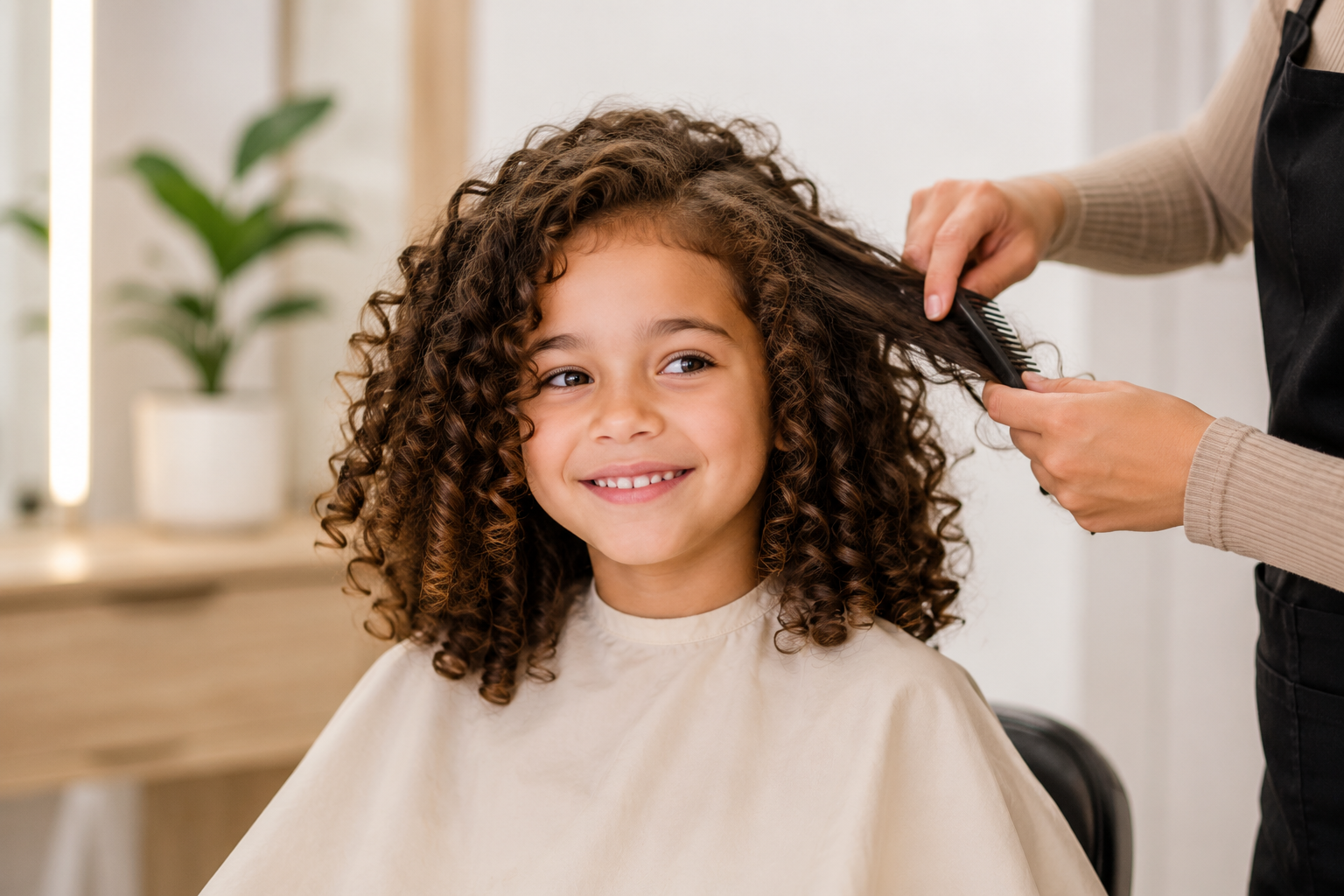
A lot of the daily fight with curly hair actually starts at the haircut, not the morning routine. Heavy layering breaks up curl clumps and causes frizz in a way a more uniform length just doesn’t. For younger kids especially, a simple rounded shape trimmed evenly holds definition better and grows out more gracefully than something full of internal layers. Older kids wanting more personality in the cut can absolutely do a soft shag or textured layers; just know it’ll probably need more product and more effort to stay defined than the simpler version would, which is worth knowing before booking the appointment.
Mistakes That Cause More Frizz, Not Less
Brushing dry hair tops the list; it breaks apart curl clumps and creates a frizzy halo every single time, no exceptions. Overwashing is close behind; curly and coily hair needs its natural oils more than straight hair does, and washing daily strips exactly what the curls need to hold their shape. Skipping leave-in conditioner and going straight to styling product on dry hair is a quieter mistake, but it means the product just sits on top instead of actually doing anything. And a regular cotton pillowcase undoes half the morning’s work by the next morning; satin or silk makes a difference you’ll notice within a few nights, one of the cheapest fixes on this entire list.
Refreshing Curls Without A Full Rewash
This is the trick that actually saves time day to day. A light mist of water with a bit of leave-in mixed in, scrunched up into the curls rather than smoothed down, revives shape that went flat or fuzzy overnight, no full wash needed. Cupping curls in your palms and scrunching upward, instead of raking a brush through, is what brings definition back rather than just spreading frizz around evenly. Takes less time than people expect once it’s part of the routine, usually just a couple of minutes once you’ve got the motion down.
A Few Habits Worth Building In
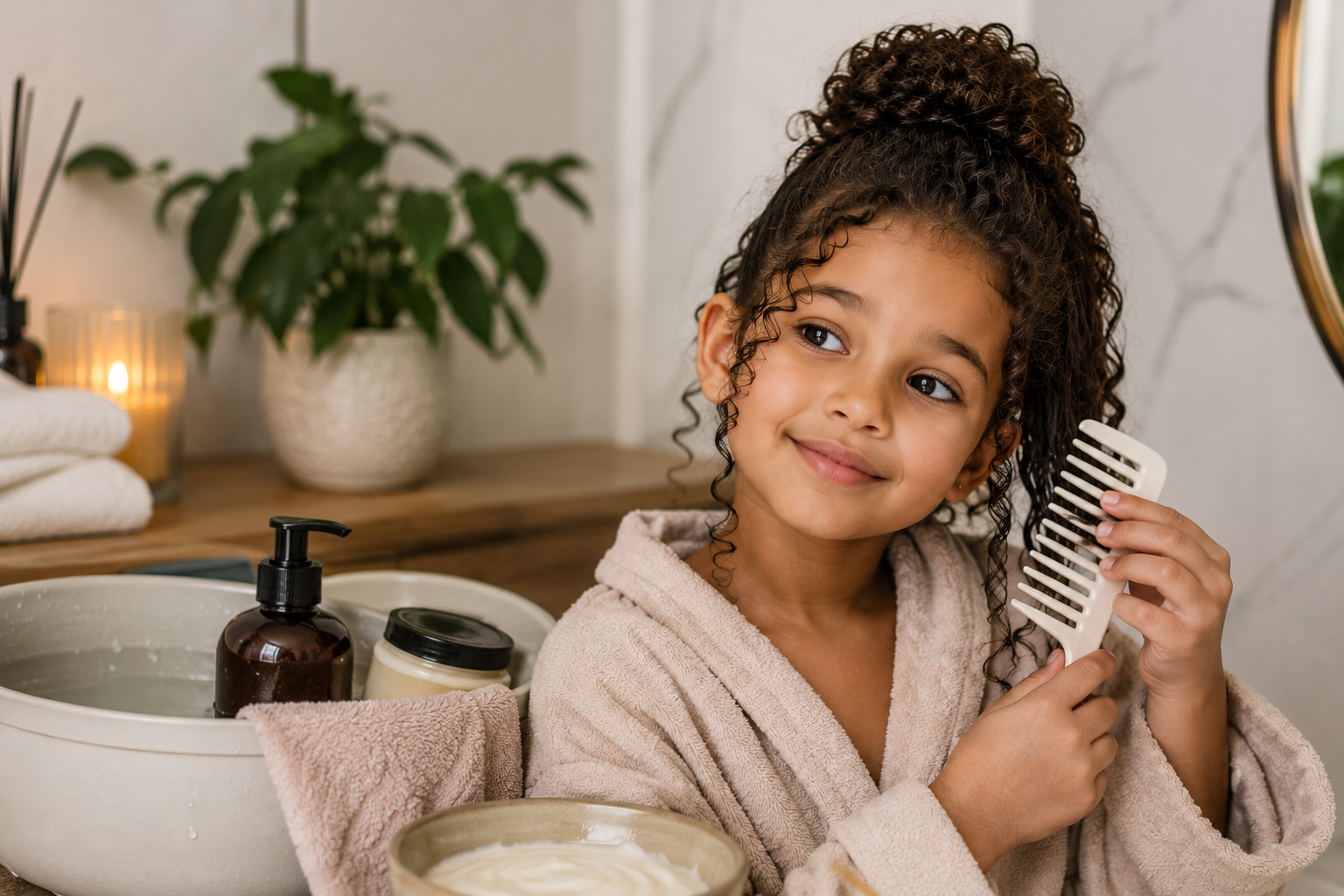
Beyond the products, a couple of small routines make a real difference over time. Deep condition on wash day; even fifteen minutes under a warm towel, it makes detangling and styling noticeably easier the rest of the week. Trim regularly; curls hide split ends well, which means damage can build up longer than you’d notice on straight hair before it starts affecting how the curl actually holds its shape. And don’t chase a specific look every single day; curls have moods. Some mornings they’ll cooperate beautifully, and others they genuinely won’t, and that’s not a sign you’re doing something wrong; it’s just what curls do sometimes regardless of technique or product.
Planning Around The Actual Week
Not every school day needs the same style. Gym or swim days call for the sturdiest option in the rotation: secure twists or a tight bun, nothing that unravels the second there’s movement involved. A regular day can handle something more relaxed, curls left mostly down with a simple headband. And picture day gets the nicer option, saved specifically for it, done with a bit more care than a rushed Tuesday morning ever realistically allows for.
For Mornings You’re Truly Out Of Time
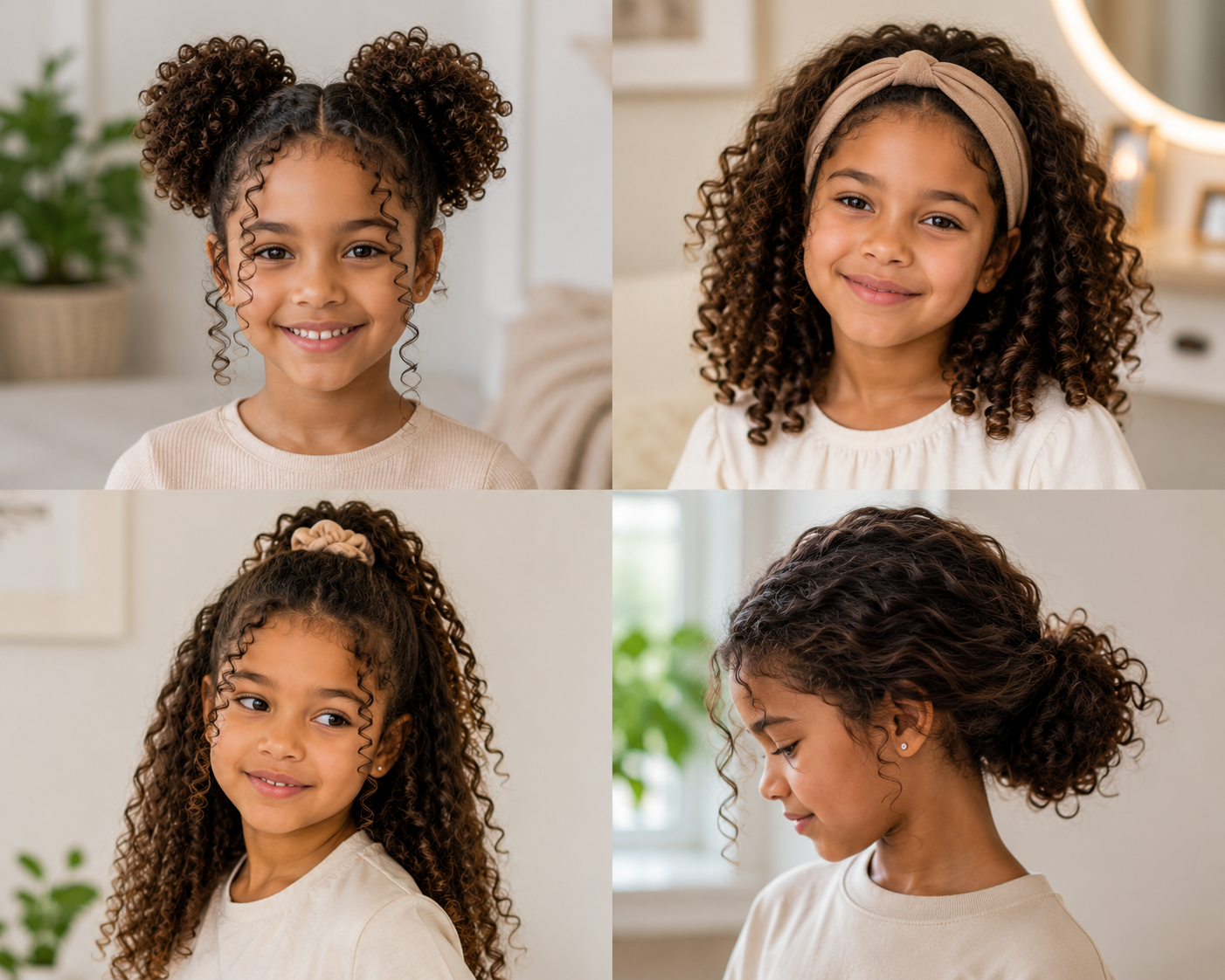
- Two puffs or curl piggies, sectioned with soft fabric elastics, they’ll naturally puff on tighter curl patterns.
- A plain headband over loose, refreshed curls, the fastest thing on this whole list.
- A half-up ponytail at the crown, rest left down, quick and shows off the actual pattern.
- A messy low bun at the nape, useful specifically on the days curls have gone genuinely wild.
Styles That Survive An Actual Active Day
These curly hairstyles for kids need to survive recess and gym class, not just look good in a morning photo. Two or three larger twists or loose braids, big sections rather than tiny detailed ones, keep curls from tangling with classmates or playground equipment while saving real installation time. A twisted-back top section into a ponytail, bottom half left loose and curly, holds through activity while still showing the texture off, forgiving enough that running around all day doesn’t wreck the whole thing.
Short Curls Deserve Attention Too
Shorter curls get skipped constantly in these guides, which never made sense to me since a rounded, evenly trimmed cut is genuinely one of the lowest-maintenance options that exists, no matter how counterintuitive that sounds to anyone still picturing long, elaborate ringlets.
- A rounded curl shape trimmed evenly grows out symmetrically and is easy to detangle since there’s no length gap.
- Tiny front pigtails with the rest left alone work even on curls barely past the ears.
- Finger coils defined right at the hairline for a bit of polish without any real added time.
- A simple side part with curl cream worked through, under a minute, done.
For Girls
- Double curl puffs with a bow or clip, playful, shows off the full pattern.
- Half-up half-down, top twisted back, bottom left in defined curls.
- A halo braid around the crown, protective and dressy enough for an occasion.
- Loose twin twists left long instead of fully braided, softer, just as secure.
For Boys, Toddler Through Tween
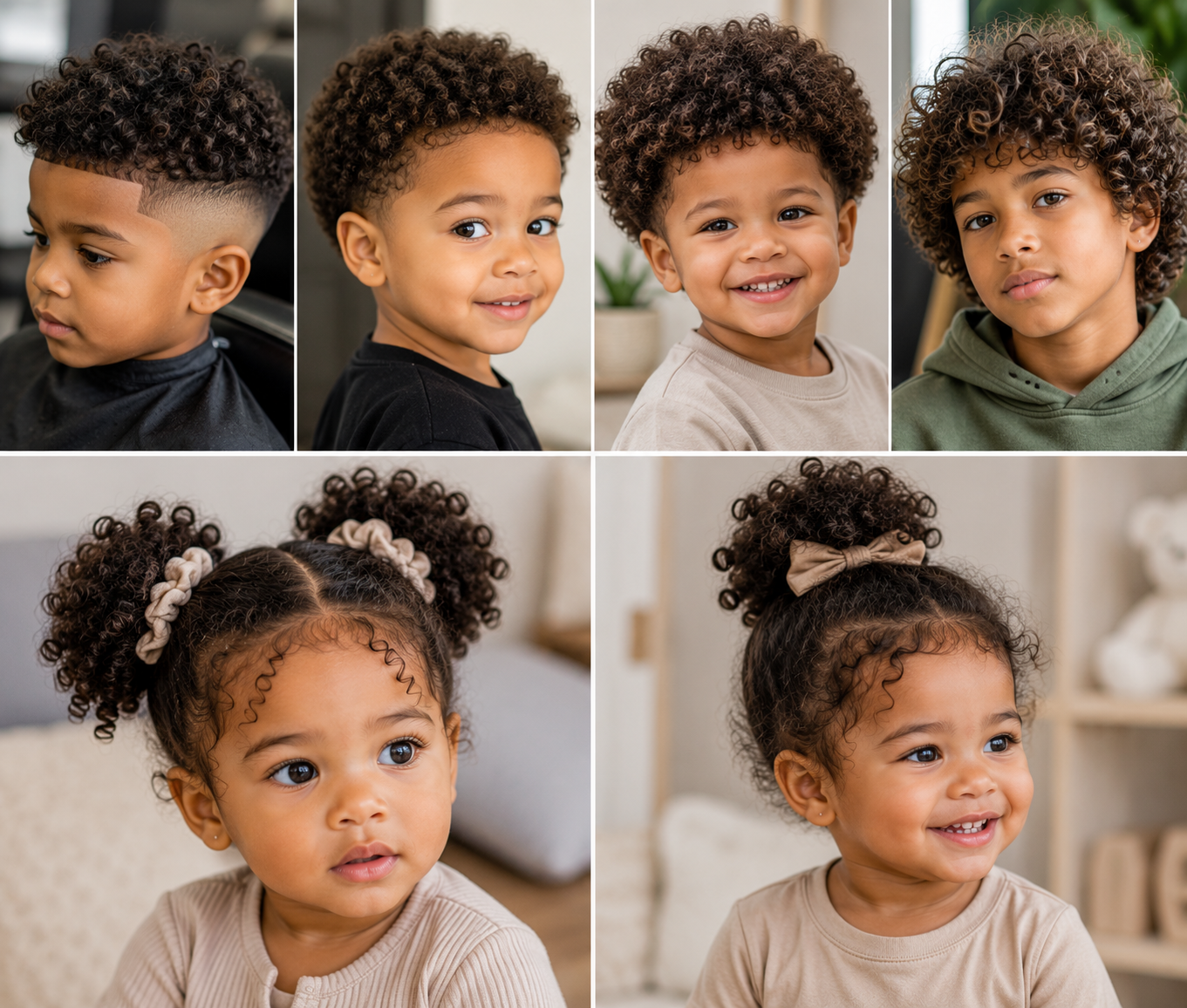
Boys’ curls get far less attention in most guides, and there’s genuinely more range here than a basic buzz cut suggests.
- A curly fade or taper, clean sides, natural curl left full on top, works from toddler age right on up.
- A loose curl pick-out for definition, no comb, just fingers.
- A rounded, evenly trimmed shape for toddlers specifically, easy to keep moisturized since the length stays uniform.
- A curly shag as they get older, choppy layers that work with the texture instead of against it, reads a bit more grown-up than a round trim.
Toddlers, Where Patience Runs Out Fast
Toddler curls come with a specific problem: the pattern’s often still developing at this age, and their patience for sitting still is basically nonexistent. Keep it simple: twin puffs or one low ponytail on damp, product-loaded hair while they’re distracted by something else entirely. Skip precise sectioning; nobody’s judging a slightly lopsided toddler puff, and it won’t hold that shape past an hour anyway once they’re up and moving, undoing the careful work in about the time it takes to put shoes on.
Picture Day, When It Actually Matters
Build in extra time the night before instead of trying anything new that morning. Wash and style the evening prior if the schedule allows, curls genuinely look their best on day two once they’ve settled rather than fresh out of the shower. A halo braid or twisted-back top section with the rest in full, bouncy curls photographs beautifully and holds for hours without touch-ups. Skip the brush entirely right before photos; it’s the fastest route from defined curls to a frizzy cloud, about thirty seconds flat, right before the one photo of the year that actually counts for anything.
What Actually Matters In Your Product Cabinet
- A lightweight leave-in conditioner, the foundation everything else builds on.
- A curl cream or gel, applied to soaking wet hair, not damp, not dry.
- A water-based curl refresher spray for mornings that don’t need a full rewash.
- A silk or satin bonnet or pillowcase, genuinely non-negotiable, cuts down on overnight frizz from cotton friction.
- A wide-tooth comb or curl-specific brush; regular brushes break up clumps and create more frizz than they solve, no matter how gently you try to use them.
Letting Kids In On The Process
Styling sessions go more smoothly when a kid feels some ownership over it, even something as small as picking the clip or headband for the day. Older kids can learn the basics of the water-then-product routine; handing them the spray bottle builds real investment in taking care of their own hair as they grow. Fewer complaints about sitting still too, since it starts feeling like something they’re part of instead of something happening to them, and that shift alone can turn a fifteen-minute standoff into a five-minute routine.
Frequently Asked Questions
What are some easy curly hairstyles for kids?
Curl puffs, a half-up ponytail, or a headband over refreshed curls- the quickest by far, all under five minutes with zero real technique.
What are good short curl styles?
A rounded, evenly trimmed cut, tiny front pigtails, or finger-coiled edges all work beautifully on shorter curls without needing extra length.
What are good curly hairstyles for a girl?
Double curl puffs, a half-up half-down with twisted sections, or a halo braid all show off pattern while staying secure through an active day.
What are good curly hairstyles for a toddler boy?
A rounded, evenly trimmed shape or a soft curly taper, both low-maintenance, easy to detangle, need almost no daily styling at this age.
What are good curly hairstyles for a toddler girl?
Twin puffs or a single low ponytail on damp, product-loaded hair are the most realistic options for a toddler’s limited patience.
What are cute options overall?
Curl puffs with bows, a halo braid, or loose twin twists tend to win most consistently: quick, protective, and flattering regardless of pattern or length.
The Real Takeaway
Work with the curl pattern, not against it; water before product; scrunch instead of brushing dry; a satin bonnet at night to protect whatever shape you built that morning. Once those habits stick, most of the actual styles here take under five minutes, and the curls genuinely do most of the work. Perfect definition every single day isn’t realistic, and it isn’t necessary; a slightly fuzzy happy kid beats a frizz-free one who fought you the whole way there, every single time, no matter how the photos turn out.