
Table of Contents
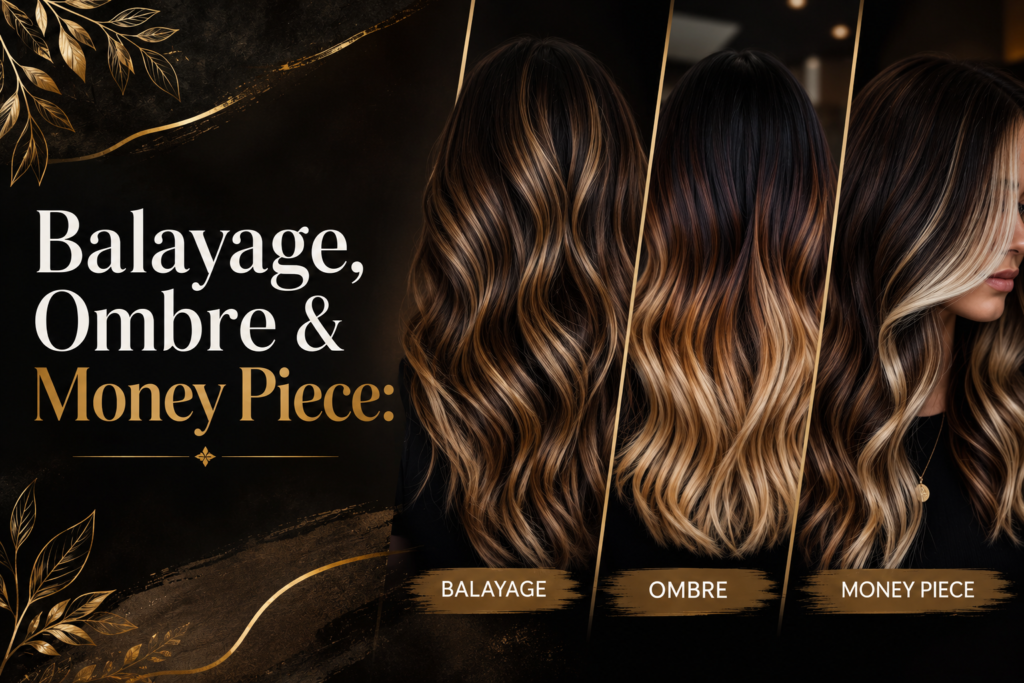
Every single week someone sits in my chair, pulls out their phone, and says some version of “I want something like this, but I don’t really know what it’s called.” And nine times out of ten, what they’re pointing at is some mix of balayage, ombre, and money piece, three techniques that get thrown around online like they’re interchangeable when they’re really not.
So let’s actually sort this out. What each one is, how they’re different, which one suits your hair and your lifestyle, and how to walk into a salon and ask for exactly what you want instead of hoping for the best. I’ll also get into copper, platinum, root smudges, and color correction, because none of these techniques exist in a vacuum; the best color jobs I do combine two or three of them at once.
What Balayage Actually Is
Balayage is French for “to sweep,” and that’s the whole technique in a nutshell. I hand-paint color directly onto sections of your hair instead of using foils. No two balayages come out identical because it’s freehand, which is exactly why it looks so natural. The color starts away from the root and gets more concentrated toward the ends, mimicking the way hair actually lightens in the sun.
Compare that to traditional foil highlights, which process evenly and give you a more uniform, defined result. Balayage is softer, more diffused, and honestly more forgiving as it grows out; there’s no hard line demanding you rush back every six weeks. Most people can go three to four months between appointments and still look put together.
Ombre, Sombre, and Balayage: Untangling the Confusion
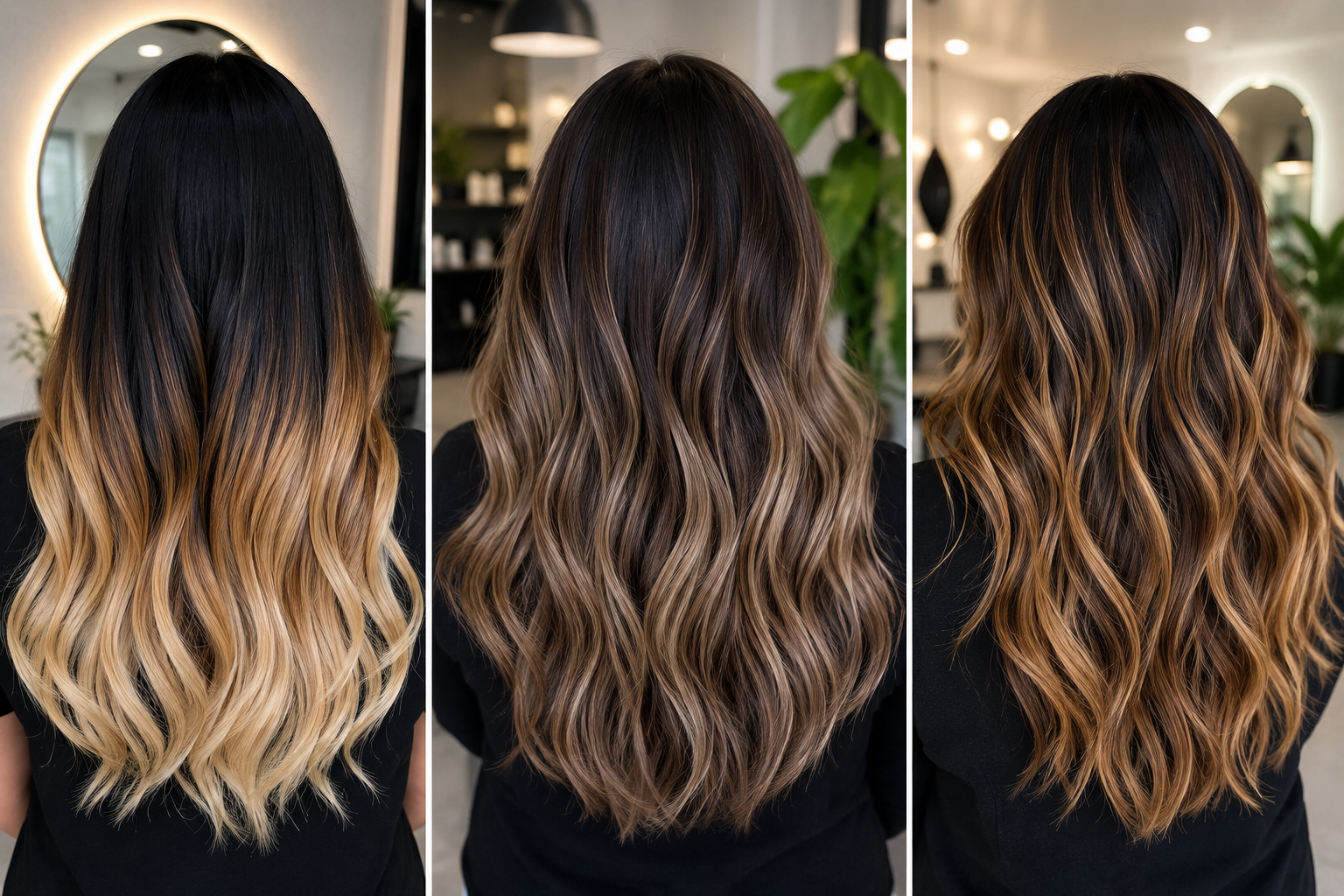
These three get mixed up constantly, so here’s the plain version. Ombre describes a gradient, dark at the roots melting into lighter ends, with a visible transition point. Sombre is the same idea but softer, with less contrast and more blended. Balayage is the technique, the way the color gets applied, not a specific result.
You can absolutely use balayage to create an ombre effect. But not every balayage looks like an ombre; plenty of balayage jobs stay close to your natural root color the whole way down with just a few lighter pieces woven through. Think of ombre as a destination and balayage as one road that can get you there, just not the only one.
If you want a dramatic, obvious transition, ask for ombre by name. If you want it soft and lived-in, sombre or a soft balayage does that. If you want maximum customization tailored to your exact hair, balayage wins. Honestly though, most people care about the result more than the technical term; tell your colorist what feeling you’re after- beachy, dramatic, natural, glam- and let them pick the road.
The Money Piece, Explained Properly
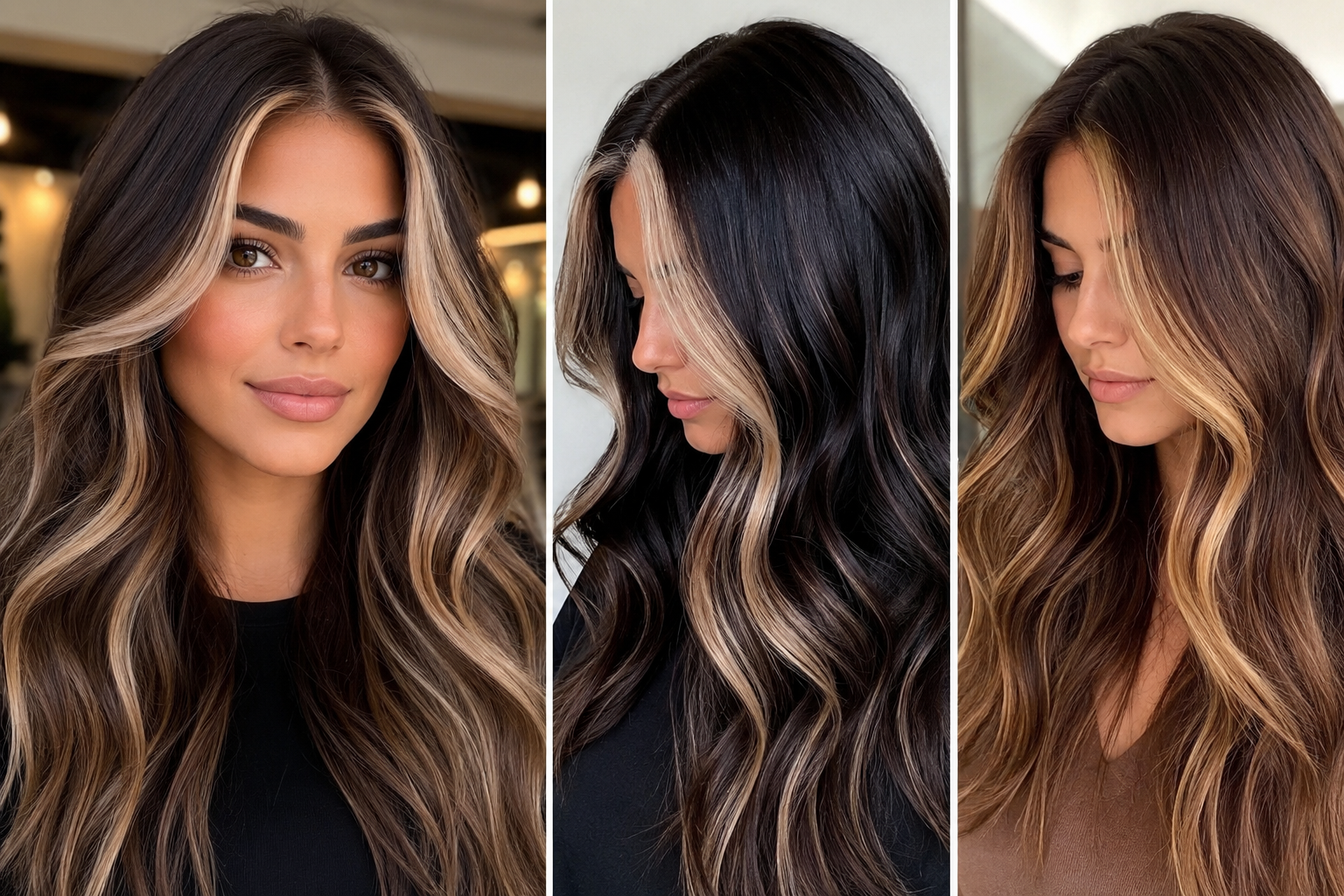
A money piece is a highlight placed specifically at the front, right around your part line and hairline, framing your face directly. It’s not a full head of color; it’s a targeted brightness right where people actually look first: your face.
Hailey Bieber gets most of the credit for the modern version of this; her soft, honey-blonde face-framing pieces blended so seamlessly into her base color that it barely reads as a technique at all, just naturally glowing hair. Beyoncé, Jennifer Lopez, and Bella Hadid have all worn their own takes on it too, each customized to their coloring. The trend actually traces back further than people think; chunky face-framing highlights were already a thing in the early 2000s; this is really a much softer, more refined evolution of that.
What makes a money piece work is precision. If your colorist takes sections that are too wide, you end up with a stripy, uneven result instead of that soft, sun-kissed glow. Small, carefully placed sections are the whole trick. The trend has also shifted noticeably softer over the last couple of years, less high-contrast and chunky, more blended and natural, closer to “my hair just does this” than an obvious styling choice.
Money piece on dark hair
This is one of the most requested versions I do, and it’s genuinely gorgeous. On dark brunette or black hair, a money piece reads as more dramatic simply because of the contrast, so I lean toward warm caramel or honey tones rather than anything too icy, which can look harsh against a dark base. Keep the rest of your color close to natural and let the front pieces do the work.
Money piece on brown hair
Brown hair is honestly the easiest base for this. A few tonal, honey or golden pieces around the face add glow without demanding much upkeep, since they blend so naturally into a brown base that regrowth barely shows. This is usually my go-to recommendation for a first-timer who’s nervous about commitment.
Face-Framing Highlights: The Bigger Category
A money piece is technically a specific version of the broader category called face-framing highlights, which can extend a bit further back around the face rather than staying right at the very front. Both work on every hair type and length; the real customization comes down to your skin tone. Warm skin tones tend to glow with golden, honey, or caramel pieces. Cooler tones look better with ashy or platinum shades. Olive skin can actually pull off a cool blonde or silver contrast beautifully. Deeper skin tones look stunning with bold honey or golden warmth.
One underrated perk here: because you’re only processing a small section, the damage is minimal compared to full-head lightening. It’s one of the gentler color services you can ask for.
Copper Hair Isn’t a Trend Anymore, It’s a Category
Copper used to come and go seasonally. Not anymore; colorists now treat it as its own shade family alongside blonde and brunette- that’s how mainstream it’s gotten. And the shades have softened; we’ve moved away from intense, in-your-face copper toward muted, earthy, lived-in versions.
- Muted copper, toned-down and wearable from day one.
- Cowboy copper, a warm gingery-auburn blend.
- Copper creamsicle, balancing red and golden blonde.
- Strawberry copper blonde, vibrant but not overwhelming.
The fade on muted copper is genuinely gorgeous too; lighter auburns fade into warm dark blonde, deeper ones fade into caramel and toffee. Your hair basically gives you a free gradient as it grows out, which is a big part of why I keep recommending it.
Platinum Blonde, But Warmer Now
Platinum will never fully go out of style, but the version people are asking for now isn’t the icy, almost silver platinum from a few years back. It’s warmer, softer, closer to cashmere than steel, which honestly makes it flattering on a lot more skin tones than the old version was.
A few things worth knowing before you commit. This is a multi-session process for most people, especially coming from a dark base. Toning matters enormously; the right toner is what keeps platinum from turning brassy or yellow between appointments. Purple shampoo becomes part of your routine, and deep conditioning isn’t optional. Find a colorist who genuinely specializes in blonde work; this isn’t the place to save money by going somewhere unproven.
One combination I love: a darker base with platinum money piece framing. The contrast is dramatic without requiring you to lighten your whole head.
Root Smudge, Root Melt, Whatever You Want to Call It
If you’ve got balayage or highlights and hate that obvious grow-out line, this technique is worth asking about. A colorist applies a darker toner or color right at the roots and blends it down into the mid-lengths, softening the contrast so there’s no harsh demarcation.
The real benefit is time. Instead of rushing back every six to eight weeks, a good root smudge lets you comfortably stretch to ten or fourteen weeks, sometimes longer, without looking grown out. You just look intentional the whole time. Blurred roots are basically the more refined version of this, diffusing the regrowth line even further rather than just darkening it.
When You Need Color Correction
This is the service that makes colorists take a breath before answering, because it’s genuinely one of the more complex things we do. Color correction fixes hair color that’s gone wrong, whether that’s an at-home dye disaster, uneven bleaching, unwanted brassiness, or a previous salon visit that just didn’t land.
Common reasons people book this: orange or brassy tones after a botched attempt at blonde, patchy color from box dye, hair that’s too dark when you wanted lighter, green tones from chlorine, or color that’s simply faded unevenly. It’s rarely a one-visit fix for anything significant; your colorist needs to assess your hair’s actual condition and underlying pigment before building a safe plan to get you where you want to be.
My honest advice here: tell your colorist everything you’ve put on your hair, box dye, henna, at-home bleach, toning treatments, all of it. It’s not a confession; it’s information they genuinely need to do the work safely.
Techniques Worth Knowing the Names Of
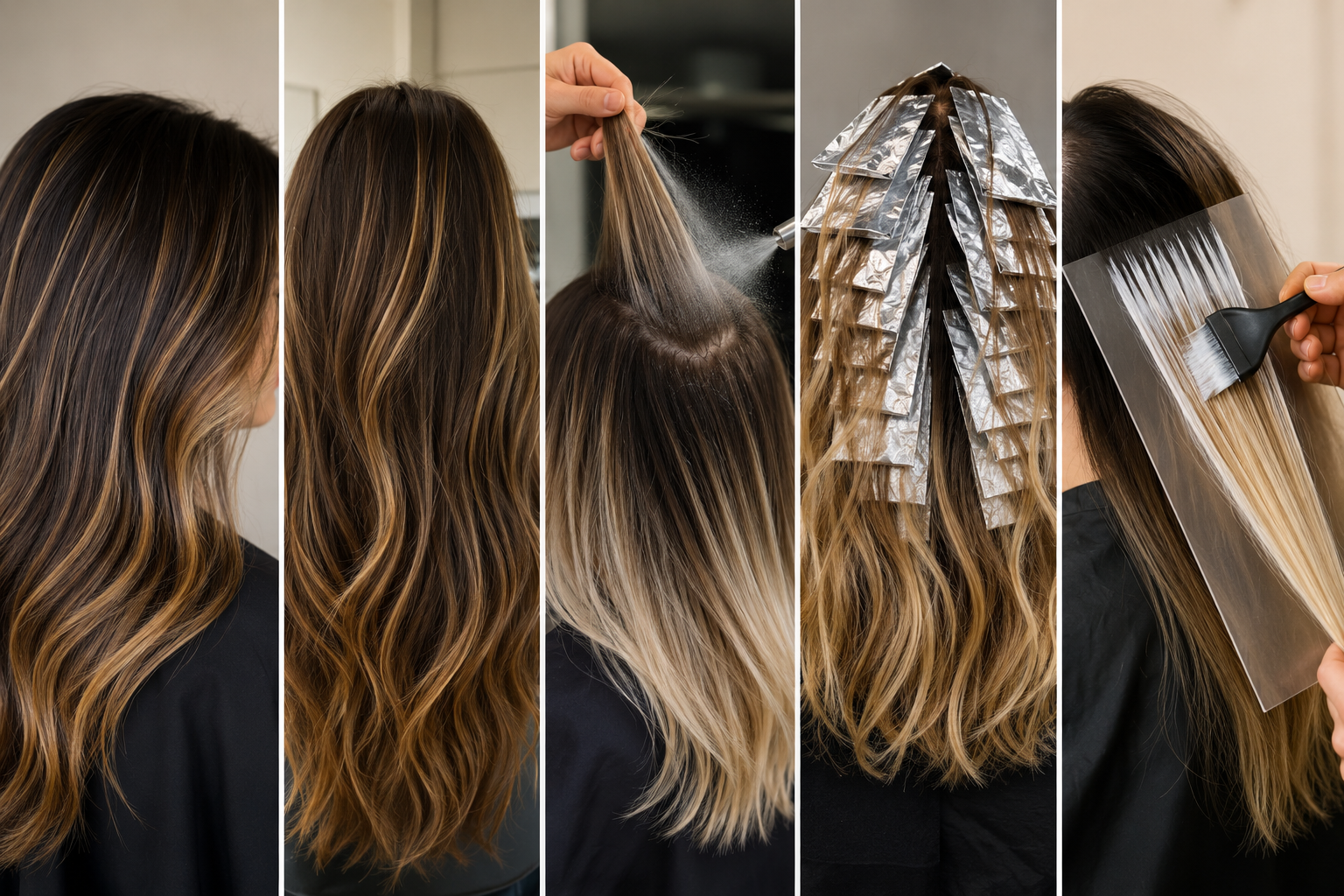
Beyond balayage, ombre, and money piece, a few more terms come up constantly, and it helps to actually understand them before your appointment.
Babylights
Super fine, delicate highlights painted throughout, mimicking the way kids’ hair naturally lightens in the sun. Subtle until the light hits it, then it comes alive.
Teasylights
Your colorist backcombs at the root before applying lightener, softening the transition so highlights blend higher up without a stark line. Feels grown-in even when it’s fresh.
Airtouch
A blow-dryer pushes out the shorter, finer hairs before coloring, so only the coarser strands get lightened. The result is extremely seamless, ideal for fine or heavily layered hair.
Foilyage
A hybrid of balayage and foils, the painted color gets wrapped in foil to lock in heat and lift more effectively. Works especially well on thick or dark hair that needs more processing power.
Pintura
A hand-painting method developed specifically for curly and coily textures, placing lightener along the natural curve of each curly hair instead of straight sections, so the color follows your actual curl pattern rather than fighting it.
Where the Color Actually Gets Placed
Coverage and placement matter as much as the technique itself.
- Full balayage, color painted throughout the whole head, best for a big shift or maximum dimension.
- Partial balayage, just the top layer and front sections, a lighter commitment.
- Root balayage, lighter tones brought closer to your natural root to soften grow-out.
- Face-framing balayage, just the front pieces for a halo effect around your face.
None of these are mutually exclusive either; a lot of my favorite results combine two, root balayage plus face-framing, or partial balayage with a money piece layered on top.
Balayage, Ombre, and Money Piece for Different Hair Types
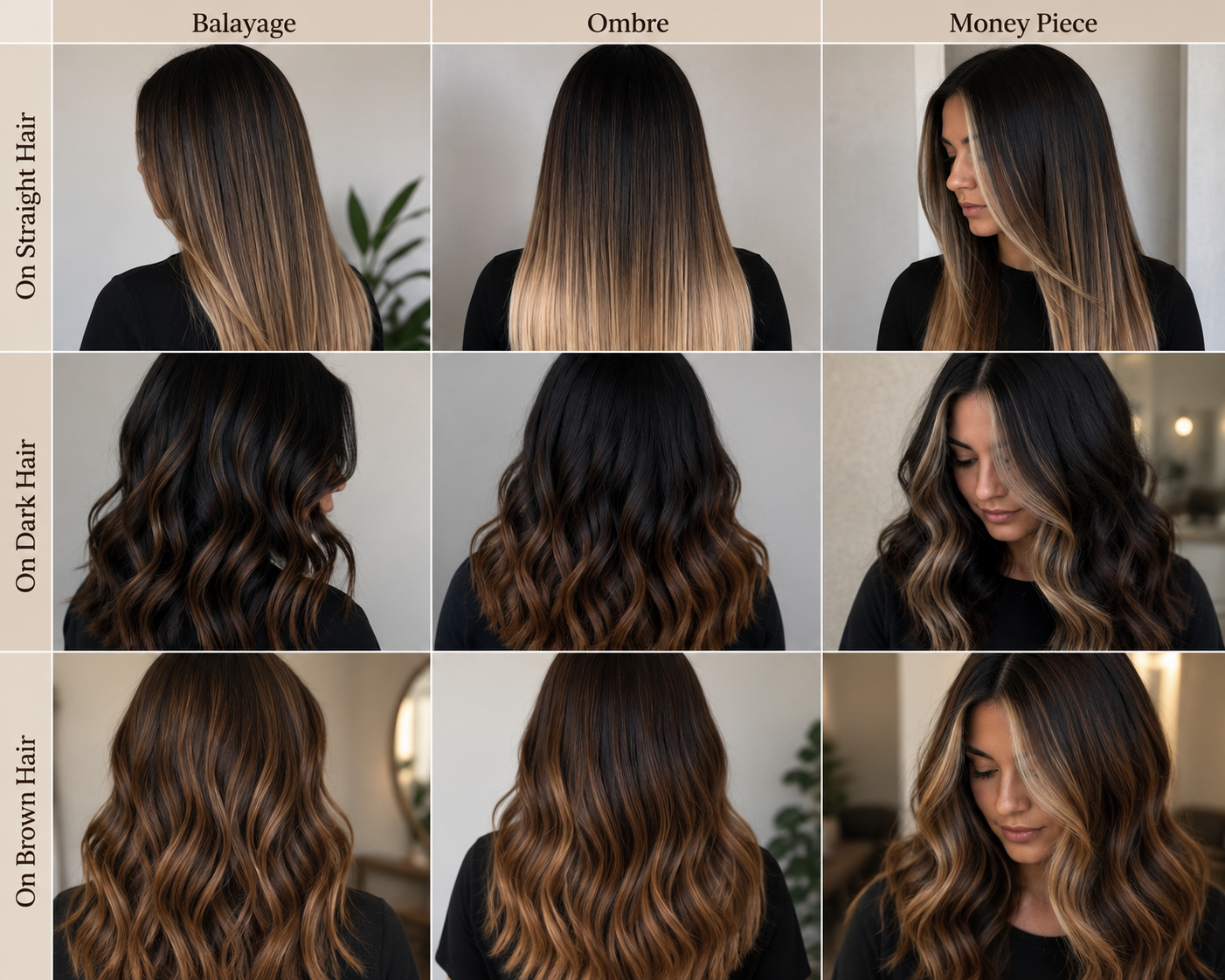
On straight hair
Straight hair is an unforgiving canvas in a good way; every brushstroke shows clearly, so precision really matters here. I lean toward softer transitions and face-framing accents rather than heavy, stripy sections, since anything choppy is more visible on straight strands than it would be on waves or curls. A money piece reads especially clean on straight hair because there’s no texture breaking up the line.
On dark hair
Dark hair, whether that’s deep brown or true black, can handle more contrast if you want it, or stay subtle if you don’t. Going lighter from a dark base takes more sessions and more care; bleach is tougher on dark strands, so lightweight oils and bond-building treatments matter more here than on lighter starting points. Even a subtle lift with chocolate or caramel balayage makes a noticeable statement against dark hair; you genuinely don’t need to go dramatic to see a difference.
On brown hair
Brown hair might be the most flexible starting point of all. You can go warmer with caramel and honey, cooler with ash tones, or add a money piece without touching the rest of your color at all. It’s also the easiest base to grow out gracefully, since most tones sit close enough to natural brown that regrowth rarely looks jarring.
Combining Techniques, Because That’s Where the Best Results Live
Here’s what I’ve noticed looking at what’s actually happening in salons versus what most articles cover: most guides treat these as separate choices. Pick balayage or pick a money piece. But the most striking color jobs I do combine them.
- Balayage base plus a money piece overlay, dimension throughout with extra brightness around the face.
- Root smudge plus ombre ends, a soft root with a real gradient down to the tips.
- Copper base plus platinum face-framing pieces, unexpected contrast that photographs beautifully.
- Platinum base plus a root shadow, all the drama with realistic maintenance.
Think of your color as a system you’re building, not a single decision. That’s genuinely the mindset shift that gets people the results they’re picturing instead of settling for whatever a single technique alone can deliver.
How to Actually Talk to Your Colorist
The gap between what you want and what you walk out with almost always comes down to communication, not skill.
- Bring three to five reference photos, not just of the color but the finish and lighting too.
- Be upfront about everything on your hair already: box dye, henna, every product.
- Ask directly what maintenance looks like over the next six months before committing to anything dramatic.
- Use the actual terms: balayage, money piece, root smudge, color correction; it signals you’ve done your homework.
- Trust the process. Corrections take time, balayage fades gracefully, root smudges evolve. The best results often come from a couple of appointments, not one dramatic sitting.
Mistakes I See People Make
Asking for a specific celebrity’s exact color without accounting for their starting point. What works on someone with three inches more natural lift than you won’t translate the same way; your colorist has to adjust for your actual base.
Skipping the maintenance conversation. Platinum and heavy lightening genuinely change your routine: purple shampoo, more conditioning, more frequent toning. Know that going in instead of being surprised by it three weeks later.
Going too wide with a money piece. This is the one that turns a soft, glowy result into something stripy and dated. Small sections, always.
What I’d Personally Book Right Now
For low-maintenance and natural, soft brunette balayage with a warm honey money piece. It grows out beautifully and needs almost no thought day to day.
For a statement look, a deep chocolate base with bold platinum face-framing and a root smudge blending the two together. Dramatic but still intentional.
For copper lovers, muted earthy copper all over with slightly brighter golden pieces around the face, warmth without looking overdone.
For the platinum-curious, a soft cashmere blonde with a darker root shadow, so you get the lightness without full-bleach-level maintenance.
What These Services Actually Cost
Pricing varies a lot by salon and city, but generally a money piece is the most budget-friendly entry point since it targets a small section, often thirty to fifty percent less than a full balayage service. Full balayage costs more upfront because of the time and product involved, but it also lasts longer between visits, so the cost per month often evens out. Color correction is the priciest of the bunch simply because it can take multiple sessions to do safely; factor that into your budget and your timeline both.
Frequently Asked Questions
What’s the actual difference between balayage and ombre?
Balayage is a hand-painting technique; ombre is a gradient result. You can use balayage to create an ombre look, but balayage doesn’t always look like an ombre; plenty of balayage stays close to your natural color with just a few lighter pieces.
Is a money piece the same as balayage?
No, a money piece is highlights placed specifically at the front around your face. Balayage can cover your whole head. You can absolutely have both at once: a balayage base with a money piece layered on top around your face.
Do these looks work on straight hair?
Yes, and honestly straight hair shows off the precision of the painting really clearly. Softer transitions and face-framing pieces tend to look cleanest since there’s no natural texture to break up the line.
Do these looks work on dark hair?
Definitely. Dark hair can handle dramatic contrast or stay subtle, your choice. Just know that lifting significantly from a dark base takes more sessions and more aftercare to protect the hair.
Do these looks work on brown hair?
Brown hair is probably the easiest base of all for these techniques. Warm, cool, subtle, bold- it all works, and it grows out gracefully since most placements sit close to natural brown.
Can I get a money piece on dark hair without it looking stripy?
Yes, the key is small, precise sections and a tone that isn’t too far from your base; warm caramel or honey rather than icy platinum tends to blend more naturally against dark hair.
How often do I need to touch up balayage?
Most people go three to four months between visits. A root smudge or shadow can stretch that even further since it softens the grow-out line.
Is balayage damaging to hair?
It’s gentler than traditional highlights since it typically avoids the roots and doesn’t require foils on the whole head, but any lightening is still processing, so conditioning care matters regardless of technique.
Which is more expensive, balayage or a money piece?
A money piece is usually less expensive since it targets a much smaller section of hair. Full balayage takes more time and product, so it costs more, but also lasts longer before you need a touch-up.
Your Hair, Your Rules
Trends are inspiration, not instructions. The best color I’ve ever put on someone wasn’t necessarily the most on-trend; it was the most intentional, chosen for their actual lifestyle, their features, their willingness to maintain it. Whether you land on balayage, ombre, and money piece all at once or just one of the three, use everything here as a starting point, then make it yours. Whether it’s your first money piece, your first copper phase, or finally booking that color correction you’ve been putting off, you deserve hair you’re actually excited to see in the mirror.