
Table of Contents
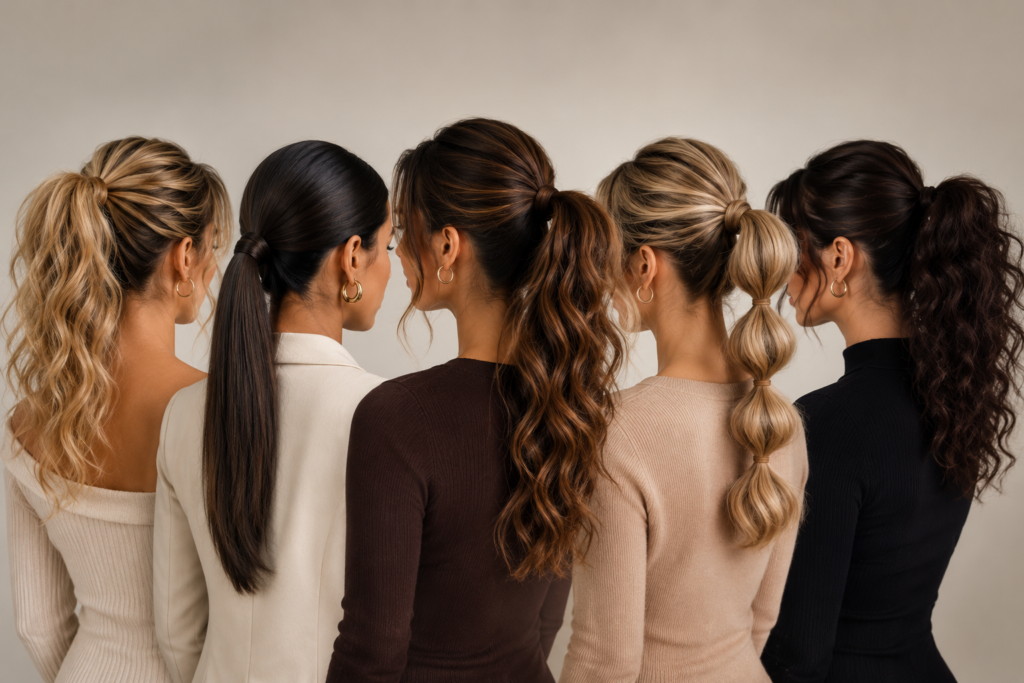
I used to think ponytails were the lazy option. Something you did when you’d run out of time, not something you actually chose. Ten years behind the chair changed my mind pretty fast. Half of my clients who come in for a “special occasion updo” end up walking out with some version of a ponytail, because when it’s placed right and finished right, it genuinely looks like more effort went in than it did.
That’s really the whole point of this guide. I want to walk you through the 10 perfect ponytail hairstyles that instantly elevate your look, the ones I actually reach for on real clients, not just what’s trending on Instagram this week. Some of these take thirty seconds. A couple take real patience. All of them work better once you know the little tricks nobody tells you.
So grab a brush, a couple of elastics, and maybe a mirror you can actually see the back of your head in. Let’s get into it.
One quick story before we start. A client came in last month convinced ponytails made her look tired, always flat, always plain. Turned out she was doing exactly one version of it, dead center, pulled bone-straight, no prep on the hairline. We tried a low, slightly undone one instead with a wrapped section over the elastic, and she genuinely didn’t recognize herself in the mirror. Same hair. Same length. Completely different result. That’s basically why this guide exists.
As a stylist, I get asked almost every week how to make a ponytail look less thrown together and more salon-fresh, and this guide is basically my answer to that question, written down properly for once instead of explained in a rush between appointments.
Why the Ponytail Deserves More Credit
Ponytails get treated like a fallback, but they’ve quietly become one of the most requested styles I do, gym days included. On the runway, they show up sleek and almost architectural. On the street, people wear them looser, a bit undone, like they didn’t try, even though they did.
If you want a ponytail that actually reads as styled instead of thrown together, aim for these three things:
- A little lift at the crown, not flat roots
- Movement through the length, not a stiff, glued-down shape
- A clean base, meaning the elastic itself is dealt with, not just left bare
Get those three right and honestly, the specific style you pick matters less. That’s the foundation every hairstyle in this list of 10 perfect ponytail hairstyles that instantly elevate your look is built on.
Before You Grab the Elastic
A few things worth thinking through before you start pulling your hair back:
- What your hair actually does on its own (straight, wavy, curly, coily)
- Your face shape, and whether you want it sharpened or softened
- Where you’re going, because a gym ponytail and a wedding-guest ponytail should not look the same
A high ponytail lifts and sharpens. A low one relaxes everything. Sleek says put-together, textured says effortless. None of that is a rule you have to follow to the letter; it’s just a starting point for figuring out what you actually want.
What’s Actually in My Kit
People assume you just need hairspray. You don’t, not for anything beyond the most basic version. Here’s what I keep reaching for.
- A heat protectant, if I’m smoothing the hair with a flat iron first, because a tight ponytail on unprotected hair breaks faster than people expect
- A smoothing cream or a light gel for anything sleek, worked in at the roots and hairline before brushing back
- Dry shampoo or a texturizing spray for messy or bubble styles, mostly because it gives the elastic something actually to grip
- A good brush, boar bristle if you have one, for the flyaway-free finish
- Silk or satin hair ties instead of the standard rubber kind
- Shine serum, saved for the very last step
One trick I picked up early on: keep an old, clean spoolie or toothbrush in your kit. Dab a tiny bit of gel or hairspray on it and use it just along the hairline. It smooths flyaways without you having to touch, and potentially mess up, the rest of the style.
14 Ponytails Worth Actually Trying
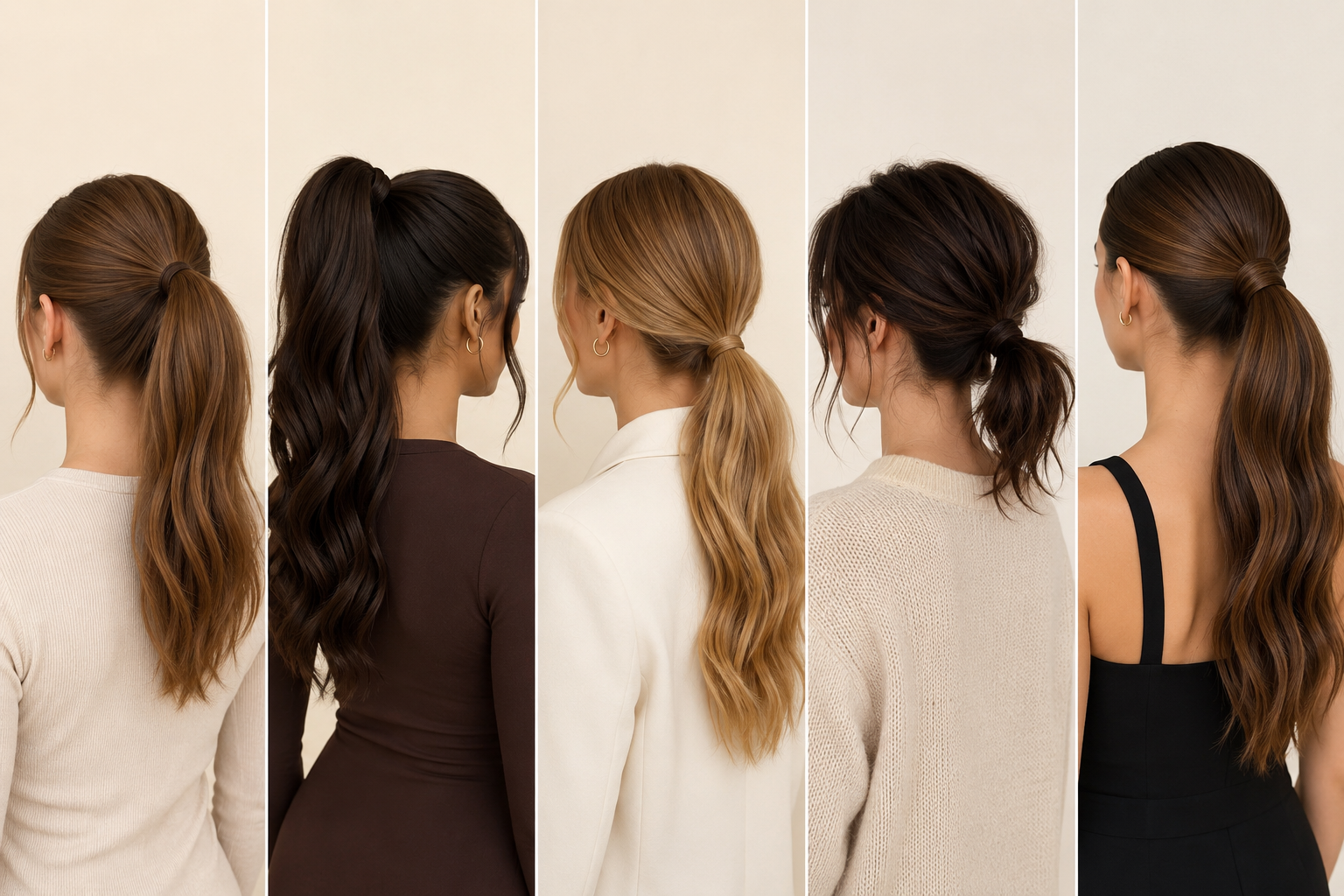
Here’s the full list: the 10 perfect ponytail hairstyles that instantly elevate your look, plus four extras I couldn’t leave out, because they solve problems the original ten don’t, like short hair or a fringe.
1. The Classic Ponytail
Start here. Gather your hair at mid-crown, not scraped up too high, not sagging too low, and tie it with intention rather than just yanking an elastic around it. The one thing that separates a classic ponytail from a lazy one is the finish: wrap a small piece of hair around the base to hide the elastic. Takes ten extra seconds. Changes the whole look.
2. The High Ponytail
This one is basically a free face-lift. Tip your head forward as you gather the hair so gravity does the work, secure it high, then comb the surface smooth. A little shine serum on the length and you’ve got something that looks a lot more expensive than it was.
3. The Low Ponytail
My go-to when I want something that reads as intentional without trying too hard. Sits at the nape, works with tailoring, works with a slip dress, doesn’t ask for much. Keep it smooth but not stiff, and pull a couple of pieces loose at the hairline so it doesn’t look severe.
4. The Messy, Undone Ponytail
Don’t let the name fool you; this one takes more finesse than the classic version, not less. The trick is loosening the crown with your fingers after tying it, not before. Pull gently until it looks like you almost didn’t try. That’s the whole style, really.
5. The Wrapped Ponytail
Tie your ponytail, then take a thin section and wrap it around the base, pinning the end underneath where nobody sees it. That’s it. It’s a small move, but it’s the difference between a ponytail that looks finished and one that looks like you’re mid-workout.
6. The Bubble Ponytail
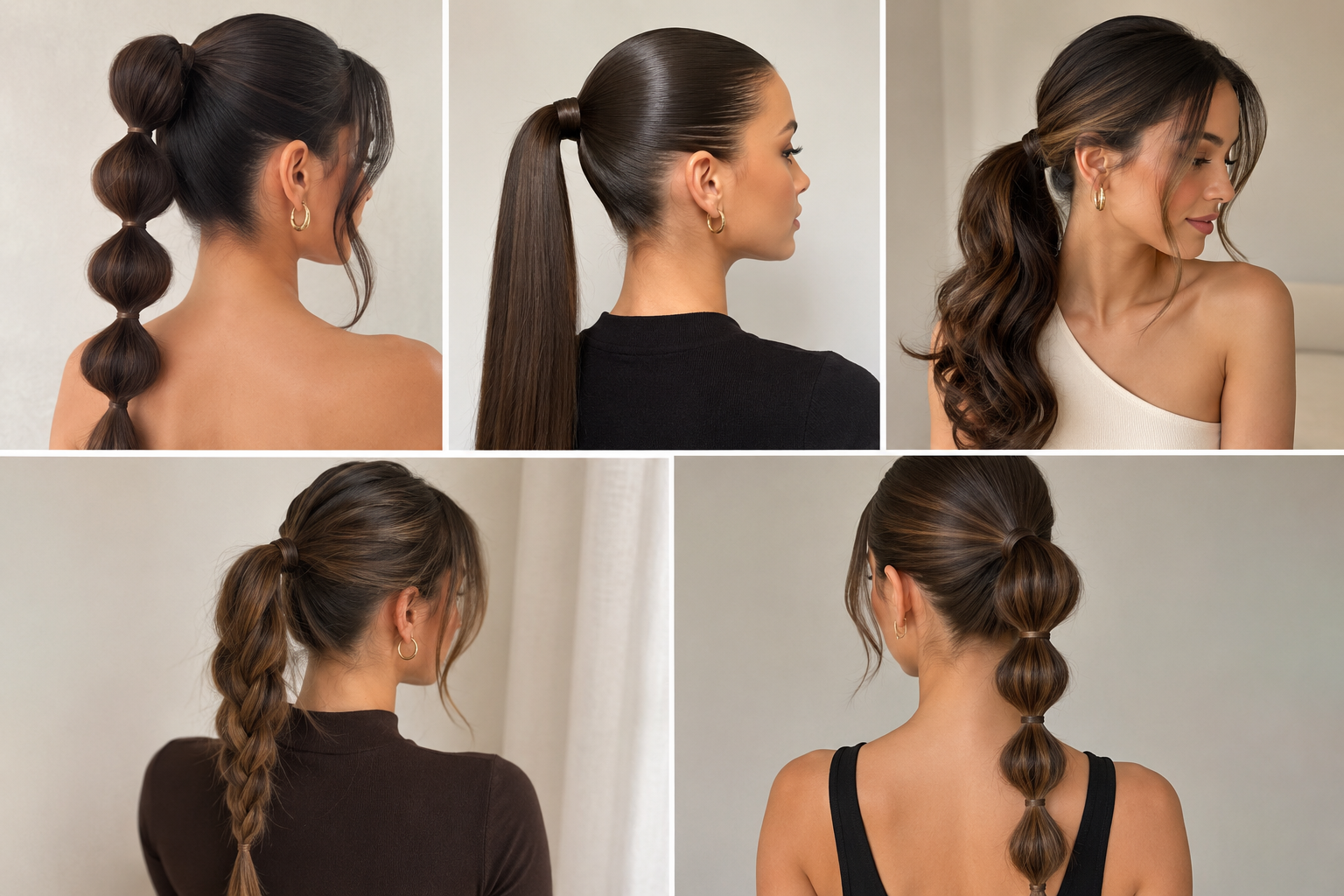
Space small elastics evenly down the length of your ponytail, then gently pull the hair between each one outward to puff it up. It looks intricate. It’s really not. Just don’t rush the pulling-apart step or the bubbles end up lopsided.
7. The Sleek, Slicked-Back Ponytail
The one that takes the most patience. Work smoothing cream through damp or dry hair, brush firmly back with a boar-bristle brush, and secure it tight. I mist a strong-hold, low-shine spray over the crown right before I brush, which buys extra hold without leaving it stiff or crunchy. Done right, it looks wet-effect and glossy, not helmet-like.
8. The Side Ponytail
Sweep it to one side instead of centering it. That small shift reads as romantic rather than sporty, especially with a little wave through the length. Don’t overthink the placement; off-center is the whole point.
9. The Braided Ponytail
Tie a regular ponytail, then braid the length. Keep it tight for something cleaner, or loosen it afterward for volume. If you’ve got thicker, coily, or natural afro-textured hair, this same idea scales up into a full goddess-braid ponytail, several braids gathered and tied at the crown. It’s protective, it’s low-maintenance, and it still looks like you did something.
10. The Bottleneck Ponytail
This is the one everyone’s been asking me about lately. Small elastics placed at intervals down the ponytail, tightened and loosened in a pattern so the shape puffs and pinches along its length. Takes a bit of practice to get even, but it photographs really well once you do.
11. The Ponytail With a Fringe
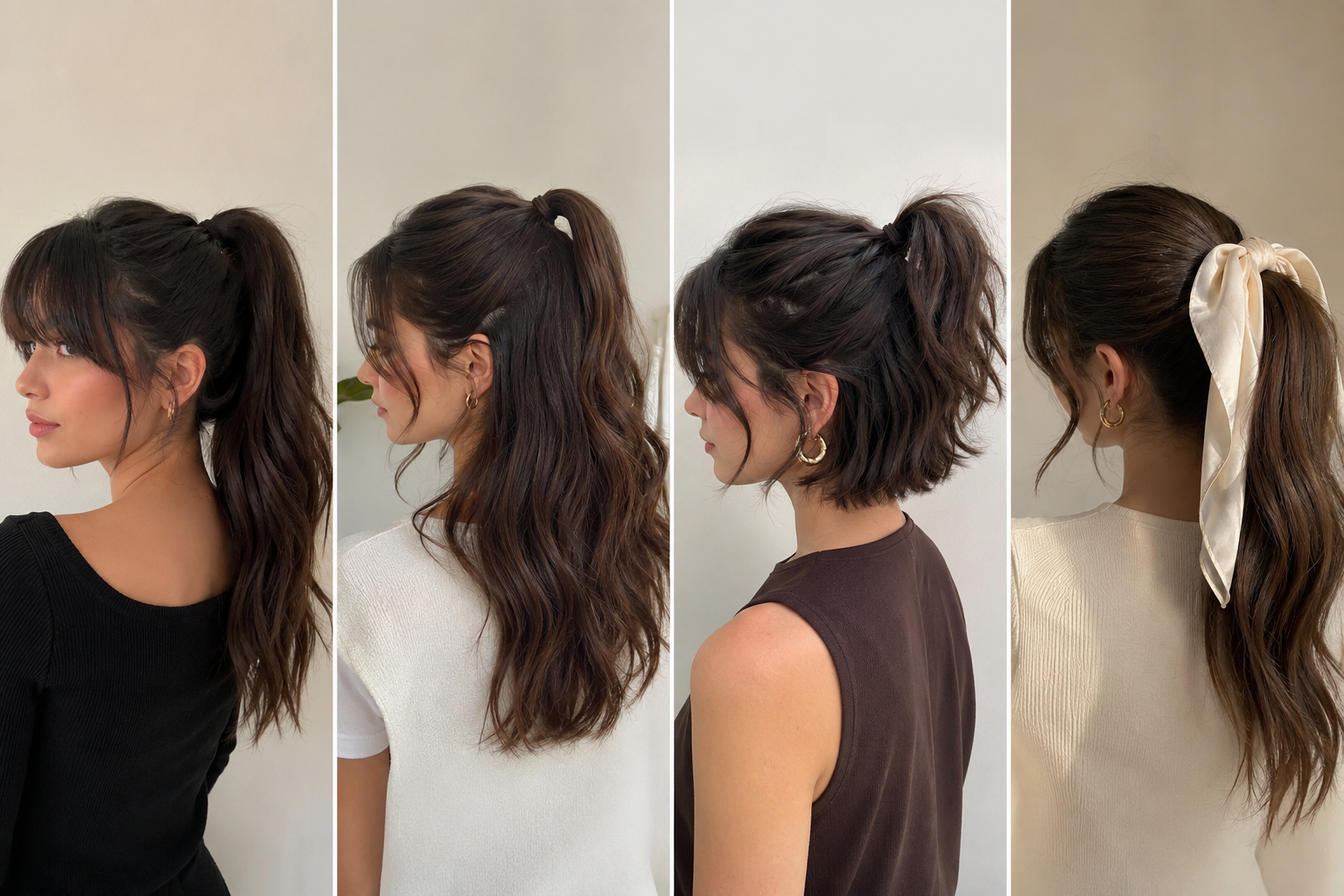
If you’ve got a fringe or curtain bangs, don’t fight them when you tie a ponytail back. Let them frame your face instead. It softens the whole look and, honestly, it’s one of the easiest fixes for a ponytail that feels too severe from the front.
12. The Half-Up Ponytail
For the days you can’t decide. Gather just the top section, roughly ear to ear, tie it off, leave the rest down. Works on nearly every face shape, forgiving on unwashed hair, and takes about thirty seconds.
13. The Short-Hair Ponytail
I hear “my hair’s too short for a ponytail” constantly, and it’s rarely true. A small, high mini-pony or a low one at the nape works on bobs and lobs just fine. Texturizing spray gives shorter strands enough grip to actually stay put. Want more length or fullness? A clip-in ponytail piece does the job without any damage. The trick with short hair specifically is not fighting the shorter layers around your face, since they’ll usually fall forward no matter how much product you use, so just let them frame things instead.
14. The Accessorized Ponytail
Sometimes the fastest fix isn’t a technique at all; it’s an accessory. A silk scarf around the base, an oversized scrunchie, a claw clip tucked underneath the elastic, or a bow. Two extra minutes, completely different look.
Ponytail Styles at a Glance
For when you just want the short version, here’s how these stack up by time and effort.
| Style | Best For | Time Needed | Difficulty |
| Classic Ponytail | Everyday, work | 2 minutes | Easy |
| High Ponytail | Gym, nights out | 3 minutes | Easy |
| Low Ponytail | Office, formal events | 3 minutes | Easy |
| Messy, Undone | Casual, second-day hair | 2 minutes | Easy |
| Wrapped Ponytail | Polished everyday looks | 4 minutes | Medium |
| Bubble Ponytail | Parties, photos | 6 minutes | Medium |
| Sleek Slicked-Back | Events, dressed-up looks | 8 minutes | Medium |
| Side Ponytail | Date nights, soft occasions | 3 minutes | Easy |
| Braided Ponytail | Gym, festivals, protective styling | 7 minutes | Medium |
| Bottleneck Ponytail | Trend-forward, social events | 8 minutes | Advanced |
| With Fringe | Face-framing, everyday | 3 minutes | Easy |
| Half-Up Ponytail | Unwashed hair, casual days | 2 minutes | Easy |
| Short-Hair Ponytail | Bobs, lobs | 2 minutes | Easy |
| Accessorized Ponytail | Special occasions | 1 minute extra | Easy |
Mistakes I See Constantly
Most of what makes a ponytail look off comes down to a handful of small, easily fixed things. None of these are hard to correct once you know to look for them; they just tend to go unnoticed until someone points them out. In no particular order:
- Not prepping second-day hair, so you’re left with flat roots and dents you can’t brush out
- Using a plain rubber band, which creases the hair and snags strands over time
- Tying it in the same tight spot every single day, which stresses the hairline
- Checking the mirror once from the front and never looking at the back
- Piling heavy cream onto fine hair, which flattens it instead of adding body
- Rushing the wrap-around step, so the elastic still peeks through
Fix even two of these and most ponytails on this list look noticeably better.
The Part Everyone Forgets to Check
Here’s something I say to clients constantly: your ponytail is seen from the front way more than the back. A little lift at the crown changes your whole face. A couple of loose strands soften features that feel too sharp. Even which way you part your hair matters more than people think. Give it thirty seconds in front of a mirror before you walk out. It’s a small habit that makes a real difference.
Adjusting for Your Hair Type
Fine Hair
Volume is the priority. Texture spray and a bit of gentle backcombing at the crown before you tie it off create thickness without weighing anything down.
Thick Hair
You’re fighting for control more than volume. Sleeker styles and a firm elastic hold up better than anything loose.
Curly or Coily Hair
Detangle before you gather it, and reach for a curl cream rather than gel, which tends to dry out curls. A loose, high “pineapple” ponytail overnight also helps protect your curl pattern while you sleep.
Short Hair
Keep it low, keep it small, and let your layers do their own thing instead of forcing them flat.
Matching the Style to Your Face Shape
- Round face: a high ponytail adds length and lift
- Square face: a side ponytail or looser wave softens the angles
- Oval face: pretty much anything works, so just wear what you like
- Heart-shaped face: a low ponytail with a few face-framing pieces balances a narrower chin
Treat these as a starting point, not a rulebook. The quickest way to know what actually works for you is trying a couple of placements in the mirror before committing for the day.
A Word on Hair Health
A ponytail can be one of the gentlest styles you wear, or one of the more damaging ones, and the difference is almost entirely in how tight and how often. Wearing a very tight, high ponytail every day puts ongoing tension on the hairline, and over time that can weaken the follicle. In more serious cases, it contributes to a receding hairline or traction hair loss. I’m not saying skip sleek styles altogether, just save the tightest ones for occasions and go looser day to day. Moving where the elastic sits also gives any one section a break from the pulling.
A couple of other habits help too: switch to silk or satin hair ties, don’t brush a tight ponytail out the second you take it down, and give your scalp a gentle rub afterward. If you notice soreness or small bumps along your hairline after wearing a ponytail regularly, that’s usually your first warning sign, well before any real damage shows up. It’s a small thing to check for, but it’s saved more than one client from a much bigger problem down the line.
On Effortlessness
The best ponytails never look overworked, even though most of them are more deliberate than they appear. A slight imperfection here, a bit of looseness there, a finish that feels considered rather than forced. That’s really the thread running through this whole list of 10 perfect ponytail hairstyles that instantly elevate your look. Once you notice the small details, even the plainest version looks different from the one you’ve been doing on autopilot for years.
FAQs
How do you make a ponytail look fuller?
Build volume at the crown before you tie it off. Backcombing, bubble sections, or even just teasing the roots slightly all help create the illusion of extra thickness.
How do you make a ponytail look good from the front?
Lift the roots a little instead of pulling everything flat, and let a couple of strands frame your face rather than scraping every hair straight back.
What’s the easiest ponytail for everyday wear?
Honestly, a low or slightly messy one. It takes under a minute, forgives bad hair days, and goes with almost anything you’re wearing.
Can short hair actually work in a ponytail?
Yes, more often than people think. A small, low ponytail with a bit of texture tends to look the most natural on shorter hair, and a texturizing spray helps the elastic actually hold.
What are good ponytail hairstyles for black hair?
Braided and gathered styles tend to work really well on natural, coily, or afro-textured hair. A goddess braid ponytail, box braids pulled up into a sleek high pony, or a smooth, edge-controlled ponytail with a braid wrapped around the base are all solid, protective options that still look polished.
What’s a good high ponytail for black hair?
A sleek, edge-controlled high ponytail, smoothed with a light gel and finished with a wrapped section around the base, gives you that clean, salon-fresh look while still doubling as a protective style.
How do you do a one-ponytail braid?
Tie all your hair into one ponytail at whatever height you like, then braid the whole length in a simple three-strand plait. Secure the end, then gently tug the outer edges to make it look a bit fuller.
What are good ponytail hairstyles for girls?
Keep it simple for kids. A basic mid-height ponytail, a bubble ponytail, or two smaller pigtail-style ponytails are all fast, comfortable, and sturdy enough to survive an entire day of actual playing.
How often should you switch up your ponytail style or placement?
If you’re wearing one daily, try not to tie it in the same spot every time. Rotating between a low, a mid, and an occasional high placement gives your hairline regular breaks and genuinely helps prevent the thinning that comes from repeated tension in one area.
Final Thoughts
A ponytail is never just a ponytail; it’s a small daily decision about how put-together you want to look. Once you actually understand the details, even the simplest of the 10 perfect ponytail hairstyles that instantly elevate your look in this guide starts to feel a lot more elevated than it did before.