
Let’s be real for a second.
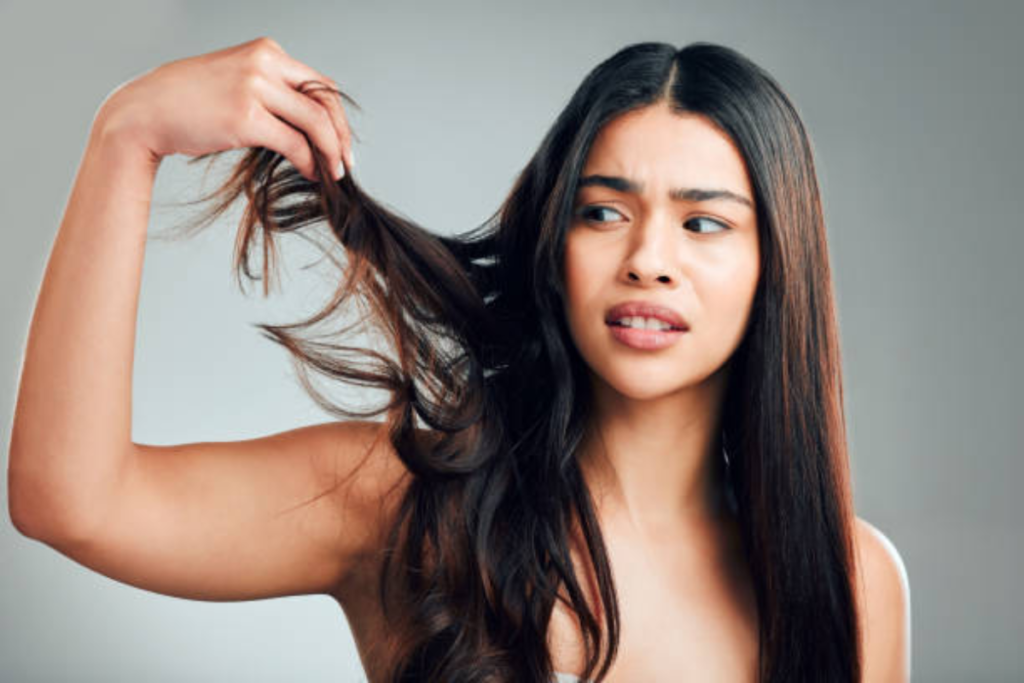
You’ve already Googled this before. You’ve tried the coconut oil. You’ve cut back on heat. You bought that “miracle” hair mask from the drugstore. And your hair? Still dry. Still snapping. Still nowhere close to what it used to feel like.
So what’s actually going wrong?
Here’s the thing most hair articles won’t say upfront: you can’t fix damaged hair the same way you heal a cut on your skin. Hair is a dead fiber. It doesn’t regenerate from the inside. But, and this is a big but you can absolutely stop the damage cycle, rebuild your hair’s strength, and retain the length you keep losing.
This guide breaks down the real science behind hair damage, what natural repair actually means, and a practical routine that works without the fluff or the false promises.
“I Thought My Hair Was Just… Done” — You’re Not Alone
Before we get into the how, let me tell you something that might make you feel a little better.
Even Camila Cabello who has a full team of professional stylists, went through a very public hair crisis after bleaching her naturally dark hair platinum blonde in 2024. Two years later, in February 2026, she was still posting about what she calls “bleachgate,” telling her followers: “It’s taken a year but my hair has finally started to forgive me.” She literally asked her fans to comment their repair tips “like it’s group therapy.”
If one of the most recognizable voices in the world needed a year of consistent care to walk back from serious bleach damage and was still actively working on it then your frustrated Google search at midnight makes complete sense.
The damage is real. The frustration is valid. And the repair takes longer than any product label will ever admit.
Now let’s talk about what actually works.
Why Your Hair Feels Like It’s Stopped Growing (It Hasn’t)
This one surprises most people.
Your hair is growing roughly half an inch per month, regardless of what you do. The reason it feels stuck? Breakage at the ends is eating up every inch of new growth. You grow two centimeters, lose two centimeters. Net result: zero visible progress.
So when people say “my hair won’t grow,” what they usually mean is their hair won’t retain length. Fix the breakage, and suddenly your hair “starts growing” not because anything changed at the root, but because the ends are finally surviving long enough to show up.
A lot of people in the r/HaircareScience community describe this exact moment that shift when breakage slows and length suddenly appears as feeling like magic. It isn’t. It’s just physics finally working in your favor.
That’s the real goal here: less breakage = more visible length. Everything else follows from that.
What’s Actually Happening Inside a Damaged Strand
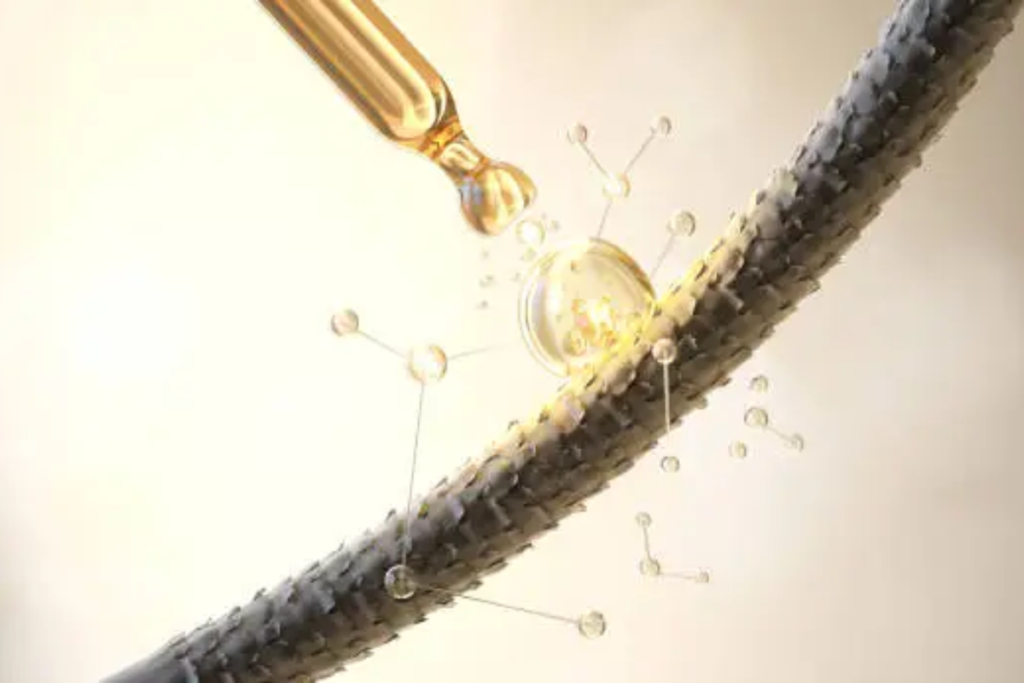
Before we get into fixes, let’s quickly understand what we’re dealing with — because this changes everything about how you approach repair.
Your hair strand has three layers:
- The cuticle — the outer protective shield, made of overlapping scales like roof tiles
- The cortex — the middle layer where disulfide bonds hold your hair’s strength and shape
- The medulla — the soft inner core (mainly in thicker hair types)
When your hair is healthy, those cuticle scales lie flat. They reflect light (that’s where shine comes from), lock in moisture, and protect the cortex inside.
When hair gets damaged through heat, bleach, chemical treatments, or even rough handling the cuticle gets lifted and chipped, creating visible breakage points and making the strand far more porous. This makes your hair soak up water too fast (and lose it too fast), which is why damaged hair always feels dry within hours of washing.
Inside the cortex, broken disulfide bonds lead to lost strength, reduced elasticity, and changes in texture. Unlike hydrogen bonds, which reform with water, disulfide bonds don’t bounce back on their own. That’s why “just deep conditioning more” often doesn’t fix the real problem. you’re moisturizing a structurally broken strand.
The Three Causes Nobody Takes Seriously Enough
1. Heat Damage — The Sneaky Accumulator
Everyone knows flat irons are bad. What most people don’t realize is that repeated, moderate-heat styling does just as much cumulative damage as one extremely hot session. Your blow dryer on “warm” every single morning adds up over months.
Heat damage specifically erodes the cuticle layer and causes the proteins in your cortex to denature, they lose their structural shape and can’t hold the strand together the way they should. The result: frizzy, weak, porous hair that feels rough to the touch.
2. Chemical Damage — The Deep Kind
Bleaching, coloring, perming, relaxing, these all work by chemically opening the cuticle and altering the cortex. Bleaching specifically removes a protective surface lipid called 18-MEA, which is what makes healthy hair feel silky and repel water. Once that’s gone, hair becomes hydrophilic. it soaks up water aggressively leading to that “dry, rough, hard-to-manage” feeling that’s so frustratingly persistent.
This is exactly what Camila went through. This kind of damage goes deep, and it’s not something a single oil treatment can fix. It takes months of consistent structural repair.
3. Mechanical Damage — The Everyday Thief
This is the one nobody talks about, and honestly, it’s often the biggest culprit.
Rough towel-drying, aggressively brushing wet hair, tight ponytails every day, sleeping on rough cotton pillowcases these create physical stress on the cuticle, chipping away at it slowly, strand by strand, morning by morning.
A lot of people clean up their heat and chemical habits and still can’t figure out why their hair keeps breaking. Nine times out of ten, it’s mechanical damage happening on autopilot. Check your daily routine not just your styling routine.
The Biggest Mistake: Why Oil Alone Isn’t Fixing Your Hair
Here’s something most natural hair content gets dangerously wrong.
Oil makes hair feel soft. It does not rebuild broken structure.
That’s not a knock on oils they have real, documented benefits (more on that below). But if your disulfide bonds are compromised, your protein structure is damaged, and your cuticle is lifting no amount of coconut oil is going to patch that.
Research published in the Journal of Cosmetic Science confirms that coconut oil can reduce protein loss during washing by up to 39% when used as a pre-wash treatment. That’s genuinely impressive. But reducing future protein loss is very different from repairing existing structural damage. Knowing the difference is everything.
Natural repair works when you address three things simultaneously:
- Protein — to rebuild structure and fill gaps in the hair shaft
- Moisture — to restore flexibility and prevent brittleness
- Protection — to stop ongoing damage while the first two work
Miss any one of these, and you’ll keep chasing your tail. This is probably why your current routine isn’t delivering.
Protein vs. Moisture: How to Know What Your Hair Actually Needs
This is where most people go wrong and it’s a gap almost every competitor guide ignores.
Your hair is telling you exactly what it needs. You just have to know how to listen.
Your hair needs MORE PROTEIN if:
- It feels mushy, gummy, or limp when wet
- It stretches way too much before snapping (like wet chewing gum)
- It lacks body even after conditioning
- It’s breaking even though you’re moisturizing regularly
Your hair needs MORE MOISTURE if:
- It feels stiff, rough, or sandpaper-like
- It snaps quickly with almost no stretching
- It stays dry no matter how much conditioner you use
- You’re getting a lot of single-strand knots
Here’s something hair enthusiasts in the natural hair community figured out long before it became mainstream: the stretch test. Take a single strand and gently stretch it. Healthy hair stretches about 30% before snapping. Too much stretch = needs protein. Too little stretch = needs moisture.
Neither works fully without the other and getting this balance right is genuinely the most transformative thing you can do for damaged hair.
Real Talk: What “Natural Bond Repair” Actually Means
You’ve seen “bond repair” on labels. Here’s the honest version.
Professional bond repair products — like Olaplex — work at a molecular level, specifically targeting and relinking broken disulfide bonds. The science is real. Natural approaches can’t fully replicate this. But they can do meaningful repair work:
- Slow protein loss through pre-wash oil treatments
- Temporarily fill gaps in the shaft using hydrolyzed proteins (egg white, rice water)
- Smooth the cuticle using mildly acidic rinses that lower the hair’s pH
- Reduce friction and breakage through gentler handling and protective tools
Of natural protein options, hydrolyzed proteins particularly those small enough to penetrate the hair shaft offer the most effective structural reinforcement. Egg white protein, rice water protein, and hydrolyzed keratin in DIY treatments all fall into this category.
The key word is hydrolyzed: proteins broken into smaller molecules that can actually enter the strand, not just coat the outside.
5 Natural Treatments That Work — And the Science Behind Each
1. Egg Mask — For Weak, Breaking Hair
The egg white contains hydrolyzed protein that temporarily fills damaged areas along the shaft from the outside. The yolk brings lecithin and fatty acids that condition and add slip to the cuticle. Together, they work from both inside and outside the strand.
Best for: Hair that snaps easily, feels thin, or lacks body.
How to use: Beat 2 eggs, apply to damp hair from mid-shaft to ends. Leave 20–30 minutes. Rinse with cold water only warm water cooks the egg protein and you’ll be picking bits out of your hair for days. Use once a week.
The cold water step matters beyond the obvious reason it also helps close the cuticle after treatment, sealing in the protein you just applied.
“I resisted the egg mask for years because it sounded messy and kind of gross. First time I tried it cold water rinse and all the difference in how my hair felt when I was detangling was genuinely shocking. Less snapping, more slide. Now I do it every Sunday.” real experience shared in r/HaircareScience
2. Avocado + Olive Oil Mask — For Dry, Brittle Hair
Avocado is rich in oleic acid and vitamins B and E, which actually penetrate the hair shaft rather than just sitting on top. Olive oil adds elasticity and reduces moisture loss during washing.
Best for: Hair that feels rough, breaks with little force, or has lost its shine.
How to use: Mash half a ripe avocado with 1 tablespoon olive oil and 1 teaspoon honey. Apply to hair, cover with a shower cap (the warmth helps absorption), leave 30 minutes. Rinse thoroughly. Use every 1–2 weeks.
The honey isn’t just there for texture. it’s a humectant, pulling moisture from the air into your hair shaft and holding it there long after you’ve washed out the mask.
3. Fermented Rice Water Rinse — For Thinning and Growth Support
This one has more science behind it than most people realize. Fermented rice water contains inositol a carbohydrate that can penetrate damaged hair and repair it from the inside. Multiple cosmetic chemistry studies have confirmed this mechanism, and it’s one of the few natural ingredients shown to reduce surface friction and improve elasticity of damaged hair.
It also contains amino acids, B vitamins, and antioxidants that support follicle health.
Best for: Thinning hair, weak strands that keep snapping, slow-seeming growth.
How to use: Soak ½ cup of rice in 2 cups of water for 30 minutes. Strain. Ferment the water for 24 hours at room temperature. it’ll get slightly sour, which is exactly what you want (the fermentation process increases the inositol content and lowers the pH). Dilute 1:1 with plain water before use. Pour over hair as a final rinse after conditioning. Leave 5 minutes, then rinse out. Use 1–2 times per week.
Don’t skip the dilution step undiluted rice water can cause protein overload if used frequently.
4. Banana + Honey Mask — For Frizz and Smoothness
Bananas contain silica a mineral that supports collagen synthesis and contributes to stronger, smoother hair texture over time. Combined with honey’s moisture-locking properties, this mask is surprisingly effective for rough, hard-to-manage hair.
Best for: Frizzy, coarse-textured, or high-porosity hair.
How to use: Blend (don’t mash banana lumps are a nightmare to remove) one very ripe banana with 2 tablespoons honey. Apply to clean, damp hair. Leave 20–30 minutes. Rinse thoroughly with lukewarm water. Use every 1–2 weeks.
Pro tip: The riper the banana, the easier it blends and the higher the silica content. Brown-spotted bananas are perfect for this.
5. Black Tea Rinse — For Shedding and Scalp Health
Black tea is high in tannins, which temporarily bind to the hair shaft and reduce shedding by strengthening the strand. Some early research also suggests tannins may help block DHT at the scalp level, DHT being the hormone linked to follicle miniaturization in androgenetic hair loss.
Best for: Excessive shedding, weak roots, overall hair thinning.
How to use: Brew 3–4 black tea bags in 2 cups of boiling water. Cool completely (applying hot tea to your scalp is not a vibe). Pour over hair after conditioning. Leave 5 minutes, then rinse. Use 1–2 times per week. Always condition after black tea can be drying if used without a follow-up moisture step.
Oils That Help — When You Use Them Right
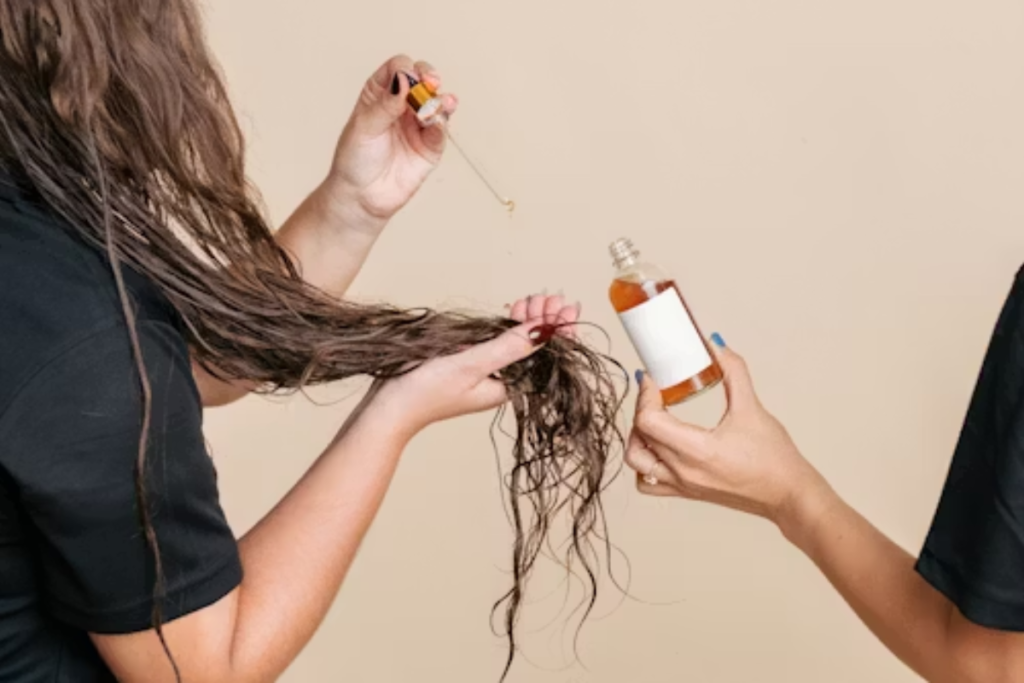
Most people use hair oils wrong. Here’s the no-nonsense guide:
Coconut Oil — Pre-Wash Only, Not a Leave-In
Coconut oil is one of the very few oils that genuinely penetrates the hair shaft (most oils just coat it). Its main value is reducing protein loss during washing something researchers call reducing “hygral fatigue.” Apply before shampooing, leave 30–60 minutes, then wash as normal.
Used as a leave-in on high-porosity hair? It can actually make things worse by blocking moisture absorption. Know your porosity before making it a daily habit.
A community hair blogger on Hairlicious Inc. has been mixing coconut oil directly into her weekly protein reconstructor for years. She credits the combination with dramatically reduced breakage in her chemically relaxed hair. The theory: coconut oil prevents moisture loss during the protein treatment, so the strand stays flexible rather than brittle afterward.
Rosemary Oil — For Scalp and Growth Support
A 2023 study in the journal Skinmed found rosemary oil to be as effective as 2% minoxidil for hair growth stimulation over 6 months with fewer side effects. It improves circulation to the scalp and reduces scalp inflammation, both of which support stronger hair from the follicle up.
Mix 3–5 drops into a carrier oil (jojoba works well) and massage into the scalp 2–3 times per week. Leave at least an hour ideally overnight before washing.
Argan Oil — Finishing, Not Repairing
Best used as a finishing oil on dry hair or a light pre-heat protectant. It’s rich in antioxidants and vitamin E, which improve the appearance of the cuticle surface significantly. It won’t repair structural damage, but it makes repaired hair look and feel noticeably better. A little goes a long way one small drop worked between the palms and smoothed through the ends.
The Scalp Section Everyone Skips (Don’t Skip This)
Here’s something trichologists bring up consistently that most hair blogs rush past: your scalp is skin, and unhealthy skin produces weaker hair from day one. The follicle is the factory. If the factory environment is poor, the output reflects that.
Scalp Massage — The Underrated One
A 2016 study from Edelstein et al. found that just 4 minutes of daily scalp massage over 24 weeks measurably increased hair shaft thickness. The mechanism: stretching follicle cells and improving blood flow signals the follicle to produce a denser strand.
Users in r/tressless a community dedicated to hair loss and regrowth frequently cite consistent scalp massage (with or without rosemary oil) as the one free, zero-risk habit that made the most noticeable difference over time.
Use your fingertips in gentle circular motions for 3–5 minutes. Do it while your rosemary oil is on your scalp. Two steps, one time slot.
Apple Cider Vinegar Rinse
ACV is mildly acidic (pH around 2–3), making it excellent for closing the cuticle and restoring the scalp’s natural pH after alkaline shampoos strip it. It also dissolves product buildup without the harshness of a clarifying shampoo.
Mix 1 tablespoon ACV in 1 cup water. Pour over hair after shampooing, leave 2 minutes, rinse out. Once a week maximum overdoing it causes dryness.
Your Weekly Routine (Realistic, Not Pinterest-Perfect)
| Day | What to Do | Why |
| Wash Day (Day 1) | Coconut oil pre-treatment (30–60 min) → Sulfate-free shampoo → Deep conditioner | Protect protein during wash, cleanse gently, restore moisture |
| Day 3 | Egg mask OR avocado mask (based on your hair’s current needs) | Protein or moisture replenishment |
| Day 5 | Rosemary + jojoba scalp massage, 3–5 minutes | Growth support, circulation boost |
| Weekly (pick one wash day) | ACV rinse after shampooing | Cuticle closure, pH balance, buildup removal |
| Every 6–8 weeks | Trim ¼ inch off ends | Stop split ends traveling up the shaft |
Give this 6–8 weeks minimum before you evaluate. Not days. Weeks. Real structural change — the kind you can feel when you run your fingers through your hair — takes time.
The Mistakes Quietly Wrecking Your Progress
Most people doing everything “right” are still making one of these:
Over-oiling the scalp. Oils on the scalp can clog follicles and disrupt your natural sebum balance. Apply oils mid-shaft to ends only.
Protein overload. Too much protein without enough moisture makes hair stiff, brittle, and prone to snapping — it can actually mimic the feel of damage. If your hair feels rough after a protein treatment and deep conditioning isn’t helping, take a week off from all protein and focus purely on moisture.
Treating all damage the same. Heat damage needs protein + cuticle-smoothing. Chemical/bleach damage (like bleachgate situations) needs moisture restoration first because the 18-MEA lipid barrier is gone. The approach isn’t one-size-fits-all.
Skipping the trim. Split ends don’t stay put. They split further up the shaft over time, causing breakage higher and higher up the strand. Trimming doesn’t make hair grow faster — but it absolutely prevents existing damage from spreading.
Expecting one treatment to cover everything. No single mask covers protein and moisture and protection. The routine has to address all three, applied strategically over time.
How Long Does Hair Repair Actually Take?
Here’s the honest timeline, because most guides either exaggerate results or stay vague:
Mild damage (rough texture, slight frizz, some breakage): You’ll feel real improvement within 4–6 weeks of consistent care.
Moderate damage (significant breakage, dullness, lost elasticity from heat): Expect 2–4 months of consistent work before the hair genuinely feels different.
Severe damage (bleached, heavily processed, heat-fried multiple times): This is a 6–12+ month journey of growing out healthier hair while managing the existing damage. Camila’s “a year to forgive me” timeline? That tracks exactly.
The important thing to understand: you’re not waiting for the same hair to repair itself. You’re waiting for enough new, healthy hair to grow in from the root while preventing further damage to what’s already there. It’s growth + retention + protection, all working together over time.
FAQ
Can damaged hair fully repair itself?
Honestly, no– not in the way skin heals. Once the cuticle is severely compromised, you’re managing and improving the existing damage, not reversing it. But “significantly improved” can feel dramatically different from “damaged.” With consistent care, hair can regain real strength, shine, and manageability and new growth comes in healthier from day one.
What’s the single most effective natural treatment?
It depends on what your hair is missing. Gummy when wet? Egg mask (protein). Stiff and snapping? Avocado mask (moisture). Scalp issues? Rosemary oil massage. There’s no universal answer because the right answer depends on your specific deficiency. The stretch test we covered earlier will tell you which direction to go.
Is heat styling completely off the table during repair?
Not necessarily — but heat protection every single time is non-negotiable, and staying under 350°F for most hair types (under 300°F for fine or highly porous hair) matters. Even taking 2–4 weeks completely off heat while you’re in the early stages of your repair routine makes a noticeable difference in how quickly things improve.
Does diet actually affect hair damage?
Yes, significantly — more than most people realize. Hair is built from protein (mostly keratin). If your dietary protein is insufficient, your body deprioritizes hair production. Biotin, zinc, iron, and omega-3 fatty acids all play documented roles in hair strength and growth. If you’re in a major caloric deficit or restricting food intake significantly, that will show up in your hair’s health and growth rate before almost anything else.
I’ve been consistent for 6 weeks and see no difference. What am I missing?
Most likely one of three things: you’re treating moisture damage like protein damage (or vice versa), you’re not actually stopping the source of damage (still heat styling daily, tight hairstyles), or your expectations are off-timeline. Go back to the stretch test, honestly audit your daily mechanical habits, and give it at least 8–10 weeks before evaluating.
Final Remarks
Repairing damaged hair isn’t about finding the magic ingredient. It’s about understanding what your hair specifically needs protein, moisture, or both and being consistent enough to let that work.
You’re not going to see a transformation in a week. Even Camila Cabello, with every resource available to her, needed a full year to walk back from one bleaching session.
But four to eight weeks of the right routine? You’ll feel the difference in how your hair moves, how much less it breaks when you detangle, and how much more length you’re actually keeping.
That’s not a miracle. That’s just biology doing its job when you stop working against it.
Ready to Go Further?
If damaged hair has been holding you back from trying a new style, here’s something worth knowing: the style you choose matters more than you think when it comes to ongoing damage. Tight hairstyles, certain cuts that require daily heat these can undo your repair work faster than any mask can fix it.
Try our free AI Hairstyle Simulator → Preview low-damage, protective hairstyles on your actual face shape before committing to anything. It takes two minutes and could save you months of repair work.
And if you want to keep going deeper on specific damage types:
- [Signs Your Hair Is Damaged: The Complete Checklist →]
- [How to Repair Heat Damaged Hair Specifically →]
- [Best Sulfate-Free Shampoos for Damaged Hair →]
Your hair can feel healthy again. Give it the right conditions — and the right amount of time.