
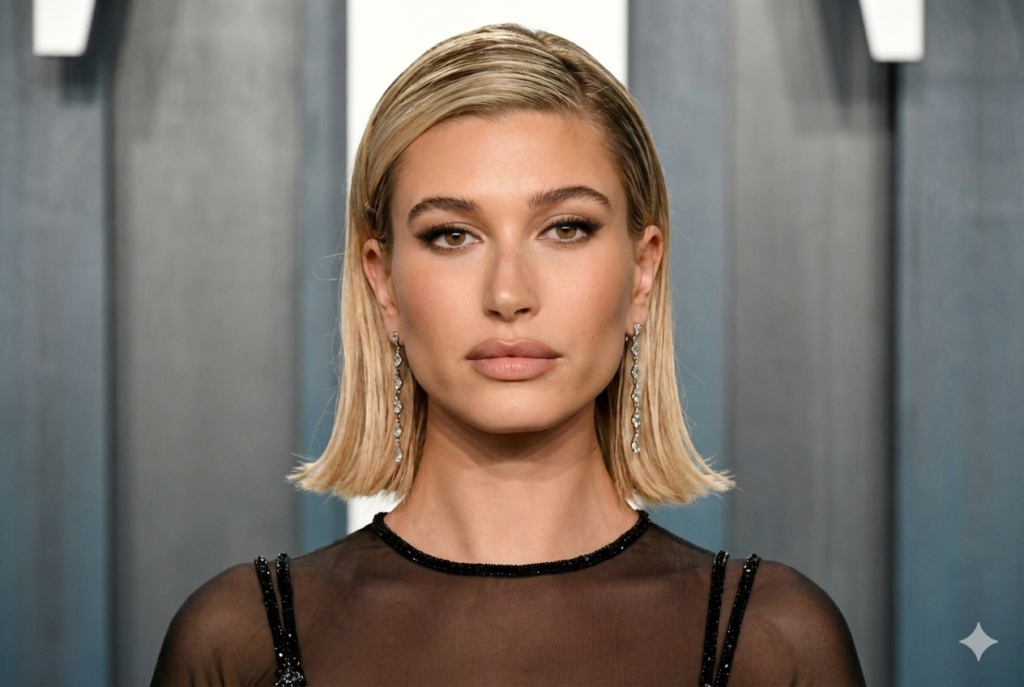
Most people don’t regret cutting their hair short.
They regret believing the wrong advice before doing it.
If you’ve been staring at Hailey Bieber bob photos, feeling inspired but uneasy at the same time, that hesitation isn’t insecurity—it’s awareness. You’re sensing that what works on her might not automatically work on you.
And you’re right.
Because short hair isn’t about bravery or trends.
It’s about proportion. And that’s where most online advice collapses.
The Frustration No One Talks About
You’re not looking for “short hair.”
You’re looking for:
- A haircut that doesn’t stretch your face
- A jawline that looks defined, not harsh
- A shape that still works three weeks later
- A style that feels intentional, not accidental
Yet the internet keeps repeating one dangerous sentence:
“Oval faces suit everything.”
That statement is only half true—and that half-truth ruins a lot of haircuts.
Oval faces are balanced, yes. But that balance also means any mistake becomes more visible, not less.
Why Most Bob Haircut Advice Quietly Fails
1. Haircuts Are Taught in Lengths—Faces Respond to Ratios
Most guides focus on where the hair ends: chin-length, jaw-length, above the jaw.
Faces don’t work that way.
Your face responds to:
- Where the eye stops
- Where visual weight sits
- Whether vertical length is interrupted or exaggerated
Oval faces are especially vulnerable to vertical elongation.
If a bob doesn’t intentionally break that vertical line, the face looks longer and flatter—even if the haircut is trendy.
2. Celebrity Bobs Are Engineered, Not Just Cut
Hailey Bieber’s bob isn’t “simple.”
It includes:
- Internal layering you don’t see in photos
- Controlled weight at the ends
- Strategic parting
- Styling designed to soften symmetry
Most people copy the photo.
They don’t copy the structure.
A Real Salon Story That Explains Everything
In late 2024, a client walked into a high-end London salon.
Oval face. Fine hair. A phone full of Hailey Bieber bob images.
“I want this exact cut,” she said.
The stylist asked one question:
“Do you style your hair every morning?”
Her answer was honest:
“Not really.”
The result was a sharp, jawline-skimming bob with a blunt finish and a center part.
Three weeks later, she came back frustrated.
The haircut wasn’t bad.
The decision-making was.
That moment explains why the Bieber bob works—and why it often doesn’t.
Why the Hailey Bieber Bob Actually Works
1. The Length Frames the Jaw—It Doesn’t Sit on It
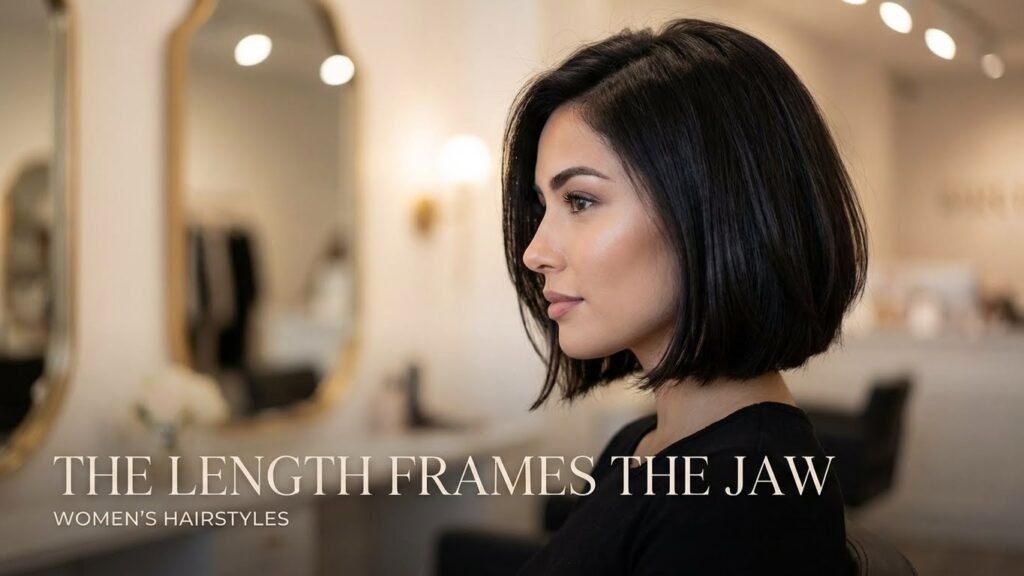
Hailey’s bob rarely lands harshly on the jawline.
It floats just around it.
That subtle difference:
- Defines the jaw without cutting the face in half
- Prevents harsh angles
- Creates softness through shadow, not length
2. The Ends Are Controlled, Not Blunt
Her bob isn’t razor-sharp or overly feathered.
The weight is intentional:
- Enough to hold shape
- Light enough to move
- Balanced enough to grow out cleanly
3. The Parting Is Never Truly Centered
Even when it looks centered, it’s slightly off.
That micro-shift:
- Breaks facial symmetry
- Prevents elongation
- Keeps the cut modern and wearable
The Jawline Bob: Powerful but Unforgiving
The jawline bob dominates social media—but it’s also the most misunderstood cut online.
What a Jawline Bob Does Well
- Highlights bone structure
- Creates definition
- Projects confidence
Where It Goes Wrong on Oval Faces
Oval faces already have natural balance.
A jawline bob that’s too blunt or precise:
- Erases cheek softness
- Pulls attention downward
- Makes the face look rigid
Professional rule:
For oval faces, softness must begin before the jaw—not at it.
The Micro Bob Trend: Editorial, Not Effortless
The micro bob trend is bold, fashion-forward, and everywhere in 2026.
It’s also brutally honest.
What a Micro Bob Really Demands
- Daily styling
- Hair that holds shape
- Comfort with exposure
It removes framing and forgiveness.
Why It’s Risky for Oval Faces
Micro bobs don’t interrupt vertical length.
They:
- Let the eye travel straight from forehead to chin
- Reduce cheek emphasis
- Shift focus to neck and shoulders
Uncommon insight:
Micro bobs don’t fail because of confidence—they fail because hair rarely behaves perfectly in real life.
Short Hair for Oval Face: The Decision Framework That Works
Forget trend lists. This is how professionals decide.
Step 1: Understand Your Facial Energy
Ask yourself:
- Does my face feel soft or sharp?
- Do photos make my face look long?
- Is my jaw subtle or dominant?
Step 2: Decide What You Want to Control
- Want balance? → Bieber bob
- Want structure? → Softened jawline bob
- Want edge? → Textured micro bob
Step 3: Match the Cut to Your Lifestyle
If you don’t style daily, micro bobs will punish you.
Haircuts don’t fail—they expose mismatches.
Jawline Bob vs Micro Bob vs Bieber Bob
| Feature | Jawline Bob | Micro Bob | Bieber Bob |
|---|---|---|---|
| Oval Face Safety | Medium | Low | High |
| Styling Demand | Medium | High | Medium |
| Grow-Out Phase | Awkward | Difficult | Clean |
| Daily Wearability | Risky | Editorial | Practical |
The Bieber bob wins because it balances trend with real life.
Common Mistakes That Ruin Short Hair
- Copying photos instead of structure
- Ignoring parting during the cut
- Forcing blunt ends on fine hair
- Choosing micro bob for low-maintenance lifestyles
- Trusting face-shape labels over real feedback
FAQs Based on Real Search Intent
Does short hair suit oval faces?
Yes—but only when it controls vertical balance.
Jawline bob or micro bob—which is safer?
Jawline bob with softness. Micro bob is high risk.
Why doesn’t Hailey Bieber’s bob suit everyone?
Because people copy length, not proportion.
Can short hair make an oval face look longer?
Absolutely. The wrong bob exaggerates length.
Final Word
Short hair isn’t about confidence.
It’s about precision.
The Hailey Bieber bob isn’t magic.
The jawline bob isn’t universal.
The micro bob trend isn’t forgiving.
When you choose based on proportion instead of popularity, short hair stops being risky—and starts feeling right.