
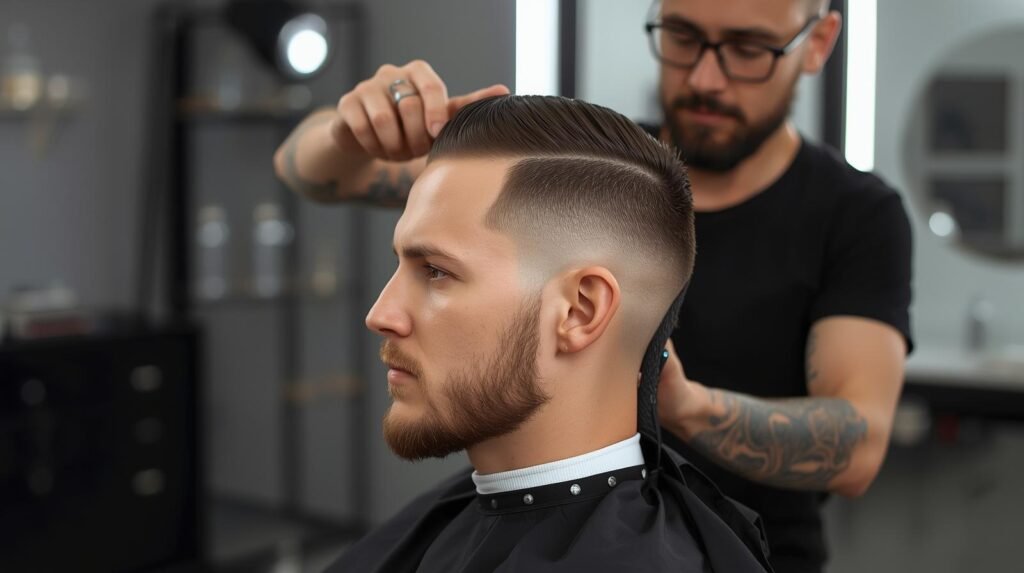
You don’t hate the mullet.
You hate what usually happens to it.
The sides feel too thin. The back looks awkward after a week. And somehow the haircut that looked fine in the chair stops making sense once you style it yourself.
If you’ve ever walked out thinking “Maybe it’s just my hair type” — it usually isn’t. It’s the way the taper fade mullet was built.
The Real Problem With the Taper Fade Mullet (Reality Check)
The taper fade mullet isn’t difficult — it’s misunderstood.
Most people fail with this cut because they treat it like:
- a fade haircut with extra length, or
- a mullet with shaved sides
It’s neither.
A true taper fade mullet is a balance haircut. When that balance is off — even slightly — the sides collapse, the back loses authority, and the head shape looks wrong.
Why Most Advice Online Doesn’t Work
Most online advice treats the taper fade mullet like a formula. Same fade height. Same back length. Same instructions for everyone.
That’s exactly why it fails.
Haircuts don’t fail because people don’t follow trends. They fail because trends ignore head shape, hair direction, and density behavior over time.
“Just get a low taper on the sides”
On paper, this sounds safe. In reality, a low taper can remove the support the mullet needs to sit properly.
Barbers notice this most on flatter occipital bones — the mullet holds for a few days, then drops and starts looking disconnected.
“Keep the back long”
Length without internal structure doesn’t create style. It creates drag. The back needs weight control, not just inches.
“Go super clean for a sharp look”
Over-clean fades look impressive on day one.
In real chairs, this shows up after 10–14 days — the sides stay sharp, but the mullet loses shape and starts looking thin instead of intentional.
Uncommon Insight #1: The Transition Zone Controls Everything
Most people judge a mullet from the sides.
Experienced barbers judge it from the transition zone — the area where the taper fade hands control over to the mullet back.
If this zone is rushed or placed incorrectly:
- the back feels accidental
- the crown loses flow
- styling becomes frustrating
Too high, and the mullet looks detached. Too low, and it feels bulky.
What consistently works is placing the transition just behind the ear, following the natural curve of the occipital bone instead of cutting across it.
This is one of the main reasons celebrity mullets grow out cleanly while most regular mullets don’t.
Uncommon Insight #2: Negative Space Makes the Mullet Look Thicker
Here’s what rarely gets discussed:
A strong mullet depends on what you don’t cut.
Over-fading around the parietal ridge removes negative space, causing:
- flat sides
- collapsed crown
- a weak-looking back
Leaving controlled density near the upper sides creates the illusion of fuller hair — especially important for medium length hair.
Uncommon Insight #3: Hair Texture Decides the Fade — Not Trends
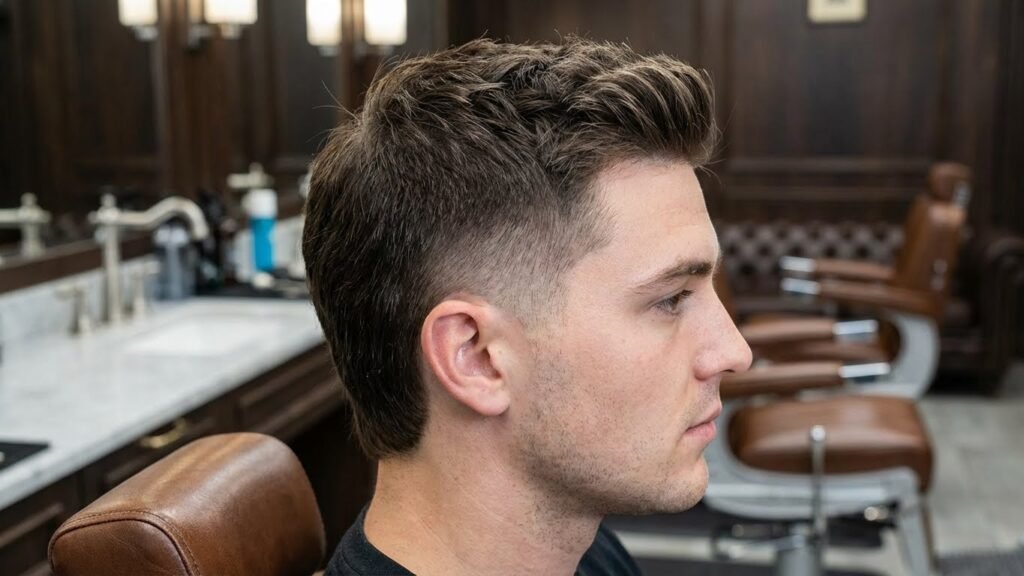
This is where most generic guides get it wrong.
- Straight hair: needs a longer taper fade or it looks hollow
- Wavy hair: performs best with a shadow taper
- Curly hair / taper fade black hair: needs a graduated taper, never abrupt
This is why celebrity mullets age better — their fades protect texture movement instead of chasing day-one sharpness.
The wrong fade type changes how the mullet falls from the crown, even if the length is perfect.
The Right Way to Approach a Taper Fade Mullet
1. Decide the fade’s purpose
The fade should support the mullet shape — not compete with it.
2. Shape the back first
Experienced barbers build the mullet back before finalizing the taper. This prevents clean sides with a weak rear profile.
3. Control bulk at the crown
Bulk removal belongs at the crown, not the ends. This keeps flow without thinning the perimeter.
Fade Variations That Actually Work
Low Taper Fade Mullet
Ideal for work-friendly styles and first-time mullets. Clean, controlled, and forgiving.
Taper Fade Black Hair Mullet
Best paired with natural texture. The fade frames the curls — it shouldn’t overpower them.
Shadow Fade Mullet
Underrated but powerful. Adds depth without sacrificing shape.
Common Mistakes That Quietly Ruin Results
- Over-fading behind the ear
- Disconnecting the crown from the back
- Thinning the back instead of weighting it
Barbers often hear “first week perfect tha” — that’s the warning sign of a mullet built for photos, not real wear.
FAQs
Is a taper fade mullet good for medium length hair?
Yes. Medium length offers the best control for shape and balance.
How often should it be maintained?
Taper: every 2–3 weeks
Mullet back: every 6–8 weeks
Can it look clean for professional settings?
Yes — when the taper is subtle and the back is structured.
Does face shape matter?
Skull shape matters more than face shape, especially the occipital bone.
Final Word
A taper fade mullet isn’t hard to wear.
It’s hard to build correctly.
When the fade supports the shape, the back carries weight, and the transition is respected, the haircut stops feeling trendy or risky.
It just works — even weeks later, even on normal hair, even without perfect styling.
That’s the difference between a mullet that survives Instagram… and one that survives real life.