
Table of Contents
You don’t lose confidence because of a bad haircut — you lose it because you trusted advice that wasn’t built for your face.
That’s the quiet frustration behind searches like “paul mescal haircut”. Men aren’t looking for trends. They’re looking for certainty. And most blogs don’t provide it.
This one will
The Real Reason This Haircut Fails for So Many Men
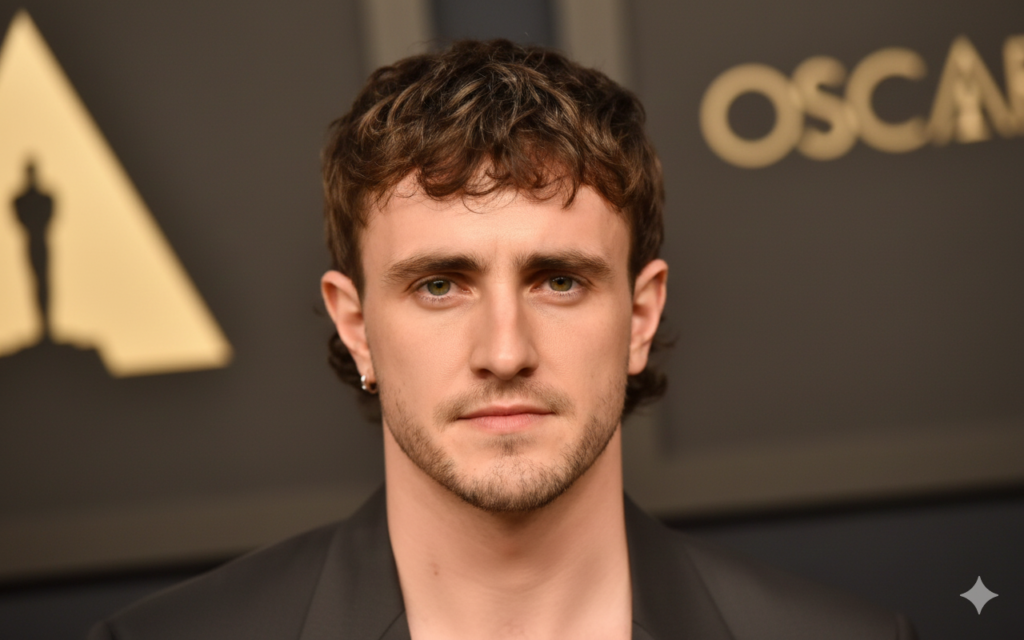
The Paul Mescal haircut looks casual, relaxed, almost accidental.
That appearance is deceptive.
In reality, it’s one of the least forgiving modern men’s haircuts.
Why?
Because the textured French crop with a short fringe sits in a narrow margin:
- Too clean → it looks forced
- Too messy → it looks careless
- Too short → it exaggerates the forehead
- Too long → it loses structure
Most men fail not because the haircut is bad — but because they choose it blindly.
Why Most Online Advice Is Misleading (Even When It Sounds Smart)
Scroll through most articles and you’ll see the same pattern:
- “Works for most face shapes”
- “Easy to maintain”
- “Just add texture”
None of that explains why the haircut behaves differently on different people.
Here’s what’s missing:
Haircuts don’t fail visually — they fail structurally.
And structure depends on:
- Face proportions
- Forehead-to-jaw balance
- Hair density and growth direction
Celebrity photos hide all of this.
What the Paul Mescal Haircut Actually Is (No Hype)
Strip away the celebrity label and you’re left with a very specific structure:
- A textured French crop
- With a short, broken fringe
- Soft sides (not aggressive fades)
- A crown that’s deliberately under-corrected
This haircut is designed to move and settle, not stay locked in place.
That’s why it looks better after a few hours — and terrible when over-styled.
Insight #1 (Rarely Discussed): This Haircut Is Built to Age During the Day
Most haircuts peak right after the barber finishes.
This one doesn’t.
The Paul Mescal haircut is intentionally cut so that:
- Natural oils improve separation
- Minor collapse adds realism
- Friction (hands, movement, wind) enhances texture
If you expect it to look perfect all day, you’ll fight it — and lose.
Men who succeed with this haircut let it change.
Insight #2: The Fringe Is About Balance, Not Length
Most men misunderstand the short fringe for men.
They think:
“Shorter fringe = safer”
Wrong.
The fringe works when:
- It breaks the forehead line
- Density is uneven, not thin
- Length varies slightly across the hairline
A perfectly even fringe creates a visual shelf — and shelves look heavy.
Paul Mescal’s fringe avoids that by never looking intentional.
Insight #3: The Crown Controls Everything (And Most Barbers Rush It
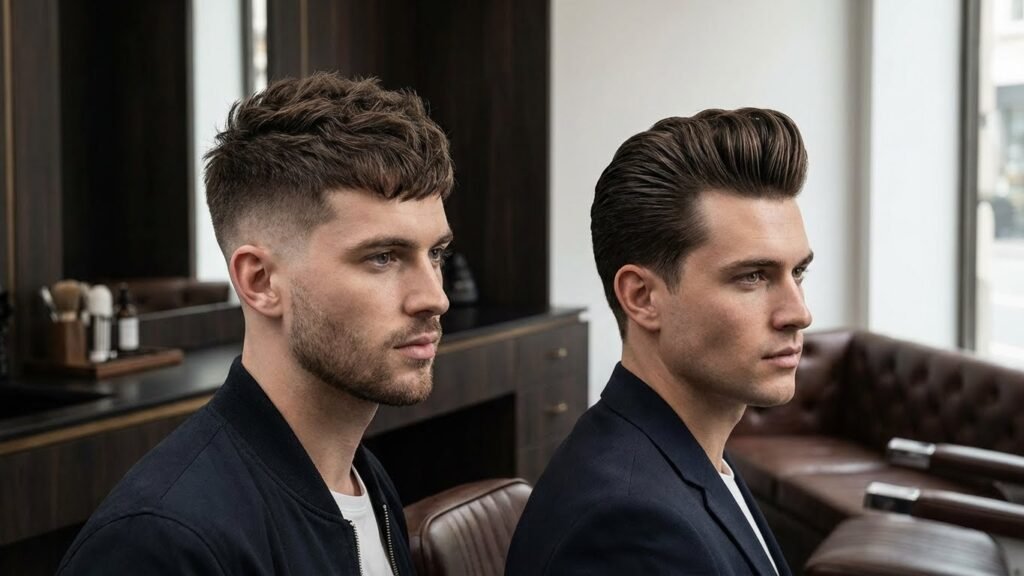
Here’s a truth most haircut guides ignore:
If the crown is wrong, the fringe will never sit right.
In successful Paul Mescal–style cuts:
- The crown retains subtle weight
- Transition into the top is imperfect
- Forward movement is encouraged, not forced
When the crown is cut too clean:
- The top collapses
- The fringe separates awkwardly
- The haircut loses its identity within days
This is why “cleaning it up” too often ruins the look.
Why Guessing Is the Fastest Way to Ruin This Haircut
This haircut lives on a fine line.
Small misjudgments — fringe height, side tightness, crown volume — change the entire outcome.
That’s why relying on:
- Celebrity photos
- Trend descriptions
- Generic “face shape” advice
Turns a calculated haircut into a gamble.
And that’s exactly where most men get stuck.
Don’t Guess Your Haircut — See It on Your Own Face First
Here’s the part most hairstyle blogs can’t offer:
You can preview how this haircut actually looks on you before committing.
Using the hairstyle tool on https://cutehairstyles.org/, you can upload your own photo and test different men’s hairstyles — including variations close to a textured French crop with a short fringe.
How it works:
- Visit CuteHairstyles.org
- Upload a clear front-facing photo
- Try different men’s hairstyles
- Download and compare the results
This instantly answers the most important question:
Does this haircut balance my face — or fight it?
Why This Tool Matters Specifically for Paul Mescal–Style Haircuts
Paul Mescal–inspired cuts are borderline haircuts.
They don’t fail loudly.
They fail subtly.
A fringe that’s half an inch too high.
Sides that are slightly too tight.
A crown that collapses instead of supporting the front.
By testing the look on your own photo:
- You see whether a short fringe enhances or exposes your forehead
- You can compare safer vs riskier variations
- You walk into the barber with clarity, not hope
That alone dramatically improves outcomes.
How to Use This Tool the Smart Way (Not Like a Gimmick)
Don’t try 20 hairstyles.
Do this instead:
- Test 2–3 similar styles
- Focus on fringe height and top balance
- Save the version that looks most natural
Then tell your barber:
“I want this overall structure — especially the balance between the fringe and crown.”
That sentence prevents most miscommunication.
Styling the Textured French Crop (What Actually Works)
This haircut collapses beautifully — if you don’t suffocate it.
Best approach:
- One light product only
- Fingers, not brushes
- Minimal heat
If you feel product in your hair, you’ve already gone too far.
The goal isn’t control.
It’s controlled inconsistency.
Common Mistakes That Quietly Kill the Look
- Over-washing (kills natural separation)
- Trimming too frequently
- Asking for “clean sides”
- Fixing the fringe every morning
This haircut rewards restraint, not effort.
FAQ
Is the Paul Mescal haircut low maintenance?
Low effort, high awareness.
Does it work with straight hair?
Yes — if texture is cut in, not styled on.
Why does it look better after a few days?
Because it’s designed to settle, not hold.
Should I get a fade with it?
Soft taper only. Sharp fades fight the structure.
Is this haircut safe?
Only if you stop guessing.
Final Thought
The Paul Mescal haircut isn’t about copying a celebrity.
It’s about choosing a textured French crop with a short fringe for men that respects how your face and hair actually behave.
The biggest upgrade isn’t a better barber or product.
It’s clarity.
And seeing the haircut on your own face — before the scissors come out — is how you get it.