
Table of Contents
Everyone’s trying to dress like Carolyn Bessette-Kennedy right now. And almost everyone’s getting it wrong.
Since Ryan Murphy’s FX series Love Story: John F. Kennedy Jr. & Carolyn Bessette dropped in early 2026, the internet has been flooded with “get the CBK look” roundups white shirts, bootcut jeans, oval sunglasses, done. But after spending years studying her wardrobe, dissecting paparazzi archives, and reading Sunita Kumar Nair’s definitive book CBK: Carolyn Bessette Kennedy: A Life in Fashion, I can tell you that buying the pieces is the easy part.
Understanding why those pieces looked the way they did on her? That’s where everyone stops short.
This guide goes deeper than any competitor content you’ve read. We’re covering her style evolution, the fabric philosophy, the accessory formula, the wedding dress legacy, and how to actually apply all of it to your body and life, not just a model-thin runway silhouette.
What Carolyn Bessette-Kennedy’s Style Is Actually Called (And Why One Word Doesn’t Cover It)
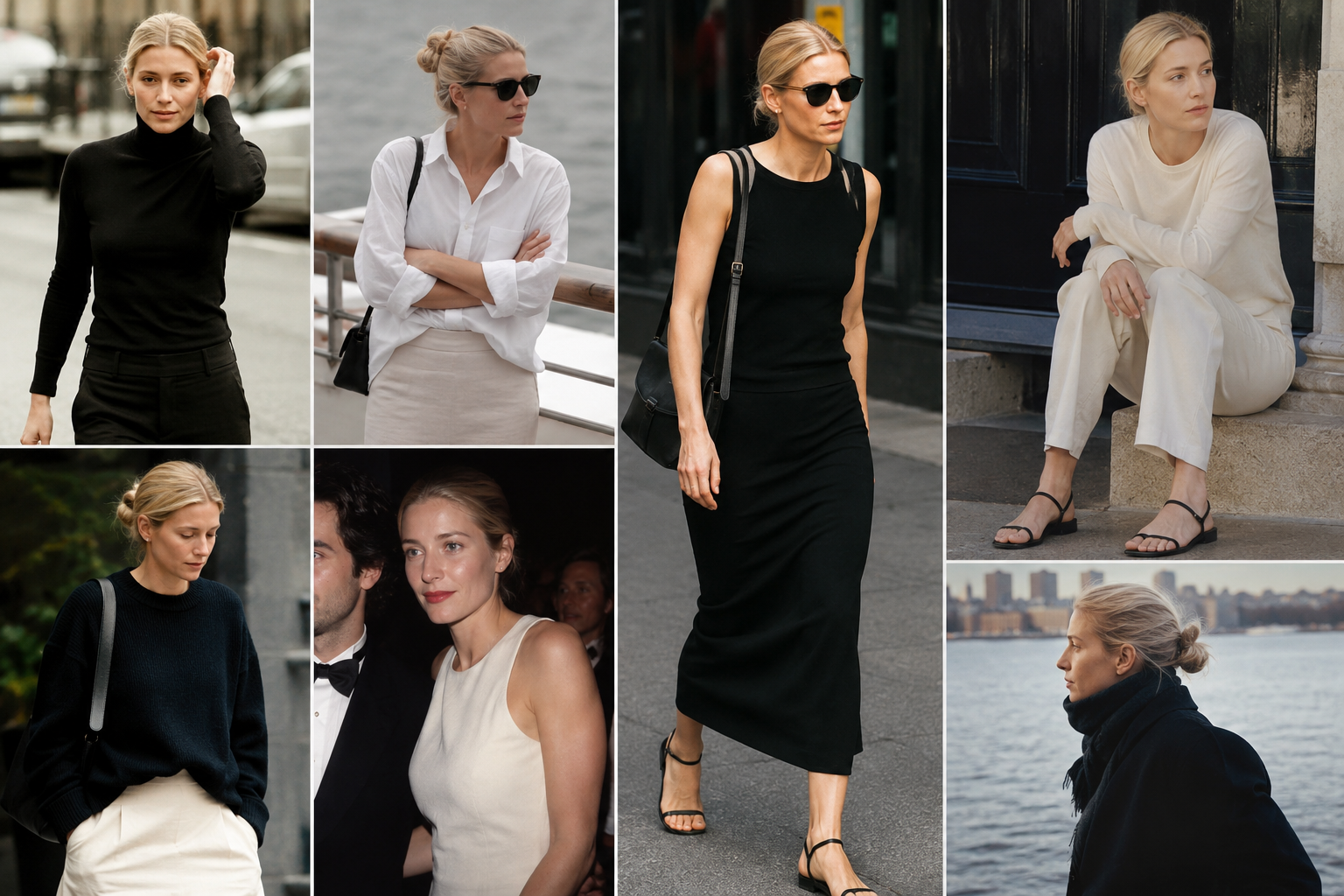
Most articles slap a single label on her look — “minimalist” — and call it a day. That’s like describing the Mona Lisa as “a painting of a woman.”
Her aesthetic was the intersection of several distinct style philosophies:
90s minimalism was the era’s dominant mode Calvin Klein, Donna Karan, and Helmut Lang were stripping fashion down to its bones. Carolyn lived inside this world professionally as a Calvin Klein publicist, which meant she wasn’t just inspired by it. She did it.
Quiet luxury — now a TikTok buzzword was something she practiced two decades before anyone named it. No logos. No embellishment. No need to announce the brand because the quality announced itself.
Stealth wealth dressing took it further: she famously removed labels from her clothes so nobody could identify the designer. In a decade when people wore Tommy Hilfiger logos like a religion, that was a radical act.
Sartorial restraint — a term fashion scholars now use describes the discipline of choosing less when more is available. She had access to every designer in New York. She still reached for the white shirt.
Put it all together and you get what the New York Times memorably called her status as a “ghost influencer” — someone whose style shapes culture from beyond the timeline, whose Pinterest boards have more views today than they did when she was alive.
Takeaway: CBK’s style isn’t minimalism. It’s confident restraint and confidence is the part you can’t buy.
The Style Evolution Nobody Talks About:
Here’s the angle that zero competitors cover: Carolyn’s style wasn’t static. It evolved in three distinct phases, and understanding each one explains why her wardrobe felt so complete.
Phase 1: The New England Foundation (Pre-NYC)
Growing up in Greenwich, Connecticut, and later studying at Boston University, Carolyn absorbed a quietly preppy, New England aesthetic — think clean cotton, good denim, practical outerwear. This wasn’t fashion. It was just how people dressed.
This foundation is why her style never looked styled. The classics she wore came from a place of genuine familiarity, not careful curation.
Phase 2: The Calvin Klein Years (Early-to-Mid 90s)
Working as a publicist at Calvin Klein from 1990, she had front-row access to the decade’s most refined fashion vision. She didn’t become a walking advertisement. Instead, she absorbed the brand’s ethos — pared-down silhouettes, immaculate tailoring, a muted palette — and made it her own.
Narciso Rodriguez, who worked alongside her at CK before designing her wedding dress, told ELLE in 2025: “Her style was never a production. It was just something innate. Even when she wore the most complicated Yohji piece, it was natural.”
This is a crucial insight. She was surrounded by fashion professionals who dressed to impress. She dressed to exist comfortably in her own skin.
Phase 3: The Public Life (1996–1999)
After her 1996 marriage to JFK Jr., every trip to get coffee became a paparazzi event. Most people’s style collapses under that pressure. Hers sharpened.
She developed what you might call a uniform within a wardrobe, a reliable rotation of pieces she trusted completely. Black turtleneck. White poplin shirt. Tailored coat. Bootcut jeans. The formula was so consistent that photographers could almost predict what she’d wear. And yet it never looked repetitive.
That consistency under pressure is the CBK lesson no one teaches.
Takeaway: Her style became iconic because it was authentic. First the circumstances just put a spotlight on it.
The 8 Non-Negotiable Wardrobe Staples (With Exactly What She Wore)
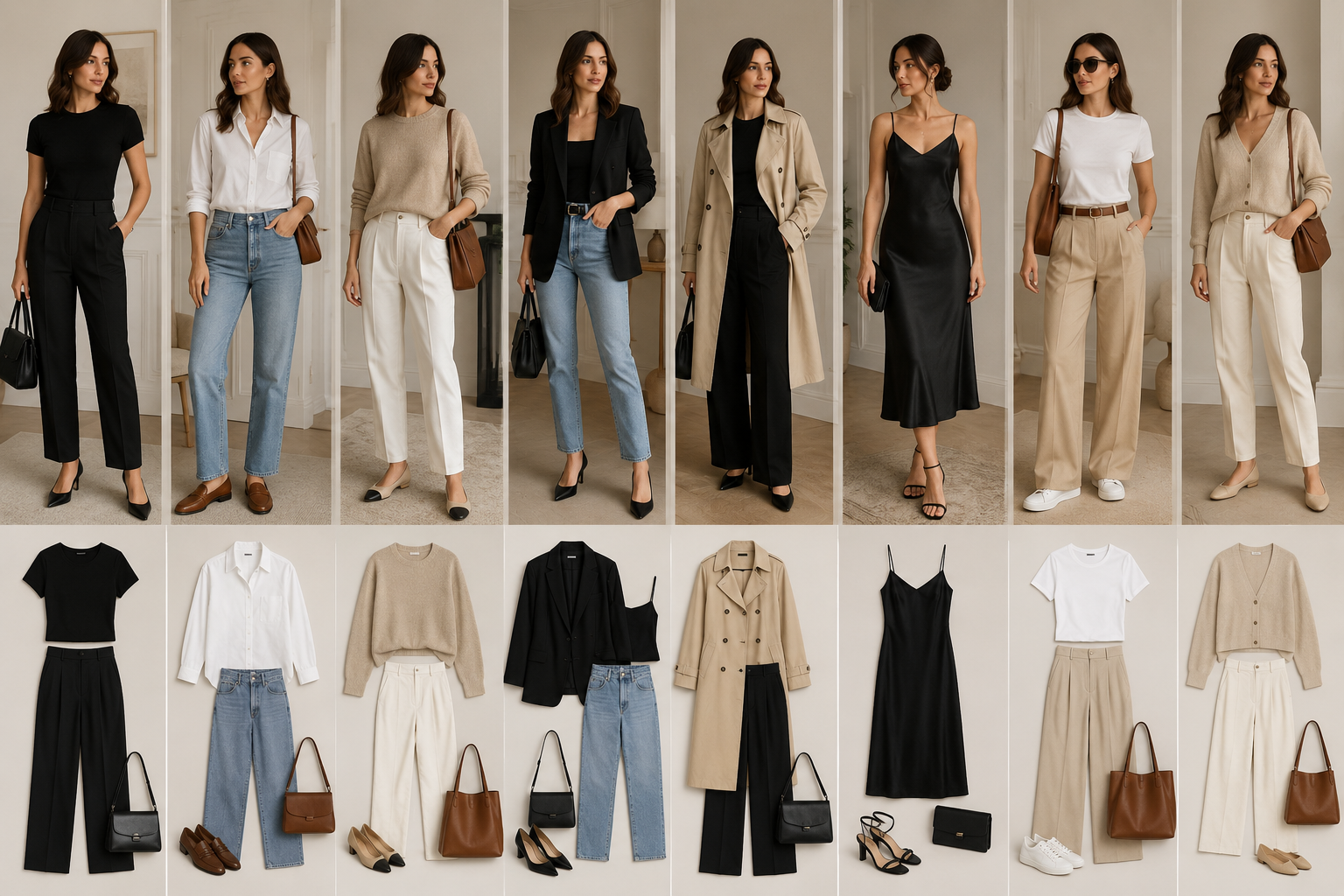
This isn’t a generic “basics” list. These are the specific pieces she returned to again and again verified through photo archives.
1. The White Shirt
Not a white shirt. The white shirt as a philosophy. She wore it every way possible open and loose over denim, tucked into a ruffled Yohji Yamamoto skirt, wrapped crossover-style, sleeves rolled up.
Her most referenced version was a white crossover shirt by Yohji Yamamoto, proof that she wasn’t allergic to interesting cuts, she just deployed them sparingly. The current equivalent? A well-cut Oxford from COS or a structured poplin from The Row.
2. Bootcut and Straight-Leg Denim
While the 90s gave us low-rise everything, Carolyn wore her jeans at the natural waist. Her go-to: Levi’s 517 bootcut, a specific model that fashion editors now hunt on vintage markets.
The cut created a long, unbroken line from hip to floor. Combined with a clean top, it was the closest thing to effortless that denim has ever achieved.
3. The Slip Dress
She wore silk slips two ways: alone with just a strappy sandal, or layered under a long black coat for a contrast that was equal parts sensual and severe. She preferred styles on the looser side, never oversized a distinction that sounds small and matters enormously.
4. The Tailored Black Coat
Her most-photographed outerwear. She chose coats with clean, unbroken lines, no fussy details, no statement buttons. The coat did the work by getting out of its own way. COS’s viral black longline coat of recent years is probably the closest modern equivalent.
5. The Turtleneck
Black, fitted, tucked into high-waisted trousers. Simple. She wore this combination so often it became almost a signature. The fabric mattered fine wool or cashmere, never anything that pilled or lost shape.
6. The Headband
This is the accessory people get most wrong. They buy a headband and add it to an already-busy outfit. For Carolyn, the headband was the styling decision. Everything else stripped back so the headband had space to breathe.
7. Oval Sunglasses
Small-framed, dark-lensed, and worn slightly low on the nose. The effect was more “thinking” than “hiding.” Modern options from Warby Parker or vintage finds on Depop nail this perfectly.
8. Black Loafers
The shoe that completed nearly every look. Flat, polished, worn with everything from jeans to tailored trousers. Never sneakers, never kitten heels for daytime. Loafers.
Takeaway: The CBK wardrobe isn’t about owning specific items, it’s about owning each item completely.
The Fabric Formula:
Here’s the technical insight that fashion content almost never covers: Carolyn’s looks were expensive-looking because she understood fabric hierarchy.
Every piece she wore was made from materials that behaved beautifully. Silk slips fell with natural weight. Wool coats held their structure without stiffening. Cashmere turtlenecks molded to the body without clinging.
Sunita Kumar Nair’s book quotes multiple designers confirming that Carolyn invested heavily in quality materials and often worked with designer friends on custom tailoring and fit. This wasn’t vanity, it was understanding that cheap fabric betrays you in photographs.
The CBK fabric hierarchy, from her archive:
| Category | Her Preference | Modern Equivalent |
|---|---|---|
| Knits | Fine cashmere, merino wool | Naadam, Everlane cashmere |
| Shirts | Poplin, fine linen, silk crepe | COS, Equipment |
| Dresses | Silk charmeuse, wool crepe de chine | Vince, Reformation |
| Outerwear | Structured wool, heavy cotton | Theory, Max Mara |
| Trousers | Wool gabardine, silk blend | The Row, Toteme |
The lesson isn’t “only buy expensive things.” It’s to choose natural fibers, avoid synthetics that pill or cling, and prioritize drape over stiffness.
A $60 linen shirt from COS will give you the CBK silhouette. A $200 polyester blouse will not.
Takeaway: Fabric is the invisible foundation of the CBK look, get the material right and the rest follows.
The Accessory System:
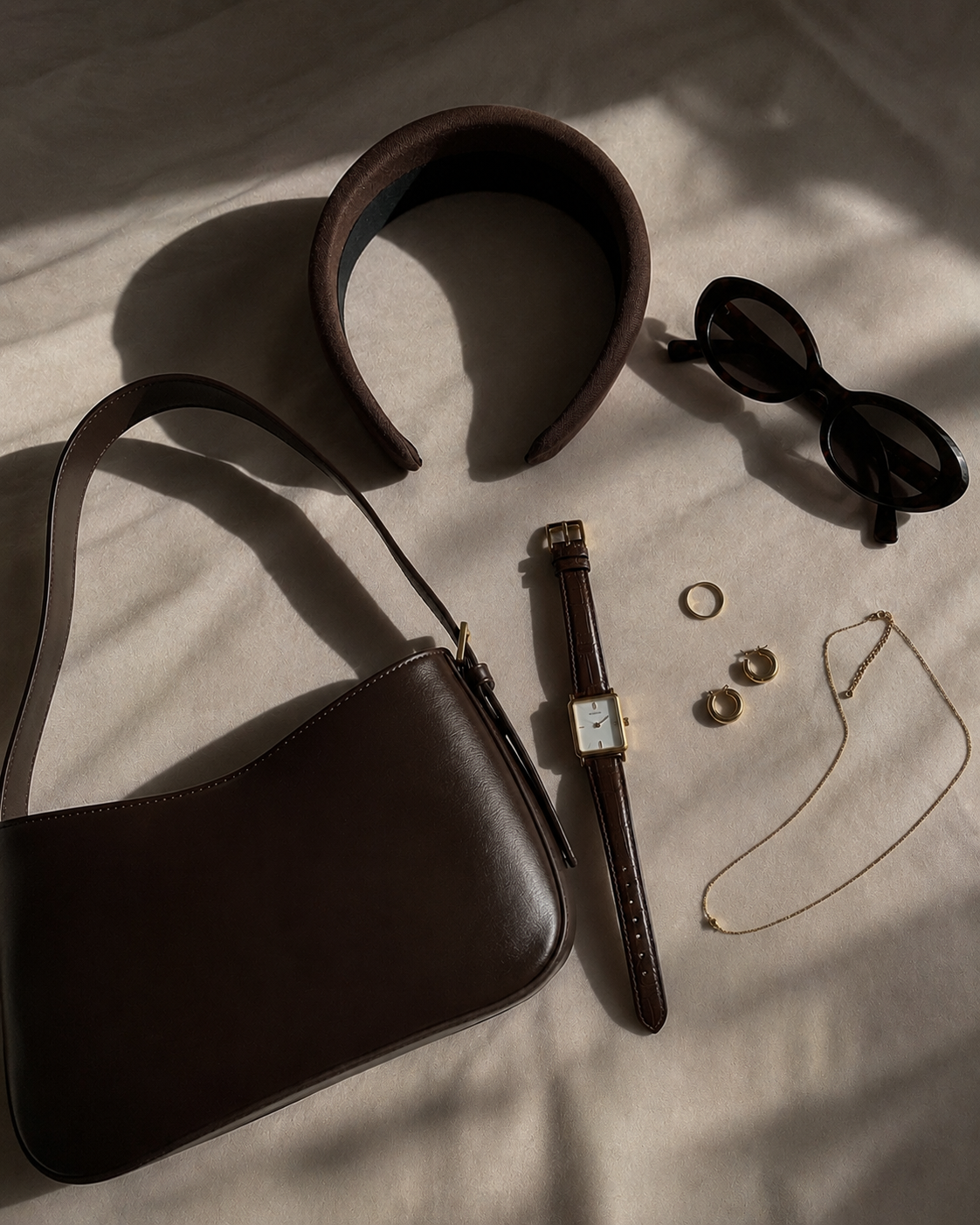
Carolyn’s accessories are often listed as an afterthought. They shouldn’t be, they were an entire system, and she followed it with almost mathematical precision.
The formula: One focal accessory + disappearing everything else.
When she wore the headband, the jewelry disappeared. When she wore sunglasses, the handbag went small and neutral. When the coat was the statement, even the sunglasses came off.
Her complete accessory rotation:
- Headband (simple, fabric or velvet, worn mid-crown)
- Oval dark sunglasses (small frame, never oversized)
- Leather watch (simple strap, modest face — analog and unfussy)
- Minimal jewelry (occasionally small hoop earrings or a delicate chain, never stacked)
- Simple leather bag (structured, mid-size, neutral tone)
What’s missing from this list is as important as what’s on it. No statement earrings. No charm bracelets. No trendy “it” bags. No visible logo hardware.
The restraint wasn’t poverty. It was editorial discipline, the same instinct that makes a great magazine cover work. One thing catches your eye. Everything else serves it.
Takeaway: Styling like CBK isn’t about adding the right accessories, it’s about removing the wrong ones.
The Wedding Dress That Changed Fashion Forever
The 1996 Carolyn Bessette-Kennedy wedding dress is the most studied single garment of the late 20th century. And almost every “CBK style guide” covers it in one paragraph.
Here’s what actually happened and why it matters so much.
The designer: Narciso Rodriguez, who had worked alongside Carolyn at Calvin Klein and understood her aesthetic from the inside. She didn’t hire a famous bridal designer. She went to a friend who got it.
The design: A bias-cut silk crepe gown in off-white technically cowl-necked, with a deep V back and a matching bias-cut veil. No beading. No lace. No train to speak of. The silhouette moved with her body rather than constructing a shape around it.
Why it was radical: This was 1996. Princess Diana’s wedding dress had a 25-foot train. Sarah Jessica Parker was making maximalist fashion famous on Sex and the City. Carolyn walked down the aisle in something that looked, at first glance, almost plain.
The fashion world lost its mind in the best way. The dress is now considered the blueprint for an entire category of bridal fashion: the quiet wedding dress, the anti-princess gown.
Its legacy today: The Row’s bridal collection, Khaite’s minimal eveningwear, and virtually every “undone bride” editorial from 2015 to now trace a direct line to that gown. Rodriguez himself has said the response surprised even him.
This is why the wedding dress is more than a moment in her biography. It’s the clearest articulation of her style philosophy in a single garment: trust the cut, trust the fabric, trust yourself to be enough without the embellishment.
Takeaway: The wedding dress wasn’t minimalist by accident; it was a precise creative statement that redefined what bridal elegance could look like.
CBK vs. Princess Diana, Kate Moss & Gwyneth Paltrow:
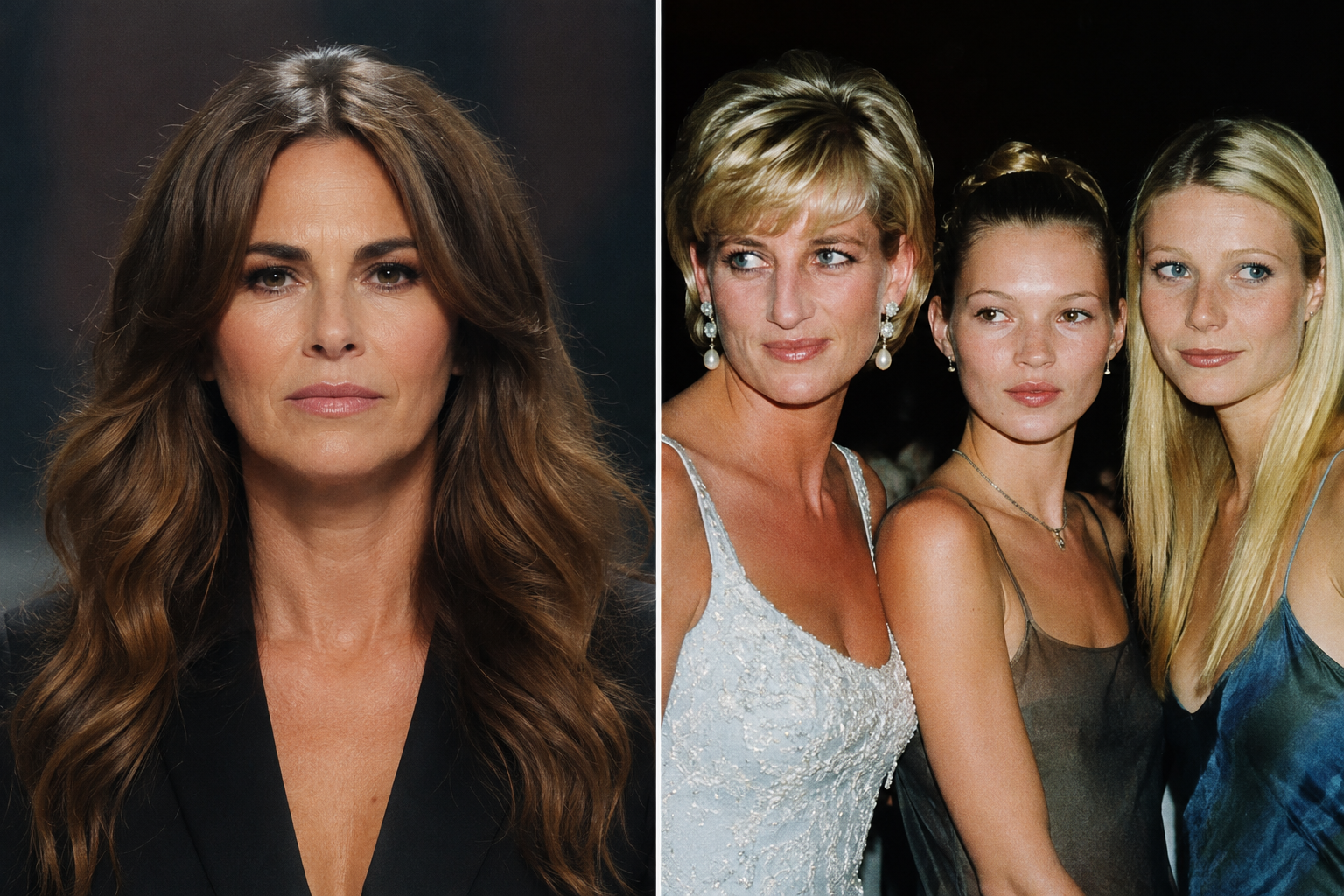
The late 90s had no shortage of women making understated dressing feel revolutionary. But each approached it from a completely different angle and understanding the differences makes CBK’s specific contribution much clearer.
| Style Icon | Core Approach | Shared With CBK | Key Difference |
|---|---|---|---|
| Princess Diana | Refined, diplomatic, brand-conscious | Tailoring, neutral palette | Diana used fashion politically; CBK used it personally |
| Kate Moss | Off-duty cool, slightly undone | Denim, slips, effortlessness | Moss was deliberately casual; CBK was deliberately precise |
| Gwyneth Paltrow | Polished, prep-school cool | Clean lines, structured pieces | Paltrow leaned into wellness branding; CBK rejected all branding |
| Carolyn Bessette-Kennedy | Sartorial restraint, anti-label | — | The only one who deliberately erased the brand identity |
The key differentiator is the anti-label philosophy. Diana wore Spencer and Catherine Walker with clear attribution. Paltrow became a brand herself. Moss became the face of campaigns. Carolyn actively removed labels, declined to identify designers, and used fashion as a private language rather than a public statement.
That’s genuinely unusual and it’s why her wardrobe still resonates in an era of influencer culture and affiliate links. She was the opposite of all of that.
Takeaway: CBK wasn’t competing with the 90s’ other style icons; she was playing a different game entirely.
The Ghost Influencer:
Carolyn Bessette-Kennedy died in 1999. Her Pinterest board, if she’d had one, would have been created by other people. And yet her fashion influence has grown steadily for 25 years, peaking right now in 2026 with more Google searches, more content, and more cultural conversation than at any point since her death.
How does that happen?
The New York Times coined the term “ghost influencer” to describe people whose aesthetic continues to shape culture posthumously, through moodboards, archival photographs, and the collective obsession of fashion-forward communities.
CBK is the definitive ghost influencer. Here’s why she’s so well-suited to the role:
Her photographs are timeless. Paparazzi images from the 90s captured her in motion walking in SoHo, leaving Tribeca, shopping in the West Village. These candid street-style shots look like they could be editorial photographs from 2024. The styling doesn’t date because it was never trend-dependent.
Her wardrobe is reconstructible. Every item she wore exists in some form today. A slip dress is a slip dress. A headband is a headband. The Levi’s 517 is still in production. This accessibility is what makes her style so Pinterest-friendly people can actually do something with the inspiration.
She left no substandard content. No bad interview looks. No experimental phase that didn’t land. No collaboration she’d regret. The archive is curated by circumstance, and every frame is compelling.
The Love Story effect (2026): Ryan Murphy’s series brought her to a generation who’d never Googled her — and for those viewers, discovering the real CBK through archival images after watching Sarah Pidgeon’s portrayal was like finding a second show. The search volume spike for “Carolyn Bessette Kennedy style” in early 2026 was unlike anything seen for a historical fashion figure in years.
Takeaway: The ghost influencer phenomenon works for CBK because her aesthetic was always more about a feeling than a moment and feelings don’t expire.
How to Actually Dress Like CBK for Your Body Type and Life
This is the section every competitor skips because it’s harder to write. It doesn’t have the same magazine polish. But it’s the section most readers actually need.
If You’re Not 5’10” and Willowy
Carolyn was tall with a slim, athletic frame and most CBK guides are written as if that’s the default body. It isn’t. Here’s how to adapt the core principles:
For petite frames: The long coat + slim trouser combination can overwhelm. Instead, try a cropped structured blazer + wide-leg trouser. Keep the color palette the same black, camel, white, cream. The proportion principle still applies; just recalibrate the scale.
For curvier figures: The slip dress worked for Carolyn because of bias-cut silk. The same principle works for curved bias cut moves with the body. Skip the structured shift silhouettes and lean into draped, fluid fabrics. The headband-and-minimal-jewelry formula is completely body-neutral.
For shorter torsos: The tucked-in white shirt + high-waisted trouser creates length where petite frames need it most. The CBK preference for high-rise bottoms wasn’t a vintage quirk in its geometry.
If Your Life Isn’t Upper-East-Side-in-the-90s
Most readers aren’t attending gallery openings and Kennedy-family dinners. They’re going to work, running errands, and occasionally getting dressed up. The CBK formula adapts to all of these.
For office wear: The Calvin Klein publicist CBK is your north star. Tailored trousers + silk or poplin blouse + loafers = the blueprint. Keep jewelry minimal. Skip the statement bag. This looks polished without looking like you’re trying.
For casual days: White shirt + straight-leg jeans + flat sandals or loafers. Headband optional but recommended. This is CBK in her most-photographed form and the easiest version to replicate.
For evening: The slip dress, nothing under, minimal accessories, simple heeled sandals. If it’s winter, the long black coat over the slip is pure CBK. Resist the urge to add a clutch, necklace, and earrings all at once.
Takeaway: The CBK formula isn’t a specific outfit, it’s a proportional and restraint principle that works at any size, in any context.
Shopping the Look:
Real CBK content gives you real options not just aspirational luxury pieces that require a publicist’s salary to buy.
Investment Pieces (Worth Saving For)
- The Row — Margaux loafers, cashmere sweaters, tailored trousers. These are the closest modern equivalent to what CBK actually wore.
- Max Mara — structured wool coats that hold their shape for a decade.
- Vince — silk slip dresses that drape correctly without requiring dry cleaning after every wear.
Mid-Range Sweet Spot
- COS the single best high-street brand for CBK aesthetics. Their black longline coat went viral for a reason. Silk-look blouses, tailored trousers, simple knits.
- Toteme slightly pricier than COS but worth it for trousers and outerwear.
- Equipment silk shirts that rival designer quality at a fraction of the price.
- Madewell for denim specifically. Their straight-leg styles in mid-wash are the closest modern equivalent to Carolyn’s Levi’s rotation.
Budget-Friendly Options
- ASOS Design white shirts, wide-leg trousers, black slip dresses. The key is sticking to natural fabrics even here check the label for cotton, linen, or viscose.
- Everlane for basics that genuinely last. Their Japanese Oxford shirt is a CBK essential.
- Depop and eBay for actual vintage 90s pieces including real Levi’s 517s, which are available for under $40 if you’re patient.
Takeaway: You don’t need a luxury budget to dress like CBK, you need a disciplined budget. Buy fewer things. Buy better materials. Resist the impulse purchase.
The CBK Beauty and Grooming Detail That Completes the Look
This is a content gap competitors consistently miss: Carolyn’s beauty was as curated as her wardrobe, and the two worked as a unified system.
Hair: Long, blonde, worn with deliberate imprecision. Not styled-imprecision actually imprecision. Flyaways, slight movement, nothing over-finished. The headband was often used not to style the hair but to get it out of the way, which paradoxically made it look more considered.
Skin: A no-makeup makeup approach even, luminous skin with minimal product visible. In an era of matte foundation and heavy contouring, she looked like she’d stepped outside with a good moisturizer and nothing else.
The red lip exception: Her most striking beauty choice was the occasional red manicure or red lip, a single sharp note of colour against an otherwise entirely neutral canvas. This is the CBK contrast principle applied to beauty: everything else disappears so one thing registers.
Nails: Clean, maintained, and either bare or red. No French tips, no colour in between.
Fragrance: Less documented but frequently referenced, she was known for clean, unobtrusive scents that fit the anti-ostentation philosophy.
The unified lesson: her beauty said the same thing her wardrobe did. Restraint, precision, and occasional sharp contrast. One system, not two separate choices.
Takeaway: The complete CBK look requires aligning beauty and wardrobe around the same principle: everything quiet, one thing sharp.
The Book That Finally Got It Right:
For anyone serious about understanding Carolyn’s style at a deeper level, Sunita Kumar Nair’s book CBK: Carolyn Bessette Kennedy: A Life in Fashion is required reading.
The 256-page volume includes:
- A foreword by Gabriela Hearst
- A preface by Edward Enninful (former Editor-in-Chief of British Vogue)
- Conversations with Mario Sorrenti, Yohji Yamamoto, and multiple other designers and creatives who knew her
- Never-before-published photographs and personal anecdotes
What makes the book worth owning is its refusal to mythologize her in the way most retrospective coverage does. Nair makes the case that Carolyn’s style was inseparable from her personality, not a performance, but an extension of who she was.
The most striking insight: she had “a strict color palette” and wore looks with “the brand labels deliberately removed,” presenting herself as “the essence of class no label would ever define her.”
That’s not fashion advice. That’s a philosophy of self-presentation. And it’s what makes her a more interesting study than any trend guide can convey.
Frequently Asked Questions
What is Carolyn Bessette’s style called?
Her aesthetic sits at the intersection of 90s minimalism, quiet luxury, and sartorial restraint. Some fashion writers call it “stealth wealth dressing” the idea that true elegance doesn’t announce itself. The New York Times famously called her a “ghost influencer” for her posthumous cultural impact. There’s no single perfect label, and that’s part of what makes her style so hard to copy and so easy to admire.
What was Carolyn Bessette Kennedy’s signature style?
Her signature was confident restraint, clean silhouettes, a strict neutral palette of black, white, and camel, impeccable tailoring, and the complete absence of visible logos. Key pieces included a white poplin shirt, straight-leg or bootcut jeans (often Levi’s 517s), slip dresses, a long tailored coat, and simple black loafers. Her accessories followed a “one focal point” rule headband or sunglasses, never both at once.
How to look like Carolyn Bessette Kennedy?
Start with the fabric natural materials only (cotton, silk, wool, linen). Build around a neutral palette. Invest in one well-fitting coat, one perfect pair of trousers, and the best jeans you can afford. Remove one accessory before you leave the house. And prioritize fit above all else Carolyn’s clothes worked because they fit her precisely, not because they were expensive. That’s the part money can’t buy; tailoring can.
What were JFK Jr.’s last words?
This isn’t definitively documented. John F. Kennedy Jr., Carolyn, and her sister Lauren Bessette died on July 16, 1999, when JFK Jr. piloted his plane into the Atlantic Ocean off Martha’s Vineyard. The cause was pilot error in hazy conditions. No survivor accounts of his final words exist, and any specific quotes attributed to him are speculative.
What size did Carolyn Bessette Kennedy wear?
She was approximately a US size 4–6, standing around 5’10” a tall, slim frame typical of fashion-world standards of the era. Her clothes were often custom-tailored or adjusted for fit even when they came from ready-to-wear. The takeaway isn’t to replicate her proportions, it’s to understand that the perfection of her look came from tailoring to her specific body, not from wearing the “right” size.
Where can I find the CBK style book?
CBK: Carolyn Bessette Kennedy: A Life in Fashion by Sunita Kumar Nair is available from major retailers including Amazon, Barnes & Noble, and most independent bookshops. It’s also widely available as a digital edition. Given the renewed interest following the Love Story series, some editions have limited availability; checking multiple retailers or a local library is worth doing.
Is Carolyn Bessette Kennedy’s style realistic for everyday wear?
Completely arguably more so than most “icon” aesthetics. Her wardrobe was built around real clothes she actually wore to walk her dog, get coffee, and run errands in Manhattan. A white shirt, good jeans, and loafers isn’t a special-occasion look. It’s a Tuesday. The CBK formula works precisely because it was never meant for a red carpet it was meant for life.
The Real Lesson That Outlasts the Trend
Here’s the honest truth about Carolyn Bessette-Kennedy’s style: it works because she wore it as if she had no idea anyone was watching.
That’s the paradox of quiet luxury: the less you perform it, the more powerful it becomes. The moment you’re trying to look effortless, you’ve already lost it.
What you can control: the fabric, the fit, the palette, and the discipline to remove one thing before you walk out the door.
What you can’t buy: the certainty she carried. The sense that the clothes were simply what she reached for that morning, not a carefully assembled statement.
The goal isn’t to dress like Carolyn Bessette-Kennedy. The goal is to dress like yourself with the same precision, the same restraint, and the same refusal to let anyone else define what that means.
That’s the style lesson she actually left behind.