
Table of Contents
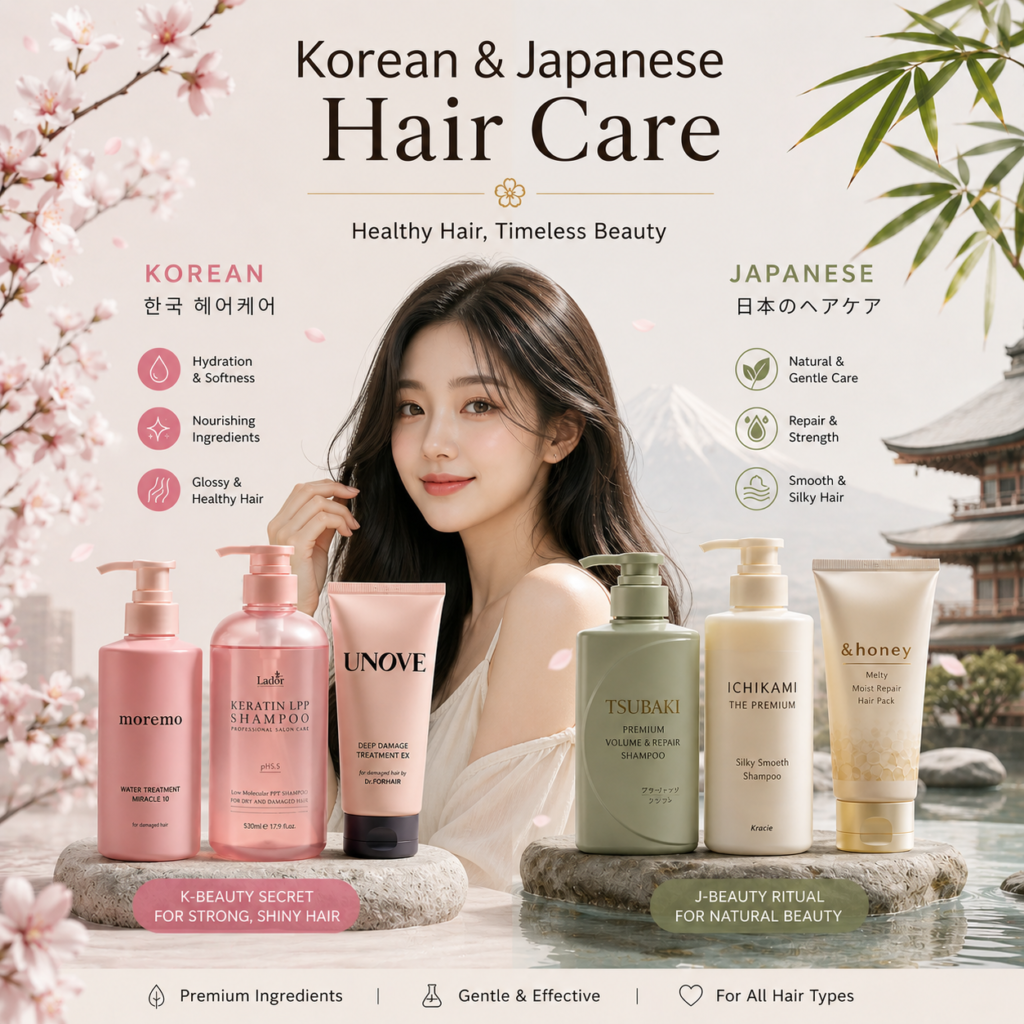
Ever wonder why Korean and Japanese women seem to have effortlessly shiny, thick, and healthy-looking hair even without a salon visit every week? It’s not genetics alone. It’s a ritual.
While the Western beauty world has long focused on hair styling, Korean and Japanese hair care philosophies focus on something deeper: scalp health, moisture balance, and long-term hair integrity. The result? Hair that doesn’t just look good for a day it thrives for years.
Whether your hair is frizzy, dry, color-damaged, or just desperately in need of a glow-up, this guide breaks down everything you need to know about Korean and Japanese hair care routines in 2026. We’re talking step-by-step rituals, the best products, hero ingredients, brand recommendations, and the hidden secrets that make East Asian hair care so incredibly effective.
Let’s get into it.
Why Korean & Japanese Hair Care Is Different
Before we dive into the steps and products, it’s important to understand the philosophy behind these routines. Because that’s really where the magic starts.
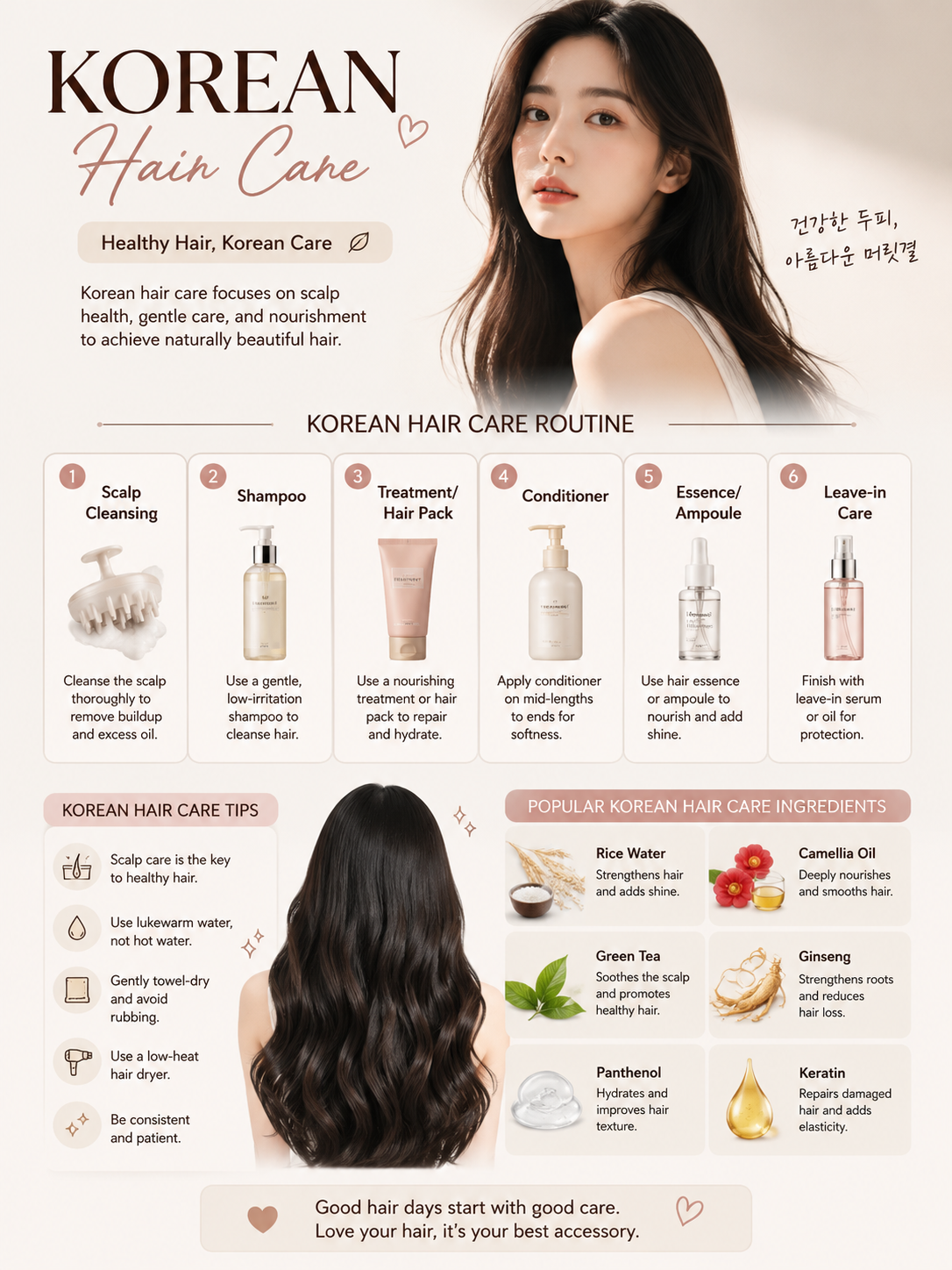
Korean hair care is deeply influenced by the K-beauty skincare philosophy of layering lightweight, nourishing products and giving the scalp the same attention you’d give your face. In Korea, hair is considered an extension of beauty and wellness, not just an aesthetic accessory. The Korean approach focuses on prevention over correction: you don’t wait until your hair breaks or falls out to start caring for it.
Japanese hair care is rooted in tradition, minimalism, and ingredient purity. Japanese beauty culture values kami (hair) as a symbol of health and dignity. The Japanese routine centers on scalp massage, gentle cleansing, and protection from environmental damage. Many Japanese hair care techniques have been passed down through generations, with a particular emphasis on the washing ritual itself.
Together, these two approaches offer a complete, holistic system for achieving the healthiest hair of your life.
The 10-Step Korean Hair Care Routine
The Korean hair care routine can range from a simple 5-step process to an elaborate 10-step ritual depending on your hair’s needs. Here’s the full breakdown:
Step 1: Pre-Shampoo Scalp Scrub or Oil Treatment
Before you even think about shampoo, Korean hair care says: prep your scalp.
A scalp scrub removes product buildup, dead skin cells, and excess sebum that clogs hair follicles and slows growth. Look for scrubs with ingredients like sugar, charcoal, or salicylic acid.
Alternatively, a pre-shampoo oil treatment (popular choices include camellia oil, argan oil, or fermented rice water) coats the hair shaft before washing, preventing the shampoo from stripping too much moisture.
Try: RATED GREEN Real Apple Cider Vinegar Scalp Scrub, or a DIY warm coconut oil mask applied 30 minutes before washing.
Step 2: Double Cleansing — Yes, for Your Hair Too
Just like double cleansing your face, Koreans apply the same logic to their hair.
First wash: Use a clarifying or gentle cleansing shampoo to remove buildup, pollution, and styling residue.
Second wash: Follow up with a nourishing, sulfate-free shampoo tailored to your hair type whether that’s a moisture-boosting formula for dry hair or a volumizing one for fine hair.
Why double cleanse? Because one wash often isn’t enough to fully clean the scalp, and doing two gentle washes is less stripping than one harsh scrub.
Popular Korean Shampoo Picks:
- Mise en Scene Perfect Serum Shampoo for damaged or dry hair
- Innisfree Green Tea Fresh Shampoo for oily scalp types
- Lador Damaged Protector Acid Shampoo color-safe, frizz-reducing
Step 3: Scalp Massage (The Secret Step Everyone Skips)
This is the step most people in the West completely overlook and it’s arguably the most powerful.
Koreans spend 3–5 minutes massaging the scalp during shampooing, using the pads of their fingers (never nails) in circular motions. This:
- Stimulates blood circulation to the hair follicles
- Promotes hair growth and thickness
- Reduces scalp tension and stress
- Helps shampoo penetrate and cleanse more effectively
Make this non-negotiable. Your hair growth will thank you in a few months.
Step 4: Rinse with Cool or Lukewarm Water
Hot water is your hair’s enemy. It opens the cuticle aggressively, strips natural oils, and leaves hair looking dull and frizzy.
After shampooing, rinse with cool or lukewarm water to remove all product residue while keeping the cuticle flatter and smoother. This one small habit makes a noticeable difference in shine.
Step 5: Conditioner — Applied Correctly
Most people apply conditioner incorrectly. Here’s the Korean way:
- Apply conditioner mid-length to ends only avoid the roots and scalp
- Leave on for 3–5 minutes minimum (not 30 seconds like most of us do)
- Use a wide-tooth comb to distribute evenly while it sits
- Rinse thoroughly with cool water
Standout Korean Conditioners:
- Amorepacific Treatment Enzyme Hair Mask enzyme-based, deeply nourishing
- The History of Whoo Gongjinhyang Hair Treatment premium, ginseng-infused
- Moremo Water Treatment Miracle 10 lightweight and deeply hydrating
Step 6: Hair Mask or Deep Treatment (2–3x per week)
For extra repair and nourishment, Koreans use a hair mask or deep conditioning treatment several times a week, not just as a once-a-month luxury.
Korean hair masks are packed with ingredients like:
- Fermented rice water protein-rich, smooths the cuticle
- Ginseng extract stimulates growth and strengthens follicles
- Hydrolyzed keratin fills in damage along the hair shaft
- Camellia oil penetrates deeply without weighing hair down
Top Picks:
- Lador Keratin LPP Treatment salon-quality at home
- Elizavecca CER-100 Hair Treatment collagen-infused, hugely popular
- Whamisa Organic Flowers Hair Treatment natural, fermented ingredients
Step 7: Scalp Tonic or Essence
Just like applying toner to your face after cleansing, Koreans apply a scalp essence or tonic after washing. These lightweight, watery treatments penetrate the scalp to:
- Soothe inflammation and redness
- Balance sebum production
- Stimulate hair follicle activity
- Deliver active ingredients (biotin, peptides, ginseng) directly to the root
Recommended Products:
- Dr.FORHAIR Folligen Tonic strengthens and revitalizes
- APIEU Rosemary Scalp Tonic rosemary-infused, clinically associated with growth
- KSECRET Scalp Care Ampoule concentrated treatment for thinning hair
Apply with fingertips, massage in, and do not rinse.
Step 8: Leave-In Treatment or Hair Serum
Before drying, apply a leave-in treatment or hair serum to damp hair. This seals moisture, reduces frizz, and adds shine.
Look for formulas with:
- Argan oil for frizz control and shine
- Silk amino acids smooth and protect
- Panthenol (Vitamin B5) moisture retention powerhouse
Korean Favorites:
- Mise en Scene Perfect Rose Hip Serum iconic, smells incredible
- Ryo Hambitmo Hair Essence strengthening and light
- Lador Thermal Protection Serum great if you use heat tools
Step 9: Proper Blow-Drying Technique
Here’s something most people don’t realize: how you dry your hair matters as much as what you put on it.
Korean blow-drying technique:
- Pat dry with a microfiber towel never rub aggressively
- Use a low or medium heat setting high heat causes cuticle damage
- Keep the dryer 15–20 cm from your hair
- Direct the airflow downward this keeps cuticles flat and adds shine
- Finish with a cool shot to seal the cuticle
Step 10: Hair Oil or Finishing Serum (On Dry Hair)
The final step: a small amount of hair oil or finishing serum applied to dry hair to seal everything in, add extra gloss, and tame flyaways.
Less is more here. One or two drops of camellia oil, argan oil, or a Korean hair oil applied to the ends creates that signature K-beauty glossy finish.
Top Picks:
- Mise en Scene Perfect Serum (Original Gold) a Korean cult classic
- Laneige Silk Intense Capsule Serum innovative encapsulated formula
- Aromatica Rosemary Root Enhancer scalp and strand care in one
The 7-Step Japanese Hair Care Routine

Japanese hair care is more streamlined but equally powerful. It focuses on ritual washing technique, minimal product use, and long-term scalp health.
Step 1: Brush Before Washing
Japanese women always brush hair before shampooing. This detangles knots (so you’re not yanking while wet), distributes natural scalp oils down the shaft, and loosens dirt and product buildup.
Use a natural bristle brush or a wide-tooth comb, and brush gently from tips to roots.
Step 2: Pre-Rinse with Warm Water
Before applying any product, rinse hair thoroughly with warm water for 1–2 minutes. This softens the hair, opens the cuticle slightly for better cleansing, and removes a significant portion of dust and loose debris before shampoo even touches it.
Step 3: Shampoo with the Two-Lather Method
Similar to the Korean double cleanse, Japanese hair washing involves two rounds of shampoo:
- The first lather focuses on the scalp using fingertip massage in slow, circular motions to lift buildup
- The second lather distributes through the lengths and finishes the cleanse
Japanese shampoos are known for their gentle, pH-balanced formulas and use of traditional botanical ingredients.
Best Japanese Hair Care Products (Shampoos):
- Shiseido Tsubaki Premium Moist Shampoo enriched with camellia oil
- Pantene Micellar Shampoo (Japan) ultra-gentle formula
- Moist Diane Perfect Beauty Shampoo argan oil + amino acids
- Kracie Ichikami Smooth & Sleek Shampoo Japanese botanicals
Step 4: Conditioning Ritual
Japanese conditioners tend to be lighter and more focused on smoothing the cuticle rather than heavy moisturization. Apply to mid-lengths and ends, wait 2–3 minutes, and rinse completely.
Top Japanese Conditioners:
- Shiseido Tsubaki Premium Repair Conditioner
- LUX Super Rich Shine Treatment (Japan version)
- BOTANIST Botanical Treatment
Step 5: Inkan (Hair Mask) Once a Week
Once a week, Japanese women use a concentrated hair treatment often inspired by traditional inkan healing practices. These masks focus on:
- Sealing damaged cuticles
- Restoring elasticity and softness
- Delivering botanical extracts deep into the cortex
Standout Japanese Hair Masks:
- Shiseido Sublimic Aqua Intensive Treatment
- Ma Cherie Hair Mask
- Napla Kerastase-style N. Bond Shaper
Step 6: Camellia Oil (Tsubaki) — The Japanese Hair Secret
If there’s one single ingredient that defines Japanese hair care, it’s camellia oil (tsubaki in Japanese). Used for centuries by Japanese women, particularly geishas, this lightweight oil:
- Has a molecular structure similar to human sebum it absorbs instantly
- Adds extraordinary shine without greasiness
- Protects against heat and environmental damage
- Seals the cuticle for smooth, frizz-free hair
Apply 1–2 drops to damp or dry hair, focusing on ends. This is the Japanese secret to that mirror-like hair shine.
Step 7: Cold Water Final Rinse
Every Japanese hair care routine ends with a cold water rinse. Cold water closes the cuticle tightly, locking in moisture and creating a naturally smooth, reflective surface. It’s the cheapest and most effective “hair treatment” you’ll ever find.
Key Ingredients:
Understanding the hero ingredients in these products helps you shop smarter and understand why these routines deliver such dramatic results.
| Ingredient | Found In | Benefit |
| Fermented Rice Water | Korean masks & tonics | Strengthens hair protein, smooths cuticle |
| Ginseng Extract | Korean serums & ampoules | Stimulates growth, thickens hair |
| Camellia (Tsubaki) Oil | Japanese oils & conditioners | Deep shine, frizz control, heat protection |
| Hydrolyzed Keratin | Korean treatments | Fills damage, restores elasticity |
| Centella Asiatica | Korean scalp tonics | Soothes scalp inflammation |
| Bamboo Extract | Both | Strengthens hair shaft |
| Silk Amino Acids | Japanese serums | Smoothing, moisture-locking |
| Biotin + Peptides | Korean scalp ampoules | Hair growth, density support |
| Green Tea Extract | Korean & Japanese | Antioxidant, scalp health |
| Collagen | Korean treatments | Plumps and hydrates strands |
Korean vs. Japanese Hair Care:
| Feature | Korean Hair Care | Japanese Hair Care |
| Philosophy | Layer + nourish, skincare-inspired | Ritual cleansing, scalp-first |
| Steps | 5–10 steps | 5–7 steps |
| Focus | Damage repair, moisture, glow | Scalp health, shine, prevention |
| Signature Ingredient | Fermented rice water, ginseng | Camellia oil (tsubaki) |
| Texture Philosophy | Rich treatments layered carefully | Lightweight, absorbing quickly |
| Best For | Dry, damaged, color-treated hair | All hair types, especially fine hair |
Bottom line: Use Korean care for intensive repair and nourishment. Use Japanese techniques for long-term scalp health and natural shine. The best routine? Combine both.
Korean Hair Products for Frizzy Hair:
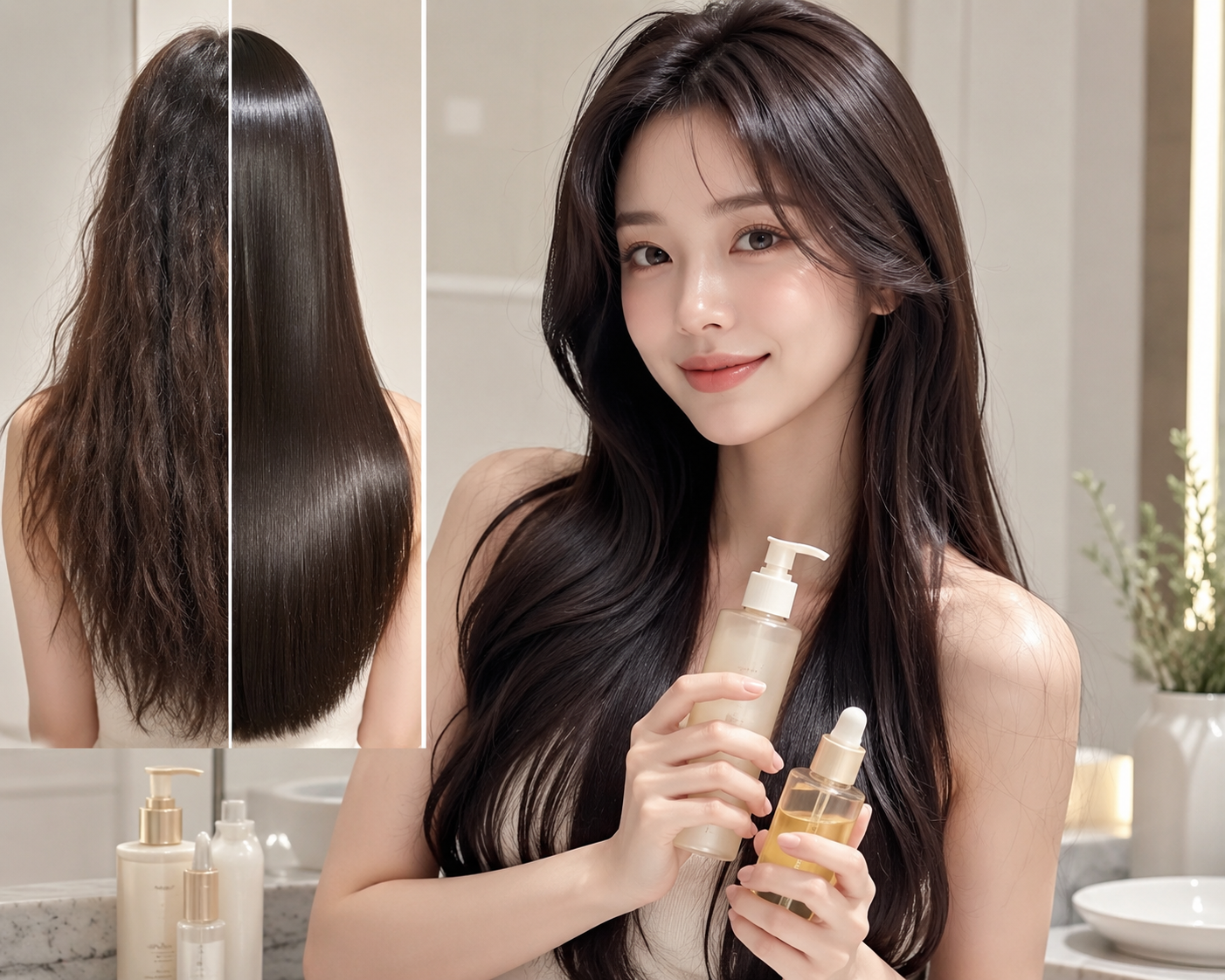
Frizzy hair is one of the most common hair concerns worldwide, and Korean beauty has some genuinely game-changing solutions:
- Lador Keratin LPP Treatment smooths and seals the cuticle from within
- Mise en Scene Perfect Serum iconic anti-frizz serum used by millions
- Ryo Damage Care & Nourishing Treatment deep repair for damaged, frizzy hair
- Aromatica Rosemary Root Enhancer lightweight, anti-humidity protection
- Elizavecca CER-100 Hair Treatment collagen-boosted frizz control
The key to frizz control in the Korean method is sealing the cuticle at every step: cool rinses, leave-in serums, and finishing oils all work together to create a frizz-blocking layer.
Korean Silky Hair Tips You Can Start Today
You don’t need to completely overhaul your routine overnight. Here are quick wins you can implement immediately:
- Switch to a microfiber towel regular towels create friction and frizz
- Stop washing with hot water go lukewarm to cool
- Add a scalp massage to every wash 3–5 minutes minimum
- Apply conditioner with a comb, not just your hands, for even distribution
- End every wash with a cold rinse this one habit transforms your shine
- Use a hair serum before heat styling always
- Reduce washing frequency if possible 2–3x per week is optimal for most hair types
Best Korean Hair Care Brands in 2026
Here are the most trusted and results-driven Korean hair care brands available globally:
- Lador professional-grade, widely available, affordable
- Mise en Scene drugstore accessible, iconic products
- Ryo ginseng-focused, traditional herbal blends
- Aromatica natural and clean beauty
- Dr.FORHAIR scalp-specialist brand
- Elizavecca innovative, collagen and keratin-forward
- Innisfree green tea and nature-inspired
- Laneige premium, moisture technology
- The History of Whoo luxury, ginseng-forward heritage brand
- Amorepacific prestige, multi-award-winning formulas
Best Japanese Hair Care Products in 2026
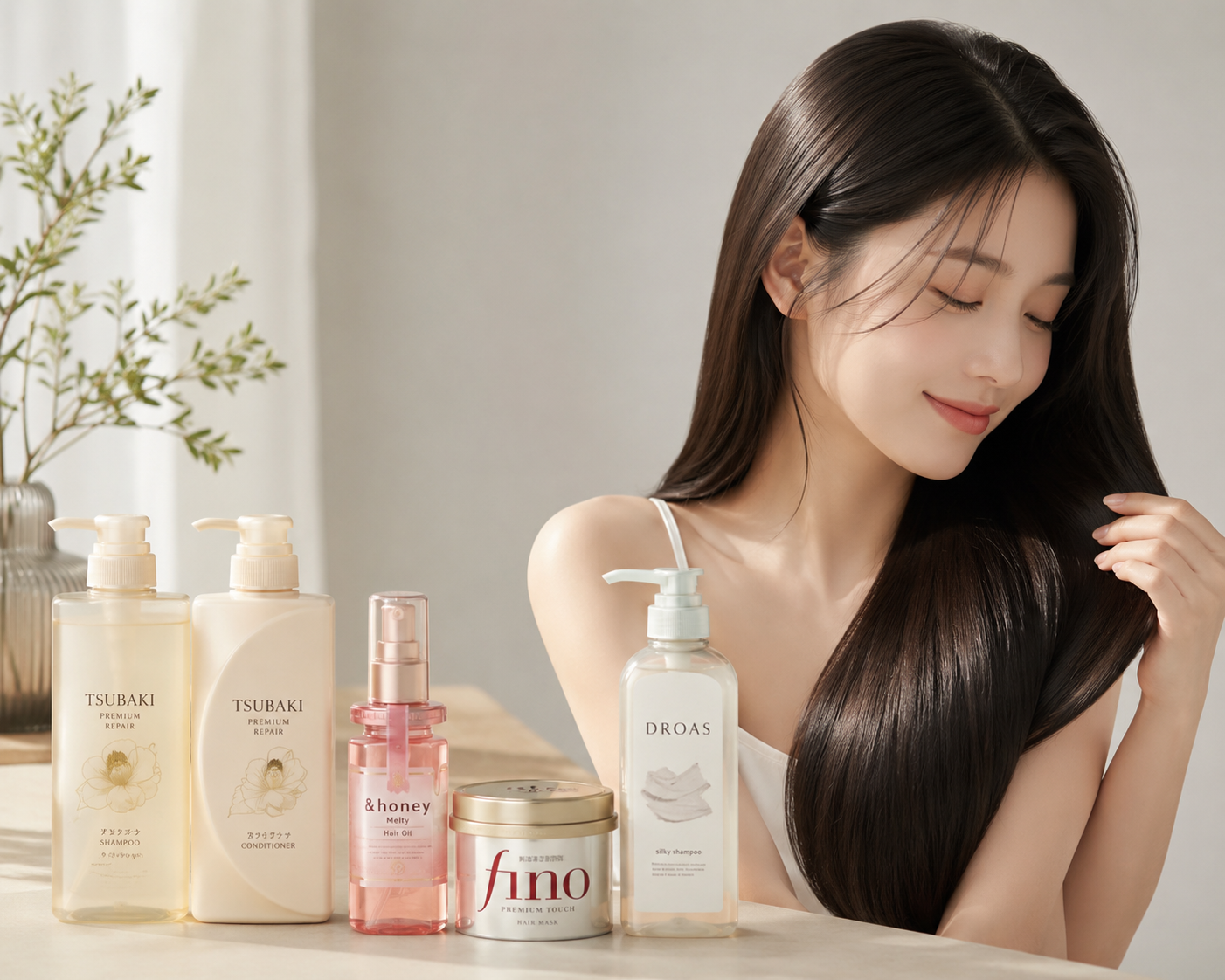
- Shiseido Tsubaki the gold standard in Japanese hair care
- BOTANIST botanical ingredients, clean formula
- Moist Diane accessible, argan and amino acid formulas
- Kracie Ichikami traditional Japanese botanicals
- Pantene (Japan formula) different and superior to Western versions
- LUX Super Rich Shine shine-focused, salon-quality feel
- Napla salon brand, deeply conditioning
- Ma Cherie fragrance-forward, softening formula
Building Your Routine:
Daily (on wash days): Pre-shampoo oil → Double shampoo + scalp massage → Conditioner → Scalp tonic → Leave-in serum → Proper blow-dry → Finishing oil
2–3x per week: Add a deep conditioning hair mask or treatment after shampoo
Once a week: Full scalp scrub + extended hair mask (leave on 20–30 minutes under a heat cap)
Monthly: Clarifying treatment to fully reset buildup
Frequently Asked Questions (FAQ)
What are the 5 steps in Korean hair treatment?
The essential 5-step Korean hair treatment involves: (1) Pre-shampoo scalp prep or oil treatment, (2) Shampoo with scalp massage, (3) Conditioner applied mid-lengths to ends, (4) Deep conditioning mask or treatment, and (5) Leave-in serum or hair oil. These five steps form the core of the K-beauty hair care philosophy and address moisture, strength, and scalp health simultaneously.
What are the common Korean hair care steps?
The common steps in a Korean hair care routine are: scalp scrub or pre-treatment, double shampoo, scalp massage, cool water rinse, conditioner, hair mask (2–3x weekly), scalp tonic, leave-in serum, proper blow-dry technique, and finishing hair oil. You don’t have to do all ten every wash day and adapt the routine to your schedule and hair’s needs.
What is the Japanese 7-step hair care routine?
The Japanese 7-step routine includes: (1) Brushing before washing, (2) Warm water pre-rinse, (3) First shampoo lather focusing on the scalp, (4) Second shampoo lather through lengths, (5) Conditioner on mid-lengths and ends, (6) Weekly deep mask treatment, and (7) Final cold water rinse. Camellia oil and scalp massage are incorporated throughout as key rituals.
What is the difference between Korean and Japanese hair care?
Korean hair care focuses on layering nourishing products, intensive repair, and scalp treatment inspired by the K-beauty skincare philosophy. Japanese hair care emphasizes a ritualistic washing technique, scalp health, and minimal product use with high-quality botanicals like camellia oil. Both prioritize long-term hair health over short-term styling.
Are Korean hair care products good for frizzy hair?
Yes, Korean hair care products are some of the best in the world for managing frizz. Products like the Mise en Scene Perfect Serum, Lador Keratin LPP Treatment, and Elizavecca CER-100 are specifically formulated to seal the cuticle, reduce humidity-triggered frizz, and restore smoothness to damaged hair.
Can I combine Korean and Japanese hair care routines?
Absolutely, and many hair enthusiasts recommend it. Use Japanese techniques for your washing ritual (brush first, warm pre-rinse, two-lather shampoo, cold final rinse) and Korean products for nourishment and repair (hair masks, scalp tonics, leave-in serums). Together, they cover all aspects of hair health beautifully.
How often should I do a deep hair treatment?
In Korean beauty, deep conditioning hair masks are recommended 2–3 times per week for dry or damaged hair, and once a week for healthy maintenance. This is more frequent than most Western routines recommend, and it’s a key reason why results with K-beauty hair care tend to be more dramatic.
What is the best Japanese hair care product for shine?
Camellia (tsubaki) oil is considered the best single product for hair shine in Japanese beauty. The Shiseido Tsubaki Premium line is one of the most popular options globally. For an oil treatment specifically, pure tsubaki oil applied to ends before or after washing delivers unparalleled glossiness.
Do I need to follow all 10 Korean hair care steps?
No, you don’t need all 10 steps every single wash. Start with 5 core steps (shampoo, scalp massage, conditioner, leave-in serum, finishing oil) and add the deeper treatments as your schedule allows. Consistency matters more than doing every step perfectly every time.
What makes Asian hair care routines so effective?
The effectiveness comes down to three things: scalp prioritization (treating the scalp like skin rather than just washing hair), consistent layering of lightweight treatments, and ingredient quality with a preference for natural botanicals, fermented extracts, and traditional remedies that have proven results over centuries of use.
Final Thoughts:
Korean and Japanese hair care aren’t trends, they’re time-tested philosophies that consistently deliver healthier, stronger, shinier hair. The secret isn’t one miracle product. It’s the system: treating your scalp like skin, nourishing consistently, and protecting what you have.
Start small. Implement a scalp massage this week. Switch to a cool-water rinse. Add a leave-in serum. Build from there. Within 4–6 weeks, you’ll start to see and feel the difference and in 3–6 months, you’ll wonder why you ever took care of your hair any other way.
Your hair journey starts today.